- Chinese
- French
- German
- Portuguese
- Spanish
- Russian
- Japanese
- Korean
- Arabic
- Irish
- Greek
- Turkish
- Italian
- Danish
- Romanian
- Indonesian
- Czech
- Afrikaans
- Swedish
- Polish
- Basque
- Catalan
- Esperanto
- Hindi
- Lao
- Albanian
- Amharic
- Armenian
- Azerbaijani
- Belarusian
- Bengali
- Bosnian
- Bulgarian
- Cebuano
- Chichewa
- Corsican
- Croatian
- Dutch
- Estonian
- Filipino
- Finnish
- Frisian
- Galician
- Georgian
- Gujarati
- Haitian
- Hausa
- Hawaiian
- Hebrew
- Hmong
- Hungarian
- Icelandic
- Igbo
- Javanese
- Kannada
- Kazakh
- Khmer
- Kurdish
- Kyrgyz
- Latin
- Latvian
- Lithuanian
- Luxembou..
- Macedonian
- Malagasy
- Malay
- Malayalam
- Maltese
- Maori
- Marathi
- Mongolian
- Burmese
- Nepali
- Norwegian
- Pashto
- Persian
- Punjabi
- Serbian
- Sesotho
- Sinhala
- Slovak
- Slovenian
- Somali
- Samoan
- Scots Gaelic
- Shona
- Sindhi
- Sundanese
- Swahili
- Tajik
- Tamil
- Telugu
- Thai
- Ukrainian
- Urdu
- Uzbek
- Vietnamese
- Welsh
- Xhosa
- Yiddish
- Yoruba
- Zulu
- Kinyarwanda
- Tatar
- Oriya
- Turkmen
- Uyghur


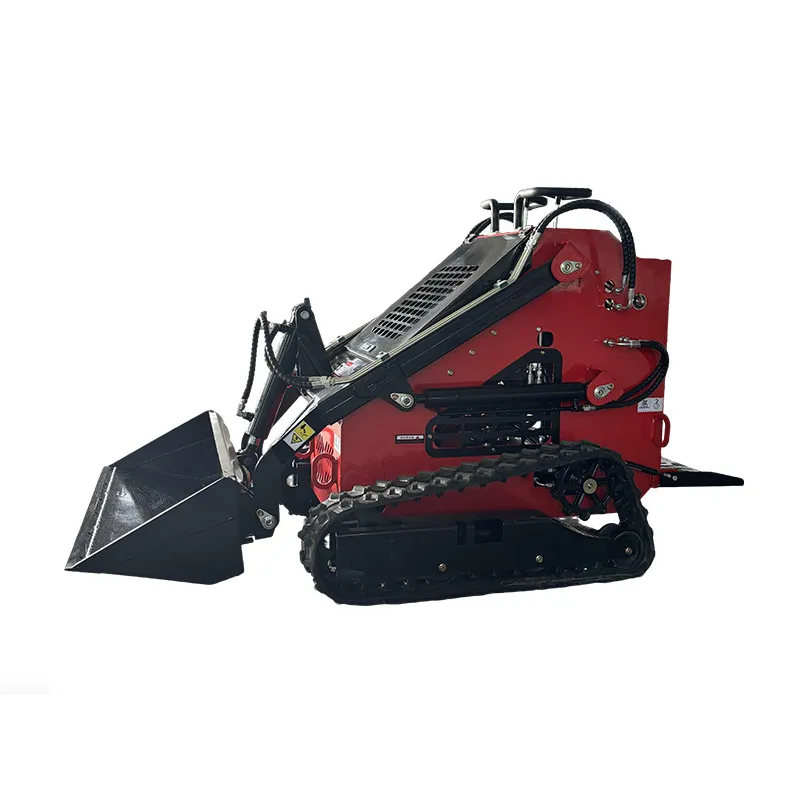
Hydraulic Crawler Loader
When most people hear 'hydraulic crawler loader', they picture a slow, tank-like machine just pushing dirt. That's the first misconception. The real story isn't just about traction; it's about the hydraulic system's intelligence—or lack thereof—in real-world muck. A spec sheet tells you about pump flow and relief valve settings, but it won't tell you how the machine will hesitate for a split second when you try to lift and curl simultaneously on a side slope, or how that translates to spilled load and wasted cycles. I've seen too many projects choose a machine based on bucket capacity and engine horsepower alone, only to find its hydraulic response is all wrong for the material, turning a supposed productivity tool into a fuel-burning placeholder.
The Heart of the Matter: Hydraulic Feel
You can't quantify 'feel' in a brochure, but an operator knows it in the first hour. It's the difference between a machine that feels like an extension of your arms and one you have to fight. I remember running an older model from a well-known brand—the joystick controls were precise on paper, but the actual implement movement had a slight lag and a 'soft' start. Fine for precision grading, but when you're loading shot rock, you want that bucket to slam into the pile with authority. The machine was working, but the operator was working harder, constantly overcompensating.
Contrast that with a unit we tested later, a hydraulic crawler loader from a manufacturer like Shandong Pioneer. What stood out wasn't a fancy new valve block, but how they'd tuned the existing system. The priority flow to the steering was just aggressive enough to maintain track power during a turn while digging, preventing that dreaded stall. It felt deliberate, like the engineers had actually spent time on a real site, not just a test pad. That's the kind of detail that separates a parts-bin machine from a thought-out tool.
This 'feel' often comes down to pump integration and valve spool design. Some systems use a single variable pump feeding everything, which can lead to competition for flow. Others, often better for demanding work, use a dual-pump setup. One dedicated to travel, one to implements. When you're trying to climb out of a trench while raising the load, that separation is everything. It prevents the lurching that can unsettle the machine. I’ve seen machines without it struggle badly in wet clay, where smooth, consistent power is the only thing keeping you moving.
Under the Tracks: More Than Just Grousers
Everyone focuses on the engine and hydraulics, but the undercarriage is where profit is lost or saved. A crawler loader lives or dies by its tracks. The common mistake is specifying the longest, widest track shoe for maximum flotation, which is great for swamps but a disaster in rocky terrain. The excessive surface area creates more pivot points on uneven ground, leading to accelerated wear on bushings and rollers, and making the machine feel tippy. I learned this the hard way on a forestry road job. We had the premium wide tracks, and within 400 hours, the track link seals were shot from constant twisting stress.
The correct setup depends on ground pressure and the primary work. For mixed use—say, loading trucks on a gravel pad but also having to traverse softer ground to get to the pile—a mid-width shoe with a multi-bar grouser pattern often works best. It provides a compromise: enough bite for traction and enough clearance to shed mud. Companies that understand application, like Shandong Pioneer Engineering Machinery Co., Ltd, often offer a range of undercarriage options. It's a sign they're thinking beyond just assembling components.
Maintenance access is another unsung hero. Can you actually grease all the track rollers and idlers in under ten minutes without contorting yourself? On some models, you can't. That leads to skipped maintenance, which leads to a $15,000 undercarriage rebuild at 2,000 hours instead of 4,000. The design of the track frame and the placement of access panels seem trivial until you're the one holding the grease gun in the rain. A well-laid-out machine respects the mechanic's time, which is a direct cost saving.
The Power Dilemma: Diesel vs. Future Tech
The industry is obsessed with Tier 4 Final and now Stage V engines, and for good reason. The emissions hardware is complex. But on a hydraulic crawler loader, the impact is magnified. All that extra heat from the Diesel Particulate Filter (DPF) regeneration needs to go somewhere, often right into the hydraulic oil reservoir if the cooling package isn't sized correctly. I've witnessed machines derate power in the middle of a loading cycle because the combined heat load from the engine regeneration and the hydraulic system overwhelmed the cooling capacity. You're left sitting there, waiting for the machine to cool, while the haul trucks idle.
This is where system integration from the ground up matters. Some newer designs from manufacturers who control their own chassis and powertrain assembly, which you can see in the approach of a firm like Shandong Pioneer (overseas trade), are building in larger, more efficiently routed cooling systems from the start. They're not just bolting a compliant engine into an old frame. It's a fundamental redesign to manage total thermal load.
And then there's the electric question. It's coming. For a loader working in a quarry or a recycling yard, the duty cycle is perfect for electrification: high, consistent power demand in a confined area. The instant torque would be a revelation for digging. But the hurdle isn't the motor; it's the hydraulic system. Running high-pressure hydraulics off an electric motor is straightforward. The real challenge is the energy storage—batteries big enough to run a 3-ton digging machine for an 8-hour shift don't yet fit in the envelope, or make economic sense. We're probably a generation of battery tech away from that being viable for most contractors. For now, a perfectly integrated diesel-hydraulic system is still the king of versatility.
On the Ground: A Case in Point
Let me give a concrete example from a site prep job last year. We were clearing a hillside for a pad, dealing with a mix of loose topsoil, dense clay, and fragmented sandstone. We had a mid-sized hydraulic crawler loader on site, a model sourced internationally. Its job was to clear vegetation, load the spoil, and do final grading. The first two days were a fight. In the clay, the machine would bog down, the tracks spinning because the hydraulic system couldn't deliver enough consistent power to both the tracks and the bucket to walk it out. We had to constantly change techniques, taking smaller bites, which killed efficiency.
We adjusted. We played with the hydraulic pressure settings (within safe limits, of course), slightly increasing the relief setting for the travel motors. This gave a bit more oomph to the tracks at the expense of a fraction of a second slower bucket curl. It was a trade-off, but it worked. The machine became more capable in the tough stuff. This is the reality: you often have to tune the machine to the site, not just take it out of the crate. A good machine allows for that fine-tuning; a bad one doesn't give you any levers to pull.
This is why dealing with a supplier that has actual application knowledge is critical. It's not about buying a machine; it's about buying a solution for a specific set of problems. When you look at a company's history, like Shandong Pioneer's 20 years of development and their export to markets with tough standards like Germany and Australia, it suggests they've had to solve these real-world problems for their customers. Their relocation and expansion in 2023 into a new facility in Ningyang County isn't just growth; it's a commitment to building a better platform, literally and figuratively.
The Bottom Line: It's a Tool, Not a Toy
At the end of the day, a crawler loader is a purchase justified by the cost per cubic yard moved. All the fancy features mean nothing if the machine can't stay in the seat and work. Reliability is the silent spec. It comes from things like using oversized pivot pins in the loader linkage, from having easy-to-clean radiator screens, from using common, off-the-shelf hydraulic fittings instead of proprietary ones. These are the details you only appreciate after 1,000 hours, when a competitor's machine is down for a special-order part and yours is still running.
The trend I see, and appreciate, is a move back toward serviceability and robustness over pure digital integration. Sure, a touchscreen diagnostic panel is nice, but a simple, clearly labeled bank of pressure test ports is nicer when you're troubleshooting a weak track on a Friday afternoon. The best machines balance smart hydraulics with simple, robust architecture. They feel solid, they react predictably, and they don't hide their critical components behind a maze of panels.
So, when you're evaluating, look past the headline numbers. Get in the seat. Feel how it transitions from digging to lifting to traveling. Ask about cooling capacity and standard undercarriage options. Check the service points. And consider the source—a manufacturer that has evolved over decades, like the one behind https://www.sdpioneer.com, has likely baked a lot of these hard-learned lessons into their current products. They're not just selling you a machine; they're selling you the thousands of hours of runtime that informed its design. That's what you're really paying for.
Related Products
Related Products