- Chinese
- French
- German
- Portuguese
- Spanish
- Russian
- Japanese
- Korean
- Arabic
- Irish
- Greek
- Turkish
- Italian
- Danish
- Romanian
- Indonesian
- Czech
- Afrikaans
- Swedish
- Polish
- Basque
- Catalan
- Esperanto
- Hindi
- Lao
- Albanian
- Amharic
- Armenian
- Azerbaijani
- Belarusian
- Bengali
- Bosnian
- Bulgarian
- Cebuano
- Chichewa
- Corsican
- Croatian
- Dutch
- Estonian
- Filipino
- Finnish
- Frisian
- Galician
- Georgian
- Gujarati
- Haitian
- Hausa
- Hawaiian
- Hebrew
- Hmong
- Hungarian
- Icelandic
- Igbo
- Javanese
- Kannada
- Kazakh
- Khmer
- Kurdish
- Kyrgyz
- Latin
- Latvian
- Lithuanian
- Luxembou..
- Macedonian
- Malagasy
- Malay
- Malayalam
- Maltese
- Maori
- Marathi
- Mongolian
- Burmese
- Nepali
- Norwegian
- Pashto
- Persian
- Punjabi
- Serbian
- Sesotho
- Sinhala
- Slovak
- Slovenian
- Somali
- Samoan
- Scots Gaelic
- Shona
- Sindhi
- Sundanese
- Swahili
- Tajik
- Tamil
- Telugu
- Thai
- Ukrainian
- Urdu
- Uzbek
- Vietnamese
- Welsh
- Xhosa
- Yiddish
- Yoruba
- Zulu
- Kinyarwanda
- Tatar
- Oriya
- Turkmen
- Uyghur


hydraulic hammer for mini excavator
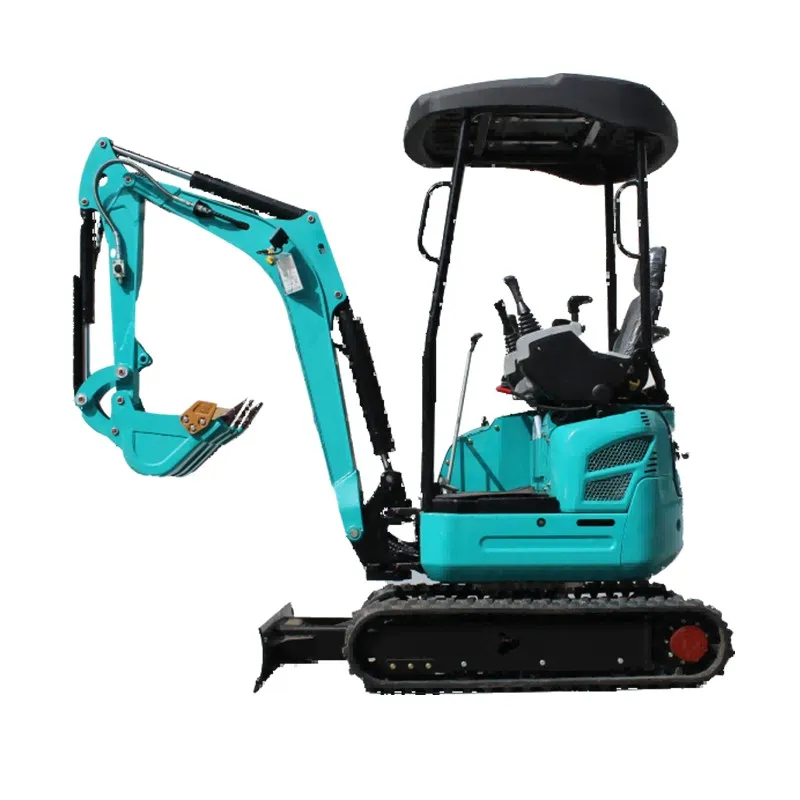
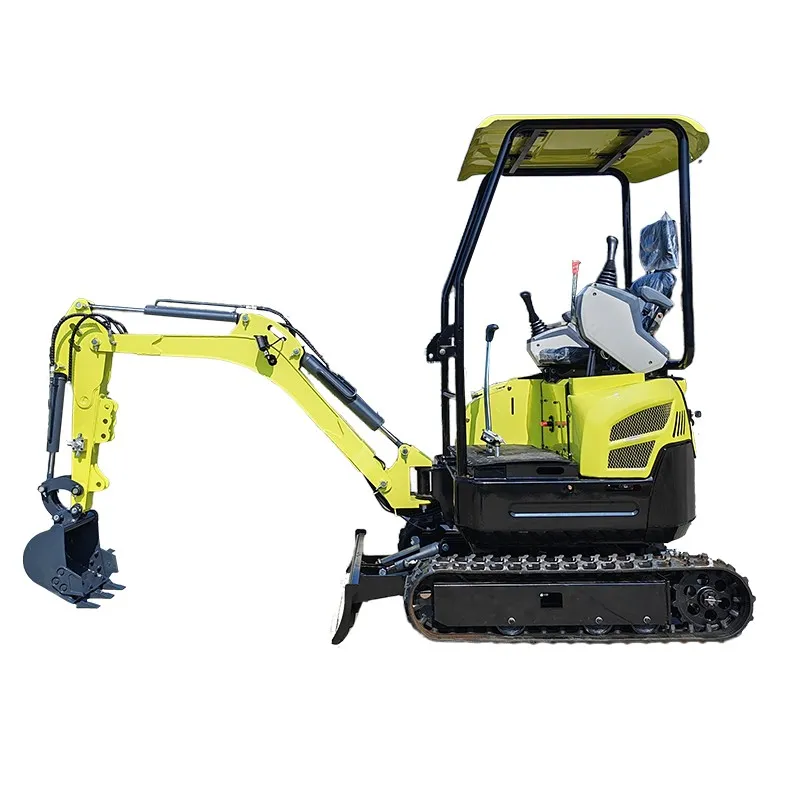
When someone says hydraulic hammer for mini excavator, a lot of folks picture a small tool on a small machine, thinking it's all straightforward. That's the first mistake. The pairing isn't just about size; it's about balance, flow, and not blowing your carrier's hydraulics because you chose a breaker that's too hungry. I've seen too many contractors grab a hammer based on price or brand name alone, only to end up with a machine that's constantly overheating or a tool that bounces more than it breaks. The real talk starts with understanding that your 1.5-ton to 8-ton mini ex isn't just a smaller platform—it's a system with very specific limits.
The Core Mismatch: Carrier vs. Tool
Let's get into the gritty details. The biggest headache I encounter is the flow and pressure mismatch. A mini excavator might only put out 15-25 GPM at PSI. You slap on a hydraulic hammer rated for 30 GPM, and you're asking for trouble. The tool will be underpowered, the cycle time slows to a crawl, and you're essentially just wearing out both the hammer seals and your machine's pumps. It's not the hammer's fault, nor the excavator's—it's a wrong marriage. I always tell people to look at the tool's required operating flow range, not just its weight class. A 500 ft.lb class breaker might be perfect for a 3-ton machine, but only if its flow demand sits comfortably in the middle of your machine's output.
Then there's the pressure. Some older or more basic mini excavators have fixed auxiliary hydraulic circuits. If your system relief is set at 2300 PSI, but the hammer is designed to operate optimally at 2500 PSI, you're leaving a significant chunk of impact energy on the table. You might not notice it on softer concrete, but try trenching in compacted material or weathered rock, and the difference is night and day. It feels like the hammer is just tapping the surface. This is where checking the machine's spec sheet and the hammer's performance curve becomes non-negotiable, not optional.
And weight distribution—this one's often overlooked until it's too late. Mounting a 600 lb breaker on a 1.8-ton machine sounds okay on paper, but when you're fully extended on a side slope, that extra weight on the stick changes the machine's stability dramatically. I've had a close call years ago, using a supposedly compatible hammer on a 2.5-ton machine for a demo job on a slight incline. The tail end felt light, the hammer's inertia made the whole upper structure wobble. We had to stop, reposition, and add counterweight in the form of concrete blocks in the cab. Lesson learned: the manufacturer's maximum recommended breaker weight is a starting point, not a green light for all conditions.
Beyond the Spec Sheet: Real-World Wear and Tear
Specs tell one story, the job site tells another. One critical detail is the hydraulic hammer mounting bracket and pins. On a mini excavator, the stick is lighter, the pin bosses aren't as robust as on a 20-ton machine. A hammer that's constantly side-loading, or one where the bracket isn't a perfect fit, will wallow out those pin holes in a matter of months. I've seen brackets from generic brands that claimed universal fit but had a few millimeters of slop. That slop translates into massive shock loads directly into the stick's metal. The fix isn't cheap—it's either welding and re-boring or replacing the entire stick section.
Then there's the hose routing. Mini excavators have tight spaces. A hydraulic hose that rubs against the boom or the cab frame during swing will fail. It's not an if, it's a when. I recall a job where we had a failure mid-demolition; the high-pressure hose burst because it was chafing against a sharp edge on the carriage. Hot oil everywhere, downtime for hours. The solution was simple in hindsight: proper hose clamping with rubber cushions and a daily visual check. But it's one of those things you only learn after it happens to you. The quality of the hammer's factory-installed hoses and fittings matters immensely for these compact setups.
Heat is the silent killer. A mini excavator has a smaller hydraulic oil reservoir. Running a breaker is the most demanding task for the system. Without a proper auxiliary oil cooler, the oil temperature can spike, especially in summer. I've watched gauges creep into the 220°F+ range on machines without enhanced cooling. That heat thins the oil, accelerates wear on every pump, valve, and cylinder in the system, and kills the hammer's internal seals. For any sustained breaker work, insisting on a machine with an upgraded cooling package is a smart long-term investment. Otherwise, you're trading a day's productivity for a shortened machine life.
Brands, Build, and the Value Proposition
The market is flooded with options, from premium European brands to a plethora of Asian manufacturers. The cheap price tag is tempting, but for a hydraulic hammer, the true cost is in the downtime. I've run hammers from all tiers. The premium ones, you feel the difference in the consistency of the blow. Even when the material gets harder, the impact doesn't fade as much. The valve design is just more responsive. But are they always necessary for a general contractor doing light-duty concrete work? Maybe not.
This is where companies that understand both manufacturing and application come in. I've followed the work of Shandong Pioneer Engineering Machinery Co., Ltd for a while. They've been in the game since 2004, which in this industry, means they've seen a few product cycles and iterations. What stands out is their focus on the export market—sending products to places like the US, Canada, and Australia. That tells me their products have to meet a certain threshold of durability and compatibility to survive in those competitive markets. It's not just about making a hammer; it's about making one that works on the diverse fleet of mini excavator brands found on a global job site. You can check out their approach at their website, https://www.sdpioneer.com.
Their recent relocation in 2023 to a new facility in Ningyang likely points to scaling up production and R&D. For a buyer, that kind of stability and growth in a supplier is reassuring. It suggests they're investing in consistency and perhaps more tailored solutions. I'm not saying they're the only option, but in the mid-range value segment, they represent the type of manufacturer that's moved beyond pure reverse-engineering to actually considering application engineering. Their hammers need to work on a Kubota, a Takeuchi, or a Yanmar without causing immediate issues, which is a real test.
Application Pitfalls: What the Brochure Doesn't Show
Let's talk about actual use. Breaking a 4-inch sidewalk slab is child's play. But what about removing a thick foundation footing, or trenching through old riverbed material? The impulse is to go for the biggest hammer the machine can theoretically carry. Bad move. An oversized hammer will just stall the carrier, leading to a brutal, jarring stall shock that travels right back through the mount into the excavator's front-end. It feels awful and is terrible for the equipment. The right technique is to let the tool's weight and impact do the work, not to force it down with arm crowd. If you're having to muscle the stick down to get penetration, the hammer is either too small or you're in material that requires a different tool (like a mounted crusher).
Another pitfall is neglecting the tool steel—the moil point or chisel. Using a worn-down, mushroomed tip is a surefire way to kill your hammer's efficiency and increase recoil. The energy has nowhere to go but back into the tool. I keep a spare, sharp set of tool steel on the truck at all times. For a mini excavator hammer, the tool steel is smaller in diameter, so it's more prone to bending or breaking if you're prying laterally. You have to remind operators: it's a breaker, not a crowbar. That lateral force bends the tool steel inside the bushings, causing binding and uneven wear.
Cold weather operation is a whole other chapter. Standard hydraulic oil becomes viscous. If you don't let the machine and the hammer warm up thoroughly—I mean idle with the hammer getting short, light bursts for a good 10-15 minutes in freezing temps—you risk cavitating the pump and damaging the hammer's piston. The seals are less pliable, making them prone to blow-out. I learned this the hard way on an early winter morning, rushing to start a job. A loud bang and a dead hammer was the result. Now, the procedure is sacred: slow warm-up, every time.
The Bottom Line: Making the Right Choice
So, how do you choose? First, match the numbers religiously: operating weight, flow demand, and pressure. Then, think about your primary material. For mostly concrete and occasional asphalt, a lower impact frequency, higher energy per blow hammer might be better. For trenching in rocky soil, a faster cycle rate can be more effective. It's about the fracture pattern.
Second, consider the support. Where are the seals and wear parts coming from? How long does it take to get a replacement thru-bolt or accumulator? A hammer that's down for two weeks waiting for a part from overseas is a paperweight. This is why the supply chain and local dealer support for brands, including ones like the aforementioned Shandong Pioneer, matter. Their two-decade presence and dedicated export channels, as noted in their company profile, are built to address that very issue of reliable supply for international customers.
Finally, test it if you can. Nothing replaces feeling how the hammer reacts on your specific machine. Does it cause excessive vibration in the cab? Does the machine stabilize well on the outriggers when it fires? Does the impact feel crisp or dull? Your gut feeling, combined with the hard data, usually points you right. The goal is to forget the hammer is there—to have it feel like a natural, reliable extension of the machine's arm, not a separate, temperamental attachment. That's when you know the pairing for your mini excavator is right.
Related Products
Related Products