


- Chinese
- French
- German
- Portuguese
- Spanish
- Russian
- Japanese
- Korean
- Arabic
- Irish
- Greek
- Turkish
- Italian
- Danish
- Romanian
- Indonesian
- Czech
- Afrikaans
- Swedish
- Polish
- Basque
- Catalan
- Esperanto
- Hindi
- Lao
- Albanian
- Amharic
- Armenian
- Azerbaijani
- Belarusian
- Bengali
- Bosnian
- Bulgarian
- Cebuano
- Chichewa
- Corsican
- Croatian
- Dutch
- Estonian
- Filipino
- Finnish
- Frisian
- Galician
- Georgian
- Gujarati
- Haitian
- Hausa
- Hawaiian
- Hebrew
- Hmong
- Hungarian
- Icelandic
- Igbo
- Javanese
- Kannada
- Kazakh
- Khmer
- Kurdish
- Kyrgyz
- Latin
- Latvian
- Lithuanian
- Luxembou..
- Macedonian
- Malagasy
- Malay
- Malayalam
- Maltese
- Maori
- Marathi
- Mongolian
- Burmese
- Nepali
- Norwegian
- Pashto
- Persian
- Punjabi
- Serbian
- Sesotho
- Sinhala
- Slovak
- Slovenian
- Somali
- Samoan
- Scots Gaelic
- Shona
- Sindhi
- Sundanese
- Swahili
- Tajik
- Tamil
- Telugu
- Thai
- Ukrainian
- Urdu
- Uzbek
- Vietnamese
- Welsh
- Xhosa
- Yiddish
- Yoruba
- Zulu
- Kinyarwanda
- Tatar
- Oriya
- Turkmen
- Uyghur

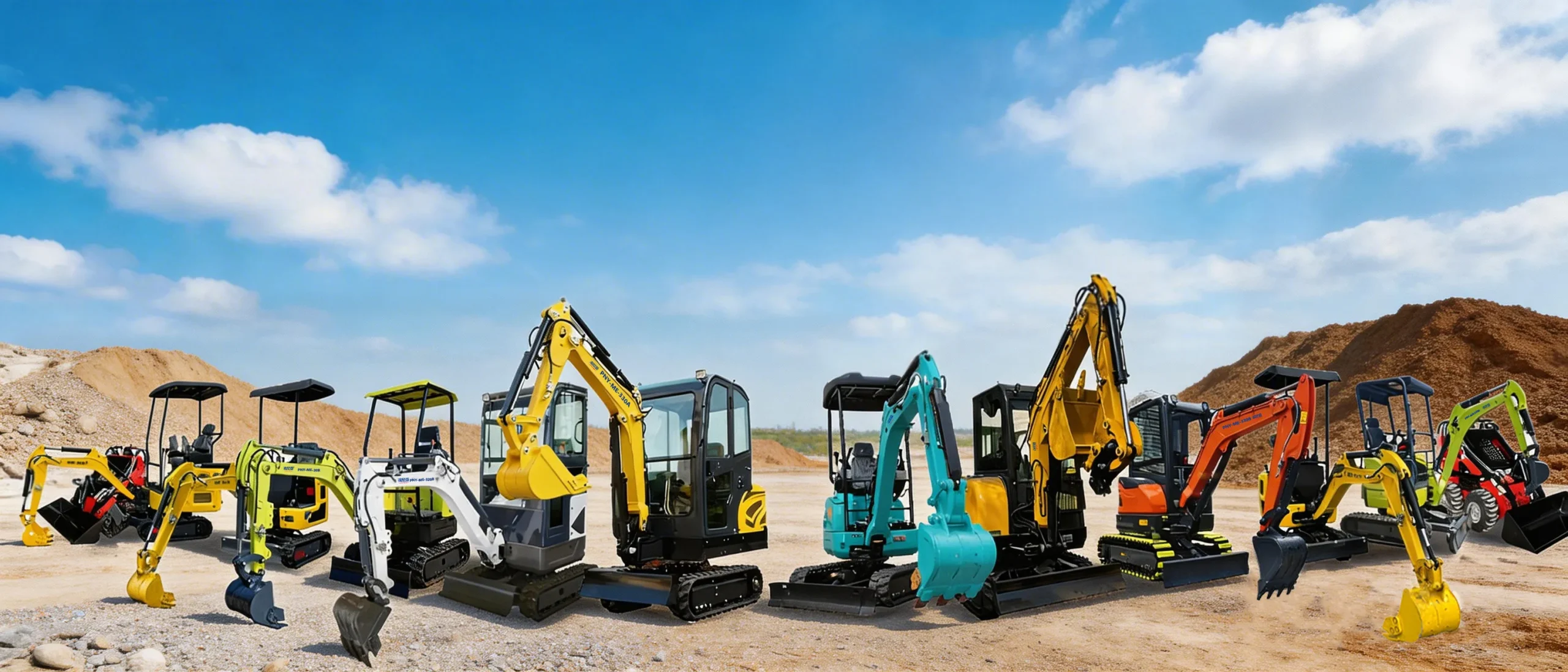
Hydraulic pilot Excavator
When you hear 'hydraulic pilot excavator', most guys immediately think of that smooth, almost effortless joystick feel. That's not wrong, but it's just the surface. The real story isn't just about operator comfort—it's about how the entire machine's nervous system changes. I've seen too many people equate it simply with 'easier to operate', missing the critical shift in control architecture and, frankly, the maintenance mindset it demands. It's not just an upgrade; it's a different animal.
The Core Shift: From Lever Muscle to Signal Fidelity
With traditional direct-operated hydraulics, you're fighting pump flow with your arm. The lever is physically linked to a spool valve. More pull, more oil, more force. It's brute force, simple, and you can feel the resistance in the stick. The pilot system replaces that muscle with a hydraulic signal. You move a joystick that meters a tiny, low-pressure pilot oil line, and that signal tells the main control valve what to do.
The immediate benefit is reduced operator fatigue, sure. But the profound change is in precision. You're now commanding a flow, not wrestling a valve. Digging a straight trench or doing fine grading becomes more about finesse. However, this introduces a new variable: signal integrity. A tiny leak or contamination in the pilot circuit won't stop the machine, but it'll make it sloppy—unresponsive or 'spongy' controls. That's the first thing I check when a pilot machine feels 'off'.
I remember working on a mid-2000s model from a Japanese brand, one of the early mainstream pilot machines in our fleet. The operators loved it, but the mechanics hated it initially. We were used to clear, direct linkages. Now we had to think in terms of signal amplification and pilot pressure checks. It forced a learning curve. A clogged pilot filter once caused a machine to have a severe lag on one side. The main hydraulics were fine, but the signal was starved. Took us half a day to trace it back because we were looking at the wrong place—the main pump. Lesson learned.
Real-World Pitfalls and the Maintenance Mindset
This leads to the biggest practical headache: contamination sensitivity. The orifices and channels in a pilot valve block are incredibly fine. Water or particulate matter that a main system might tolerate can wreak havoc here. I've seen a machine develop a 'creep'—the arm would slowly drift out on its own—because of a speck of debris holding a pilot valve slightly open. The fix wasn't expensive, just a thorough flush and new pilot filter, but the downtime was.
You can't maintain these like the old ones. The hydraulic oil spec becomes gospel. Regular sampling? Not just for the big mines anymore. For a fleet owner, the total cost of ownership calculation changes. You might save on operator turnover and get better productivity, but you're investing more in fluid cleanliness and technician training. It's a trade-off.
And then there's the troubleshooting. Diagnostics are both easier and harder. Easier because many modern pilot systems have pressure test ports right on the valve bank for the pilot lines. You can hook up a gauge and see if the signal pressure is to spec. Harder because the issue could be in the joystick transmitter, the pilot line itself, the receiver valve on the main block, or the electronic controller that manages it all if it's an EPOS (Electric over Proportional) system. It's a chain of fidelity.
Case in Point: The Too-Smooth Problem
Here's a specific scenario that threw us. We had a hydraulic pilot excavator used for precision pipe laying. The veteran operator, a guy who'd run machines for 30 years, complained it was 'too smooth'. He said he lost the 'feel' of the bucket cutting into the material. This is a common, almost philosophical, gripe from old-school operators.
It wasn't a machine fault. The pilot system was doing exactly what it was designed to do: decouple the operator from the shock and vibration. We had to adjust. For him, it meant relying more on visual and auditory cues—the sound of the engine, the sight of the material flow—rather than the tactile feedback through the levers. He eventually came around, admitting he was less tired at the end of the day and his accuracy improved, but the transition took weeks. The machine was 'right', but the human interface had changed fundamentally.
Sourcing and the Component Reality
When you're dealing with these systems, especially for rebuilds or in price-sensitive markets, you learn where the critical components come from. The main valve blocks for many machines, even from major brands, are often sourced from specialized manufacturers. This is where companies that understand this ecosystem add value. They're not just selling a machine; they're providing a package with the right system integrity.
Take a company like Shandong Pioneer Engineering Machinery Co., Ltd. You can look at their operation at https://www.sdpioneer.com. Established back in 2004 and now based in Tai'an, they've been through the evolution from direct control to pilot systems. Their experience exporting to markets like the US, Germany, and Australia means they've had to meet different operator expectations and regulatory environments. That kind of practical, cross-market experience informs how they spec the pilot systems on their own excavators. It's not about slapping on any pilot valve; it's about matching the component quality and system layout to the machine's duty cycle and target market. A machine bound for a rental fleet needs a robust, easily serviceable pilot system, maybe with more modular valves, versus a specialist machine for a single long-term project.
Looking Down the Line: Integration and the Electric Future
The hydraulic pilot was the bridge. Now we're seeing the move to full electronic joysticks sending signals to solenoid-controlled proportional valves (EH systems). But guess what? Many of those soloids are actuated by... a small hydraulic pilot stage. The principle persists. The core idea of using a low-power signal to control a high-power output is more relevant than ever.
The next layer is integration with machine control and guidance systems. The pilot system's inherent precision is what makes GPS grade control possible. You can't effectively automate a jerky, direct-control machine. The pilot system provides the stable, proportional control interface that the computer can work with. So when you're buying a machine today, you're not just buying an operator aid; you're buying a platform for future automation readiness.
So, back to the start. A hydraulic pilot excavator isn't just a fancy control option. It's the definitive shift from pure mechanical-hydraulic interaction to a signal-based control paradigm. It demands a different approach from the operator, the mechanic, and the fleet manager. The buttery-smooth feel is just the welcome side effect. The substance is in the design, the maintenance protocols, and the new possibilities it unlocks. It's become the standard for a reason, but treating it like the old standard is where the problems begin.
Related Products
Related Products