- Chinese
- French
- German
- Portuguese
- Spanish
- Russian
- Japanese
- Korean
- Arabic
- Irish
- Greek
- Turkish
- Italian
- Danish
- Romanian
- Indonesian
- Czech
- Afrikaans
- Swedish
- Polish
- Basque
- Catalan
- Esperanto
- Hindi
- Lao
- Albanian
- Amharic
- Armenian
- Azerbaijani
- Belarusian
- Bengali
- Bosnian
- Bulgarian
- Cebuano
- Chichewa
- Corsican
- Croatian
- Dutch
- Estonian
- Filipino
- Finnish
- Frisian
- Galician
- Georgian
- Gujarati
- Haitian
- Hausa
- Hawaiian
- Hebrew
- Hmong
- Hungarian
- Icelandic
- Igbo
- Javanese
- Kannada
- Kazakh
- Khmer
- Kurdish
- Kyrgyz
- Latin
- Latvian
- Lithuanian
- Luxembou..
- Macedonian
- Malagasy
- Malay
- Malayalam
- Maltese
- Maori
- Marathi
- Mongolian
- Burmese
- Nepali
- Norwegian
- Pashto
- Persian
- Punjabi
- Serbian
- Sesotho
- Sinhala
- Slovak
- Slovenian
- Somali
- Samoan
- Scots Gaelic
- Shona
- Sindhi
- Sundanese
- Swahili
- Tajik
- Tamil
- Telugu
- Thai
- Ukrainian
- Urdu
- Uzbek
- Vietnamese
- Welsh
- Xhosa
- Yiddish
- Yoruba
- Zulu
- Kinyarwanda
- Tatar
- Oriya
- Turkmen
- Uyghur


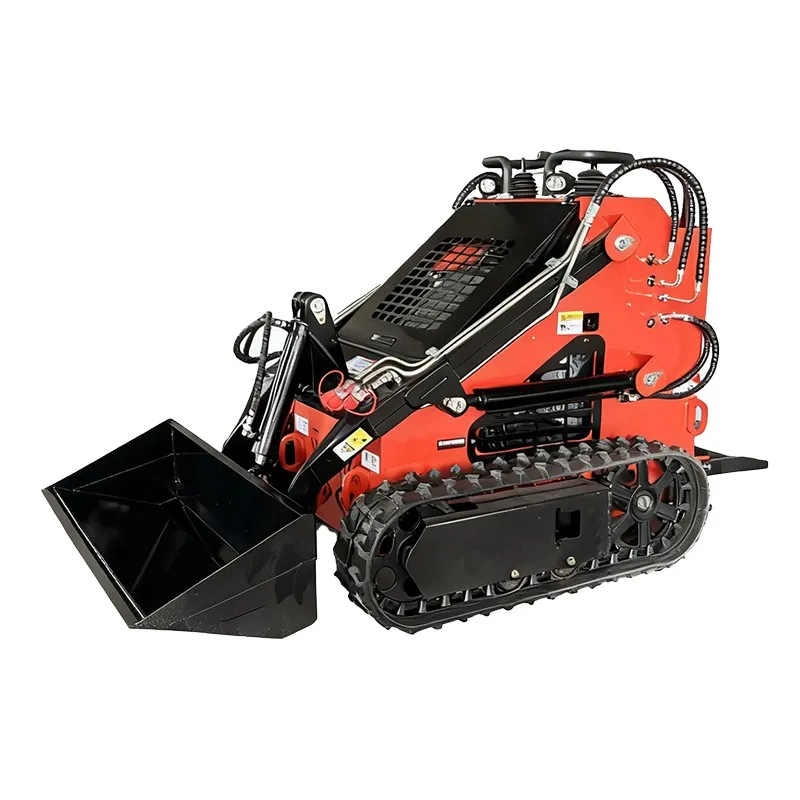
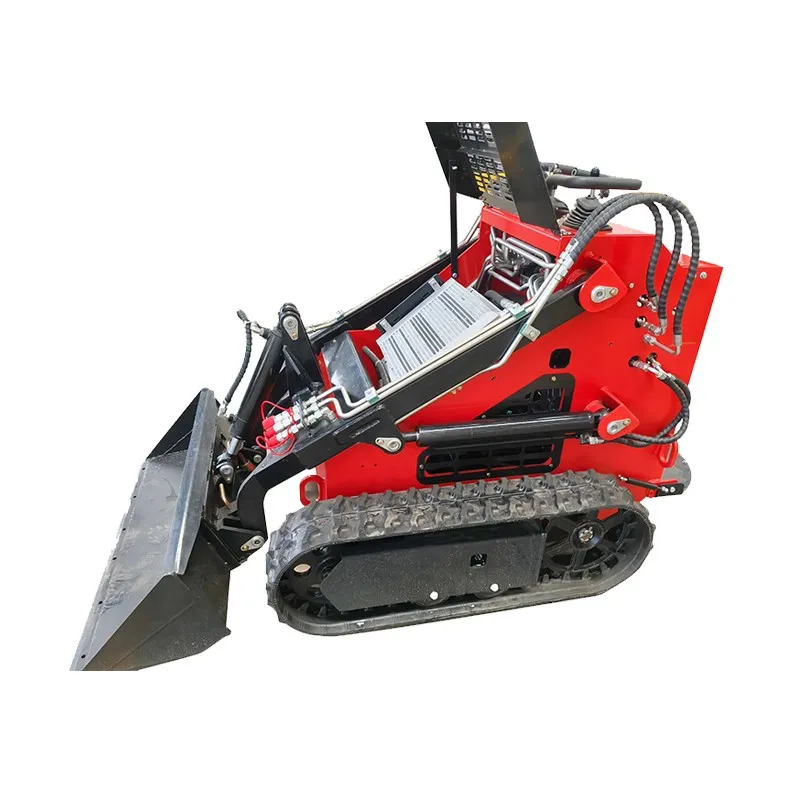
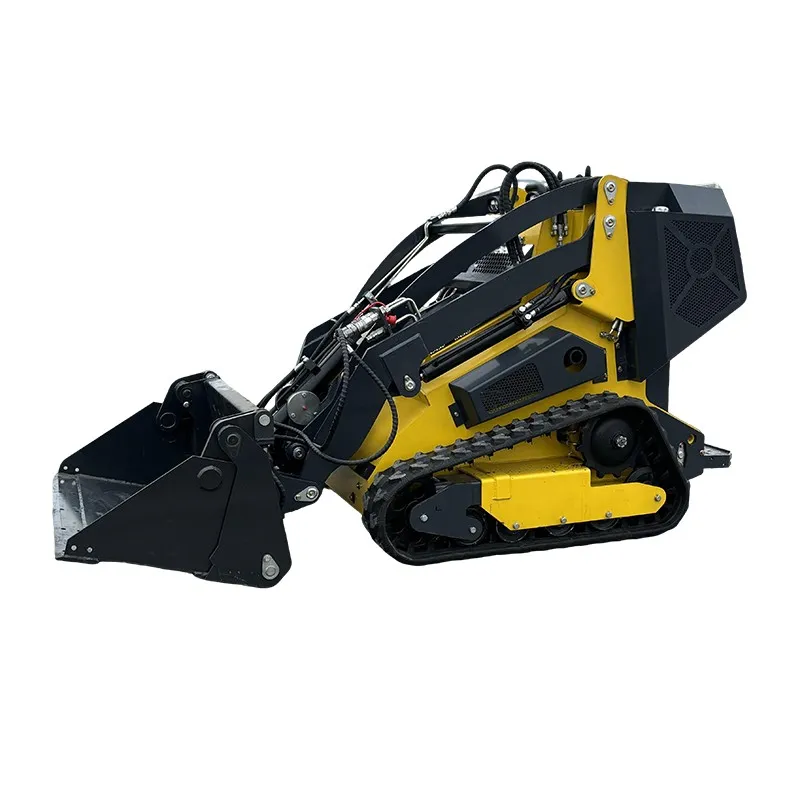
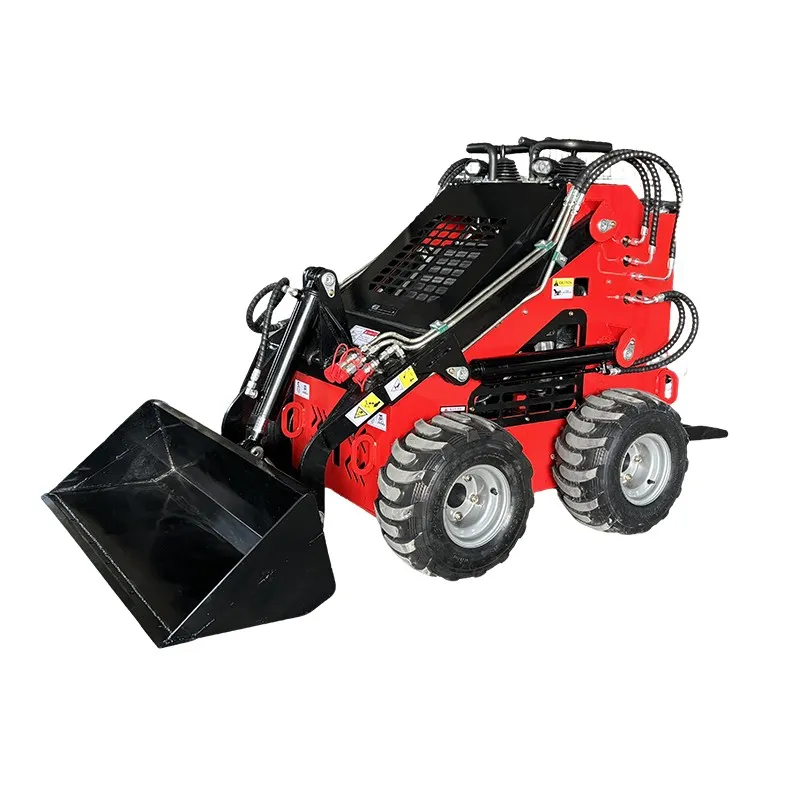
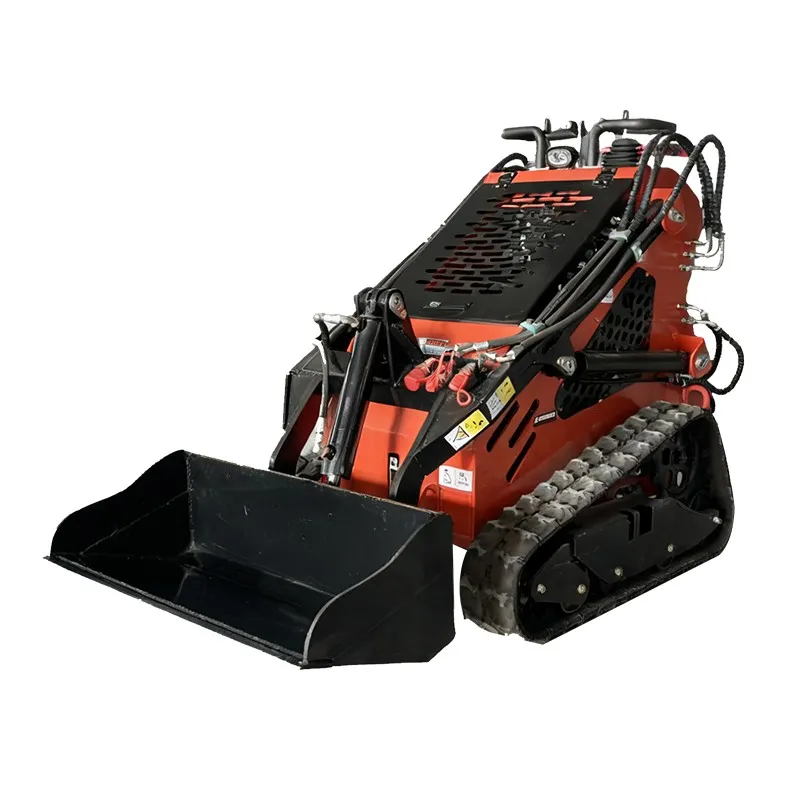
Hydraulic Skid Steer Loader
When most people hear 'hydraulic skid steer loader', they think of horsepower, lift capacity, and maybe tire type. That's the brochure talking. The real story starts when you're knee-deep in mud, the auxiliary hydraulics are acting up, and you need to get that pallet of blocks placed before the rain hits. It's not just a machine; it's a partner on site, and its value is measured in uptime and predictability, not just numbers on a page. Too many operators, and even some buyers, get hung up on the peak specs without considering how the system integrates—how the pump flow actually translates to smooth attachment control under load, or why a well-designed cooling circuit matters more on a 95-degree day than an extra 5 HP ever could.
The Heart of the Matter: Hydraulic System Nuances
Let's cut to the chase. The 'hydraulic' in hydraulic skid steer loader is everything. I've seen machines with impressive engine specs underperform because the hydraulic system was an afterthought. It's not just about pressure; it's about flow consistency and thermal management. A common pitfall is focusing solely on the main lift and tilt circuits while neglecting the auxiliary circuit performance. That's where you run attachments—from augers to trenchers to breakers. If the flow isn't stable, your attachment stutters. I remember a job using a cold planer attachment where the machine's aux flow would drop intermittently. The result? An uneven surface and a furious foreman. The issue traced back to a priority valve that couldn't handle the demand spikes, something no standard spec sheet would warn you about.
Then there's the pump itself. Gear pumps versus piston pumps. Gear pumps are tougher, simpler, cheaper. But on a machine you're running hard all day, every day, the efficiency loss generates heat. A lot of heat. Heat kills hydraulic fluid and seals. I lean towards piston pumps for sustained heavy work—they're more efficient, run cooler, and offer better variable flow control. Sure, they're a more sensitive and a pricier initial investment, but the reduction in downtime from overheating issues pays for it. I learned this the hard way on a remote site where the only machine available had a gear pump system. After three hours of continuous loader work in a confined space, it went into thermal derate. We lost half a day waiting for it to cool. The specs said it could handle the load. Reality, with its lack of airflow and ambient heat, disagreed.
Hose routing and component placement seem like minor details until you're the one doing repairs. Some manufacturers tuck the main hydraulic lines right behind the cab frame, making a simple hose replacement a three-hour ordeal of contortion. Others run them through the boom arms neatly. That's a design choice that speaks volumes about whether the engineers ever talked to the mechanics. It's these little things—accessibility, the quality of the quick-connect fittings, the placement of the oil cooler—that separate a machine that works from a machine you can work with.
Attachment Compatibility: It's Not Universal
The promise of the skid steer is its versatility through attachments. But the assumption of universal compatibility is a fast track to frustration. The hydraulic skid steer loader auxiliary circuit has two key specs: flow rate (GPM) and pressure (PSI). An attachment is designed for a specific range. Hook a high-flow attachment to a standard-flow machine, and it'll be sluggish, ineffective. Hook a standard-flow attachment to a high-flow machine without a flow regulator, and you risk blowing seals or damaging the attachment's motor. It's not plug-and-play; it's more like match-and-verify.
We once tried to run a new, high-demand forestry mulcher on an older machine that was technically within the minimum required flow range. It ran, but just barely. The machine was constantly at high RPM, fuel consumption skyrocketed, and the mulcher performance was poor, leaving behind uncut material. It wore out the machine's hydraulic system prematurely. The lesson? Always match the attachment to the machine's optimal flow, not its maximum or minimum. There's a sweet spot for efficiency and component life.
Then there's the physical interface—the coupler. The global standard is the Universal Skid Steer Quick Attach plate. But wear and tear on both the machine's coupler and the attachment's plate can lead to dangerous slop. I've seen attachments chatter or even partially detach during operation because the locking mechanism wasn't fully engaged due to worn pins or a deformed plate. A daily visual and functional check of the coupler is non-negotiable, yet it's often overlooked in the morning rush. A company that provides robust, easily replaceable wear parts for this critical interface gets my respect. It shows they understand the real-world cycle of use and maintenance.
Durability in the Details: Understructure and Serviceability
Anyone can make a machine look tough with thick steel plate. Real durability is in the design of the undercarriage, the boom pivot points, and the hydraulic cylinder mounting. These are the high-stress areas. A common failure point I've encountered is cracking around the boom arm mounts, especially on machines used for heavy digging or demolition. The issue often isn't material thickness, but weld quality and stress distribution. A box-section design with internal gussets will almost always outlast a simple C-channel design, even if the latter uses thicker metal.
Serviceability is the true test of a manufacturer's intent. Can you check the engine oil without a mirror and a flashlight? Are the daily checkpoints (coolant, hydraulic fluid) grouped and accessible? I've worked with machines where replacing a single fuel filter required removing a panel held by ten different bolts. Contrast that with designs where the main service panels are held by quarter-turn latches or a handful of easily accessible bolts. The latter design acknowledges that maintenance will happen and shouldn't be a punishment. It saves hours of labor over the machine's life.
This focus on practical, durable design is something I've noticed in manufacturers who have a long-term stake in the market. For instance, looking at the offerings from a firm like Shandong Pioneer Engineering Machinery Co., Ltd (https://www.sdpioneer.com), you can see this philosophy. Established in 2004 and now operating from a new facility in Tai'an, their two-decade trajectory from a local manufacturer to an exporter to markets like the US, Canada, and Germany suggests they've had to adapt their designs based on global feedback. A company that survives and expands in those competitive markets for 20 years isn't just moving metal; they're likely iterating on durability and serviceability based on what customers and distributors are telling them in the field. Their relocation and expansion in 2023 points to a response to demand, which in this industry is usually built on a reputation for reliable products that stand up to job site abuse.
The Operator's Cage: Ergonomics and Control
Inside the cab is where the machine either becomes an extension of the operator or a fight for control. Two main control patterns: Standard (ISO) and H-Pattern. Most new operators struggle with the coordination required for standard pattern (left hand controls boom lift/lower, right hand controls boom tilt left/right and auxiliary functions). It's not intuitive. H-pattern, often found on older machines or as an option, mimics a more traditional control setup. The choice here is critical for productivity and safety. You can't just throw a new operator into a cab with an unfamiliar pattern and expect smooth, safe operation.
Then there's the seat, the controls' feel, and visibility. A seat with poor suspension on a machine known for its jarring ride in a skid-steer motion will exhaust an operator by lunchtime. Joystick sensitivity is huge. Some are too twitchy, making fine grading work a nightmare. Others are too sluggish, requiring large throws for basic movements. The best systems are adjustable or have a naturally progressive feel. Cab pressurization to keep out dust is another luxury that becomes a necessity on dry, windy sites. It's not just comfort; it's about operator stamina and focus over a 10-hour shift.
I recall demo-ing a newer model that had fantastic power and lift, but the joystick controls for the auxiliary hydraulics were a single toggle switch on the stick. To get variable control of an attachment like a grapple, you had to feather this tiny switch with your thumb. It was awful for precise work. We passed on that model solely because of that control scheme. The manufacturer had prioritized a clean, minimalist joystick design over actual functional control. It was a clear case of the design department not spending enough time with operators in real-world conditions.
The Long Game: Total Cost of Ownership
Finally, the biggest industry misconception: that the purchase price is the primary cost. The real metric is Total Cost of Ownership (TCO) over, say, a 5-year period. This includes fuel, routine maintenance, unexpected repairs, downtime costs, and residual value. A cheaper hydraulic skid steer loader with a 15% lower purchase price can easily become more expensive if it's 20% thirstier for fuel, requires specialized parts with long lead times, and depreciates like a rock.
Fuel efficiency ties directly back to hydraulic system efficiency and engine management. A machine with a well-matched system that doesn't constantly run the engine at full throttle to achieve needed hydraulic power will save thousands in fuel over its life. Common rail diesel engines with advanced engine control modules (ECMs) are now common for this reason—they manage fuel injection for optimal power with minimal waste.
Residual value is the silent winner. A machine from a brand known for durability and supported by a strong dealer network for parts and service will hold its value remarkably well. When it's time to trade up or sell, that difference can be substantial. It's why established players and serious newcomers who build for the long haul focus on core reliability. It creates a virtuous cycle: reliable machines command higher resale value, which lowers the customer's net cost, which builds brand loyalty. It's a slower, harder path than competing on sticker price alone, but it's the one that builds a lasting business, much like the 20-year journey of a company from Jining to a global exporter. It suggests a focus on the long game, where the machine's performance and durability on a job site in Australia or Germany ultimately matter more than a flashy sales feature. That's the kind of calculation that matters when you're signing the purchase order, not for the next quarter, but for the next decade.
Related Products
Related Products