- Chinese
- French
- German
- Portuguese
- Spanish
- Russian
- Japanese
- Korean
- Arabic
- Irish
- Greek
- Turkish
- Italian
- Danish
- Romanian
- Indonesian
- Czech
- Afrikaans
- Swedish
- Polish
- Basque
- Catalan
- Esperanto
- Hindi
- Lao
- Albanian
- Amharic
- Armenian
- Azerbaijani
- Belarusian
- Bengali
- Bosnian
- Bulgarian
- Cebuano
- Chichewa
- Corsican
- Croatian
- Dutch
- Estonian
- Filipino
- Finnish
- Frisian
- Galician
- Georgian
- Gujarati
- Haitian
- Hausa
- Hawaiian
- Hebrew
- Hmong
- Hungarian
- Icelandic
- Igbo
- Javanese
- Kannada
- Kazakh
- Khmer
- Kurdish
- Kyrgyz
- Latin
- Latvian
- Lithuanian
- Luxembou..
- Macedonian
- Malagasy
- Malay
- Malayalam
- Maltese
- Maori
- Marathi
- Mongolian
- Burmese
- Nepali
- Norwegian
- Pashto
- Persian
- Punjabi
- Serbian
- Sesotho
- Sinhala
- Slovak
- Slovenian
- Somali
- Samoan
- Scots Gaelic
- Shona
- Sindhi
- Sundanese
- Swahili
- Tajik
- Tamil
- Telugu
- Thai
- Ukrainian
- Urdu
- Uzbek
- Vietnamese
- Welsh
- Xhosa
- Yiddish
- Yoruba
- Zulu
- Kinyarwanda
- Tatar
- Oriya
- Turkmen
- Uyghur


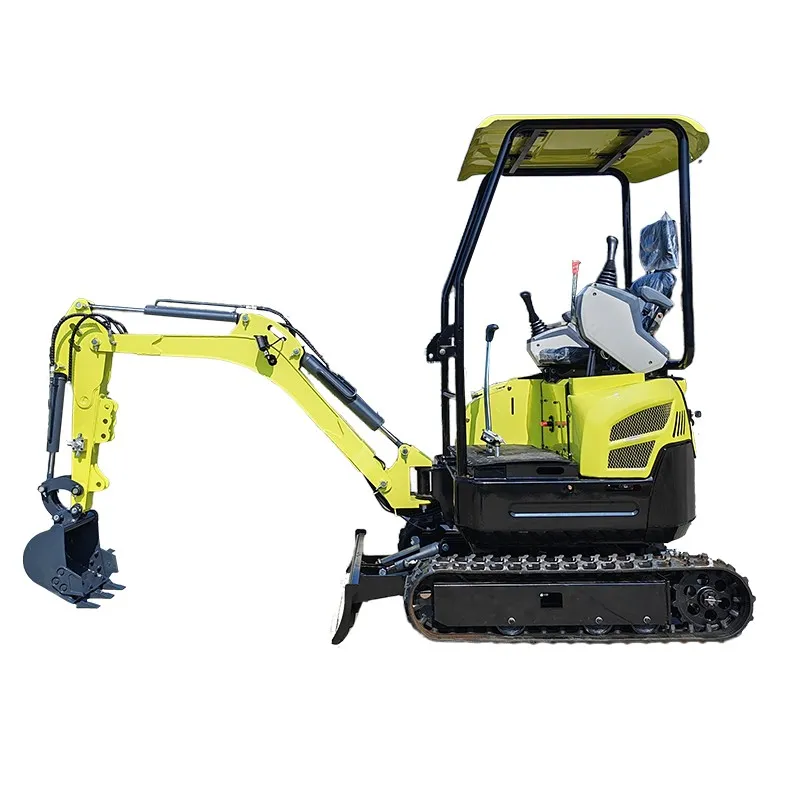
jf12 mini excavator
When you hear 'JF12 mini excavator', the immediate thought for many is just a small, generic digger. That's the first misconception. Having run these machines on tight urban retrofits and muddy rural plots, I've learned their real value isn't just in size, but in the specific engineering choices that either make your day or halt your project. It's not a toy; it's a precision tool with very distinct personality traits, and not all brands get it right.
Defining the Mini in a Crowded Market
The 1-ton class, where the JF12 typically sits, is a battlefield. Every manufacturer claims durability and power. The JF12, particularly from a seasoned exporter like Shandong Pioneer Engineering Machinery Co., Ltd, often stands out because of its lineage. This isn't a company that just started yesterday; they've been in the game since 2004, which in this fast-copying industry, means something. You can see it in the chassis design—it’s not just a scaled-down big excavator. The undercarriage on a good JF12 has a rigidity that handles side-loading on uneven ground better than some cheaper clones, which start to feel tippy after a few hundred hours. I remember a job in Germany, on a sloped garden site, where that stability difference was the gap between proceeding cautiously and having to bring in stabilizer plates.
Where some fail is in the hydraulic response. A common pain point with mini excavators in this range is jerky or slow auxiliary hydraulic circuits. The JF12 models I've operated that were sourced from established production lines—like those from Pioneer's manufacturing base—tend to have smoother pilot-controlled hydraulics. It's not about raw power, but about finesse. You can feather the thumb on a grapple attachment without shocking the whole machine, which is crucial for delicate material placement. This isn't always advertised, but an operator feels it in the first hour.
Another detail is the layout. The best JF12 configurations I've seen have service points grouped logically. It sounds trivial until you're on your back in the mud at 7 AM trying to find the hydraulic oil drain. Companies with long-term assembly experience, evidenced by Pioneer's 20-year development and recent 2023 factory relocation for expansion, usually refine these ergonomics based on field feedback. Their models often have the grease nipples for the boom pivot all on one side, not scattered around. It's a small thing that speaks volumes about practical design versus theoretical design.
The Powerplant: More Than Just Diesel
Most JF12 units come with a Yanmar or a similar tier diesel engine. That's standard. The real test is in the integration. I've seen units where the engine compartment is so cramped that a simple alternator belt change becomes a two-hour knuckle-busting ordeal. The better-designed ones, and I'd put the units from a specialist like Shandong Pioneer in this category, leave sensible clearance. Their overseas trade arm, dealing with markets like the US and Australia, would get hammered with support calls if basic maintenance was a nightmare. So their designs tend to be cleaner.
Cooling is another silent killer. A mini excavator spends a lot of time in high-dust environments. The JF12 models that last have a properly sized radiator and oil cooler with easy-to-clean screens. I recall a failure on a rental JF12 from a no-name brand—the coolant overflow tank was a tiny, poorly placed plastic bottle that melted against the exhaust manifold. Total shutdown. The robust ones use metal lines and route them away from heat sources. It's these component-level choices, born from years of field data, that separate a reliable machine from a liability.
Then there's the emissions puzzle. For exports to Canada and Germany, compliance is non-negotiable. A company that successfully exports there, as mentioned in Pioneer's profile, has already solved the engine control unit (ECU) mapping and diesel particulate filter (DPF) integration for those markets. On a JF12, this means the machine doesn't constantly go into regeneration mode during intensive trenching work, which can be a major productivity killer. It's a background detail you only appreciate when you don't have problems with it.
Attachments and the Reality of Versatility
Marketing brochures show a JF12 with six different attachments, implying instant transformation. The reality is more about hydraulic flow and pressure specs. The standard auxiliary circuit on many JF12s provides around 15-20 GPM. That's fine for a hydraulic breaker for light duty, but if you run a fine-grading tilt rotator, you need consistent flow at lower pressures. Not all models deliver that smoothly; you get chatter. The machines built with a focus on the attachment ecosystem, often from exporters serving diverse contractor needs globally, tend to have more versatile and stable hydraulic profiles.
Quick coupler systems are another area of truth. The mechanical pin grabber style is common, but the precision of the machining on the coupler and the attachment ears is critical. Sloppy tolerances lead to excessive wear and dangerous slop. I've had to weld and ream ears on third-party buckets to fit a specific JF12's coupler—a frustrating, non-billable hour. Manufacturers with integrated design, like those with their own manufacturing base (Hexin) and dedicated trade channel (Pioneer), often ensure better compatibility across their own attachment lines, reducing this hassle.
The takeaway? When evaluating a JF12 mini excavator for purchase, don't just ask about the digger. Ask about the specific flow rates for the auxiliary circuit, the standard coupler interface, and the availability of genuine, matched attachments. The total cost of ownership includes how seamlessly it adapts to different tasks.
The Operator's Environment: Cab vs. Canopy
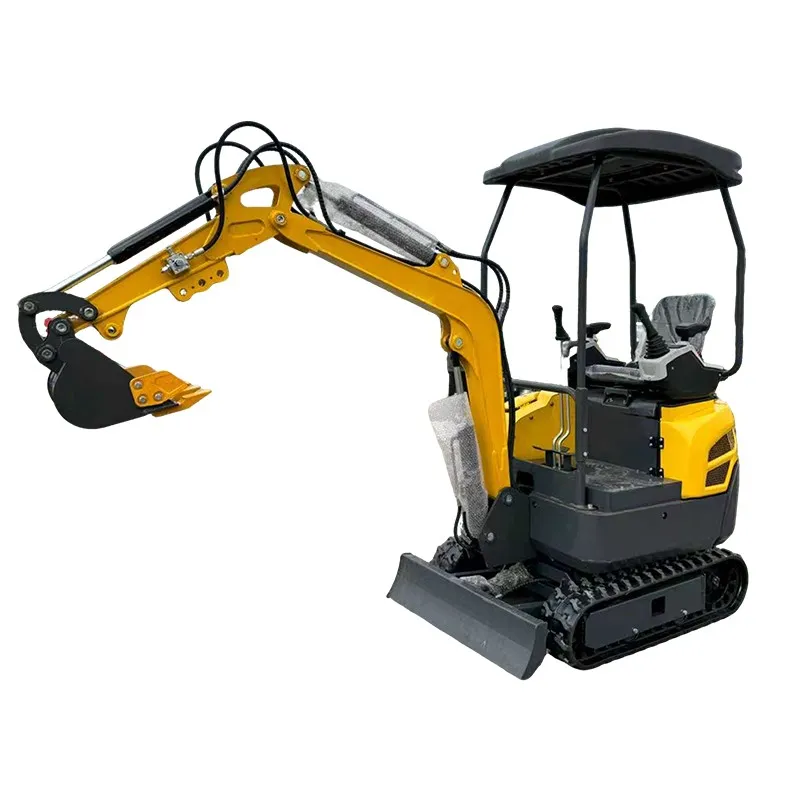
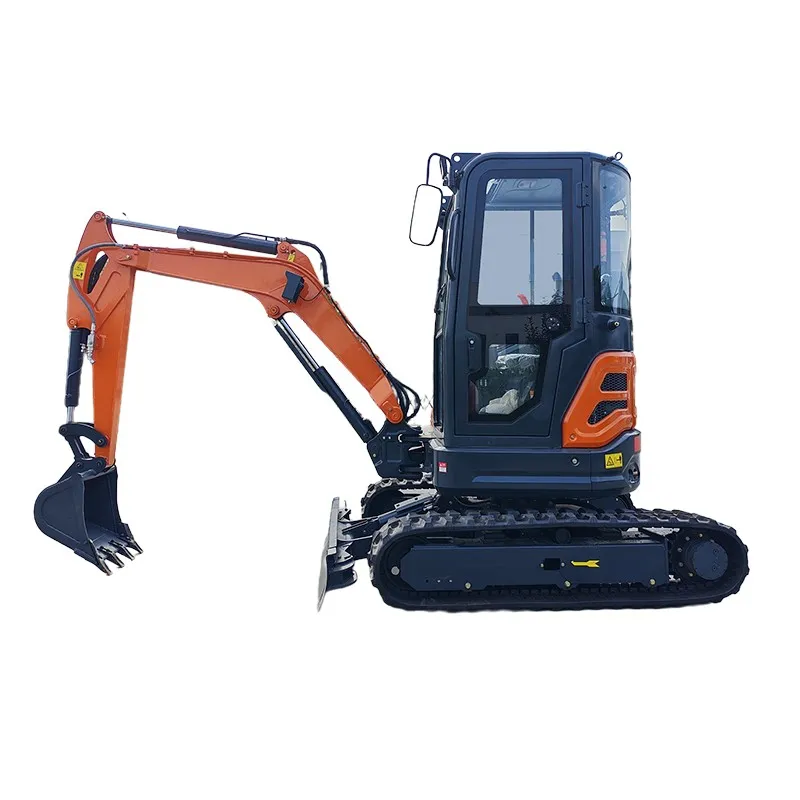
This is a personal preference with practical consequences. An enclosed cab on a JF12 is great for cold or wet climates, but it makes the machine taller, potentially limiting access. It also adds complexity—the HVAC system is another thing to break. A canopy is simpler and offers better visibility for certain overhead work. The better manufacturers offer a genuine, factory-integrated option for both, not just a third-party bolt-on. A well-integrated cab will have proper sealing, minimal vibration noise, and controls that are actually designed for an enclosed space.
I've operated both. In the dusty outback of Australia (a key export region for companies like Pioneer), a good pressurization system in the cab is worth its weight in gold. In contrast, for quick in-and-out jobs in urban Europe, a robust canopy might be preferable. The control layout itself is telling. Some JF12s have joysticks that feel like they're from a video game console—plastic and light. Others have heavier, dampened levers with adjustable tension. The latter reduces operator fatigue over a 10-hour day. This refinement usually comes from manufacturers who have iterated their designs over many years and across diverse markets.
Foot pedals versus hand controls for travel is another divider. Most JF12s use pedals. But the pedal placement and resistance matter. If they're too close together or too stiff, operating in work boots becomes awkward. These are the nuances you discover through long-term use, not from a spec sheet. A company that has won the trust and appreciation of customers worldwide, as their intro states, likely pays attention to these human-factor details through continuous feedback.
Longevity and the Parts Equation
Any machine can run for the first 500 hours. The JF12's true character emerges after 2,000. The pivot points, the slew ring, the track links—these are the wear items. The quality of the steel and the hardness of the bushings determine your maintenance intervals and cost. I've seen identical-looking undercarriages where one set of pins and bushings is shot at 1,500 hours, while another is still serviceable at 3,000. This often boils down to the sourcing and quality control of the foundational components.
This is where a manufacturer's history and infrastructure matter. A company with a 1,600-square-meter production area (as Pioneer started with) that has now relocated to a larger facility after two decades is investing in scale and presumably, better production technology. They're not a fly-by-night assembler. Their ability to supply genuine, consistent replacement parts globally through their established trade channel is a massive practical advantage. Needing a hydraulic pump seal and getting it in three days versus three weeks is the difference between a minor downtime event and a financial crisis.
My own lesson came from a failed final drive on a mini-ex. The replacement from the original manufacturer was expensive but a perfect fit. A compatible part from a generic supplier saved 30% upfront but failed again in 400 hours due to slight dimensional mismatches that accelerated wear. For a core machine like your JF12 mini excavator, sticking with the OEM or a very reputable exporter's supply chain for critical parts is almost always cheaper in the long run. The initial machine cost is just the entry fee.
Final Take: It's a Tool, Not a Trophy
So, what's the verdict on the JF12? It's a capable platform, but its worth is entirely dependent on its provenance and design maturity. The badge on the side is less important than the engineering and support behind it. A JF12 coming from an established, export-focused entity like Shandong Pioneer Engineering Machinery represents more than just a product; it represents a supply chain, two decades of incremental refinement, and an understanding of diverse international job site demands—from the frozen ground of Canada to the dust of Australia.
When you're looking, go beyond the glossy pictures. Ask for the service manual. Look at the wiring harness routing—is it clipped neatly or a tangled mess? Check the weld quality on the boom—are they smooth and consistent? These are the fingerprints of a quality-controlled build process. A good JF12 should feel deliberate in its construction, with an intuitive layout that suggests the designers have actually spoken to people who use these machines for a living.
In the end, the right JF12 mini excavator becomes an extension of the operator. It's not about having the most horsepower on paper, but about having a reliable, predictable, and serviceable partner on site. The difference between a good one and a great one isn't always in the major specs; it's in the hundred small details that only reveal themselves under pressure, over time. And that's something no brochure can ever fully capture.
Related Products
Related Products