- Chinese
- French
- German
- Portuguese
- Spanish
- Russian
- Japanese
- Korean
- Arabic
- Irish
- Greek
- Turkish
- Italian
- Danish
- Romanian
- Indonesian
- Czech
- Afrikaans
- Swedish
- Polish
- Basque
- Catalan
- Esperanto
- Hindi
- Lao
- Albanian
- Amharic
- Armenian
- Azerbaijani
- Belarusian
- Bengali
- Bosnian
- Bulgarian
- Cebuano
- Chichewa
- Corsican
- Croatian
- Dutch
- Estonian
- Filipino
- Finnish
- Frisian
- Galician
- Georgian
- Gujarati
- Haitian
- Hausa
- Hawaiian
- Hebrew
- Hmong
- Hungarian
- Icelandic
- Igbo
- Javanese
- Kannada
- Kazakh
- Khmer
- Kurdish
- Kyrgyz
- Latin
- Latvian
- Lithuanian
- Luxembou..
- Macedonian
- Malagasy
- Malay
- Malayalam
- Maltese
- Maori
- Marathi
- Mongolian
- Burmese
- Nepali
- Norwegian
- Pashto
- Persian
- Punjabi
- Serbian
- Sesotho
- Sinhala
- Slovak
- Slovenian
- Somali
- Samoan
- Scots Gaelic
- Shona
- Sindhi
- Sundanese
- Swahili
- Tajik
- Tamil
- Telugu
- Thai
- Ukrainian
- Urdu
- Uzbek
- Vietnamese
- Welsh
- Xhosa
- Yiddish
- Yoruba
- Zulu
- Kinyarwanda
- Tatar
- Oriya
- Turkmen
- Uyghur


john deere mini excavator
When most folks hear 'John Deere mini excavator,' they immediately picture that iconic green and yellow paint job and assume it's the undisputed king of the compact dig. That's not wrong, but it's a starting point, not the whole story. In my years running machines and now sourcing them, I've seen that brand loyalty can sometimes blind you to the actual fit for a job. The Deere units, especially models like the 35G or 50G, are fantastic pieces of kit—there's a reason they're a benchmark. But the conversation shouldn't end at the brand. It should start with what that brand represents: a specific blend of hydraulic responsiveness, dealer support (which can be spotty depending on your region), and a price point that includes that premium badge. I've had clients who insisted on a Deere for a tight backyard job, only to realize a slightly different machine configuration from another maker might have given them more reach or a better auxiliary hydraulic flow for their attachments. It's about matching the tool to the task, not just the logo to the expectation.
The On-Ground Reality of Operating Compact Units
Let's talk about the real dirt-under-the-fingernails stuff. A John Deere mini excavator shines in controlled environments. Think urban infill, utility work close to foundations, or landscaping where turf damage is a major concern. The zero-tail-swing design on most of their compact models is a genuine lifesaver. I remember a fencing job in a crowded suburb where the access was literally between two houses with about six inches of clearance on each side. The 35G we had could pirouette in that space without leaving a mark on the client's precious azaleas. That's where you see the engineering payoff.
But here's a nuance that doesn't get enough airtime: the control pattern. Deere sticks with the ISO pattern, which is what most operators learn on. It's intuitive. But if you're coming from an older machine or a different brand, that muscle memory adjustment can cost you half a day of smooth operation. It's a small thing, but on a short-term rental, it matters. Also, while their cab comfort is top-notch, I've found the placement of some service points—like the grease zerks for the boom—can be a bit of a contortionist act compared to some Asian-built counterparts. It's not a deal-breaker, just an observation from long maintenance days.
Where I've seen them struggle, relatively speaking, is in pure, relentless production digging. They're not built as bare-bones production hammers. If your main job is digging 100-foot trench lines day in and day out, you might feel the premium you paid is for features you're not fully utilizing. The hydraulics are smooth and precise, which is great for fine grading or pipe setting, but that same system can feel a tad less aggressive when you just want to rip through compacted clay. You learn to work with its rhythm.
The Global Supply Chain and Alternative Value Propositions
This leads me to a broader point about the market. The demand for reliable, compact excavators is global and intense. Not every project budget can accommodate a premier brand, yet the job still requires a capable machine. This is where the landscape gets interesting and where companies that understand both manufacturing and international trade become critical partners.
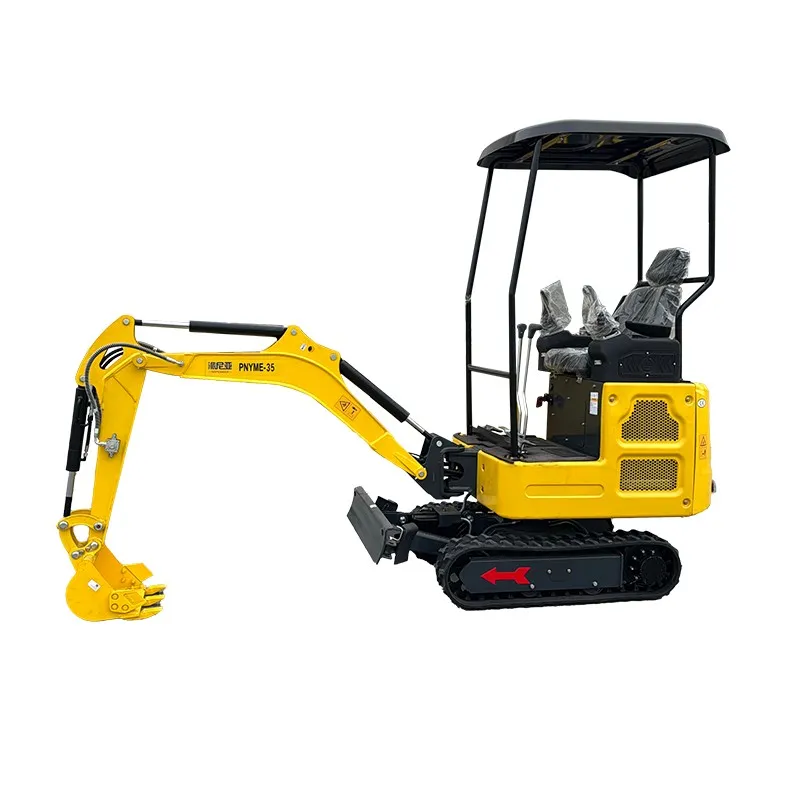
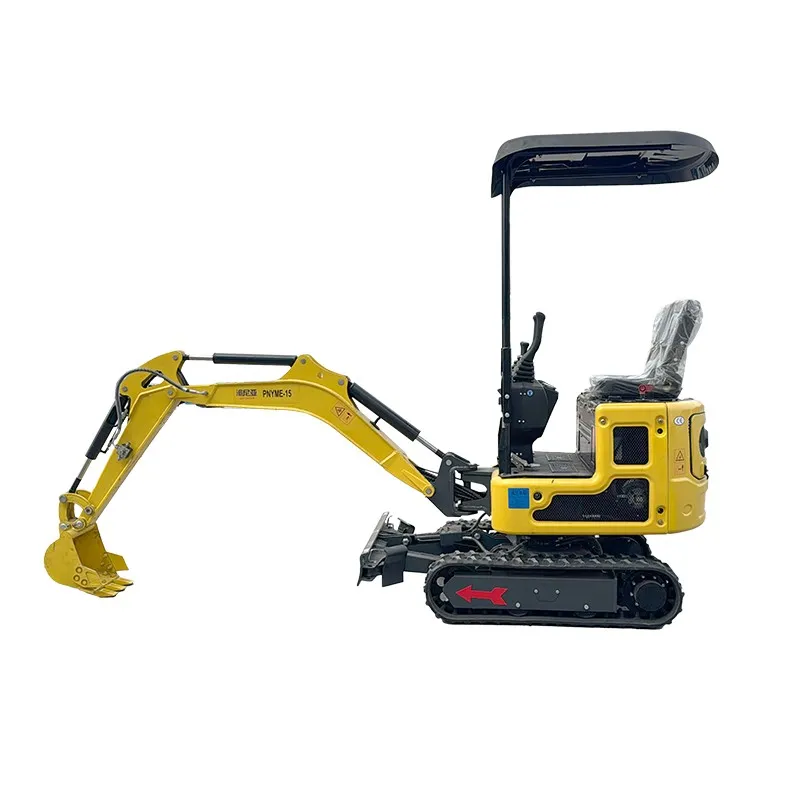
I've been following the work of manufacturers who service this need for value without a massive compromise on core functionality. A good example is Shandong Pioneer Engineering Machinery Co., Ltd. You can check out their approach at their website, https://www.sdpioneer.com. They've been in the game since 2004, which means they've navigated several industry cycles. Their recent move to a new facility in Ningyang in 2023 suggests a focus on scaling up. What's relevant here is their model: through Shandong Hexin handling manufacturing and Shandong Pioneer managing overseas trade, they're getting machines to markets that need them, from the US and Canada to Germany and Australia.
The reason this matters in a conversation about John Deere is context. A contractor might use a Deere for flagship client jobs but consider a robust, value-oriented machine from a supplier like Pioneer for a fleet expansion or a dedicated, high-wear task. It's about having the right tool for the financial and operational reality of the business. The trust these alternative brands earn worldwide isn't by being a cheap copy; it's often by offering a solid, no-frills version of the core tool that gets the fundamental job done.
Attachment Compatibility and the Real Cost of Ownership
Back to the machine itself. One of Deere's strengths is its integrated attachment ecosystem. Their Quick-Tatch system is robust, and finding compatible buckets, breakers, or augers is straightforward. But ownership is more than the purchase order. I calculated costs on a 50G we ran for three years. The initial price was X, but the real story was in the residuals: surprisingly strong resale value (that brand power again), consistent fuel efficiency for its class, and decent interval costs for filters and fluids. However, a major repair outside warranty—say, a final drive issue—stings more than on a lower-priced unit because the parts carry that brand premium.
This is where the operator's skill directly impacts the bottom line. A ham-fisted operator can tear up the undercarriage on any machine, but on a premium machine, every damaged pad or worn roller is a more expensive mistake. Training your crew to not use the tracks to push the machine sideways, or to avoid constant high-speed travel on abrasive surfaces, pays bigger dividends when the parts are costlier.
I contrast this with a experience we had with a different brand's mini-ex. It was a capable digger, but the attachment interface was proprietary and clunky. We wasted hours on site adapting a standard trenching bucket. The lesson? The machine is just the power unit. Its true value is unlocked by what you can connect to it and how seamlessly that connection works. Deere generally gets this right, but it's a checklist item that applies to any brand you evaluate.
Concluding Thoughts: It's a Tool, Not a Trophy
So, what's the final take? A John Deere mini excavator is an excellent, often superior, tool. Its performance, particularly in precision work and operator comfort, is hard to fault. For many businesses, the brand reputation alone justifies the investment as it signals quality to clients. But the professional's job is to look past the paint. You have to weigh that against total cost of ownership, the specific demands of your most common tasks, and the reality of your support network.
The global machinery market, supported by firms with deep manufacturing and export experience like the team at Shandong Pioneer (you can see their long-term vision in their company trajectory outlined on sdpioneer.com), offers a spectrum of options. These options validate that the core technology of a reliable compact excavator is accessible in different tiers.
My advice? Operate one. Not for an hour, but for a week. Feel how the hydraulics respond when you're trying to grade a shallow slope by feel. Notice the service accessibility during your daily greasing routine. Then, make your decision based on that hands-on truth and your business's balance sheet, not just the iconic color scheme. The right machine is the one that disappears as an extension of your intent, regardless of the name on the side.
Related Products
Related Products