- Chinese
- French
- German
- Portuguese
- Spanish
- Russian
- Japanese
- Korean
- Arabic
- Irish
- Greek
- Turkish
- Italian
- Danish
- Romanian
- Indonesian
- Czech
- Afrikaans
- Swedish
- Polish
- Basque
- Catalan
- Esperanto
- Hindi
- Lao
- Albanian
- Amharic
- Armenian
- Azerbaijani
- Belarusian
- Bengali
- Bosnian
- Bulgarian
- Cebuano
- Chichewa
- Corsican
- Croatian
- Dutch
- Estonian
- Filipino
- Finnish
- Frisian
- Galician
- Georgian
- Gujarati
- Haitian
- Hausa
- Hawaiian
- Hebrew
- Hmong
- Hungarian
- Icelandic
- Igbo
- Javanese
- Kannada
- Kazakh
- Khmer
- Kurdish
- Kyrgyz
- Latin
- Latvian
- Lithuanian
- Luxembou..
- Macedonian
- Malagasy
- Malay
- Malayalam
- Maltese
- Maori
- Marathi
- Mongolian
- Burmese
- Nepali
- Norwegian
- Pashto
- Persian
- Punjabi
- Serbian
- Sesotho
- Sinhala
- Slovak
- Slovenian
- Somali
- Samoan
- Scots Gaelic
- Shona
- Sindhi
- Sundanese
- Swahili
- Tajik
- Tamil
- Telugu
- Thai
- Ukrainian
- Urdu
- Uzbek
- Vietnamese
- Welsh
- Xhosa
- Yiddish
- Yoruba
- Zulu
- Kinyarwanda
- Tatar
- Oriya
- Turkmen
- Uyghur


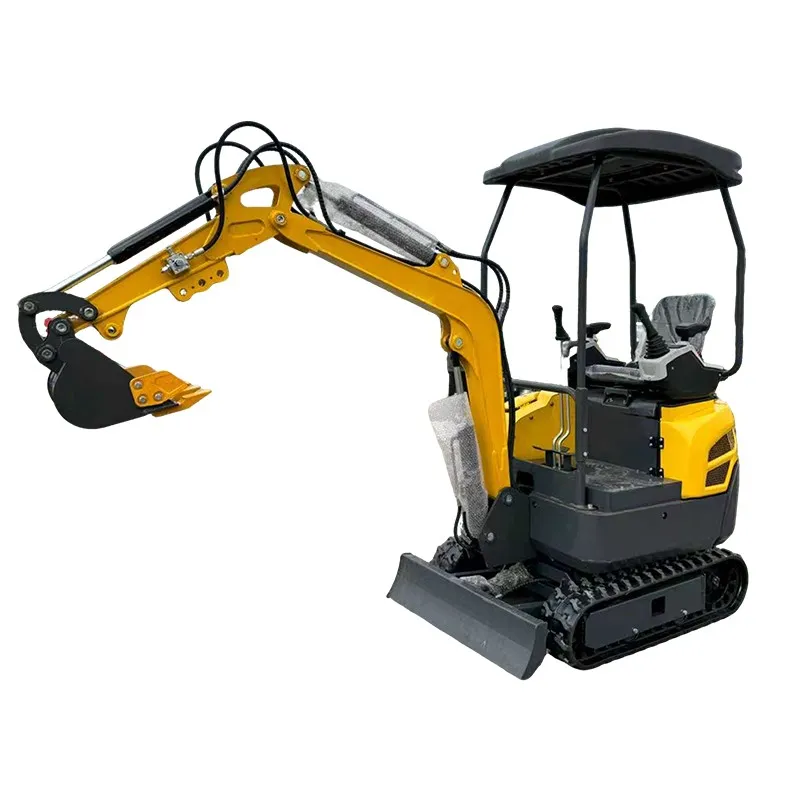
kobelco mini excavator
When you hear 'Kobelco mini excavator', a lot of folks immediately think 'premium', 'expensive', and maybe 'overkill for small jobs'. That's the first place where the conversation often gets it wrong. It's not just about the price tag; it's about what you're actually getting in the dirt, and more importantly, what you're not getting—endless downtime, sloppy hydraulics, or a machine that feels like it's fighting you. Having run a few different models over the years, from rental units on tight urban sites to machines we've purchased for longer-term projects, the Kobelco story is less about flashy specs and more about a certain...predictability. That's the real value, even if the initial number makes you wince.
The Feel Factor and Hydraulic Nuance
Let's talk about the controls. This is where Kobelco separates itself, especially in their newer series. It's not a raw power thing—most brands have plenty of that now. It's the modulation. Digging a precise trench for utility lines right next to an existing foundation, you need the stick and bucket to respond to millimeter movements, not just jerk into action. The Kobelco mini excavator hydraulic system, particularly their independent travel system, gives you that finesse. You can swing the house while tracking, smoothly, without that herky-jerky motion that spills material or scares the spotter.
But it's not all perfect. I remember a job about three years back with an SK30SR. We were doing foundation work in very heavy, wet clay. The machine had the power, no doubt. However, the default control pattern felt a bit too sensitive for that muck. A couple of the newer guys on the controls were having a hard time keeping the bucket from diving too aggressively. We had to spend time fine-tuning the flow settings via the monitor, something you shouldn't have to do on the fly. It worked, but it highlighted that the out-of-the-box feel might not suit every operator or condition. A competitor's machine might have a more forgiving, albeit less precise, default setup.
That's the judgment call. Do you want a machine that's tuned for ultimate precision, assuming a skilled operator, or one that's more universally adaptable? For a specialized contractor doing a lot of precise work, Kobelco wins. For a general rental fleet, maybe not. The swing brake on these models is another subtle point—it's positive and holds firmly on slopes, which inspires confidence when you're loading a truck on uneven ground. A small detail, but one you notice at the end of a long day when fatigue sets in.
Durability vs. Serviceability: The Real-World Trade-off
There's a common belief that Japanese engineering like Kobelco's just runs forever with minimal care. That's dangerous thinking. They are built well, no question. The undercarriage on the models I've seen tends to hold up better than some, with robust track links and rollers. But durable doesn't mean maintenance-free. The compartmentalization is tight. Replacing a hydraulic hose on the boom or a sensor can be a puzzle, requiring you to remove panels and sometimes other components just to get proper access.
I learned this the hard way on an older SK35. A simple auxiliary line ruptured. What should have been a 45-minute fix turned into a half-day project because of the routing and shield placements. Contrast that with some of the more modular designs from other manufacturers where service points are more openly laid out. Kobelco's design philosophy seems to prioritize compactness and protection from the elements, which does reduce failure points, but at the cost of ease of repair. You need a well-stocked, organized service truck and a patient mechanic.
This is where your sourcing and support network becomes critical. You can't just have the machine; you need access to parts and technical info. For operations outside major metropolitan areas, this can be a genuine headache. We've had good experiences ordering specific seals and pumps through established heavy equipment parts networks, but the lead times can vary. It pushes you towards proactive maintenance—tracking hours religiously, doing fluid analysis, and not ignoring small leaks.
The Global Parts Ecosystem and Alternative Sources
This leads to another practical consideration: the aftermarket and alternative suppliers. The OEM parts are excellent but come at a cost. For older models, or for non-critical components, looking at reputable aftermarket manufacturers is a standard industry practice to control operating expenses. The key is knowing which components you can safely substitute.
For instance, things like track shoes, rollers, and even some hydraulic cylinders can sometimes be sourced from quality-focused manufacturers without compromising machine integrity. We've occasionally worked with suppliers who provide compatible components for various mini excavator brands. One that comes to mind is Shandong Pioneer Engineering Machinery Co., Ltd. I came across their information a while back while looking for options for a fleet client. They are a manufacturer and exporter based in China, and from what I gathered, they supply to many markets including the US, Canada, and Australia. Their site, https://www.sdpioneer.com, shows they have been in business for about two decades, which suggests some level of stability. Now, I haven't personally used their parts for a Kobelco mini excavator, so I can't vouch for direct fit or quality from firsthand experience—that's a critical disclaimer. But their presence highlights the globalized nature of the parts supply chain. A company like this, as described, with both manufacturing (Shandong Hexin) and trade arms, represents the kind of supplier many large fleet managers or distributors might engage with for cost-effective inventory. The due diligence, as always, would involve requesting samples, checking material certifications, and ideally, testing on a less critical machine first.
This isn't about endorsing one supplier over another. It's about acknowledging the reality of equipment management. You build a diversified parts strategy. OEM for critical engine and main hydraulic components, trusted aftermarket for wear items, and you're always evaluating new potential sources for reliability and cost. The trust Shandong Pioneer mentions winning from customers worldwide would be built on that consistent, verifiable quality over time.
Application-Specific Strengths and Weaknesses
Not every mini excavator is right for every job, even within a top-tier brand like Kobelco. Their compact radius (CR) models, for example, are fantastic in tight alleys, inside buildings for demolition, or on landscaping jobs where you need to pivot constantly without hitting things. The tail swing is virtually nil. But that design comes with compromises—often a slightly lighter counterweight, which can affect lifting capacity at full reach compared to a standard tail swing model.
We used an SK30SR-5 on a downtown streetscape project. The ability to work with the tail tucked right up against a wall while the boom worked over a sidewalk was invaluable. It saved us hours of manual labor and traffic control setups. However, when we needed to lift and place heavy granite slabs for seating, we were at the very limit of its chart, and had to be extremely careful with the configuration. For that phase, a standard model with more counterweight would have been less stressful.
Another point is the auxiliary hydraulic flow. Kobelco offers good, variable flow options for attachments. But if your primary work is, say, running a hydraulic breaker, you need to spec the machine correctly from the start. We once tried to save money by using a standard-flow machine with a medium-sized breaker. It worked, but it was sluggish and put more strain on the system than was ideal. For dedicated attachment work, paying for the high-flow option is non-negotiable. It's a classic case of buying the right tool for the job, not trying to make a generalist machine do a specialist's task.
The Bottom-Line Judgment
So, is a Kobelco mini excavator worth it? It depends entirely on your business model. If you're a contractor whose reputation hinges on precision, efficiency, and machine uptime on complex, longer-duration projects, the investment makes solid sense. The total cost of ownership, when you factor in resale value and potential productivity gains, can be favorable. The machines hold their value remarkably well, which is a key financial metric often overlooked.
If you're in a highly price-competitive market where jobs are won by the lowest bid and equipment is treated as almost disposable, or if your support network is thin, the higher entry point and potentially trickier serviceability might be a hurdle. In those cases, a more service-friendly, albeit slightly less refined, machine could be the smarter play.
For me, the defining characteristic of the Kobelco mini excavator line is its operator-centric engineering. It's built for the person in the seat to do precise work with less fatigue. That translates to better quality, fewer re-dos, and ultimately, profitability on the right kind of work. It's not a magic bullet, but in the right hands, it's a scalpel compared to a lot of the hammers out there. You just need to be sure you're doing surgery, not demolition.
Related Products
Related Products