- Chinese
- French
- German
- Portuguese
- Spanish
- Russian
- Japanese
- Korean
- Arabic
- Irish
- Greek
- Turkish
- Italian
- Danish
- Romanian
- Indonesian
- Czech
- Afrikaans
- Swedish
- Polish
- Basque
- Catalan
- Esperanto
- Hindi
- Lao
- Albanian
- Amharic
- Armenian
- Azerbaijani
- Belarusian
- Bengali
- Bosnian
- Bulgarian
- Cebuano
- Chichewa
- Corsican
- Croatian
- Dutch
- Estonian
- Filipino
- Finnish
- Frisian
- Galician
- Georgian
- Gujarati
- Haitian
- Hausa
- Hawaiian
- Hebrew
- Hmong
- Hungarian
- Icelandic
- Igbo
- Javanese
- Kannada
- Kazakh
- Khmer
- Kurdish
- Kyrgyz
- Latin
- Latvian
- Lithuanian
- Luxembou..
- Macedonian
- Malagasy
- Malay
- Malayalam
- Maltese
- Maori
- Marathi
- Mongolian
- Burmese
- Nepali
- Norwegian
- Pashto
- Persian
- Punjabi
- Serbian
- Sesotho
- Sinhala
- Slovak
- Slovenian
- Somali
- Samoan
- Scots Gaelic
- Shona
- Sindhi
- Sundanese
- Swahili
- Tajik
- Tamil
- Telugu
- Thai
- Ukrainian
- Urdu
- Uzbek
- Vietnamese
- Welsh
- Xhosa
- Yiddish
- Yoruba
- Zulu
- Kinyarwanda
- Tatar
- Oriya
- Turkmen
- Uyghur


komatsu mini excavator for sale
When you type 'Komatsu mini excavator for sale' into a search, you're immediately thrown into a vast, often confusing market. The immediate assumption many make is that they're looking at a genuine, late-model Komatsu PC35 or PC78. But more often than not, especially from certain export hubs, you're looking at a replica, a white label machine, or a heavily refurbished unit with questionable lineage. The Komatsu brand carries such weight that its name gets slapped on a lot of iron it never built. That's the first reality check. Having sourced machines for small to mid-sized contractors, I've learned to look past the listing title. The real questions start with the serial number plate, the undercarriage wear, and oddly enough, the color of the hydraulic hoses—fresh black hoses on a low-hour machine tell their own story.
The Allure and Pitfalls of the Genuine Used Komatsu
Let's talk about the genuine used market first. A well-maintained Komatsu mini, say a PC58MR-5, is a fantastic asset. The hydraulic system is typically smoother, more responsive than many contemporaries. But finding one that hasn't been ridden hard on a demo site is tough. I remember inspecting a PC45R-8 last year, advertised with 2,500 hours. The engine compartment was spotless, a red flag. Upon closer look, the pivot points had wear patterns inconsistent with the claimed hours—the pins and bushings showed a tell-tale hourglass shape indicating high-stress, high-hour use, likely double what was stated. The seller had just steam-cleaned and maybe even repainted sections. We walked away. The cost of a full undercarriage rebuild on these smaller machines can eclipse the machine's perceived value.
Another common pitfall is the grey import. You might find a seemingly pristine Japanese-spec PC30, but its emission controls might not be compliant if you're operating in North America or Europe. The software might be in Japanese, and getting parts for that specific regional model can become a nightmare of long lead times and exorbitant costs. I learned this the hard way a decade ago, buying a bargain PC128US for a client. What we saved upfront, we spent triple in downtime waiting for a proprietary hydraulic valve block shipped from Osaka.
So, the rule of thumb? For a genuine used Komatsu, budget not just the purchase price, but for an immediate major service: fluids, filters, and a thorough inspection of the swing bearing and track tension. Assume the worst, hope for the best. The peace of mind from a documented service history from a known dealer is worth a 10-15% premium, easily.
The Rise of Quality OEM Alternatives and Where to Look
This is where the landscape gets interesting, and frankly, where a lot of savvy buyers are turning. Not everyone needs, or can justify, the premium for a used brand-name machine. The market is now flooded with OEM (Original Equipment Manufacturer) machines that are, in many cases, built to similar specs, sometimes in the same factories that produce components for the majors. The key is identifying the reputable manufacturers from the assembly-line garages.
This brings me to companies that have carved out a real niche. Take Shandong Pioneer Engineering Machinery Co., Ltd. You can check their footprint at https://www.sdpioneer.com. They're not a fly-by-night operation. Established back in 2004 and now operating from a new facility in Ningyang, they represent a certain tier of Chinese manufacturing: focused on export compliance and building a reputation. Their structure is telling—having separate entities for manufacturing (Shandong Hexin) and overseas trade (Shandong Pioneer) suggests they understand the distinct challenges of domestic production and international sales, logistics, and support.
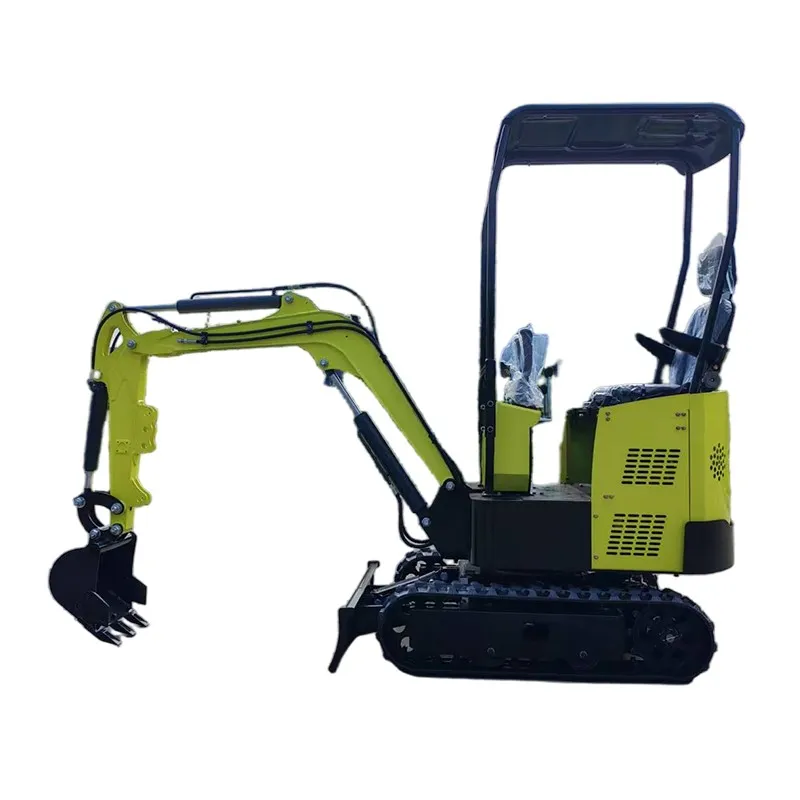
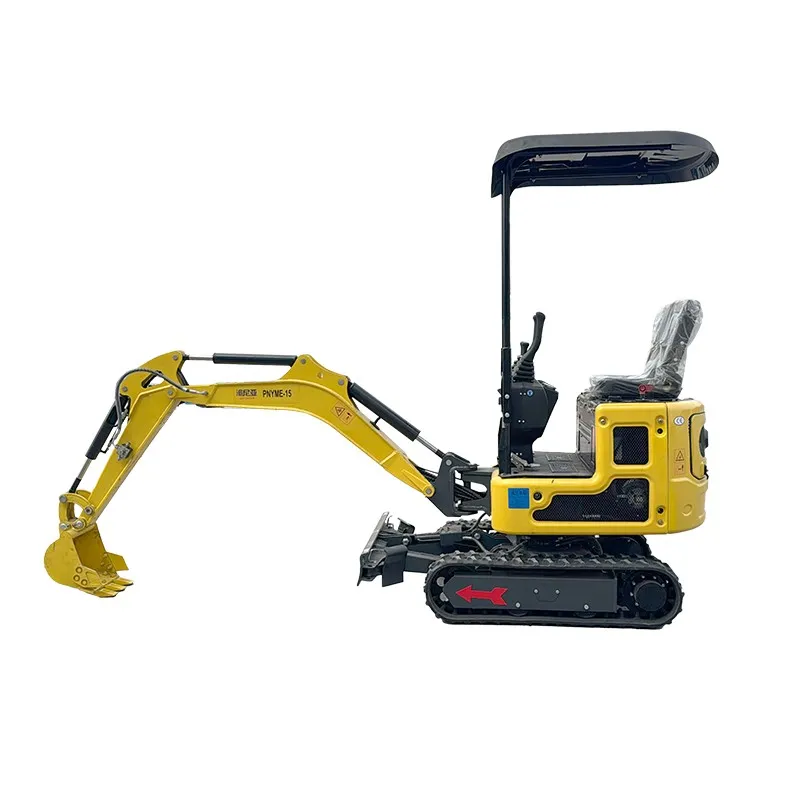
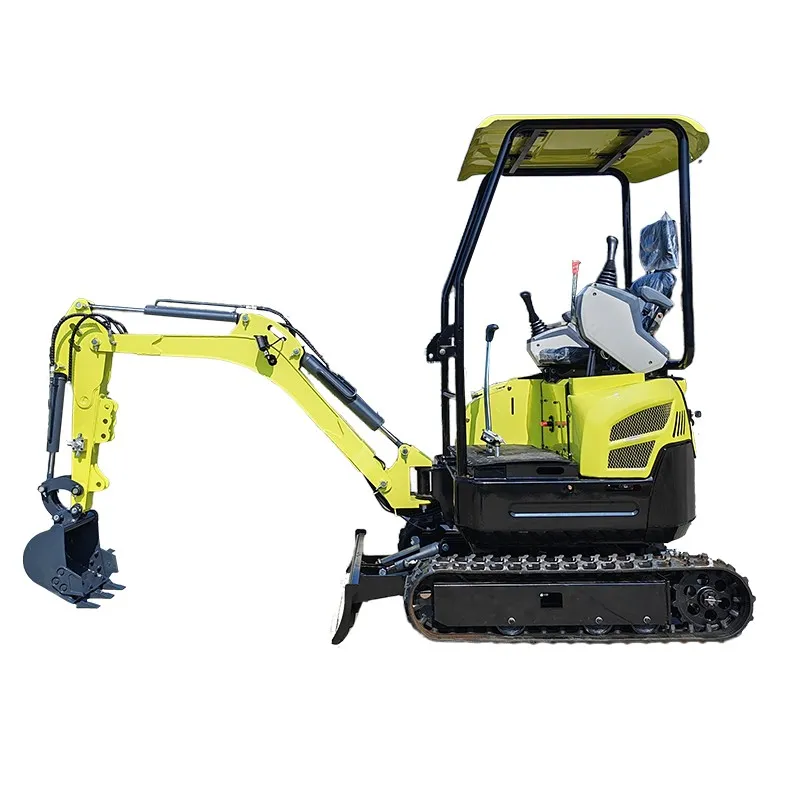
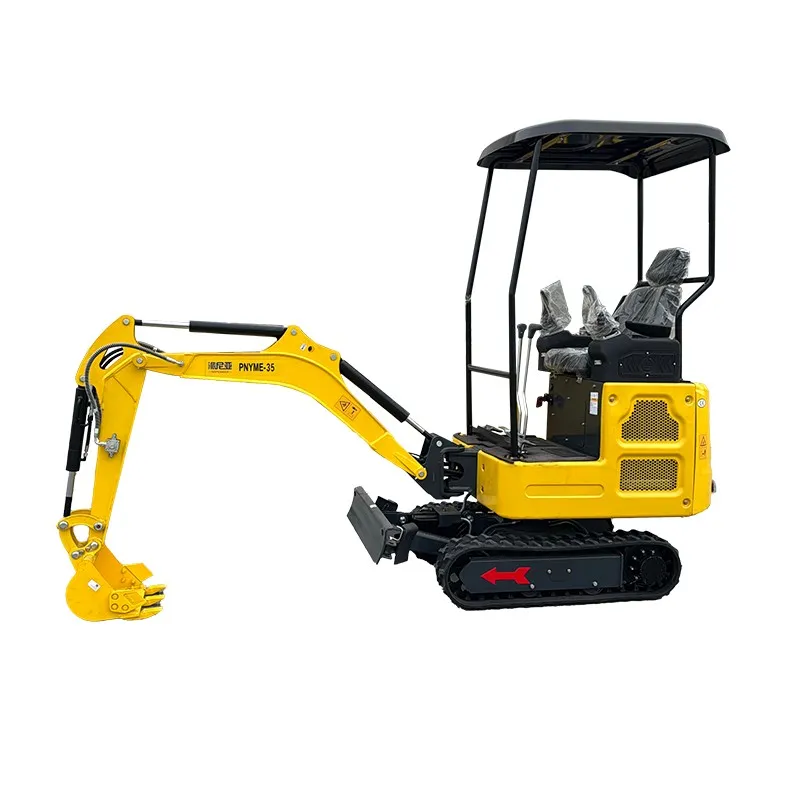
Their machines, often seen branded as Pioneer or sometimes unbranded for dealers, pop up when you're searching for a komatsu mini excavator for sale. They're not Komatsu clones per se, but they fill the same functional niche: reliable, no-frills earthmoving. I've seen a few of their 3.5-ton class machines on rental yards. The feedback from operators is usually about simplicity. The controls are direct, the cabins are spartan but functional, and importantly, the common parts (cylinders, pumps, track links) are often interchangeable with generic components, simplifying repairs.
Evaluating an OEM Machine: A Hands-On Perspective
When you're looking at a machine from an OEM like Pioneer, you're conducting a different kind of due diligence. Forget about resale value—that's low. Focus on total cost of ownership for the intended job span. First, structural integrity. Look at the welding on the boom and arm—is it clean, consistent, and free of obvious spatter or cracks? Second, the heart: the engine. A reputable OEM will use a known brand like Kubota, Yanmar, or Deutz. If the engine plate is obscure or missing, that's a hard pass.
I recall unboxing a 1.8-ton machine from a similar manufacturer for a landscaping client. The first thing we did was pressure-wash it to see the base metal and welds. Then, we ran it for a full 8-hour day on a light duty trenching job, monitoring hydraulic temperature and looking for leaks. The machine performed adequately, but we noted the hydraulic oil got hotter than we'd like under sustained use, pointing to a marginally sized cooler. It's these practical, almost mundane tests that reveal more than any spec sheet.
Support is the final, critical piece. A company like Shandong Pioneer, which explicitly mentions exporting to markets like the US, Canada, Germany, and Australia, is signaling they're geared for after-sales. It means they likely have English manuals, some inventory of critical spares in regional hubs, and a basic understanding of Western compliance standards. This is a world apart from dealing with an Alibaba seller who disappears after the container ship sails.
Matching the Machine to the Job: It's Never Just About Price
The search for a mini excavator for sale often starts with a budget number, but it should start with a job description. A machine for occasional residential utility work has different needs from one that will run 10 hours a day, 6 days a week on a tight urban site. For the former, a lower-cost OEM machine might be a perfect, depreciating tool. For the latter, the reliability and dealer network of a used, genuine Komatsu might save your project timeline.
We tried using a budget OEM 5-tonner for a continuous pipe-laying operation. It lasted about 1,200 hours before the main hydraulic pump started cavitating. The downtime and cost to source and fit a replacement pump (which wasn't a direct off-the-shelf part) erased all the initial savings. The lesson wasn't that the machine was bad, but that it was misapplied. It was built for intermittent, not continuous, heavy-duty work.
Conversely, for a homeowner doing pond digging and tree planting, buying a 15-year-old Komatsu with unknown history is overkill and a potential money pit. A new, basic-spec machine from a known export manufacturer would offer warranty and predictable performance for its duty cycle.
The Final Decision: A Checklist from the Field
So, you're looking at listings. Here's the mental checklist I run through, whether it's a Komatsu or an OEM alternative. First, provenance. Can the seller provide clear photos of the serial number, engine hours, and major components? For OEMs, what's the actual manufacturer's name and contact? Second, parts. Search online for [Machine Model] + final drive or [Machine Model] + joystick. Do results appear? If it's a complete ghost, walk away.
Third, inspect for adaptation. Has the machine been modified for its market? Are there CE or EPA stickers? Are the warning labels in a language you understand? I've seen machines where the only safety decal was a faded pictogram. Fourth, test under load. If possible, don't just watch a video of it moving. Ask to see it dig a full bucket, swing, and dump. Listen for hydraulic whine, watch for excessive black smoke under load.
Finally, consider the channel. Buying from a specialized exporter like Shandong Pioneer Engineering Machinery Co., Ltd offers a different risk profile than buying from a local used equipment dealer. The exporter might offer better pricing on the machine itself, but you'll handle shipping, customs, and initial commissioning. The local dealer adds margin but should provide a serviced, warrantied machine ready to work. There's no right answer, only a right answer for your tolerance for hassle and risk.
In the end, typing 'komatsu mini excavator for sale' is just the start of a deeper investigation. The right machine is out there, but it's rarely the first or shiniest one that pops up. It's the one whose history, construction, and support network align with the real work you need to do, not just the brand name you think you should have.
Related Products
Related Products