


- Chinese
- French
- German
- Portuguese
- Spanish
- Russian
- Japanese
- Korean
- Arabic
- Irish
- Greek
- Turkish
- Italian
- Danish
- Romanian
- Indonesian
- Czech
- Afrikaans
- Swedish
- Polish
- Basque
- Catalan
- Esperanto
- Hindi
- Lao
- Albanian
- Amharic
- Armenian
- Azerbaijani
- Belarusian
- Bengali
- Bosnian
- Bulgarian
- Cebuano
- Chichewa
- Corsican
- Croatian
- Dutch
- Estonian
- Filipino
- Finnish
- Frisian
- Galician
- Georgian
- Gujarati
- Haitian
- Hausa
- Hawaiian
- Hebrew
- Hmong
- Hungarian
- Icelandic
- Igbo
- Javanese
- Kannada
- Kazakh
- Khmer
- Kurdish
- Kyrgyz
- Latin
- Latvian
- Lithuanian
- Luxembou..
- Macedonian
- Malagasy
- Malay
- Malayalam
- Maltese
- Maori
- Marathi
- Mongolian
- Burmese
- Nepali
- Norwegian
- Pashto
- Persian
- Punjabi
- Serbian
- Sesotho
- Sinhala
- Slovak
- Slovenian
- Somali
- Samoan
- Scots Gaelic
- Shona
- Sindhi
- Sundanese
- Swahili
- Tajik
- Tamil
- Telugu
- Thai
- Ukrainian
- Urdu
- Uzbek
- Vietnamese
- Welsh
- Xhosa
- Yiddish
- Yoruba
- Zulu
- Kinyarwanda
- Tatar
- Oriya
- Turkmen
- Uyghur

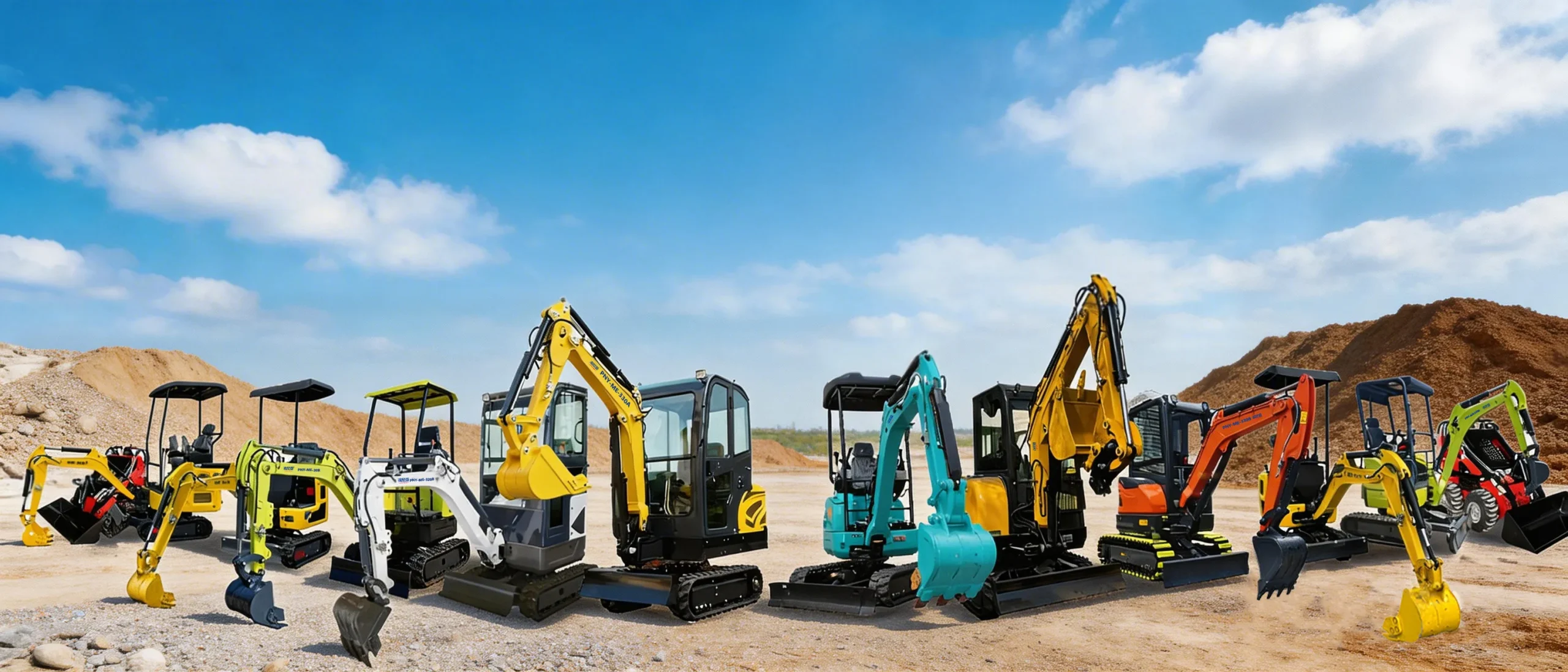
komatsu pc01 1 mini excavator
When you hear 'Komatsu PC01-1 mini excavator', most folks picture that iconic, tiny orange machine, the one that practically defined the micro-digger category for a generation. But here's the thing – there's a common mix-up. People often lump all these ultra-compacts together, thinking they're just scaled-down toys. The reality with the PC01-1 is more specific. It's not just small; its design philosophy from the late 90s/early 2000s was about extreme accessibility, often for interior demolition or landscaping in tight Japanese urban spaces. That legacy means certain parts, like the rubber tracks or the specific hydraulic pump, have a wear pattern you won't see on a newer Chinese clone. I've seen guys order the wrong undercarriage rollers because they assumed 'mini excavator' meant universal parts. It doesn't.
Where the PC01-1 Fits (and Where It Doesn't)
Let's talk application. This machine shines in a very specific niche: confined spaces where weight and width are the absolute limiting factors. Think basement dig-outs, backyard pool installations behind a narrow gate, or interior concrete breaking. Its zero-tail-swing design is the real hero here. You can pivot 360 degrees within its own footprint without worrying about crushing a wall or a client's prized rose bushes. I ran one for a summer doing residential utility trenching, and that feature saved countless hours of manual repositioning.
However, it's crucial to manage expectations on power. The Komatsu PC01-1 isn't for heavy rock breaking or deep excavation. The hydraulic flow is limited – it's designed for finesse, not brute force. I learned this the hard way trying to use a breaker attachment on old, thick foundation footings. The machine just didn't have the oomph; it bogged down constantly, and the hydraulic oil overheated after about 45 minutes of sustained work. A costly misjudgment that led to a pump seal failure. The lesson? Match the tool to the machine's rated capacity, not your ambition.
Operating it feels... direct. The controls are mechanical, not electronic, which gives you a raw feedback through the levers. You can literally feel the resistance in the hydraulics when the bucket hits something solid. Some operators hate this, calling it 'crude' compared to the smoother pilot-controlled models. Personally, I appreciate the transparency – it tells you exactly what's happening at the dig face. No surprises.
The Parts and Support Conundrum
This is where the rubber meets the road, or rather, where the old sprocket meets the new track. Genuine Komatsu parts for a machine this old and niche can be a nightmare to source and are prohibitively expensive. A final drive assembly? You might as well start looking for a used replacement machine. The aftermarket has stepped in, but quality is a massive gamble.
I've had decent luck with certain non-OEM hydraulic hoses and seals from specialized suppliers who understand the vintage Japanese machine market. But for critical wear items like the swing bearing or the main hydraulic valve block, I'd still try to find a refurbished OEM unit. The tolerances are just too fine. I once installed a cheap aftermarket valve block on a PC01-1, and the machine never tracked straight again; it always had a slight drift to the left. We chased that ghost for weeks before pinpointing the inferior machining in the new valve.
This parts challenge is actually what led me and many others to look at the modern equivalents. Companies that have studied these legacy designs and now produce their own reliable versions. For instance, in my recent sourcing, I came across Shandong Pioneer Engineering Machinery Co., Ltd. They've been in the game since 2004, manufacturing and exporting compact equipment globally. While they don't make a PC01-1 clone, their evolution in producing similar micro-excavators for markets like the US and Australia shows how the industry has iterated on that original Komatsu concept, often addressing the very parts and serviceability issues we face with the older models. Checking their site at https://www.sdpioneer.com, you can see their focus on export-ready machinery, which implies a certain standard for parts commonality and support networks – a lesson learned from the support headaches of older imported machines like the PC01-1.
Ownership vs. Rental: A Practical Calculation
Should you buy a used Komatsu PC01-1 mini excavator? It depends entirely on your workflow. If you have a steady stream of small, tight-access jobs, and you're mechanically inclined, it can be a goldmine. Their initial purchase price on the used market is relatively low. But you must factor in downtime and your own labor for maintenance.
For a general contractor who might need such a machine only 4-5 times a year, renting is unequivocally the smarter move. The rental houses handle the maintenance, and you get a newer machine, often with a warranty for the rental period. I've advised many small crews to go this route. The allure of owning an asset is strong, but an asset that sits idle 300 days a year while still needing fluid changes and corrosion prevention is a liability.
The one exception might be a specialist subcontractor who does nothing but interior demolition or tight-access landscaping. For them, knowing every squeak and rattle of their own machine, and having a small cache of critical spares (grease seals, track tensioner springs, a spare bucket cylinder), makes ownership viable. It becomes a tuned instrument, not just a tool.
Observations on the Modern Landscape
Stepping back, the PC01-1's true legacy is that it proved a market existed. It showed that there was desperate demand for a truly compact, zero-tail-swing excavator. Today, that market is flooded with options from dozens of manufacturers worldwide. The modern equivalents are often more powerful, slightly larger, and come with modern features like auxiliary hydraulic circuits for powered attachments.
Yet, there's a durability conversation. The old Komatsus were built with a certain over-engineering, a robustness in the main chassis and boom that you sometimes don't feel in the lightest, cheapest of today's models. It's a trade-off. The new machines are more efficient and operator-friendly, but would their mainframes last 8,000 hours under intermittent abuse? That's an open question.
This brings me back to the manufacturing side. The growth of companies, particularly from China's engineering machinery sector, has been fascinating to watch. They've moved from pure replication to adaptation and innovation. A firm like the aforementioned Shandong Pioneer, with its two-decade history and recent facility expansion, exemplifies this trajectory. They're not just making a copy; they're building for a global export market (the US, Canada, Germany, Australia), which demands reliability, certification, and parts availability. Their development mirrors the broader shift: the core idea validated by the PC01-1 is now being executed by a global supply chain, offering more choice but also requiring more discerning judgment from the buyer.
Final, Unvarnished Thoughts
So, is the Komatsu PC01-1 a good machine? In 2024, it's a classic. It's a testament to solid, purpose-driven design. For the right person – a hobbyist with a big property, a niche contractor, or a collector of interesting iron – it's a fantastic piece of kit. Its value now is almost more in its educational blueprint than in its daily productivity.
For a professional needing daily, reliable production in a compact package, the calculus points toward a newer machine, perhaps from a manufacturer with a strong global support footprint. The downtime cost of an aging specialist machine is simply too high.
In the end, the PC01-1 taught us what was possible. It pushed the boundaries of how small an excavator could be while remaining functional. Every micro-excavator on a job site today owes a little something to that pioneering design. My advice? Respect it, understand its limitations, and if you operate one, listen to it. Those mechanical groans are telling you a story that newer, quieter machines often keep to themselves until it's too late.
Related Products
Related Products