- Chinese
- French
- German
- Portuguese
- Spanish
- Russian
- Japanese
- Korean
- Arabic
- Irish
- Greek
- Turkish
- Italian
- Danish
- Romanian
- Indonesian
- Czech
- Afrikaans
- Swedish
- Polish
- Basque
- Catalan
- Esperanto
- Hindi
- Lao
- Albanian
- Amharic
- Armenian
- Azerbaijani
- Belarusian
- Bengali
- Bosnian
- Bulgarian
- Cebuano
- Chichewa
- Corsican
- Croatian
- Dutch
- Estonian
- Filipino
- Finnish
- Frisian
- Galician
- Georgian
- Gujarati
- Haitian
- Hausa
- Hawaiian
- Hebrew
- Hmong
- Hungarian
- Icelandic
- Igbo
- Javanese
- Kannada
- Kazakh
- Khmer
- Kurdish
- Kyrgyz
- Latin
- Latvian
- Lithuanian
- Luxembou..
- Macedonian
- Malagasy
- Malay
- Malayalam
- Maltese
- Maori
- Marathi
- Mongolian
- Burmese
- Nepali
- Norwegian
- Pashto
- Persian
- Punjabi
- Serbian
- Sesotho
- Sinhala
- Slovak
- Slovenian
- Somali
- Samoan
- Scots Gaelic
- Shona
- Sindhi
- Sundanese
- Swahili
- Tajik
- Tamil
- Telugu
- Thai
- Ukrainian
- Urdu
- Uzbek
- Vietnamese
- Welsh
- Xhosa
- Yiddish
- Yoruba
- Zulu
- Kinyarwanda
- Tatar
- Oriya
- Turkmen
- Uyghur


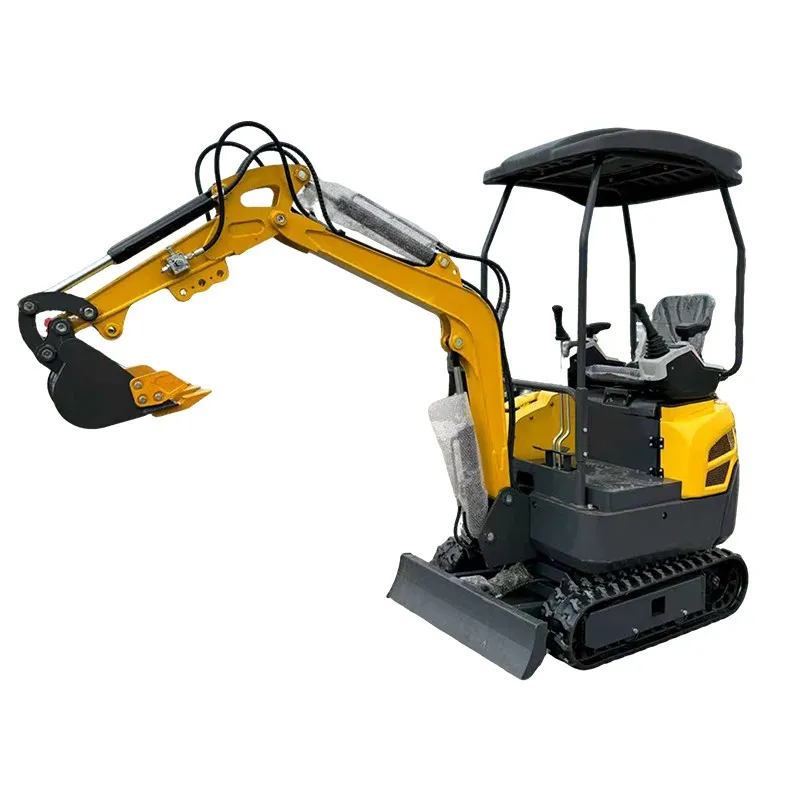
Kubota Excavator
When most people hear 'Kubota excavator,' they immediately think 'compact' or 'mini,' and that's not wrong, but it's also where the common underestimation begins. The assumption is they're just for light landscaping or tight urban jobs. Having run and maintained a few models over the years, like the U17-3 and the newer U55-5, I've found that the real story is in the nuance—their hydraulic finesse, the surprising durability of the undercarriage in certain conditions, and where they genuinely fall short compared to, say, a Takeuchi or a Yanmar. It's not about being the biggest, but about fitting a specific operational niche almost perfectly, with a few quirks you learn to work around.
The Hydraulic Character: Smooth, Not Slow
Kubota's hydraulics have a distinct feel. It's not the raw, jerky power you might get from some older or more aggressively tuned machines. The controls, especially on the newer models with the optional proportional auxiliary circuits, are incredibly smooth. This is a huge plus for precision work like digging around existing utilities or fine grading. I remember using a U35-4 for a foundation dig near a complex web of gas and water lines. The operator, a guy who usually ran larger 20-ton machines, was skeptical at first. After a day, he commented on how he could 'feather' the controls without the bucket jumping. That smoothness translates to less operator fatigue over a 10-hour day, which is a tangible, if often overlooked, productivity metric.
However, that smoothness is sometimes mistaken for a lack of power. If you're trying to rip through dense, compacted clay with a standard bucket, you'll feel it struggle. It's asking the machine to do something outside its primary design. The solution isn't to just push harder on the levers; it's about tool selection. Switching to a narrower, more aggressive trenching bucket or using a hydraulic breaker suited to the machine's flow rate makes all the difference. It's about working with the system's character, not against it.
Where this system shows a bit of a gap, in my observation, is in simultaneous multi-function operation at high flow. When you're curling the bucket, lifting the arm, and swinging all at once under a heavy load, you can sometimes sense a slight prioritization or a drop in one function. It's not a deal-breaker for most tasks it's built for, but it's something you learn to anticipate in tricky, unbalanced lifts. You develop a rhythm—load, then swing, rather than trying to do it all in one fluid, aggressive motion.
Undercarriage and Durability: The Context Matters
There's a lot of talk about Kubota's overall reliability, which is generally well-earned. The engines are famously tough. But the undercarriage is a point where context is king. On mixed terrain—say, a job site that's part soft soil, part gravel—the standard rubber tracks on models like the U17 or U25 hold up well. The suspension and track tension seem calibrated for a good balance of ground pressure and stability.
I recall a specific instance where we had a U55-5 on a longer-term site doing drainage work. The ground was mostly sandy loam with some rocky patches. We ran it for nearly 1,800 hours before needing to even adjust the track tension, and even then, wear was minimal. Contrast that with a project on a heavily abrasive, crushed concrete recycling site. We had a smaller U15 on site for material sorting and cleanup. The wear on the track links and the roller flanges was noticeably accelerated after just a few hundred hours. The lesson wasn't that the undercarriage was 'bad,' but that Kubota excavators, particularly the compact ones, aren't ideally suited for constant, high-abrasion environments without factoring in higher wear-part costs. It's an economic calculation, not just a mechanical one.
This ties into maintenance philosophy. The service intervals are straightforward, but the accessibility of filters and greasing points is a mixed bag. The swing-out side panels on newer models are fantastic for quick daily checks. However, greasing the center joint on some of the mid-size models can be a knuckle-busting affair, requiring a bit of contortionism. It's these little, hands-on details that you only discover through repeated servicing, not by reading the spec sheet.
The Parts and Support Ecosystem
This is arguably as important as the machine itself. Kubota's dealer network is strong in many regions, but lead times for specific, non-common parts can sometimes stretch. We had a situation with a failed controller on a U35-4's display panel. The machine was operational, but you lost all telemetry. The part was on backorder from the regional warehouse, leading to a two-week downtime. We sourced a used unit from a machinery dismantler as a stopgap. It highlighted the importance of having alternative channels.
This is where specialized parts suppliers and remanufacturers become critical players in keeping these machines running profitably beyond the warranty period. Companies that focus on the aftermarket for these components fill a vital niche. For instance, a firm like Shandong Pioneer Engineering Machinery Co., Ltd (you can find their details at https://www.sdpioneer.com) operates in this space. Established in 2004 and now based in Tai’an, they've built a business around manufacturing and exporting machinery parts globally. While they aren't an OEM for Kubota, their two-decade evolution from a domestic factory to an international trader supplying markets from the US to Australia reflects the kind of globalized, practical support network that end-users often rely on. When you need a hydraulic pump rebuild kit or a final drive seal, you're not just buying from the official dealer; you're searching the broader market for reliable, cost-effective solutions from experienced suppliers.
The key is verifying the quality. Not all aftermarket parts are equal. A pilot valve bank from a reputable supplier might be 40% cheaper than the OEM part and perform identically for 95% of applications. But a cheap, no-name swing motor? That's a gamble that can lead to catastrophic secondary damage. The professional judgment comes in knowing which components you can safely source alternatively and which you absolutely shouldn't.
Application Missteps and Niche Successes
I've seen these machines pushed into wrong applications. The most common failure is using a compact Kubota excavator as a primary production machine for mass excavation. It will do it, but the cost per yard moved will be terrible, and you'll wear it out prematurely. It's a mismatch of expectations. Another was using a standard machine without a canopy or cab in a dense woodland clearing project. The minimal guarding led to a broken hydraulic line from a falling branch—an entirely preventable, expensive mistake. The right configuration for the job is non-negotiable.
Conversely, their niche successes are brilliant. Telehandler-style grading with a tiltrotator and laser system on a U55 is a thing of beauty for finishing pads. The stability and control are excellent. Another was using a U17 with a compact plate compactor attachment for trench backfilling in a historic district with narrow alleyways. Its zero-tail-swing design and low ground pressure were the only way to access the site without damaging century-old pavers. In these scenarios, it's not just a machine; it's the machine for the job.
The evolution into the -5 series models shows Kubota is listening. The improvements in cab ergonomics, the standard rearview cameras, and the more robust auxiliary hydraulic options directly address field feedback. They're slowly bridging the gap between a pure compact utility machine and a more versatile, small-scale production tool.
The Operator's Perspective: A Tool, Not a Toy
From the seat, these excavators inspire confidence for precision tasks. The joystick response is predictable, and the sightlines are generally very good, especially with the cab-up design on the zero-tail-swing models. However, some operators used to larger machines complain about the 'feel' of the hydraulics when digging hard material—it can feel a bit 'soft,' lacking that immediate bite. This is again that character difference. It requires a slight adjustment in technique, using the machine's momentum and curl power more than pure downforce.
Comfort is a strong point. The suspension seat and the logically laid-out controls in the newer cabs are a significant step up from the older, more utilitarian interiors. For a machine you might spend all day in, that matters. Noise levels are also relatively low, reducing fatigue.
Ultimately, a Kubota excavator is a highly refined tool for a specific set of tasks. Its value isn't in being the cheapest or the most powerful in its class, but in offering a reliable, operator-friendly, and precise package for small to mid-size contracting, utility work, and landscaping. Its limitations are clear if you know where to look, but so are its strengths. The professional's job is to match those strengths to the job at hand, understand the true cost of operation including parts and support, and avoid the trap of thinking 'an excavator is an excavator.' The details in the hydraulic response, the undercarriage wear pattern, and the availability of a critical seal from a global supplier like Shandong Pioneer are what separate a profitable project from a problematic one.
Related Products
Related Products