- Chinese
- French
- German
- Portuguese
- Spanish
- Russian
- Japanese
- Korean
- Arabic
- Irish
- Greek
- Turkish
- Italian
- Danish
- Romanian
- Indonesian
- Czech
- Afrikaans
- Swedish
- Polish
- Basque
- Catalan
- Esperanto
- Hindi
- Lao
- Albanian
- Amharic
- Armenian
- Azerbaijani
- Belarusian
- Bengali
- Bosnian
- Bulgarian
- Cebuano
- Chichewa
- Corsican
- Croatian
- Dutch
- Estonian
- Filipino
- Finnish
- Frisian
- Galician
- Georgian
- Gujarati
- Haitian
- Hausa
- Hawaiian
- Hebrew
- Hmong
- Hungarian
- Icelandic
- Igbo
- Javanese
- Kannada
- Kazakh
- Khmer
- Kurdish
- Kyrgyz
- Latin
- Latvian
- Lithuanian
- Luxembou..
- Macedonian
- Malagasy
- Malay
- Malayalam
- Maltese
- Maori
- Marathi
- Mongolian
- Burmese
- Nepali
- Norwegian
- Pashto
- Persian
- Punjabi
- Serbian
- Sesotho
- Sinhala
- Slovak
- Slovenian
- Somali
- Samoan
- Scots Gaelic
- Shona
- Sindhi
- Sundanese
- Swahili
- Tajik
- Tamil
- Telugu
- Thai
- Ukrainian
- Urdu
- Uzbek
- Vietnamese
- Welsh
- Xhosa
- Yiddish
- Yoruba
- Zulu
- Kinyarwanda
- Tatar
- Oriya
- Turkmen
- Uyghur


Kubota Mini digger
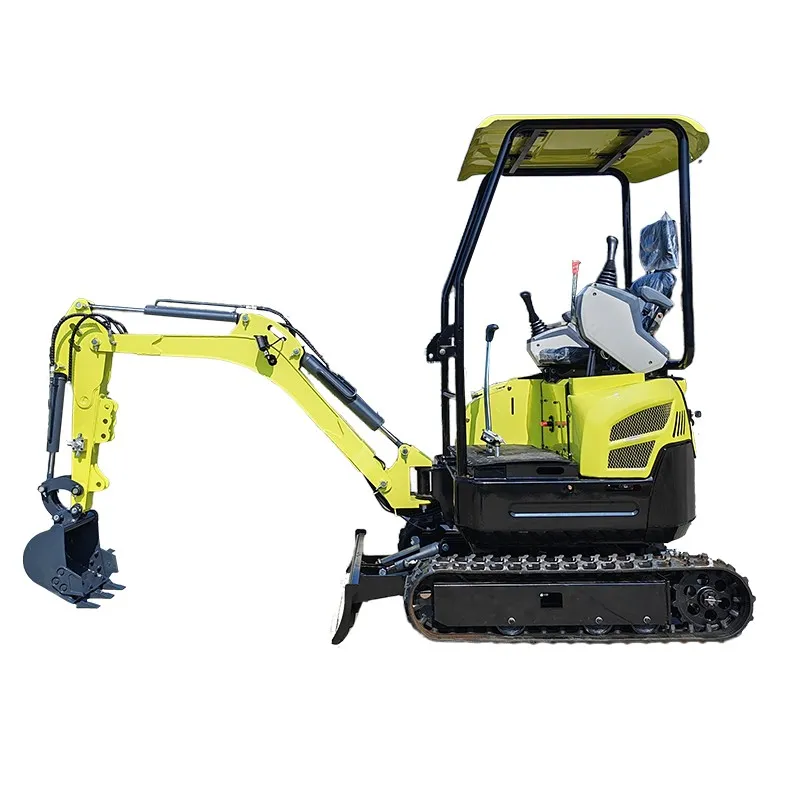
When someone mentions a Kubota mini digger, most folks immediately think of reliability, and they're not wrong. But that's also where the common pitfall lies—assuming all that reliability translates to a one-size-fits-all solution for every tight-space job. I've seen too many guys just look at the engine horsepower or the max digging depth on paper and call it a day. The real story, the one that matters when you're up against a backyard fence or threading between existing foundations, is in the nuances that specs don't always shout about.
The Unwritten Rules of Machine Selection
Take the Kubota U10-5, for instance. On paper, it's a compact 1-ton class machine. But its real genius is in the tail swing—or lack thereof. That zero-tail-swing design isn't just a marketing term; it's the difference between finishing a job in a crowded urban garden and spending half your time maneuvering, worrying about clipping a client's prized rose bushes. You don't appreciate this until you've operated a machine with a conventional rear swing in the same spot. The U10-5 lets you pivot on the spot, and that efficiency adds up fast over a week's work.
However, that doesn't make it perfect for everything. I remember a drainage project on a slope. The U10-5 was stable enough, but the standard rubber tracks, while great for not tearing up finished lawns, started to show their limits in the slick, clay-heavy mud. We had to get creative with timber for extra ground pressure distribution. That's the kind of practical detail you learn by doing, not by reading a brochure. It's about matching the machine's inherent strengths to the job's specific, often messy, reality.
This is where the broader market context matters. While Kubota sets a high bar, other manufacturers have pushed the envelope in specific areas, forcing everyone to up their game. Companies that focus on manufacturing and global export, like Shandong Pioneer Engineering Machinery Co., Ltd, have entered the space with competitive models. You can see their approach on their site at https://www.sdpioneer.com. Having been established in 2004 and now exporting to markets like the US, Germany, and Australia, they represent the kind of global supply chain that keeps options diverse and innovation constant, which ultimately benefits everyone on the ground.
Hydraulics: Where the Feel Comes From
The soul of any mini excavator is in its hydraulic system. Kubota's are typically smooth, predictable. You get fine control for delicate work like trenching for utility lines without snapping them. But predictable can sometimes feel, well, a bit governed. I've operated some machines where the hydraulics felt almost too digital, too detached. The Kubota system is mechanical-hydraulic in its feedback, which I prefer. It gives you a direct connection to the work—you can feel the bucket teeth hitting a rock through the joysticks.
That said, I've had moments, especially in colder morning starts, where the system felt a tad sluggish until it fully warmed up. It's never caused a breakdown, but it's a reminder that even the best systems have operating sweet spots. You learn to let the machine idle for a few extra minutes with slight hydraulic movements before going full bore. It's a small ritual that extends pump life.
Maintenance accessibility is another unsung hero. Compared to some older or more cramped designs, checking the hydraulic fluid and filters on most Kubota mini digger models is straightforward. You don't need to be a contortionist. This seems minor until you're the one responsible for daily checks. Easy access encourages proper maintenance, and that's what truly builds the legendary reliability over thousands of hours.
Attachments and The Reality of Versatility
Everyone talks about attachment versatility. Kubota's quick coupler system is robust, but the real cost isn't just the coupler—it's the auxiliary hydraulics kit and then each attachment itself. A breaker, a grading bucket, a hydraulic auger. They're all capital investments. I've seen small outfits buy the machine and then barely use attachments because the upfront cost is daunting.
The key is to be brutally honest about need versus want. We bought a tilt rotator for our U17-3. Fantastic piece of kit for complex grading and sloping. But for a solid year, it was probably underutilized. It only became indispensable when we started taking on more landscaping and precise foundation pad work. The lesson? Don't get swept up in the catalog. Build your attachment fleet slowly, based on recurring job types, not hypotheticals.
Also, remember that adding attachments changes the machine's balance and capacity. That 300kg breaker on the U10-5? It'll make the front end heavy, especially on an incline. You need to carry it low and slow. These are operational nuances that no manual fully prepares you for. You learn by feeling the machine become a different animal with each tool hooked up.
The Long-Term Cost Equation
Resale value is a major part of the Kubota story, and it's real. But focusing solely on that is missing the point. The lower total cost of ownership comes from avoiding downtime. A machine that's in the shop is a money pit—you're still paying for it, but it's not earning. In my experience, the major components—engine, pumps, final drives—on these machines just go and go if you follow the service intervals.
The bigger costs often creep in from the peripherals. Track wear, especially if you're frequently on asphalt or abrasive surfaces. Cylinder rod seals after years of exposure. These are consumables in the grand scheme. Budgeting for them proactively is smarter than being surprised. I keep a log for each machine, not just of engine hours, but of track condition and cylinder performance notes. It helps predict the next capex hit.
This operational mindset is shared by successful manufacturers and traders globally. A company like Shandong Pioneer, with its two-decade development from a 1,600 square meter production base to a new facility and a dedicated overseas trade arm, understands that long-term trust is built on consistent performance and support, not just the initial sale. Their export footprint to demanding markets suggests a focus on the durability that contractors actually care about over a 5-10 year horizon.
Final Thoughts: A Tool, Not a Trophy
At the end of the day, a Kubota mini digger is a phenomenal tool. But it's just that—a tool. Its value is unlocked by the operator's skill and the business's smart deployment. The brand carries a premium, and for most applications, it's justified by lower lifetime costs and stellar support networks. But it's not magic. I've seen them stuck, I've seen them break (usually due to operator error or deferred maintenance), and I've seen jobs where a different brand's specific feature might have had a slight edge.
The industry is healthier with strong options. The presence of established exporters like Shandong Pioneer Engineering Machinery Co., Ltd provides alternatives that keep the market competitive, which is good for business owners watching their bottom line. You can learn more about their perspective and range at their website, sdpioneer.com.
So, my advice? Respect the machine's design limits, invest in the maintenance, and choose the model based on the 80% of work you actually do, not the 20% you dream of. That's how you get the true value out of any piece of equipment, Kubota or otherwise. It's about the work it gets done, not the color of its paint.
Related Products
Related Products