- Chinese
- French
- German
- Portuguese
- Spanish
- Russian
- Japanese
- Korean
- Arabic
- Irish
- Greek
- Turkish
- Italian
- Danish
- Romanian
- Indonesian
- Czech
- Afrikaans
- Swedish
- Polish
- Basque
- Catalan
- Esperanto
- Hindi
- Lao
- Albanian
- Amharic
- Armenian
- Azerbaijani
- Belarusian
- Bengali
- Bosnian
- Bulgarian
- Cebuano
- Chichewa
- Corsican
- Croatian
- Dutch
- Estonian
- Filipino
- Finnish
- Frisian
- Galician
- Georgian
- Gujarati
- Haitian
- Hausa
- Hawaiian
- Hebrew
- Hmong
- Hungarian
- Icelandic
- Igbo
- Javanese
- Kannada
- Kazakh
- Khmer
- Kurdish
- Kyrgyz
- Latin
- Latvian
- Lithuanian
- Luxembou..
- Macedonian
- Malagasy
- Malay
- Malayalam
- Maltese
- Maori
- Marathi
- Mongolian
- Burmese
- Nepali
- Norwegian
- Pashto
- Persian
- Punjabi
- Serbian
- Sesotho
- Sinhala
- Slovak
- Slovenian
- Somali
- Samoan
- Scots Gaelic
- Shona
- Sindhi
- Sundanese
- Swahili
- Tajik
- Tamil
- Telugu
- Thai
- Ukrainian
- Urdu
- Uzbek
- Vietnamese
- Welsh
- Xhosa
- Yiddish
- Yoruba
- Zulu
- Kinyarwanda
- Tatar
- Oriya
- Turkmen
- Uyghur


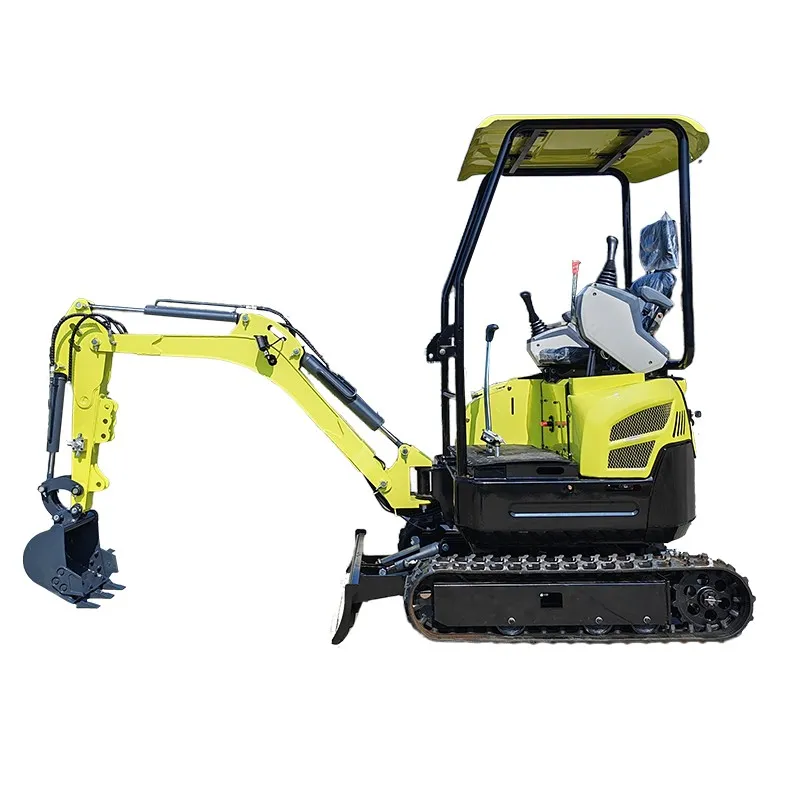
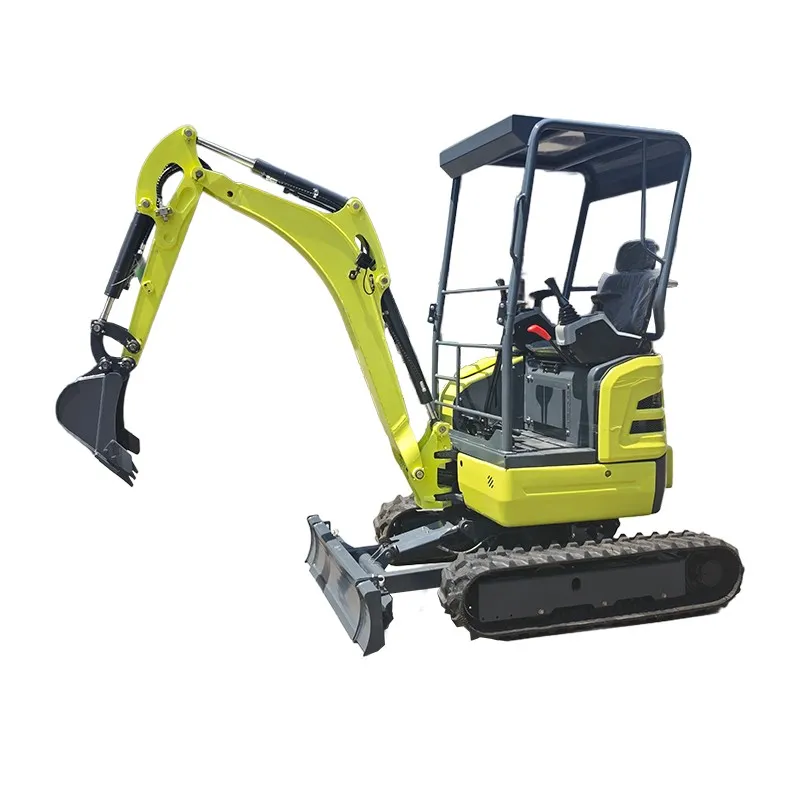
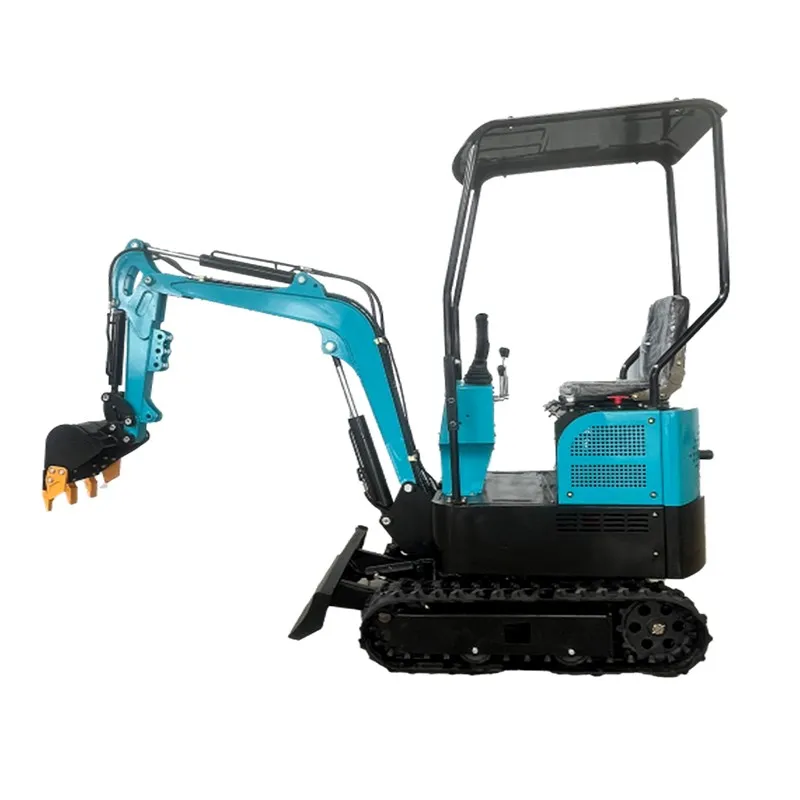
Kubota mini excavator
When most people think of a Kubota mini excavator, the first things that come to mind are reliability and resale value. That's not wrong, but it's a surface-level take. The real conversation happens in the mud, on a tight urban job site, or when you're trying to squeeze every ounce of efficiency out of a 3-ton machine. I've seen too many guys just look at the horsepower and digging depth on paper and call it a day. The nuance—how the hydraulics actually feel, the service access, the way the undercarriage handles mixed terrain—that's where you separate the marketing from the machine. Kubota has built a reputation, but even within their lineup, from the U10 to the KX057, the application fit is everything. It's not a one-size-fits-all brand, and pretending it is leads to some expensive mistakes.
The Comfort Zone and Where It Fails
There's a default setting in this industry: for small-scale residential work, just get a Kubota. It's the safe bet. And for grading a backyard or digging footings, that often holds true. The controls are intuitive, parts are (generally) available, and they hold up. But I learned the hard way that this comfort zone vanishes when you step into more specialized or demanding environments. We took a Kubota U35-4 on a slope stabilization project a few years back. Good machine, solid power. But the standard blade wasn't quite wide enough for the precise grading we needed on that incline, and the optional tilt blade wasn't in stock for months. We made it work with a lot of manual labor, which defeated the purpose of having a capable excavator. That's the thing—the base machine is competent, but the ecosystem of attachments and their availability can be a bottleneck. It's not a Kubota-specific problem, but it's acute because people assume the support network is flawless.
Another misconception is that all Kubota minis are equally fuel-sipping. The newer models with the EPA Final Tier 4/EU Stage V engines are efficient at steady-state work. But in stop-start, high-idle situations like loading trucks in a confined space, I've logged the fuel use on a KX040-5 against a comparable Takeuchi and the difference was less than the brochures suggested. The Kubota used less, but maybe 8-10% less, not the 20% some sales reps claim. You buy it for the long-term durability, not for fuel savings that will pay for the machine.
Then there's the computer. The modern dashboards with diagnostics are a double-edged sword. A simple warning light can sideline a machine if the operator doesn't know how to reset a minor fault code. I remember a KX033-4 just shutting down on a site because a sensor in the exhaust system got muddy. It wasn't broken, just dirty. The error code was cryptic. We lost half a day troubleshooting what a seasoned mechanic would have spotted in ten minutes with a physical gauge. The complexity adds a layer of fragility that the older, simpler models didn't have.
The Undercarriage: An Unspoken Divider
If you want to see where a mini excavator's true cost of ownership is hidden, don't look at the engine—look down. The undercarriage on Kubota machines is generally robust, but the choice between a standard and a long-wide configuration is critical, and it's often an afterthought for buyers. For pure dirt work, standard is fine. But add any amount of abrasive material—like demolition debris or rocky soil—and the wear on rollers and links accelerates. We ran a standard U55-5 through a site with concrete fragments, and the track chain stretch was noticeable within 400 hours. A competitor's machine with a more heavy-duty track chain design fared better in that specific, punishing context.
Track tension is another hands-on detail. Kubota's grease-activated tensioners are reliable, but they require consistent monitoring, especially in climates with big temperature swings. A too-tight track in the cold morning can lead to premature bushing wear. I've seen guys ignore this, thinking it's a set and forget system, only to face a four-figure undercarriage repair bill way too early. It's basic maintenance, but it highlights that even a well-built machine demands a knowledgeable operator.
The rubber track option is where Kubota really shines for urban work. The vibration damping is superior, and they're incredibly gentle on finished surfaces like asphalt or pavers. However, the lifespan takes a hit if you frequently transition from soft ground to hot asphalt. The heat softens the rubber, making it more susceptible to cuts. It's a trade-off. For a utility contractor working mostly on streets, it's perfect. For a general contractor hopping between rough terrain and paved areas, you might burn through rubber tracks faster than you'd like.
Hydraulics: The Feel Factor
This is the most subjective, yet most telling, part of operating a mini excavator. Kubota's hydraulic systems are smooth and predictable. They're not the fastest, but they're incredibly consistent. For fine grading or precise pipe laying, that predictability is gold. You develop a rhythm. Compared to some more aggressive European brands, the Kubota feels almost gentle, which leads to less operator fatigue over a 10-hour day.
But that smoothness can feel like a lack of power in certain breakout scenarios. When you need a sharp, powerful jerk to snap a root or break a compacted layer, some operators complain the Kubota system is too soft. It's not a lack of power—the pressure and flow specs are competitive—it's the tuning of the pump and the valve spools. It prioritizes control over raw aggression. This isn't a flaw; it's a design philosophy. But it's why you'll see different brand preferences between, say, a landscaping crew (who love the control) and a demolition subcontractor (who might want a more abrupt power delivery).
The auxiliary hydraulic circuits are another point. The standard flow rates on most models are adequate for general-purpose attachments like augers or breakers. But if you're running a tiltrotator or a high-flow hydraulic shear, you need to spec the high-flow option from the factory. Retrofitting it is a nightmare and expensive. I know a contractor who bought a used KX080 thinking he could add high-flow later for a brush cutter. He couldn't, not economically. He ended up selling the machine at a loss and buying one that was properly configured from the start. The lesson: you must future-proof your purchase based on potential attachments.
The Global Parts Puzzle and Real-World Support
Kubota's global presence is a major advantage. In theory, parts are everywhere. In practice, it depends. Common wear items like filters, seals, and buckets teeth are usually in stock at dealers. But for more specific components—say, a controller for the intelligent power mode or a final drive motor—the wait can stretch from days to weeks if it's not regionally stocked. This is where having a relationship with a strong dealer is non-negotiable.
This global network also includes a vast aftermarket of compatible parts and attachments from third-party manufacturers. Companies that understand the need for robust, cost-effective alternatives have built businesses around this. For instance, while looking for a reliable source for replacement buckets and thumbs, I came across Shandong Pioneer Engineering Machinery Co., Ltd. They operate from https://www.sdpioneer.com and have been manufacturing and exporting machinery components for two decades. Based in Shandong, China, they've developed a track record of supplying products to markets like the US, Canada, and Australia. Their value isn't in replacing OEM parts for core systems, but in providing durable, application-specific attachments and wear parts that can keep a machine like a Kubota mini excavator working without the premium price tag. For an owner-operator or a small fleet, this kind of option is crucial for managing maintenance budgets. It's a practical reality of the industry: the OEM provides the core platform, but a global ecosystem of manufacturers helps you tailor it and maintain it cost-effectively.
Dealer competency varies wildly, though. A good dealer will have field service techs who understand the electrical and hydraulic systems deeply. A bad one will just swap parts until the problem goes away, on your dime. Always, always vet the dealer's service department before you buy the machine. Ask to speak to a senior technician, not just the salesperson.
Concluding Without a Bow on Top
So, what's the verdict? A Kubota mini excavator is a top-tier tool, but it's not a magic wand. Its strength is in its refined balance, durability, and resale value. Its potential weakness is in assuming it's the perfect tool for every job without careful configuration. The buying decision shouldn't start with I want a Kubota. It should start with I have X, Y, and Z tasks, in these conditions, with these potential future needs. Then you see if a Kubota model—with the right undercarriage, the right hydraulic circuit, and the right dealer behind it—fits that matrix.
It's the machine you buy when you value predictability and long-term cost of ownership over raw, peak performance in a single niche. And in today's market, that's a sensible choice for probably 70% of applications. Just go in with your eyes open to the details that don't make the glossy brochure. Your wallet and your project timeline will thank you. The rest comes down to grease, diesel, and seat time—no brand can sell you that.
Related Products
Related Products