- Chinese
- French
- German
- Portuguese
- Spanish
- Russian
- Japanese
- Korean
- Arabic
- Irish
- Greek
- Turkish
- Italian
- Danish
- Romanian
- Indonesian
- Czech
- Afrikaans
- Swedish
- Polish
- Basque
- Catalan
- Esperanto
- Hindi
- Lao
- Albanian
- Amharic
- Armenian
- Azerbaijani
- Belarusian
- Bengali
- Bosnian
- Bulgarian
- Cebuano
- Chichewa
- Corsican
- Croatian
- Dutch
- Estonian
- Filipino
- Finnish
- Frisian
- Galician
- Georgian
- Gujarati
- Haitian
- Hausa
- Hawaiian
- Hebrew
- Hmong
- Hungarian
- Icelandic
- Igbo
- Javanese
- Kannada
- Kazakh
- Khmer
- Kurdish
- Kyrgyz
- Latin
- Latvian
- Lithuanian
- Luxembou..
- Macedonian
- Malagasy
- Malay
- Malayalam
- Maltese
- Maori
- Marathi
- Mongolian
- Burmese
- Nepali
- Norwegian
- Pashto
- Persian
- Punjabi
- Serbian
- Sesotho
- Sinhala
- Slovak
- Slovenian
- Somali
- Samoan
- Scots Gaelic
- Shona
- Sindhi
- Sundanese
- Swahili
- Tajik
- Tamil
- Telugu
- Thai
- Ukrainian
- Urdu
- Uzbek
- Vietnamese
- Welsh
- Xhosa
- Yiddish
- Yoruba
- Zulu
- Kinyarwanda
- Tatar
- Oriya
- Turkmen
- Uyghur


kubota mini excavator for sale
When someone types 'kubota mini excavator for sale' into a search bar, I know exactly what they're picturing. They're likely imagining a shiny, ready-to-go machine from a local dealer, maybe a U35-5 or a K008-5, with a warranty and full support. That's the straightforward path. But in my line of work, that search term opens up a much broader, and frankly, more interesting conversation. It's not just about finding a listing; it's about navigating a global market where the definition of for sale can mean a brand-new unit from Japan, a well-maintained used machine from a rental fleet in Ohio, or a completely different proposition altogether—a high-quality, compatible alternative from specialized manufacturers. That last point is where most people's assumptions fall short, and where the real value often lies if you know what to look for.
The Dealer Route vs. The Global Sourcing Game
Let's start with the obvious. Going to an authorized Kubota dealer is safe. You'll get the genuine article, full specs, and local service. For many, that's the only way to go, and I don't blame them. The peace of mind is worth the premium. But the price tag on a new Kubota mini ex, especially in certain markets, can be staggering. This pushes a lot of smaller contractors, landscapers, and even farm owners to look elsewhere. That's when they stumble into the world of global machinery sourcing. It's messy, it's filled with jargon, and it requires a lot of vetting.
I've been through this cycle dozens of times. A client wants the reliability associated with the Kubota name but needs to stretch their budget. My first question is always about their tolerance for downtime and their local mechanic's skill set. If they're hesitant, we stick to the dealer network. But if they're hands-on and cost-sensitive, we start looking at parallel options. This isn't about finding knock-offs; it's about finding manufacturers who have studied the Kubota platform—its hydraulics, its dimensions, its attachment interfaces—and produce machines that are operationally compatible, often with more customizable features from the factory.
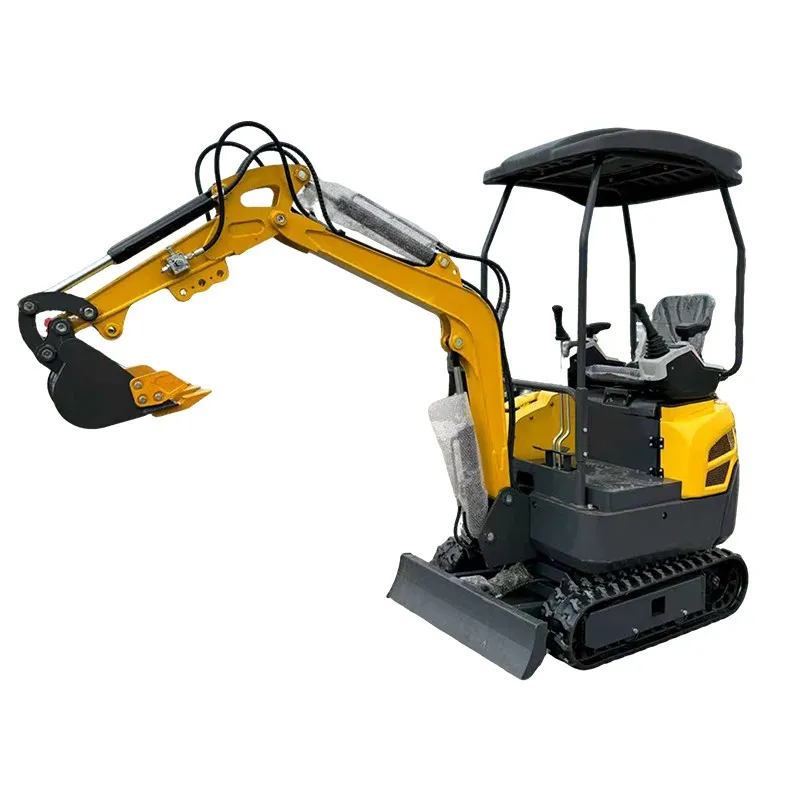
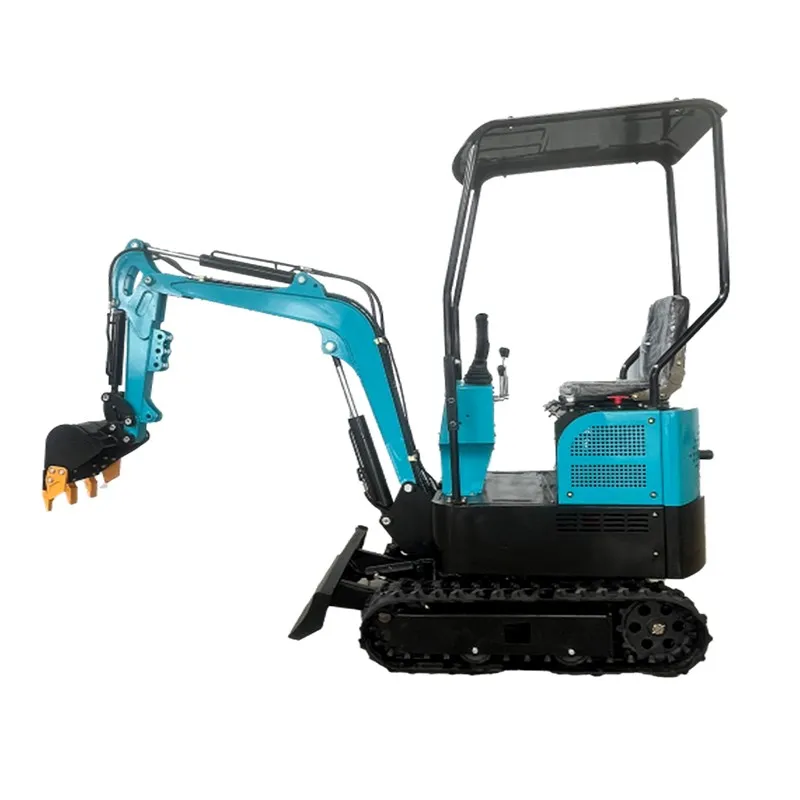
This is where companies with deep export experience come into play. I'm thinking of firms like Shandong Pioneer Engineering Machinery Co., Ltd. You can check their footprint at https://www.sdpioneer.com. They've been in the game since 2004, and that longevity in manufacturing for export, particularly to tough markets like the US, Canada, and Australia, tells you something. It tells me they've had to solve problems of compliance, durability, and parts logistics that many smaller workshops haven't. When I see a company that has operated for 20 years and recently invested in a new production facility, as they did with their 2023 relocation in Tai'an, it signals a commitment to scaling quality, not just output.
Specs on Paper vs. Performance in Mud
Anyone can list a weight, horsepower, and digging depth. The disconnect happens between the spec sheet and the job site. I recall a project where a client insisted on a specific Kubota model for a tight backyard renovation. The specs said it would fit through the gate. It did, but only after removing the side panels—something the brochure didn't cover. This is the kind of practical detail you learn by doing, or by talking to people who have.
When evaluating any mini excavator for sale, whether it bears the Kubota badge or comes from a specialist manufacturer, I now obsess over three non-spec items: the standard auxiliary hydraulic flow, the pattern changer location, and the undercarriage guard design. A Kubota might have a superb Yanmar engine, but if the auxiliary kit isn't standard, you're adding cost and complexity for a breaker or auger. Some compatible models from export-focused factories often include dual auxiliary lines as standard, which is a huge win for versatility.
The failure point I've seen most often isn't the major components; it's the linkages, the seals, and the wiring harness. A machine might have a fantastic Kubota-style boom structure, but if the pivot pins are under-specced or the hydraulic hoses rub against the frame, you'll have downtime within months. I've learned to ask manufacturers for close-up photos of the compartment plumbing and the swing bearing seal. The answers (or lack thereof) are very telling.
The Total Cost Illusion and the Parts Reality
The initial purchase price is just the entry fee. The real cost is ownership: maintenance, repairs, and availability of parts. This is the biggest legitimate fear about not buying a mainstream brand. The Kubota dealer network has this locked down in most regions. But the landscape is changing.
Many established export manufacturers now operate a different model. They don't just sell a machine; they sell a machine and a pallet of commonly worn parts—filters, seals, a spare pump, track links. It's bundled. For a buyer importing a container, this makes profound sense. It turns a potential weakness into a preparedness strength. The key is the manufacturer's commitment to a parts inventory. A brief look at Shandong Pioneer's company history shows a focus on overseas trade. Their sister company, Shandong Hexin, handles the manufacturing. This structure suggests they're set up to support the machines they send out, not just build and forget. They have to, or they wouldn't have sustained exports to demanding markets for years.
I had a learning experience a few years back with a different brand. The machine was fine, but getting a replacement drive motor was a nightmare of long lead times and poor communication. It taught me to now explicitly ask: If I need a new swing motor in 18 months, what is the process, what is the estimated time to my port, and what is the cost? Vague answers are a red flag. Companies with real export tenure usually have a clear, if not perfect, answer.
Customization: The Hidden Advantage of the Alternatives
This is a point rarely discussed when just searching for a Kubota mini excavator. When you order from a dealer, you get the standard configurations. Want a different cab? Different controls? A specific hydraulic quick coupler? It's possible, but it's often a complex, expensive special order.
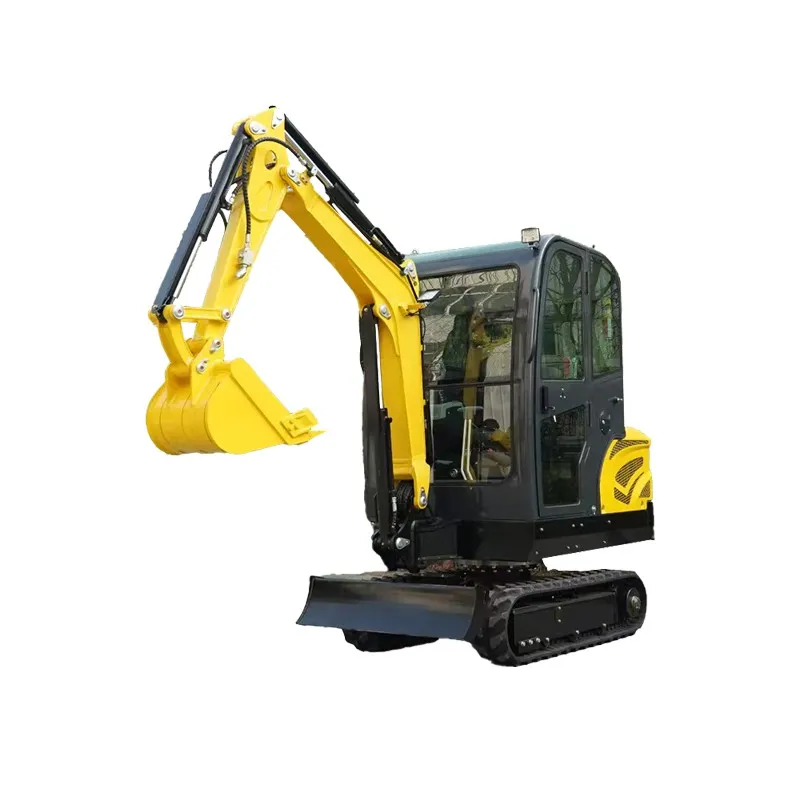
The export-oriented manufacturers live and die by customization. Their entire business is often built on building to order. I've worked with clients who needed a machine with a fully enclosed, low-profile cab for working indoors, with air conditioning and a fire suppression system pre-installed. Building that on a standard Kubota chassis after-market would be a small fortune. Sourcing it from a factory that does this as part of their normal workflow was significantly more efficient and cost-effective. The machine that arrived wasn't a Kubota, but it performed the specialized task flawlessly because it was designed for it from the ground up.
This capability stems from the manufacturing model. A large, branded production line is optimized for volume and consistency. A specialized export factory is often optimized for flexibility. They're working with similar base components—reliable engines from Kubota, Yanmar, or Deutz, quality hydraulic pumps from Kawasaki or Rexroth—but they assemble them in a way that meets a specific purchase order. This is a massive advantage for niche applications.
Making the Decision: A Framework, Not a Formula
So, back to that original search. If you're looking for a kubota mini excavator for sale, what's the takeaway? There's no one-size-fits-all answer. It's a decision tree. Start with your non-negotiables: budget, timeline, local service support needs, and job specificity. If local support and brand recognition are top, the authorized dealer is your only stop.
If budget is tighter, the jobs are varied, and you or your mechanic aren't afraid to get into the machine, then the global market of compatible equipment is worth serious consideration. Here, due diligence is everything. Look for manufacturing history, export track record, and clarity on parts support. A company like the mentioned Shandong Pioneer, with its two-decade history and documented relocation to a larger facility, presents a different profile than a trading company with no factory ties. Ask for customer references in your region, ask for video of the machine under load, and be specific about your certification requirements (CE, EPA Tier 4, etc.).
Ultimately, the best machine is the one that works for your business day in and day out, with minimal fuss. Sometimes that's a Kubota. Sometimes it's a machine that captures the essence of that reliability and efficiency, built by a firm that has spent years learning how to meet the precise, practical demands of international customers. The goal isn't to find a cheaper Kubota; it's to find the right excavator for your money, and that journey often starts with a much broader search.
Related Products
Related Products