- Chinese
- French
- German
- Portuguese
- Spanish
- Russian
- Japanese
- Korean
- Arabic
- Irish
- Greek
- Turkish
- Italian
- Danish
- Romanian
- Indonesian
- Czech
- Afrikaans
- Swedish
- Polish
- Basque
- Catalan
- Esperanto
- Hindi
- Lao
- Albanian
- Amharic
- Armenian
- Azerbaijani
- Belarusian
- Bengali
- Bosnian
- Bulgarian
- Cebuano
- Chichewa
- Corsican
- Croatian
- Dutch
- Estonian
- Filipino
- Finnish
- Frisian
- Galician
- Georgian
- Gujarati
- Haitian
- Hausa
- Hawaiian
- Hebrew
- Hmong
- Hungarian
- Icelandic
- Igbo
- Javanese
- Kannada
- Kazakh
- Khmer
- Kurdish
- Kyrgyz
- Latin
- Latvian
- Lithuanian
- Luxembou..
- Macedonian
- Malagasy
- Malay
- Malayalam
- Maltese
- Maori
- Marathi
- Mongolian
- Burmese
- Nepali
- Norwegian
- Pashto
- Persian
- Punjabi
- Serbian
- Sesotho
- Sinhala
- Slovak
- Slovenian
- Somali
- Samoan
- Scots Gaelic
- Shona
- Sindhi
- Sundanese
- Swahili
- Tajik
- Tamil
- Telugu
- Thai
- Ukrainian
- Urdu
- Uzbek
- Vietnamese
- Welsh
- Xhosa
- Yiddish
- Yoruba
- Zulu
- Kinyarwanda
- Tatar
- Oriya
- Turkmen
- Uyghur


kubota mini excavator price
When someone types 'kubota mini excavator price' into a search bar, they're usually bracing for a number that confirms their suspicion: it's expensive. And they're not entirely wrong. But that initial sticker shock often misses the real conversation. The price isn't just a figure; it's a starting point for a whole series of practical judgments about residual value, parts availability, and total cost of ownership over a decade. I've seen too many guys, especially in smaller operations or just starting out, get hung up on that first number without considering what's behind it, or if there's a viable path to get similar capability without the premium brand tag.
The Real Cost Isn't on the Spec Sheet
Let's talk about what you're actually paying for. A new Kubota U17 or U55, for instance, carries a price that reflects a deeply established dealer network and a reputation for reliability that's almost a form of currency itself. You're buying into an ecosystem. Need a hydraulic hose assembly on a Saturday morning? A Kubota dealer might have it. That's a tangible value, but it's not in the brochure. The price factors in that peace of mind. Conversely, a lower initial price from another manufacturer might mean longer downtime waiting for parts, which in a tight project schedule, wipes out any upfront savings immediately.
I remember a landscaping contractor who opted for a significantly cheaper alternative to a Kubota. The machine itself was decent for the first 800 hours. Then, a final drive issue. The local dealer for that brand had closed. He spent three weeks sourcing the part internationally, renting a machine in the meantime. The rental costs alone nearly matched the price difference. His savings turned into a net loss and a massive headache. That experience cemented for me that the kubota mini excavator price often includes a hidden insurance policy against operational paralysis.
This is where the secondary market tells the real story. Search for a 5-year-old Kubota mini ex. Now search for a 5-year-old model from a dozen other brands. The depreciation curve on the Kubota is almost always shallower. That residual value is a critical part of the financial equation. You're not just spending capital; you're parking it in an asset that holds its value. For a business, that's as important as fuel efficiency.
Where the Kubota Premium Makes Sense (And Where It Doesn't)
Not every job site justifies the entry fee. For a homeowner digging a few foundation holes a year, that premium is hard to swallow. The calculus changes completely for a utility contractor or a municipal crew. Their machines run daily, under varied operators, and downtime is a direct hit to municipal budgets or contract penalties. For them, the kubota mini excavator price is a justified operational expense, a tool for risk mitigation. The machine becomes a predictable, steady employee.
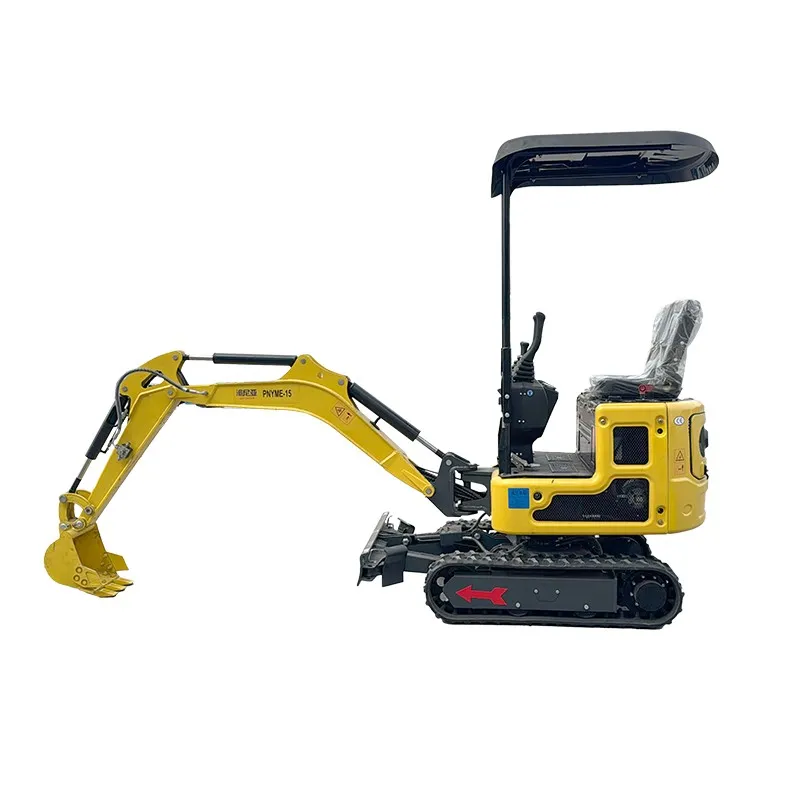
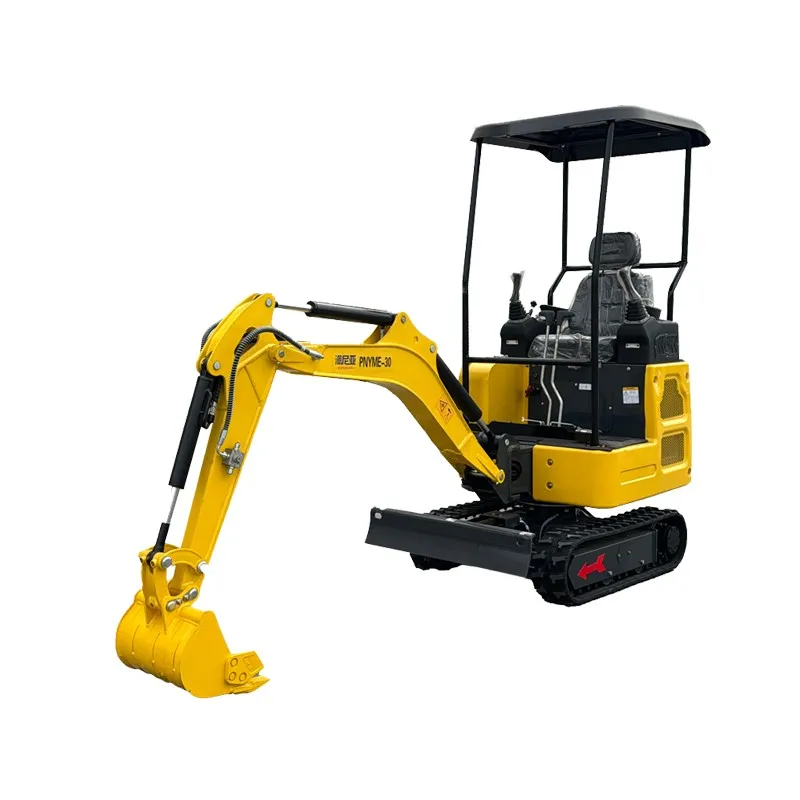
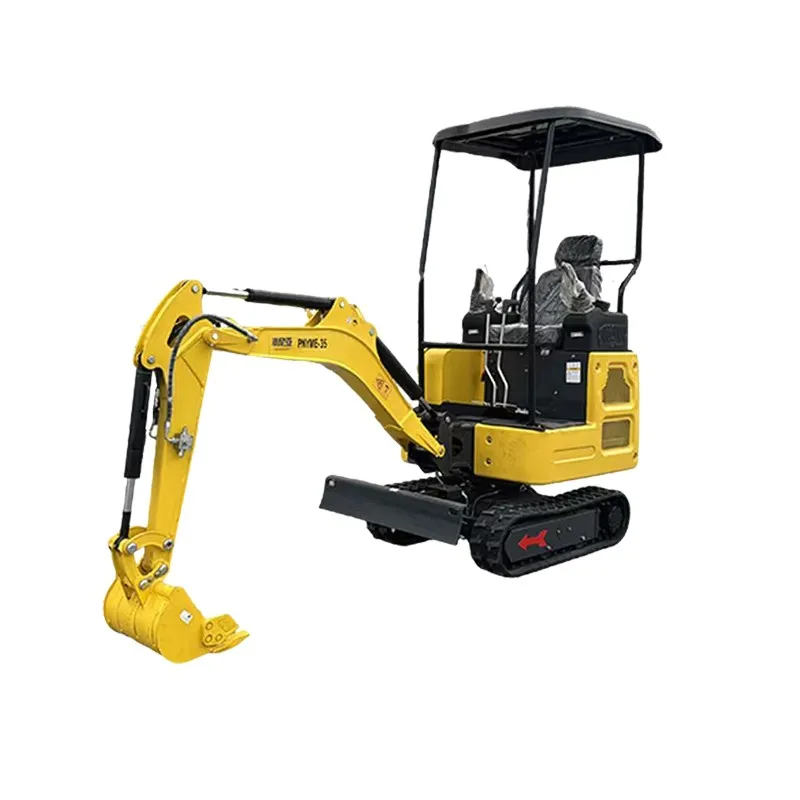
I've also seen the middle ground—the savvy buyer who needs Kubota-level durability but operates on a tighter margin. This is where the global market comes into play. Companies that have built a reputation on manufacturing and exporting reliable machinery offer a compelling alternative. They've studied the Kubota playbook: consistent quality, standardized parts, and a focus on core functionality without unnecessary electronic frills that can fail.
Take a company like Shandong Pioneer Engineering Machinery Co., Ltd. You can find their details at https://www.sdpioneer.com. Established in 2004 and now exporting to markets like the US, Canada, and Australia, they represent a segment of manufacturers that have moved beyond pure cost competition. They're competing on a value proposition that sits between the premium tier and the bargain basement. Their two-decade development, culminating in a recent relocation and expansion in 2023, signals a commitment to scaling up quality and capacity. For a buyer, this means you're not buying from a fly-by-night operation, but from an established entity with a track record. The price point here reflects manufacturing efficiency and direct-to-market trade, not just cheap labor.
The Spec-For-Spec Comparison Trap
This is a classic mistake. This 1.8-ton machine has the same digging force and is $10k less! It's tempting. But you have to dig deeper (pun intended). How is that digging force achieved? Is the hydraulic system running at the upper limit of its capacity to hit that number, potentially affecting longevity? What's the weight distribution? A slightly heavier machine with the same force might actually be more stable and productive because it doesn't waste energy bouncing around. Kubota's engineering often shines in these nuanced areas—balance, smooth hydraulics, operator ergonomics—that don't always headline a spec sheet but define the daily experience.
I once ran a side-by-side demo between a Kubota and a competitor with nearly identical paper specs. The Kubota's controls were just... smoother. The swing was more precise when placing a pipe in a tight trench. The competitor's machine jerked slightly at the end of each swing cycle. Over an 8-hour day, that slight imprecision means more operator fatigue and marginally slower cycle times. That's the price of the cheaper machine—it extracts a small tax on your operator's energy and your project's timeline every single day.
When you look at the kubota mini excavator price, a portion of it is paying for that refinement. Is it always necessary? No. For bulk excavation where precision is less critical, maybe not. But for fine grading, working near foundations, or intricate landscaping, that refinement translates directly into quality of work and reduced re-work.
Navigating Quotes and the Hidden Line Items
A quoted price is never the final number. This is universal. With Kubota, you're often dealing with a professional dealership. Their quote will typically be clear on the machine, standard bucket, and maybe a nationwide warranty. The add-ons are where you need focus: hydraulic quick couplers, auxiliary hydraulic lines for attachments, different bucket types (ditching, grading), thumb options. These can add 15-25% to the base kubota mini excavator price quickly. A good dealer will walk you through these based on your planned use.
With an export manufacturer like the mentioned Shandong Pioneer, the quote structure is different. The price is often more all-inclusive for the base machine, but you must be hyper-aware of shipping, duties, and local compliance (like EPA emissions for the US). Who handles the inland freight from the port? Who provides the warranty service in your country? These are the critical questions. Their strength, as noted in their company profile of serving diverse international markets, is in navigating these export logistics. The final landed cost is the number that matters, not the FOB price from the factory.
Never skip the step of calculating the cost of common wear items. Get a price list for track pads, sprockets, teeth, and filters for the models you're comparing. Sometimes, a cheaper machine has astronomically priced proprietary parts. Kubota parts are plentiful but carry a brand premium. Some alternative manufacturers use more generic, widely available components. This long-term maintenance cost profile is a massive part of the total price equation.
The Verdict: It's a Business Decision, Not a Purchase
So, circling back to that original search term. The kubota mini excavator price is a benchmark. It represents the gold standard in reliability, resale, and support for the 1- to 8-ton class in many markets. For businesses where uptime is non-negotiable and the cost of failure is high, it's frequently the correct choice, even at a premium.
However, the market isn't binary. The landscape has matured. Established export-focused manufacturers have closed the gap in fundamental quality. They offer a viable alternative for cost-conscious businesses that do their homework on parts and service logistics. The key is to align the machine's cost with your business's risk tolerance, operational tempo, and financial structure.
In the end, don't just ask how much is a Kubota mini excavator? Ask, What is the total cost of owning and operating a reliable mini excavator for my specific needs over the next 5 years? The answer to that question might lead you to a Kubota dealer's lot, or it might lead you to carefully vet a reliable international partner. The price is just the door into that much more important conversation.
Related Products
Related Products