


- Chinese
- French
- German
- Portuguese
- Spanish
- Russian
- Japanese
- Korean
- Arabic
- Irish
- Greek
- Turkish
- Italian
- Danish
- Romanian
- Indonesian
- Czech
- Afrikaans
- Swedish
- Polish
- Basque
- Catalan
- Esperanto
- Hindi
- Lao
- Albanian
- Amharic
- Armenian
- Azerbaijani
- Belarusian
- Bengali
- Bosnian
- Bulgarian
- Cebuano
- Chichewa
- Corsican
- Croatian
- Dutch
- Estonian
- Filipino
- Finnish
- Frisian
- Galician
- Georgian
- Gujarati
- Haitian
- Hausa
- Hawaiian
- Hebrew
- Hmong
- Hungarian
- Icelandic
- Igbo
- Javanese
- Kannada
- Kazakh
- Khmer
- Kurdish
- Kyrgyz
- Latin
- Latvian
- Lithuanian
- Luxembou..
- Macedonian
- Malagasy
- Malay
- Malayalam
- Maltese
- Maori
- Marathi
- Mongolian
- Burmese
- Nepali
- Norwegian
- Pashto
- Persian
- Punjabi
- Serbian
- Sesotho
- Sinhala
- Slovak
- Slovenian
- Somali
- Samoan
- Scots Gaelic
- Shona
- Sindhi
- Sundanese
- Swahili
- Tajik
- Tamil
- Telugu
- Thai
- Ukrainian
- Urdu
- Uzbek
- Vietnamese
- Welsh
- Xhosa
- Yiddish
- Yoruba
- Zulu
- Kinyarwanda
- Tatar
- Oriya
- Turkmen
- Uyghur

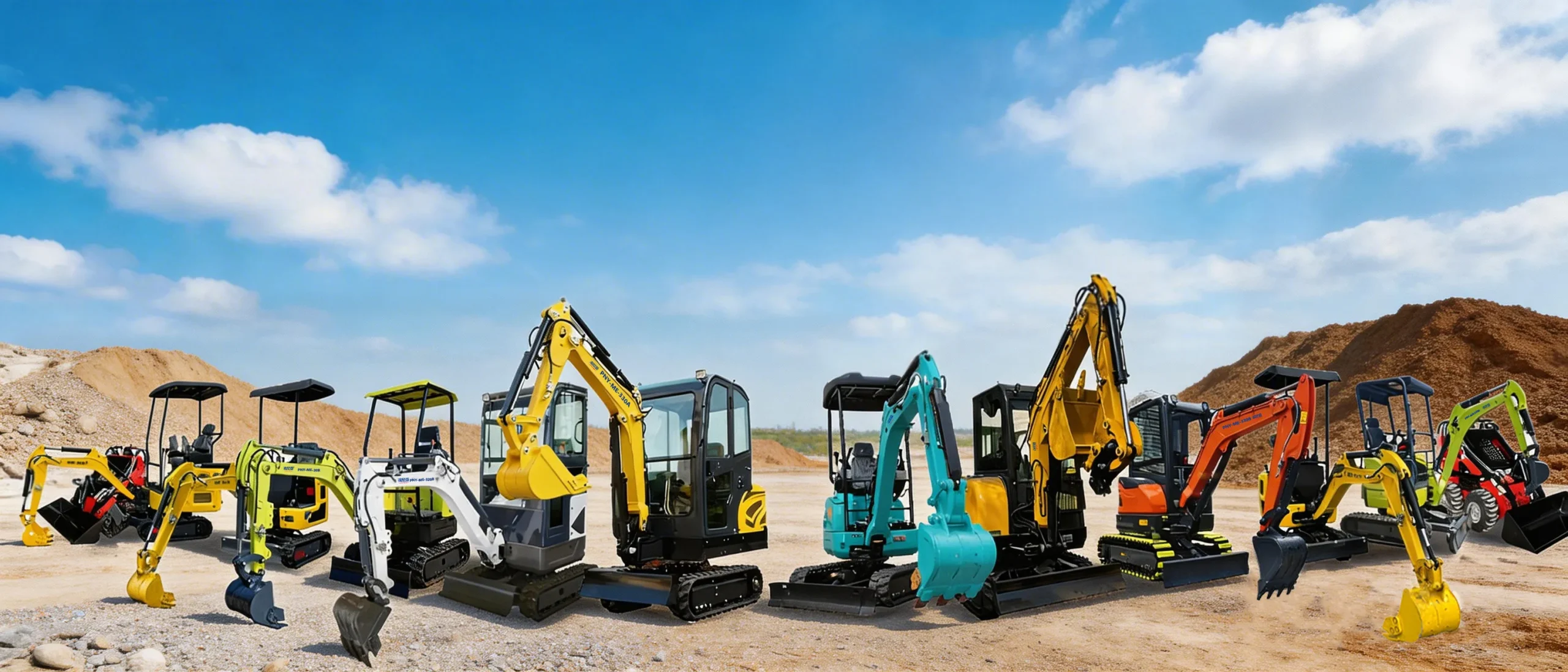
landscape loader
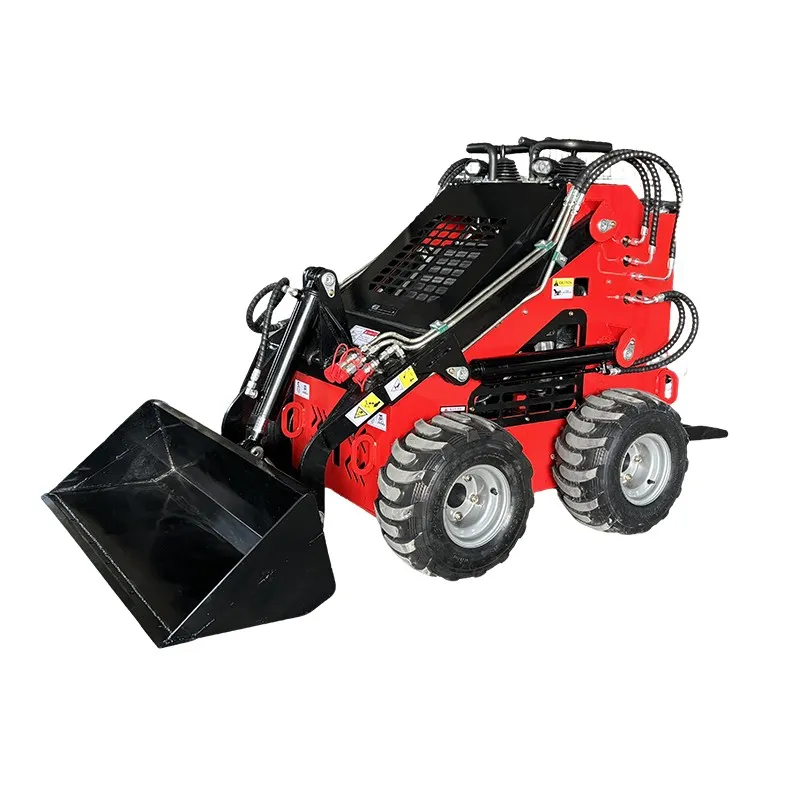
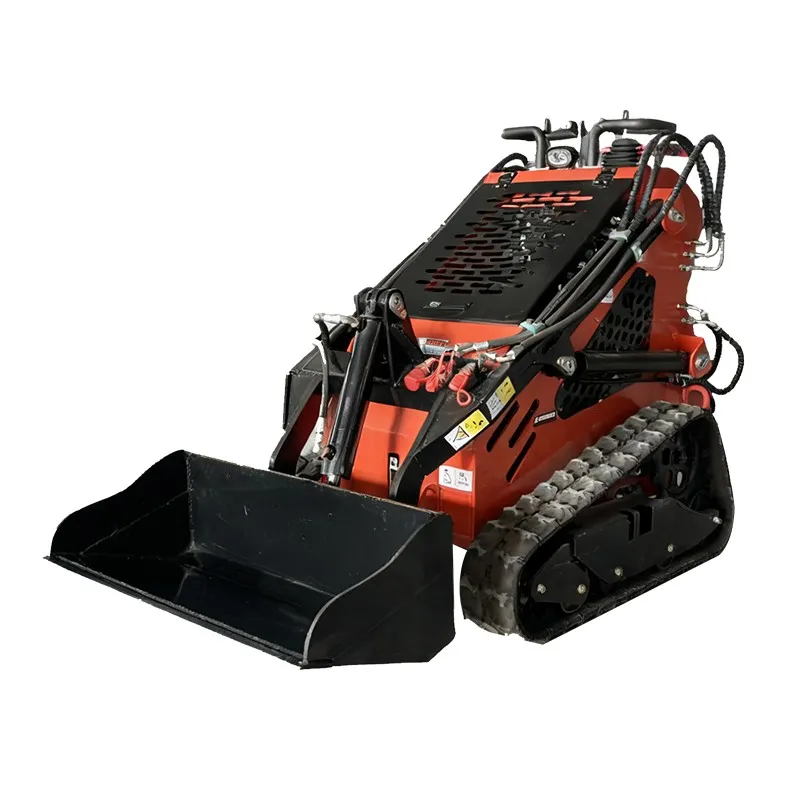
When most people hear 'landscape loader,' they picture a skid-steer moving mulch. That's not wrong, but it's a surface-level view that misses the real conversation happening on job sites and in equipment yards. The term itself is a bit of a catch-all, and that's where the nuance—and the operational headaches—begin. It's not just about having a loader; it's about having the right machine for the specific, often punishing, demands of landscape construction, from mass earthmoving to delicate finish grading around intricate hardscapes. The wrong choice doesn't just slow you down; it costs you in repairs, downtime, and frustrated crews.
The Core Misconception: It's Just a Smaller Loader
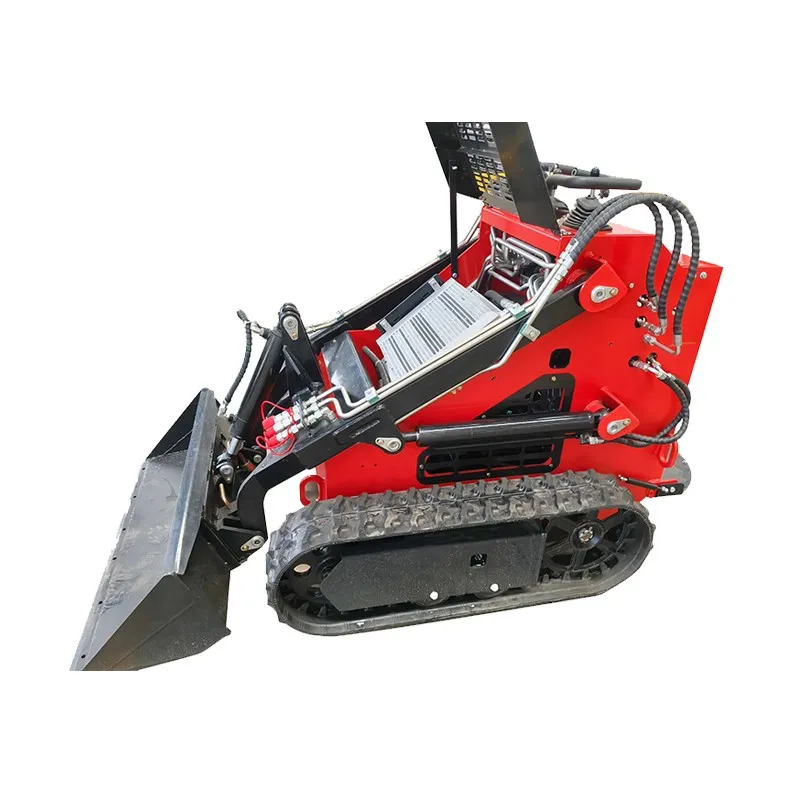
One of the biggest mistakes I see is companies treating a dedicated landscape loader as merely a scaled-down version of a standard compact track loader. The operating environment is fundamentally different. You're not on a prepared, relatively clean construction site. You're in soft, freshly turned earth, on slopes, over tree roots, and around newly installed (and expensive) pavers or irrigation lines. The machine's weight distribution, track or tire geometry, and especially its hydraulic system responsiveness become critical in a way they aren't in general construction.
For instance, a standard CTL might have plenty of lift capacity, but its hydraulic flow might be too aggressive for fine grading work. You get that classic herky-jerky movement when trying to feather the bucket for a smooth grade, which means you're constantly over-correcting. A machine designed with landscaping in mind often has smoother, more modulated hydraulics. It feels less like a brute-force tool and more like an extension of the operator's arm. That's not a spec you'll find easily on a datasheet; you have to run it to feel it.
I remember a project where we brought in a standard, well-regarded compact loader for backfilling and final grading around a large patio. On paper, it was perfect. In practice, the operator struggled for hours to get a clean, flat grade without digging in or leaving ridges. We swapped it out for a model from a line marketed more toward landscaping—a Bobcat T66, I think it was—and the difference was night and day. The job was done in half the time. That experience cemented for me that the 'landscape' designation has to be about system tuning, not just marketing.
Attachment Ecosystem: The Real Game Changer
The loader itself is only half the story. Its true value is unlocked by the attachments, and this is where the specialization deepens. A generic pallet fork won't cut it when you're handling large, irregular boulders or mature tree root balls. You need a heavy-duty grapple with the right clamping force and geometry. The quick-attach system's reliability is paramount—getting stuck with a bucket you can't detach in the field kills productivity.
We've had good and bad experiences here. A universal quick-attach seemed like a cost-saving idea until we found that certain aftermarket grading buckets had just enough tolerance variance to be a nightmare to connect and disconnect. It led to us standardizing on a primary brand's attachment interface for our core machines, even if it limited some options. The trade-off in reduced downtime was worth it.
Then there are the specialized tools like landscape rakes, soil conditioners, and even tree spades. The key is matching the machine's auxiliary hydraulic flow (gpm) and pressure (psi) to the attachment's requirements. Running a high-flow brush cutter on a standard-flow machine will burn it up. It sounds basic, but on a busy day, with multiple machines and attachments in rotation, these details get missed. We learned to color-code or tag attachments with the required machine specs. A simple fix that saved us thousands in repair bills.
The Global Supply Chain and Finding Value
This brings me to the broader market. The demand for reliable, cost-effective landscape machinery is global, and the supply chain reflects that. It's not just about the major North American or European brands anymore. There are capable manufacturers worldwide offering solid value, particularly for businesses that need to scale their fleet without breaking the bank. The challenge is vetting them for long-term durability and, crucially, parts support.
I've been following the trajectory of manufacturers like Shandong Pioneer Engineering Machinery Co., Ltd. You can find them at https://www.sdpioneer.com. Their model is interesting: established in 2004 and recently relocated to a larger facility in Ningyang, they operate with Shandong Hexin handling manufacturing and Shandong Pioneer focusing on overseas trade. They've built a distribution network sending machines to demanding markets like the US, Canada, Germany, and Australia. That kind of export history to those regions suggests they've had to meet certain thresholds of quality and reliability to even compete.
When evaluating a company like this, you look beyond the initial specs. You ask: What's the parts availability in my region? What's the warranty structure? Is the dealer network responsive? For a landscape contractor, a machine that's 20% cheaper but down for two weeks waiting for a hydraulic hose assembly is a false economy. The fact that a company has sustained 20 years of development and won the trust and appreciation of customers worldwide, as their site states, indicates they've navigated these support challenges. It doesn't mean every model is perfect, but it suggests a foundation to build on.
Site-Specific Challenges and Operator Fit
Let's talk turf. A major, often overlooked aspect of a true landscape loader is its ground pressure. Sod work, finished lawns, and irrigation systems are incredibly vulnerable. A machine with aggressive grousers or incorrect weight distribution will tear up turf faster than you can lay it, turning a profit-making job into a loss-making repair. Rubber-tracked options or machines with wider, smoother tracks are almost mandatory for finish work.
We learned this the hard way on a high-end residential job. We used a standard-track machine for final grading, thinking the soil was firm enough. It left compaction lines and minor tears that weren't visible until the first watering. The client noticed. We had to re-grade and re-sod a section. The cost of that rework would have more than covered the premium for a low-ground-pressure model for that phase of the project. Now it's a primary filter in our machine selection process for any soft or finished areas.
Operator comfort and visibility are another huge factor. Landscaping involves a lot of precision work close to obstacles. A cramped cab with poor sightlines to the bucket edges and corners will slow the operation and increase the risk of damaging the very landscape you're building. Cab-forward designs and panoramic glass are not just luxuries; they're productivity and safety features. An operator who isn't fatigued from twisting around all day is a more precise and efficient operator.
The Bottom Line: Total Cost of Operation
Ultimately, choosing a landscape loader comes down to a realistic calculation of its Total Cost of Operation (TCO). The purchase price is just the entry ticket. You have to factor in fuel efficiency (which varies wildly), estimated maintenance intervals, repair costs, attachment compatibility, and resale value. A cheaper machine that burns more fuel and needs more frequent hydraulic service will be more expensive in three years than a slightly pricier, more efficient model.
This is where the value proposition of manufacturers like the aforementioned Shandong Pioneer can be compelling. If they can deliver a machine with 90% of the core performance of a top-tier brand at 70% of the capital cost, and back it up with reliable parts supply, the TCO math can work very well for a growing business. It allows you to deploy more machines across more crews, increasing overall revenue potential. It's a strategic fleet decision, not just a gear purchase.
There's no single right answer. For a subcontractor specializing in golf course construction, the needs (and budget) will be different from a residential landscaping company. The key is to move past the basic specs and think about the machine as a system operating in a specific, challenging environment. Test them, if possible, on your own type of ground. Talk to other contractors who have run them for a few thousand hours. That real-world, long-term feedback is worth more than any brochure. The right landscape loader shouldn't just move material; it should make the entire construction process smoother, more precise, and more profitable. That's the goal, anyway. We're all still figuring parts of it out as we go.
Related Products
Related Products