


- Chinese
- French
- German
- Portuguese
- Spanish
- Russian
- Japanese
- Korean
- Arabic
- Irish
- Greek
- Turkish
- Italian
- Danish
- Romanian
- Indonesian
- Czech
- Afrikaans
- Swedish
- Polish
- Basque
- Catalan
- Esperanto
- Hindi
- Lao
- Albanian
- Amharic
- Armenian
- Azerbaijani
- Belarusian
- Bengali
- Bosnian
- Bulgarian
- Cebuano
- Chichewa
- Corsican
- Croatian
- Dutch
- Estonian
- Filipino
- Finnish
- Frisian
- Galician
- Georgian
- Gujarati
- Haitian
- Hausa
- Hawaiian
- Hebrew
- Hmong
- Hungarian
- Icelandic
- Igbo
- Javanese
- Kannada
- Kazakh
- Khmer
- Kurdish
- Kyrgyz
- Latin
- Latvian
- Lithuanian
- Luxembou..
- Macedonian
- Malagasy
- Malay
- Malayalam
- Maltese
- Maori
- Marathi
- Mongolian
- Burmese
- Nepali
- Norwegian
- Pashto
- Persian
- Punjabi
- Serbian
- Sesotho
- Sinhala
- Slovak
- Slovenian
- Somali
- Samoan
- Scots Gaelic
- Shona
- Sindhi
- Sundanese
- Swahili
- Tajik
- Tamil
- Telugu
- Thai
- Ukrainian
- Urdu
- Uzbek
- Vietnamese
- Welsh
- Xhosa
- Yiddish
- Yoruba
- Zulu
- Kinyarwanda
- Tatar
- Oriya
- Turkmen
- Uyghur

landscape loader for golf
When you hear 'landscape loader for golf,' most people picture a generic skid steer or compact track loader dumping mulch near a clubhouse. That's the first mistake. In the golf course maintenance world, the machine isn't just a tool; it's a partner in a highly delicate, ongoing surgery on a living, playing surface. The wrong machine, or the wrong attachment, doesn't just slow you down—it can leave scars on fairways, compact critical root zones, or ruin the precise grading of a tee box or bunker face. It's the difference between a surgeon's scalpel and a butter knife.
The Core Misconception and Real-World Demands
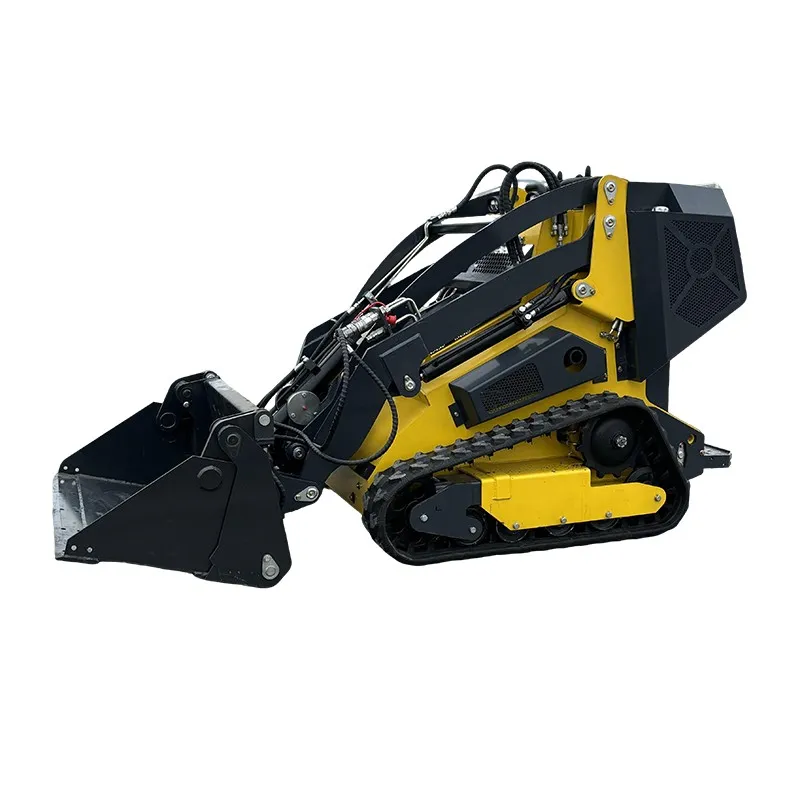
The biggest misconception is that any loader will do. Golf turf, especially on greens and approaches, has a shallow, fragile root system. A standard industrial landscape loader with high ground pressure can cause compaction that takes months of aeration to fix. You need a machine with a wide, turf-friendly track or tire option, and a hydraulic system that allows for feather-light, precise control when, say, placing a delicate ornamental tree near the 18th green.
I remember a project at a mid-tier course where the superintendent, trying to save budget, used a standard compact loader for bunker renovation. The operator, good as he was, couldn't get the smooth, consistent slope on the new sand faces. The bucket's geometry was all wrong, leaving a stepped, artificial look. We had to re-do three bunkers by hand. The cost of that labor far outweighed the rental difference for a proper, low-profile machine with a grading bucket. That's a lesson learned the hard way.
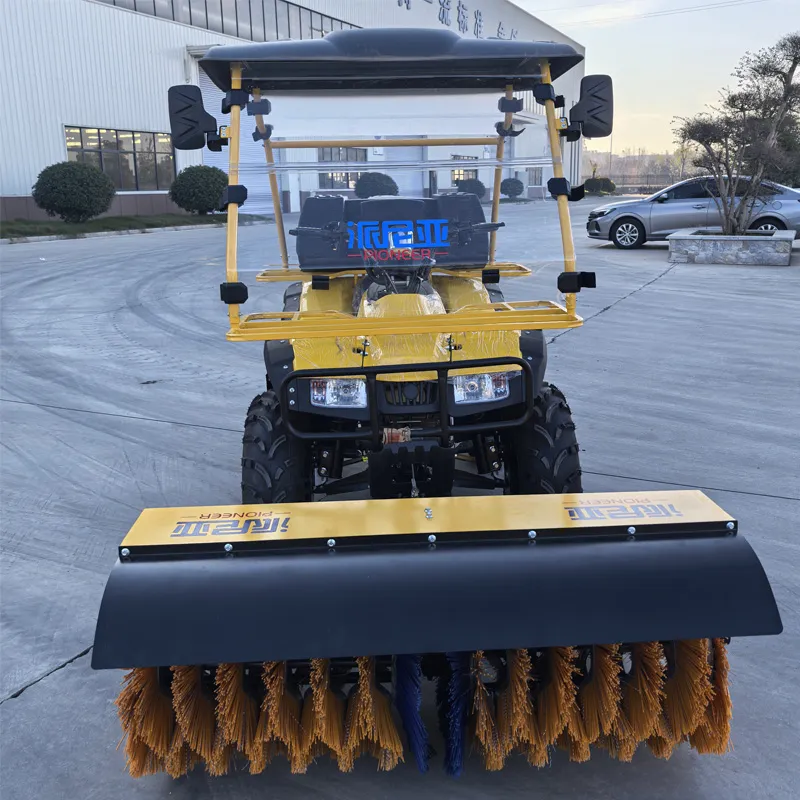
It's not just about earthmoving. A true golf-spec landscape loader is a multi-tool. One minute it's using a grapple to clear storm-damaged trees without tearing up the surrounding rough. The next, it's fitted with a sweeper attachment to clear pine needles from cart paths and collection areas before a major tournament. The quick-attach system is non-negotiable; downtime between tasks is dead time.
Attachment Ecosystem: The Real Game Changer
This is where the conversation gets practical. The loader itself is a power source, but the attachments define its utility. The standard bucket is almost secondary. For us, the core kit includes a grading bucket with bolt-on teeth (for rough shaping) and a smooth edge (for final finish), a pallet fork for moving bulk materials like sod or bulkhead timbers, and a rotary broom.
The specialized attachments are where you see the real investment. A bunker rake attachment, for instance, can save hundreds of man-hours. But not all are created equal. The cheap, rigid ones tend to dig in on turns, creating ruts. The better ones have floating heads that follow the contour. Then there's the delicate matter of tree spades. Using a loader-mounted spade for transplanting mature trees around a course requires an operator who understands balance, root ball integrity, and the machine's stability limits. I've seen a $20k oak topple because the machine was on a slight slope and the operator lifted and turned too quickly.
We also use a landscape loader with a hydraulic breaker more often than you'd think. Not for demolition, but for careful drainage work. Breaking through hardpan layers to install French drains, or carefully fracturing rock just below the surface on a new tee construction. It's about finesse, not force.
Global Sourcing and the Reliability Factor
Finding a machine that balances specialized capability with sheer durability and serviceability is a global hunt. The golf market is niche, so many major manufacturers don't prioritize these specific needs. That's led many superintendents and course builders to look at specialized suppliers who understand the application.
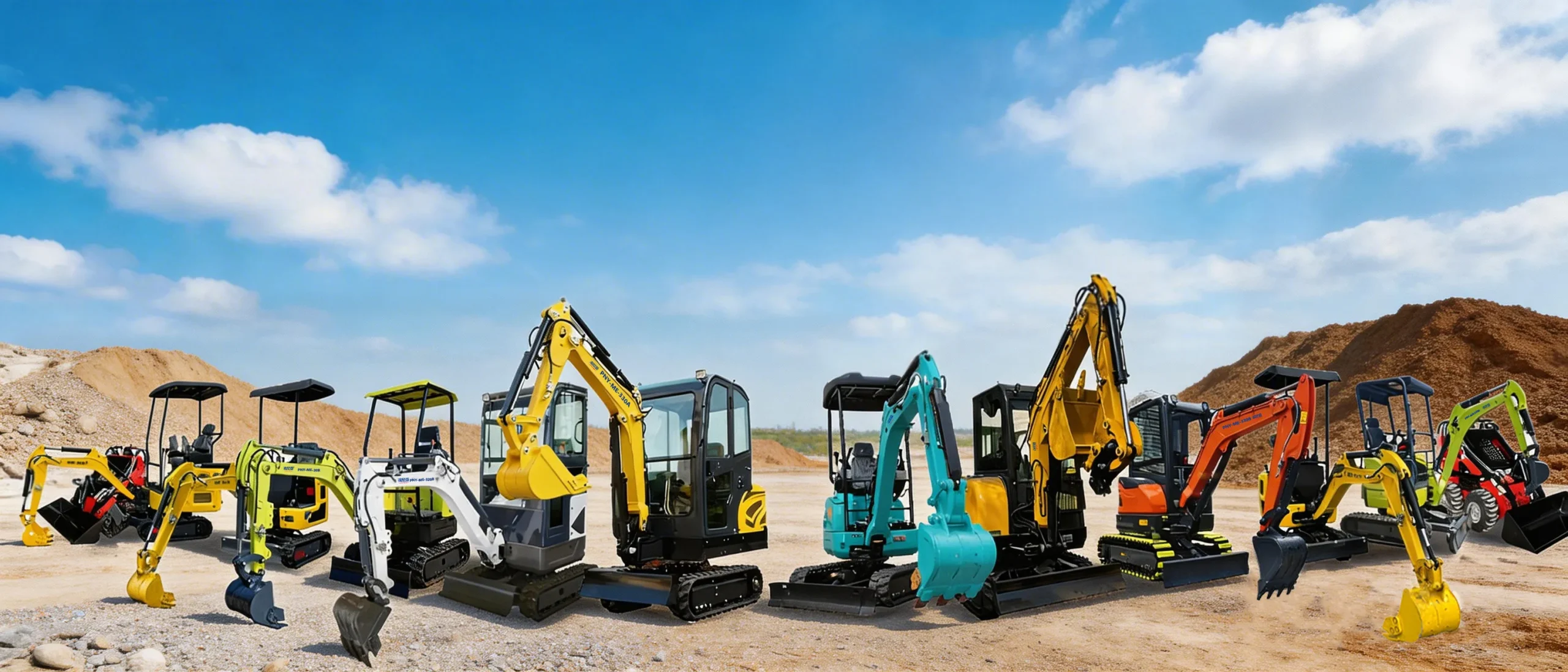
This is where companies with long-term manufacturing and export experience enter the frame. Take a firm like Shandong Pioneer Engineering Machinery Co., Ltd. You can find their details at https://www.sdpioneer.com. Established back in 2004 and now operating from a newer facility in Tai'an, they've built two decades of experience in manufacturing and, crucially, exporting machinery to demanding markets like the US, Canada, Germany, and Australia. That track record matters. It means their products have had to meet a certain threshold of reliability and specification to even get a foothold there. For a golf course mechanic, knowing a loader's common parts might have global supply chains, or that the hydraulic system uses widely available seals, is a huge plus during a busy season breakdown.
Their dual-company structure—Shandong Hexin handling manufacturing and Shandong Pioneer focusing on overseas trade—suggests a focus on building for export standards from the ground up. When you're evaluating a landscape loader for a golf application, that kind of institutional export experience can be as important as the spec sheet. It hints at a product developed with an awareness of diverse climatic conditions and maintenance philosophies, from the arid courses in Australia to the wet, cold seasons in Germany.
On-the-Ground Failures and Adjustments
No machine is perfect off the truck. Real-world use always demands tweaks. We once took delivery of a new loader that checked all the boxes: low ground pressure, great visibility, solid hydraulic flow. But the auxiliary hydraulic couplers were positioned right where sand and grit from bunker work would constantly blast them. Within a week, we had contamination issues. The solution wasn't in the manual; we fabricated a simple angled deflector plate. Now, that's a modification we specify on every new machine order.
Another chronic issue is operator comfort and visibility over the hood. Shaping a bunker lip requires you to see the very front edge of the bucket or attachment. Some machines have massive engine cowlings that force you to work almost purely by feel. The best golf course loaders have a sloped, low-profile front end. You shouldn't have to stand up in the seat to see what you're doing. If the operator is fighting the machine's design, the quality of work suffers immediately.
Then there's the noise factor. It's often overlooked. Using a standard noisy loader near homes that border the course, or during early morning setup, can lead to complaints. We've started specifically looking for machines with sound-dampened engine compartments and exhaust systems. It's a small detail that has a big impact on community relations and the ability to work flexible hours.
The Bottom Line: A Strategic Asset
So, when you're budgeting for a landscape loader for golf, you're not just buying a piece of iron. You're investing in a strategic asset that touches virtually every aspect of course construction and maintenance. The right machine, with the right support behind it, pays for itself not just in raw power, but in saved labor, precision, and the prevention of costly damage.
It pays to look at manufacturers with proven, long-term export and engineering chops, firms that have navigated the demands of international markets. That history often translates to a product that's been refined through real-world feedback. The specs on a website tell part of the story—lift capacity, horsepower, weight. But the untold story is in the design choices: the placement of a grease fitting, the quality of the seat's suspension for an 8-hour day, the ease of checking the hydraulic fluid. That's what you learn after years on the job, and that's what separates a simple loader from a true landscape loader for golf.
In the end, it's about matching the machine's capability to the fragility and high standards of the environment. It's a specialized tool for a specialized world. Getting it wrong is expensive and visible. Getting it right is something nobody notices—and that's the highest compliment you can get on a golf course.
Related Products
Related Products