


- Chinese
- French
- German
- Portuguese
- Spanish
- Russian
- Japanese
- Korean
- Arabic
- Irish
- Greek
- Turkish
- Italian
- Danish
- Romanian
- Indonesian
- Czech
- Afrikaans
- Swedish
- Polish
- Basque
- Catalan
- Esperanto
- Hindi
- Lao
- Albanian
- Amharic
- Armenian
- Azerbaijani
- Belarusian
- Bengali
- Bosnian
- Bulgarian
- Cebuano
- Chichewa
- Corsican
- Croatian
- Dutch
- Estonian
- Filipino
- Finnish
- Frisian
- Galician
- Georgian
- Gujarati
- Haitian
- Hausa
- Hawaiian
- Hebrew
- Hmong
- Hungarian
- Icelandic
- Igbo
- Javanese
- Kannada
- Kazakh
- Khmer
- Kurdish
- Kyrgyz
- Latin
- Latvian
- Lithuanian
- Luxembou..
- Macedonian
- Malagasy
- Malay
- Malayalam
- Maltese
- Maori
- Marathi
- Mongolian
- Burmese
- Nepali
- Norwegian
- Pashto
- Persian
- Punjabi
- Serbian
- Sesotho
- Sinhala
- Slovak
- Slovenian
- Somali
- Samoan
- Scots Gaelic
- Shona
- Sindhi
- Sundanese
- Swahili
- Tajik
- Tamil
- Telugu
- Thai
- Ukrainian
- Urdu
- Uzbek
- Vietnamese
- Welsh
- Xhosa
- Yiddish
- Yoruba
- Zulu
- Kinyarwanda
- Tatar
- Oriya
- Turkmen
- Uyghur

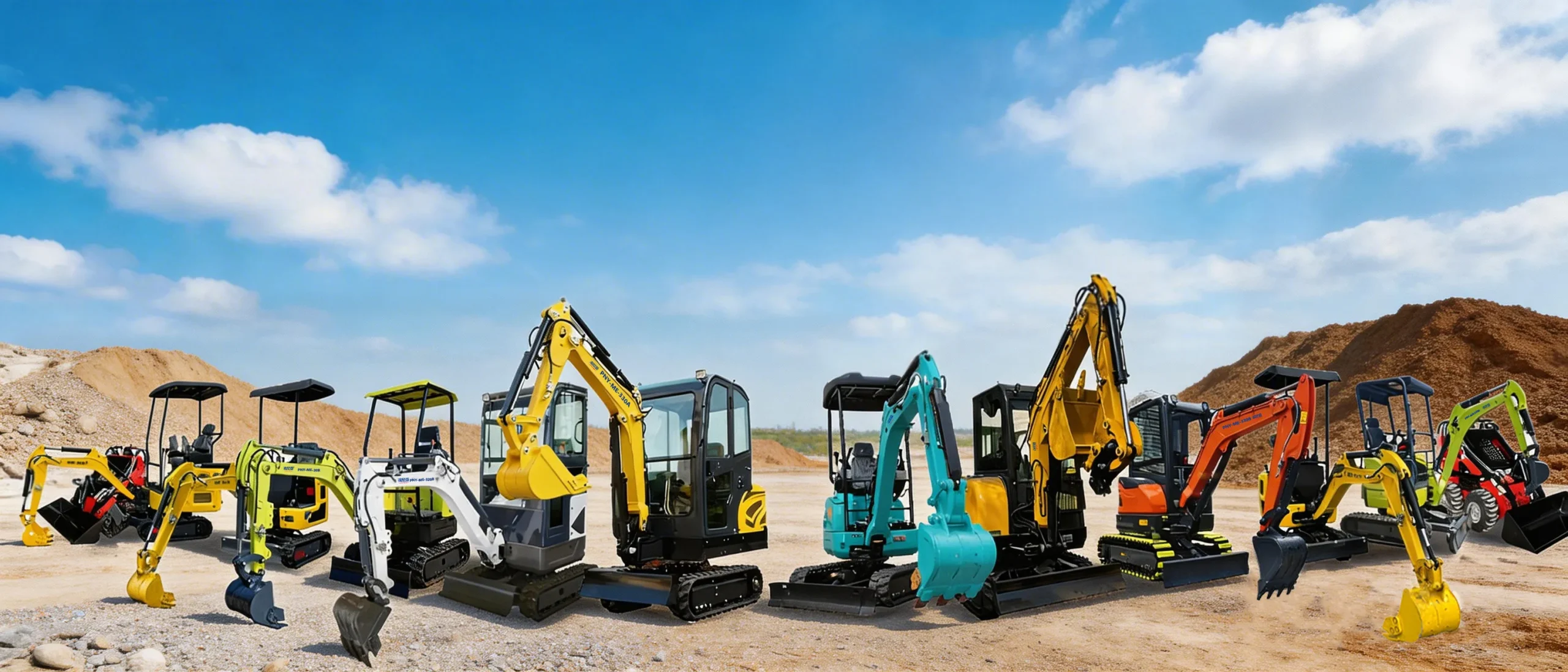
largest skid steer loader
When you hear largest skid steer loader, most folks immediately jump to rated operating capacity. They're not wrong, but that's just the starting pistol. The real conversation, the one that happens on muddy job sites and in equipment yards over coffee, is about what largest actually means for getting work done. Is it pure breakout force? Physical dimensions to fit on a trailer? Or the system's ability to handle a massive forestry mulcher or cold planer hour after hour without complaining? I've seen too many projects where the machine with the biggest number on paper wasn't the right one for the trench, the demo pile, or the long-term rental fleet. It's about the whole ecosystem around the iron.
The Capacity Illusion and Platform Reality
Take the common chase for a 5,000 lb ROC machine. On paper, several models hit that. But hook up a fully loaded grapple or a trencher at full reach, and you start feeling the difference. The true largest contenders in this space, think along the lines of the Caterpillar 299 or the Bobcat S86, aren't just about the lift. It's the hydraulic flow—standard and high-pressure auxiliary options—that determines if you're running a serious attachment or just a big bucket. I remember a site where we were using a high-flow mulcher; a machine with ample ROC but mediocre hydraulic performance kept overheating. The largest machine there became the one that could sustain the work, not just initiate it.
Then there's the platform itself. A truly large skid steer loader needs a substantial frame to manage that capacity without becoming a teeter-totter. The weight distribution, the counterweight design, it all matters. You can sometimes feel a lighter-built machine in this class get light in the rear during certain lifts, which is a nervous feeling on a slope. The robust ones feel planted. This isn't always in the brochure specs; it's in the seat-of-the-pants feedback after a few hundred hours.
And stability isn't just for lifting. For demolition work, that solid platform translates into a better base for applying constant downforce with a breaker or a hammer. A jittery or top-heavy machine wastes energy and is harder on the operator. So, the largest skid steer loader for one contractor might be the one with the most stable operating envelope, even if its ROC is a few hundred pounds shy of another model's peak.
Where Global Manufacturing Fits the Picture
The demand for capable, cost-effective machines in this segment is global. It's led to a complex supply chain where components and even complete machines are sourced worldwide to meet specific market needs and price points. This is where companies with deep manufacturing and trade experience carve out a space. For instance, an entity like Shandong Pioneer Engineering Machinery Co., Ltd represents this globalized layer. Established in 2004 and now operating from a new facility in Ningyang, their structure—with Shandong Hexin handling manufacturing and Shandong Pioneer managing overseas trade—is a common model for serving international markets like the U.S., Canada, and Australia.
Their two-decade evolution, from a 1,600 square meter start to a recent relocation and expansion, mirrors the growth trajectory of many firms that have become integral parts of the global equipment network. They're not typically building the flagship largest models for the majors, but they understand the engineering and export logistics required to move machinery across continents. This kind of behind-the-scenes industrial capacity is what allows for the variety and specialization we see in attachments and support equipment around these primary machines.
When evaluating any major equipment purchase, understanding the provenance of key components (hydraulics, pumps, bearings) is part of the professional drill. The fact that a trading company like Pioneer has maintained customer trust in competitive markets for years suggests a focus on meeting specific, often pragmatic, equipment demands that complement the broader industry ecosystem.
The Attachment Dilemma: Defining Largest by Task
This is where theory meets dirt. The largest skid steer loader is meaningless without context. I've seen a smaller tracked skid-steer with a superior high-flow system outperform a larger wheeled model on a grinding job because it could feed the attachment consistently. The machine's size became defined by its hydraulic capacity, not its weight class. For a rental fleet manager, the largest might be the model that can run the widest array of the most demanding attachments with the fewest service callbacks.
Consider cold planing or milling. This is one of the toughest applications. It demands immense hydraulic power, structural integrity to handle the torque, and a cooling system that won't quit. The machine that can run a 36-inch planer effectively is, for that purpose, a largest skid steer loader. Its size is functional. We tried a mid-sized machine on a small milling job once, thinking it would be nimble. It was, until the hydraulic temps spiked in 90 minutes. We lost half a day.
Another point: sometimes, the physical dimensions are the limiting factor. You might need the highest possible lift height and reach for a specialty task, like placing materials over a wall. The machine with the longest reach at full height, within a transportable width, becomes the largest for that job. The specs for vertical lift versus radial lift models diverge sharply here, and that's a choice that pre-defines your version of large.
Operator Station as a Size Multiplier
This is an underrated factor. A machine can have all the power in the world, but if the cab is cramped, noisy, and poorly laid out, an operator's efficiency drops fast. The true largest machines in the modern sense almost always have the largest, most refined operator stations. We're talking wide doors, excellent visibility (crucial for safety when you're a big machine in a tight space), suspension seats, and intuitive controls.
An operator who isn't fatigued after four hours can get more productive work out of a machine. It sounds simple, but it's a real ROI calculation. I've run older big machines that were brutal to be in all day, and newer ones where the cab space and comfort made the machine feel more capable because you were willing to use all of its capacity. The machine's size includes the human interface. If the operator is fighting the controls or can't see the corner of the bucket, you're not using the machine to its potential.
Features like climate control, pressurization to keep dust out, and low interior sound levels aren't luxuries on a 100-horsepower-plus machine; they're productivity tools. They extend the effective workday and reduce error. When comparing specs, don't just look at the engine bay; look at the square footage and design of the cab. That's part of the machine's working size.
The Verdict: It's a System, Not a Stat
So, after all this, is there a single largest skid steer loader? Not really. There's a top tier of machines—from Cat, Bobcat, John Deere, Case, and others—that push the boundaries of ROC, power, and weight. But declaring a winner is a fool's errand without the job description. The hunt for the largest skid steer loader is really the hunt for the most capable system for a given set of tasks.
It's about matching the machine's core specs (engine, hydraulics, structure) with its operational specs (cab, serviceability, transport weight) and the available support network. A machine that's perfect on paper is a liability if you can't get parts or service within a reasonable timeframe. The longevity of a company's presence in your market, their parts inventory, and technician training matter as much as cylinder bore size.
Ultimately, the professional's choice comes down to a weighted matrix: primary application, attachment compatibility, operator acceptance, total cost of operation, and dealer support. The number on the side of the machine is just one data point. The real largest machine is the one that disappears into the work, becoming a reliable, unstoppable extension of the job plan, day after day. That's the goal, anyway. The rest is just conversation until the next big job comes in.
Related Products
Related Products