- Chinese
- French
- German
- Portuguese
- Spanish
- Russian
- Japanese
- Korean
- Arabic
- Irish
- Greek
- Turkish
- Italian
- Danish
- Romanian
- Indonesian
- Czech
- Afrikaans
- Swedish
- Polish
- Basque
- Catalan
- Esperanto
- Hindi
- Lao
- Albanian
- Amharic
- Armenian
- Azerbaijani
- Belarusian
- Bengali
- Bosnian
- Bulgarian
- Cebuano
- Chichewa
- Corsican
- Croatian
- Dutch
- Estonian
- Filipino
- Finnish
- Frisian
- Galician
- Georgian
- Gujarati
- Haitian
- Hausa
- Hawaiian
- Hebrew
- Hmong
- Hungarian
- Icelandic
- Igbo
- Javanese
- Kannada
- Kazakh
- Khmer
- Kurdish
- Kyrgyz
- Latin
- Latvian
- Lithuanian
- Luxembou..
- Macedonian
- Malagasy
- Malay
- Malayalam
- Maltese
- Maori
- Marathi
- Mongolian
- Burmese
- Nepali
- Norwegian
- Pashto
- Persian
- Punjabi
- Serbian
- Sesotho
- Sinhala
- Slovak
- Slovenian
- Somali
- Samoan
- Scots Gaelic
- Shona
- Sindhi
- Sundanese
- Swahili
- Tajik
- Tamil
- Telugu
- Thai
- Ukrainian
- Urdu
- Uzbek
- Vietnamese
- Welsh
- Xhosa
- Yiddish
- Yoruba
- Zulu
- Kinyarwanda
- Tatar
- Oriya
- Turkmen
- Uyghur

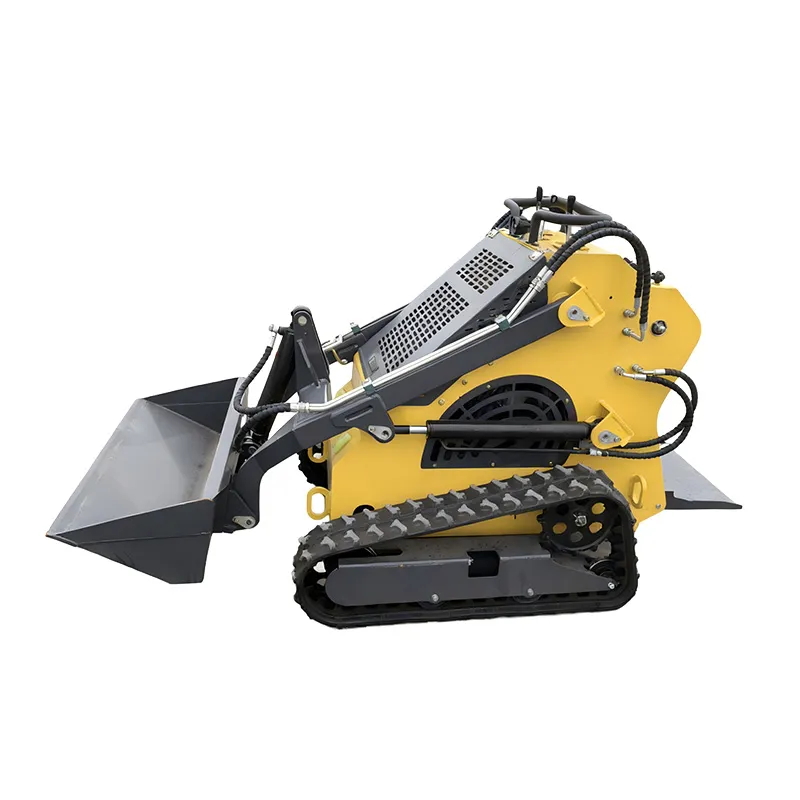
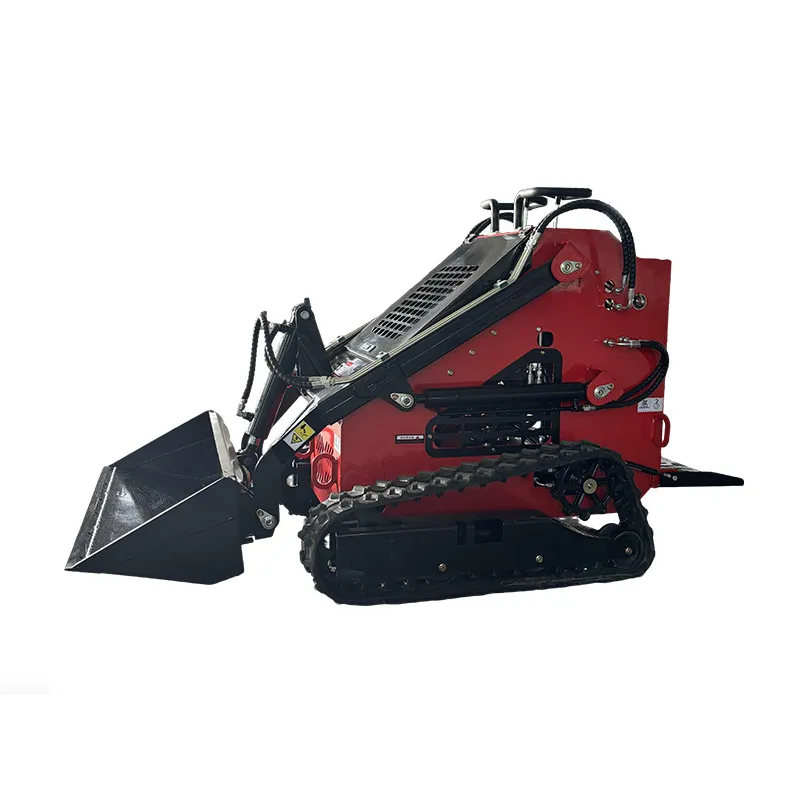
leading compact track loader factory
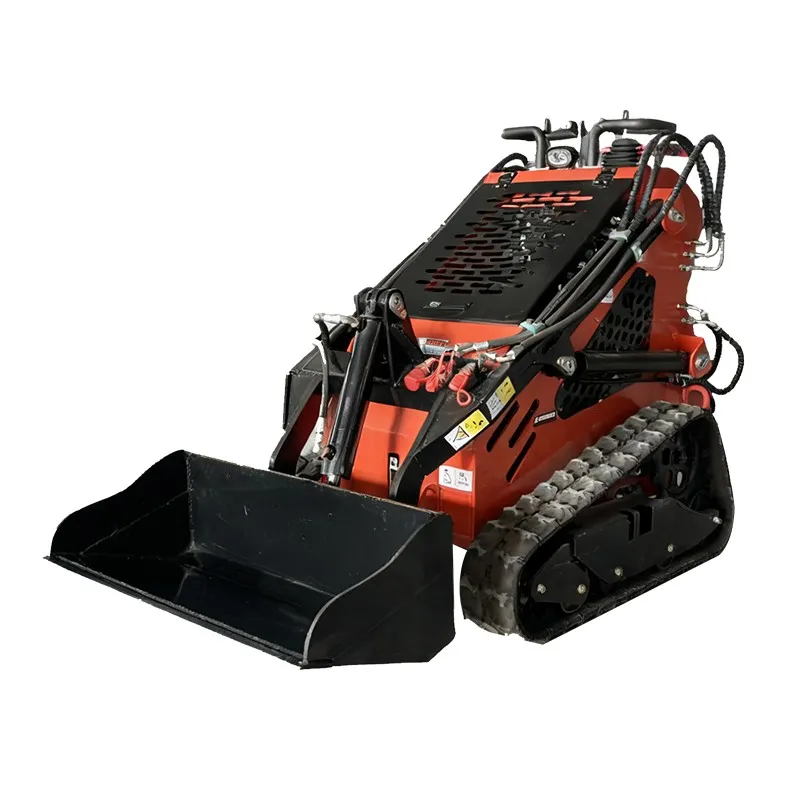
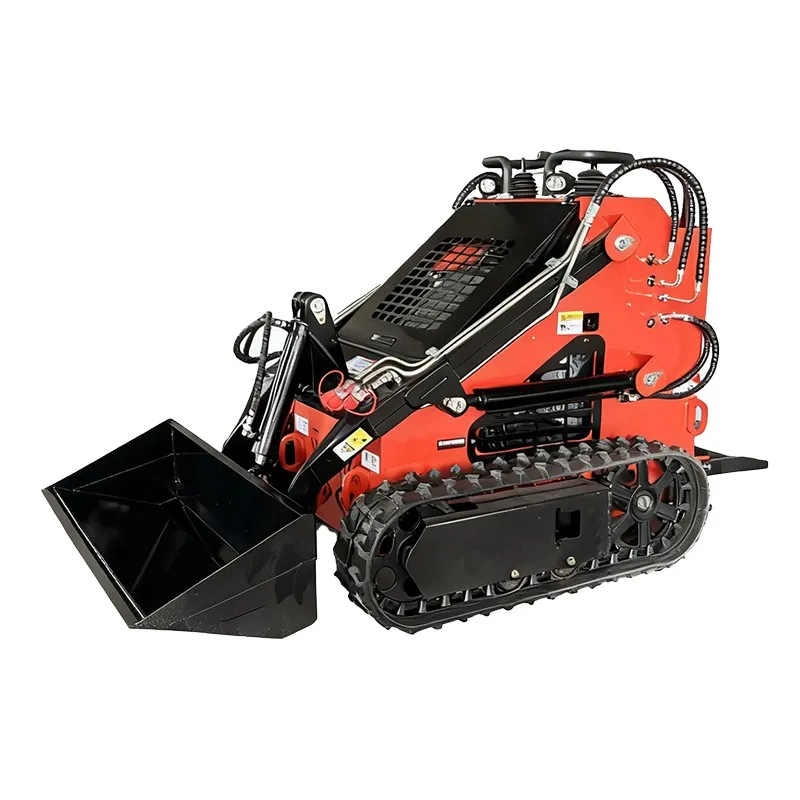
When you hear leading compact track loader factory, most people think of massive scale, robotic assembly lines, and brand names plastered on every job site. That's a common trap. The real lead isn't just about output volume; it's about the depth of problem-solving embedded in the machine, the kind you only learn from two decades of field failures and global feedback. It's the grind in a 1,600 square meter workshop that matters as much as the final product on a site in Canada or Australia.
The Foundation Isn't Glamorous
I remember visiting the original facility of Shandong Pioneer Engineering Machinery Co., Ltd a few years back. Established in 2004 in Jining, the place was tight, operations were lean. You wouldn't call it leading by glossy brochure standards. But that's where the nuance is. Their focus wasn't on looking like a giant; it was on building a machine that could handle a full day of trenching in wet clay without throwing a track or overheating. That practical, problem-first mentality is what separates a marketing claim from a workshop reality. They were solving for durability and serviceability from the ground up, because their trade arm, dealing directly with overseas buyers, was getting raw, unfiltered complaints from the field.
This feedback loop is critical. A distributor in Germany isn't calling about your marketing stats; they're calling because a hydraulic line routing is causing premature wear in cold climates. A leading compact track loader factory has a system to ingest that, quickly prototype a fix, and validate it. Pioneer's setup, with Hexin handling manufacturing and Pioneer handling overseas trade, essentially built this loop into their DNA. The trade team's survival depended on relaying precise pain points back to the factory floor.
Their relocation in August 2023 to a new site in Ningyang wasn't just about more space. It was a logistical and process upgrade born from those 20 years of accumulation. You don't move your entire operation on a whim. It's a response to bottlenecks identified over thousands of units—maybe needing a better flow for final drive assembly or a more robust testing bay for the electrical systems that now dominate machine intelligence. The move signals a shift from a capable workshop to a systematized factory aimed at consistent, scalable quality.
Defining Leading Through the Undercarriage
If you want to judge a CTL, forget about the cab comforts first. Get underneath it. The undercarriage is the profit center—or the money pit. A leading manufacturer's obsession starts here. We learned this the hard way early on, sourcing track chains and rollers that looked spec-perfect on paper but failed miserably in abrasive Australian soils. The issue wasn't hardness; it was the seal design letting in fine dust.
Pioneer's approach, from what I've seen in their component selection and assembly process, is to treat the undercarriage as a integrated system, not a bundle of purchased parts. They've had to. When your products are shipped to markets as diverse as the arid U.S. Midwest and damp German forests, you can't have a one-size-fits-all track tension or roller spacing. Their trade company's direct customer relationships allow them to specify and sometimes customize this system. For instance, a configuration for sandy soils might use wider shoes and a different track link pitch to prevent packing and reduce rolling resistance.
This is where the engineering in their company name proves its weight. It's not decorative. It's the daily grind of calculating load distribution, optimizing idler placement, and selecting pivot bushing materials that can withstand both high-impact loading and constant, slow oscillation. The real test is whether a contractor can get 2,500 hours out of it before the first major undercarriage rebuild. That's the benchmark their global customers, especially in cost-conscious markets, silently enforce.
The Export Crucible: Trust Isn't Given, It's Earned
Selling to the U.S., Canada, Germany, Australia—these are punishing markets with high expectations and low tolerance for downtime. Winning trust and appreciation there, as their site mentions, is the ultimate proof of concept. It's not about being the cheapest; it's about predictability. A dealer in Canada needs to know that the machine he sold will start in -25°C and that the joystick controls will feel intuitive to an operator used to a major brand.
I've seen factories fail here by trying to copy specs without understanding context. They'll match the lift capacity and breakout force but miss the nuance of hydraulic response curve or the placement of service points. Pioneer's model, with its trade company acting as the frontline, forces a deeper adaptation. Their website, https://www.sdpioneer.com, serves as a hub, but the real work is in the tailored communication and support behind it. The trust comes from solving a thorny hydraulic issue for a miner in Australia within 48 hours, not from a slick online presentation.
This export pressure creates a culture of over-engineering in the best way. For example, electrical systems are now a huge point of failure. A leading factory will use connectors and wiring harnesses that exceed the basic vibration and moisture specs. They'll build in diagnostic ports that output clear, actionable codes, not just generic alerts. This attention to the unsexy details is what prevents a minor fault from becoming a site-stopping catastrophe halfway across the world. It's what turns a single sale into a fleet order.
The Relocation as a Strategic Pivot
Their move to Ningyang in 2023 is a data point worth dissecting. After 20 years, you don't just pick up and move for more square footage. You move to implement a new production philosophy. The old 1,600 sqm facility likely had constraints that limited process flow—maybe painting and final assembly were too close, or logistics for just-in-time component delivery were choked.
The new facility is an opportunity to build a line that reflects lessons learned. Think about material flow: from receiving forged components to the machining cell, to sub-assembly of the boom, to marriage with the chassis, to fluid filling and testing. A modern, leading compact track loader line needs flexibility to run different models (standard flow, high flow) without massive changeover downtime. It needs a dynamometer test cell where every machine can be run through a simulated duty cycle—not just started and moved off the line. This is the level of investment that speaks to a commitment to moving from a good manufacturer to a leading one.
It also speaks to scaling support. A larger facility can house a larger parts warehouse and a more technical training center for international dealers. This turns the factory from just a production site into a global support hub. When a dealer from Europe visits, seeing an organized, scalable operation builds more confidence than any sales pitch. It shows the backend is being built to match the front-end sales ambition.
The Unseen Benchmark: The Second Owner Test
Here's a dirty little secret of the equipment world: the true quality of a machine is often determined by its second owner. The first owner might be under warranty and have a dedicated service relationship. The second owner is often a smaller outfit, more price-sensitive, and running the machine harder. If the machine holds up and remains economical to maintain, that's the ultimate endorsement.
A factory that is thinking like a leader designs for this lifecycle. It means using standardized, commonly available bearings and seals. It means designing a cooling module that can be cleaned without removing three other components. It means providing clear, non-proprietary service manuals. From my observations of the industry, companies that thrive on long-term exports, like the Shandong Pioneer and Hexin structure seems to aim for, bake this in. They know their reputation in, say, the U.S. used equipment market will dictate their ability to command a price premium for new machines.
This philosophy impacts everything from the software (is it locked down or can a decent mechanic recalibrate it?) to the structure (are there grease points everywhere they're needed, or did they skimp to save 15 minutes on the assembly line?). The goal is to build a machine that doesn't just perform when new, but one that a contractor 5,000 hours in still feels was a smart buy. That's the legacy a leading compact track loader factory is really building, one robust undercarriage and sensible service point at a time. It's a slow, unglamorous climb, but it's the only one that matters.
Related Products
Related Products