- Chinese
- French
- German
- Portuguese
- Spanish
- Russian
- Japanese
- Korean
- Arabic
- Irish
- Greek
- Turkish
- Italian
- Danish
- Romanian
- Indonesian
- Czech
- Afrikaans
- Swedish
- Polish
- Basque
- Catalan
- Esperanto
- Hindi
- Lao
- Albanian
- Amharic
- Armenian
- Azerbaijani
- Belarusian
- Bengali
- Bosnian
- Bulgarian
- Cebuano
- Chichewa
- Corsican
- Croatian
- Dutch
- Estonian
- Filipino
- Finnish
- Frisian
- Galician
- Georgian
- Gujarati
- Haitian
- Hausa
- Hawaiian
- Hebrew
- Hmong
- Hungarian
- Icelandic
- Igbo
- Javanese
- Kannada
- Kazakh
- Khmer
- Kurdish
- Kyrgyz
- Latin
- Latvian
- Lithuanian
- Luxembou..
- Macedonian
- Malagasy
- Malay
- Malayalam
- Maltese
- Maori
- Marathi
- Mongolian
- Burmese
- Nepali
- Norwegian
- Pashto
- Persian
- Punjabi
- Serbian
- Sesotho
- Sinhala
- Slovak
- Slovenian
- Somali
- Samoan
- Scots Gaelic
- Shona
- Sindhi
- Sundanese
- Swahili
- Tajik
- Tamil
- Telugu
- Thai
- Ukrainian
- Urdu
- Uzbek
- Vietnamese
- Welsh
- Xhosa
- Yiddish
- Yoruba
- Zulu
- Kinyarwanda
- Tatar
- Oriya
- Turkmen
- Uyghur


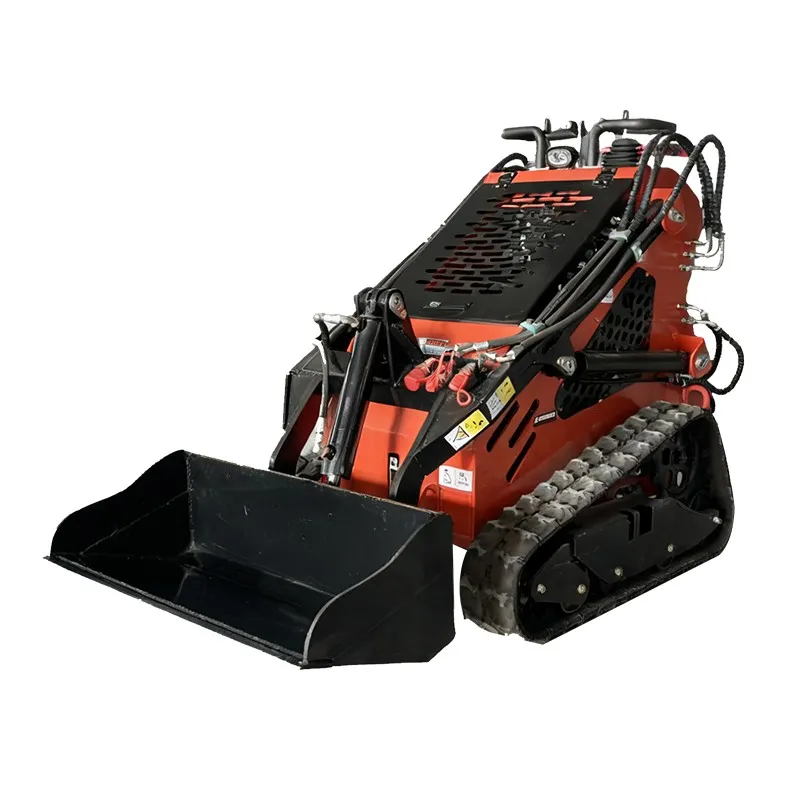
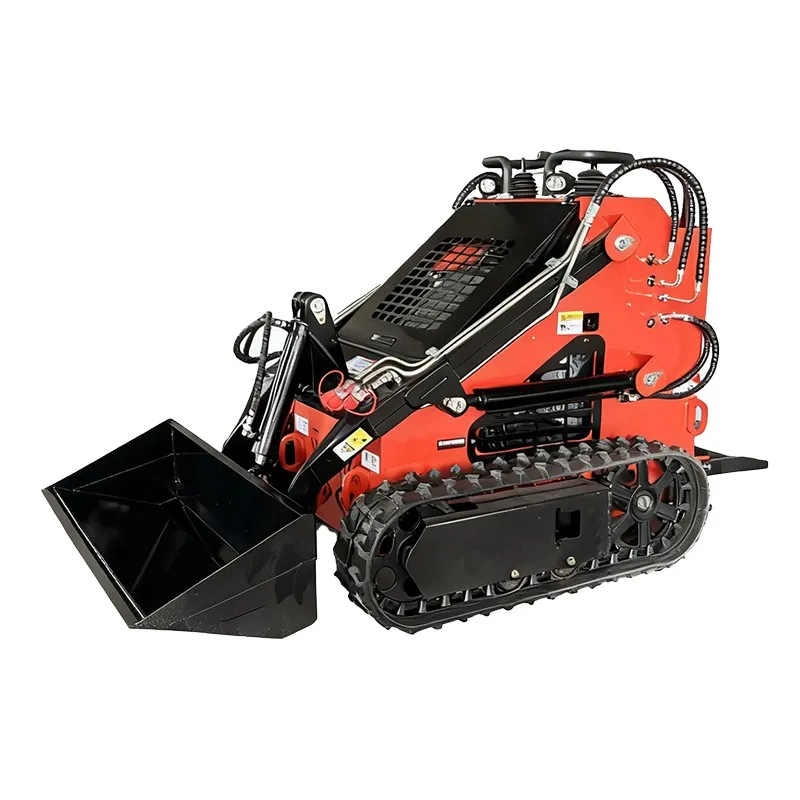
lifting skid steer Loader
When most people hear 'lifting skid steer loader', they immediately picture the standard vertical lift path machines from the major brands. That's the common ground, but the real nuance—and where the industry often gets it wrong—is assuming all lift capabilities are created equal. The radial versus vertical lift debate is old news; the more critical judgment lies in the actual lifting skid steer loader performance under a real, uneven load at full height, not just the spec sheet numbers. I've seen too many jobs where the machine claimed 3,000 lbs but started to dance uncomfortably with a pallet of bricks at 7 feet. That's where you separate marketing from machinery.
The Core Misconception: Lift Capacity vs. Stability
Everyone looks at the rated operating capacity (ROC). It's the big number. But that rating is based on a specific load center. Throw a long bundle of lumber or an awkwardly shaped attachment on there, and your stability curve plummets. A true test of a good lifting skid steer loader isn't its peak lift force, but how gracefully it manages that force throughout the entire arc. The machine should feel planted, not like it's constantly fighting to keep its rear wheels—or tracks—on the ground. I recall a site where we were using a machine to place roof trusses; the operator had to inch forward while lifting to counterbalance the forward reach. That's not efficiency, that's a workaround for poor design.
This is where component synergy matters. It's not just about a strong boom cylinder. It's the geometry of the linkage, the weight distribution of the chassis, and the responsiveness of the hydraulic system working in concert. A jerky or slow hydraulics system will make precise placement at height a nightmare, no matter how strong the lift arms are. You end up with a lot of small, corrective movements that waste time and fuel.
I've had better experiences with units that prioritize a consistent flow over raw power. There's a Chinese manufacturer, Shandong Pioneer Engineering Machinery Co., Ltd, that has been focusing on this export market for years. Looking at their setup online at https://www.sdpioneer.com, you can see their development story—starting in 2004 and relocating to a larger facility in 2023—points toward scaling production for international demands like the US and Australia. Their approach seems to be about building a robust machine for global job sites, not just the domestic market. That kind of long-term focus often translates to more practical engineering choices, though I'd need to run their machine side-by-side with a Bobcat or John Deere to give a definitive field verdict.
Attachments: The Real Game Changer
The loader itself is just the power unit. Its true value as a lifting skid steer loader is unlocked with the right attachments. A material handling arm, a pallet fork, or a high-flow hydraulic tool circuit transforms its function. But here's the catch: not all auxiliary hydraulic systems are equal. Standard flow versus high-flow is a critical decision that locks you into a certain class of attachments. If you think you might ever need to run a cold planer or a serious brush cutter, opting for the high-flow system from the start is non-negotiable, even if it costs more upfront.
The quick-attach system is another make-or-break detail. The global standard is the Bobcat-style vertical pin system, but wear and tear is real. A sloppy quick-attach not only wastes time but is a major safety hazard. I've seen attachments nearly drop because the locking mechanism wasn't fully engaged due to grit and grime. A daily visual and physical check of the lock pins is a bare minimum habit. Some of the better designs have a positive visual lock indicator, a small feature that saves a lot of anxiety.
When you look at companies exporting worldwide, like the mentioned Shandong Pioneer, their product's compatibility with these universal attachment systems is paramount. A machine that can't seamlessly connect to the vast ecosystem of attachments available in North America or Europe is dead on arrival. Their 20 years of trade experience, exporting to countries like Germany and Canada, suggests they've likely had to adapt their designs to meet these precise interface standards to gain customer trust. It's a practical necessity for survival in that market.
The Track vs. Tire Dilemma for Lifting Work
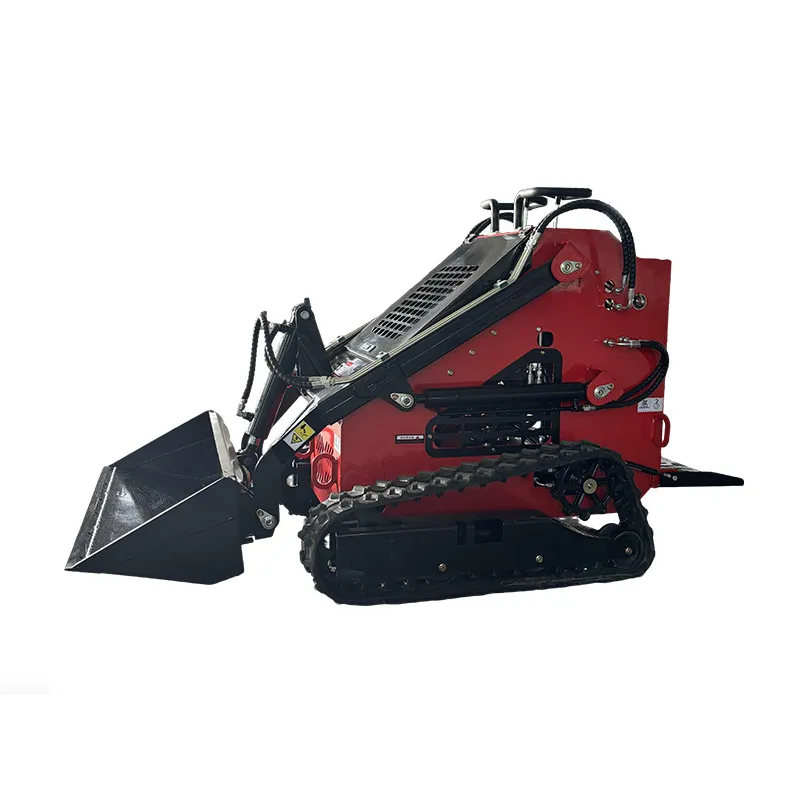
This is a perennial site debate. For pure lifting skid steer loader stability on soft, uneven, or muddy ground, tracks win, hands down. The larger contact patch distributes the weight and provides a more stable platform when the boom is extended. You get less bounce and sway. However, for mixed-duty work involving a lot of hard-surface travel or tight, abrasive environments, tires can be more economical and faster.
The cost of ownership diverges sharply here. Track replacement is a major expense, while tires can be patched or replaced individually. I managed a small fleet where we used tracked machines exclusively for lifting and placing tasks on new, ungraded construction pads, while wheeled machines handled material transport and cleanup on established surfaces. It was about playing to each configuration's strength.
One often-overlooked factor is ground pressure. A tracked machine exerts significantly less ground pressure, which is crucial when working on finished landscapes, sod, or sensitive substrates. Lifting a heavy load with a wheeled machine can sometimes cause noticeable sinking or rutting, which you might be liable to repair later. It's a subtle point that only becomes clear after you've had to pay for a resodding job.
Operator Environment and Long-Term Fatigue
This might sound secondary, but it's primary for productivity. A cab that's loud, cramped, or has poor visibility directly impacts the precision and safety of lifting skid steer loader operations. Lifting loads to height requires constant visual confirmation. If the door frame or cab pillars create blind spots, the operator is constantly bobbing and weaving, leading to neck strain and slower cycle times.
Cab pressurization and a good air filter system are not luxuries. On a dusty demolition site, being able to breathe clean air for an 8-hour shift is a game-changer. It reduces fatigue drastically. Similarly, intuitive joystick controls that require minimal effort for fine movements prevent joystick fatigue by the end of the day. I've operated older machines where you had to muscle the controls, and your forearms would be shot after a day of precise placement work.
Manufacturers that pay attention to these ergonomic details, often gleaned from direct field feedback in diverse markets, tend to build more operator-loyal machines. A company with a long export history to demanding regions like North America and Australia would have received ample feedback on cab comfort and control layout, pushing them to refine these aspects in their models over time.
Practical Judgments and Final Thoughts
So, how do you choose? Don't get hypnotized by the headline ROC. Demo the machine with a load that mimics your most common, challenging task. Lift it to its maximum height, try to place it precisely, and see how it feels. Does it shudder? Does the rear end feel light? How much does the view deteriorate? Listen to the hydraulics—are they smooth or noisy and strained?
Consider the total cost of operation, not just the purchase price. A slightly more expensive machine with a more efficient cooling system, better filtration, and a robust hydraulic pump might save thousands in downtime and repairs over three years. Support and part availability are critical, especially for a machine you rely on daily. A brand's global footprint, like the established export network of a firm such as Shandong Pioneer, can be a proxy for part availability, but local dealer support is the final, crucial piece.
At the end of the day, a lifting skid steer loader is a tool for solving problems. The best one is the one that disappears into the work—reliable, predictable, and extending the capability of the operator without fighting them. It's a balance of power, stability, precision, and durability that you can only truly judge by the seat of your pants and the results at the end of a long, productive day. Everything else is just brochure talk.
Related Products
Related Products