- Chinese
- French
- German
- Portuguese
- Spanish
- Russian
- Japanese
- Korean
- Arabic
- Irish
- Greek
- Turkish
- Italian
- Danish
- Romanian
- Indonesian
- Czech
- Afrikaans
- Swedish
- Polish
- Basque
- Catalan
- Esperanto
- Hindi
- Lao
- Albanian
- Amharic
- Armenian
- Azerbaijani
- Belarusian
- Bengali
- Bosnian
- Bulgarian
- Cebuano
- Chichewa
- Corsican
- Croatian
- Dutch
- Estonian
- Filipino
- Finnish
- Frisian
- Galician
- Georgian
- Gujarati
- Haitian
- Hausa
- Hawaiian
- Hebrew
- Hmong
- Hungarian
- Icelandic
- Igbo
- Javanese
- Kannada
- Kazakh
- Khmer
- Kurdish
- Kyrgyz
- Latin
- Latvian
- Lithuanian
- Luxembou..
- Macedonian
- Malagasy
- Malay
- Malayalam
- Maltese
- Maori
- Marathi
- Mongolian
- Burmese
- Nepali
- Norwegian
- Pashto
- Persian
- Punjabi
- Serbian
- Sesotho
- Sinhala
- Slovak
- Slovenian
- Somali
- Samoan
- Scots Gaelic
- Shona
- Sindhi
- Sundanese
- Swahili
- Tajik
- Tamil
- Telugu
- Thai
- Ukrainian
- Urdu
- Uzbek
- Vietnamese
- Welsh
- Xhosa
- Yiddish
- Yoruba
- Zulu
- Kinyarwanda
- Tatar
- Oriya
- Turkmen
- Uyghur


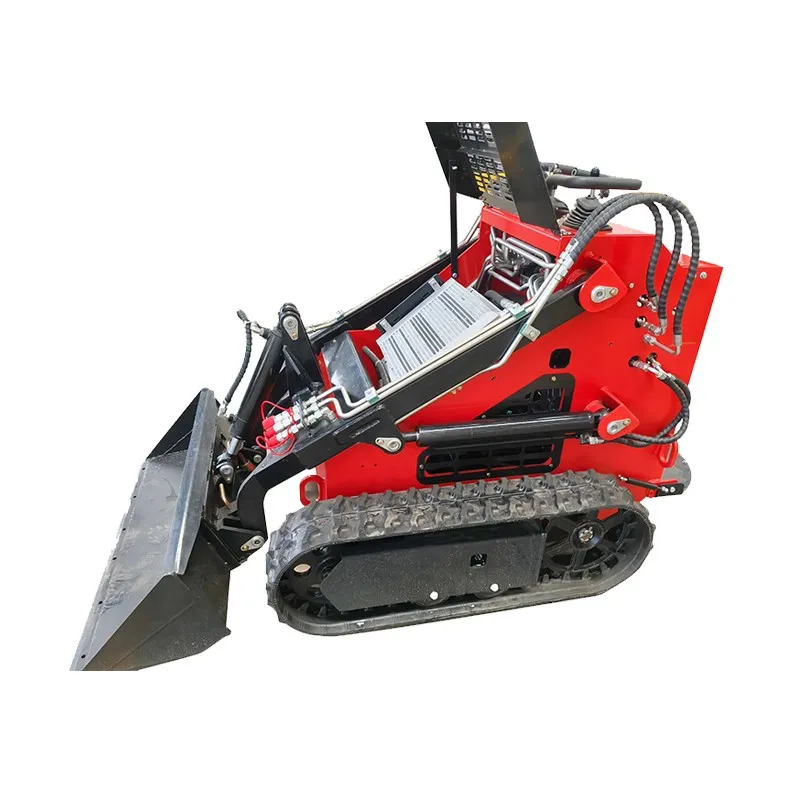
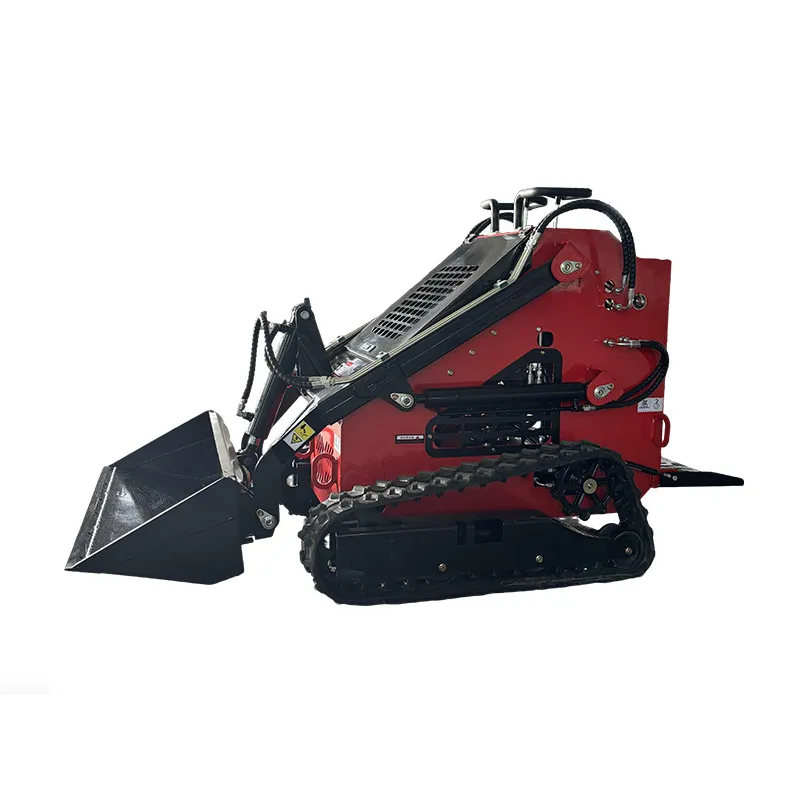
liugong skid steer loader
When you hear 'Liugong skid steer loader', the first thing that comes to mind for a lot of folks is probably just another Chinese machine trying to compete on price. I get that. The market's flooded with options, and the big names have set a high bar. But having spent years around these compact workhorses, from rental yards to tight urban job sites, I've found that dismissing Liugong outright is a mistake many make without getting their hands on the controls. The real story isn't in the brochure; it's in the mud, the dust, and the long hours where the specs meet reality.
The On-Paper Promise vs. The Ground Truth
Liugong's entry into the skid steer market felt, at first, like a logical extension of their wheel loader line. They understand hydraulics and powertrains. The initial models, say the early 365 series, had the right numbers on paper: decent lift capacity, standard auxiliary hydraulic flow. But the early units we tested had a noticeable lag in the pilot-controlled hydraulics compared to, say, a Bobcat or a Cat. It wasn't a deal-breaker for general material handling, but for fine grading or precise attachment work, the operator had to anticipate more. You could feel the engineering was solid, but the control finesse was a generation behind.
This is where the evolution has been interesting. The newer models, particularly those with the updated electronic control system, closed that gap significantly. The joystick response is more linear now. It's less about raw power—which they never lacked—and more about delivering that power in a way that doesn't fight the operator. I remember a contractor friend who exclusively ran older Bobcats reluctantly trying a newer Liugong 375 for a landscaping job. His main complaint vanished after a day; he said the machine stopped feeling jumpy and he could actually feather the bucket for grading topsoil.
One detail often overlooked is the cooling package. In one of our early summer trials in a quarry, running a mulcher attachment continuously, a competitor's machine (a major brand) kept hitting thermal derate. The Liugong unit next to it, with what seemed like a more generously sized radiator and better fan shroud design, just kept going. It ran hotter than ideal, sure, but it didn't shut down. That's a design choice that speaks to application in tough, dusty environments, not just a clean test cell. It’s these unglamorous details that build reliability.
Attachments and The Real-World Ecosystem
This is the true test for any skid steer: how it plays with others. The universal quick-attach plate is just the start. Liugong's auxiliary hydraulic system, once you get past the early lag issues, provides consistent flow. We've run everything from standard buckets to trenchers and brush cutters. The key finding was about pressure stability. When you engage a hydraulic breaker, some machines have a noticeable drop in engine RPM and a shudder as the system compensates. The newer Liugong models manage this transition more smoothly, likely due to a more responsive engine management ECU that talks to the hydraulic pump.
There's a caveat, though. We had an issue with a aftermarket high-flow mulcher on a Liugong 385. The machine's high-flow option was rated sufficiently, but the electrical connector for engaging the high-flow mode was in a vulnerable spot near the cab riser. Dust and moisture intrusion caused a faulty signal, defaulting the system to standard flow and burning up the mulcher head over a week. It was a frustrating, costly lesson. The fix wasn't on Liugong entirely—the attachment maker had a greedy flow demand—but it highlighted how machine design must protect these critical interfaces. I heard later that on some units, dealers were adding a protective boot over that connector as a field modification.
This ties into the broader support network. This is where partnerships with experienced exporters matter. A company like Shandong Pioneer Engineering Machinery Co., Ltd (you can find them at https://www.sdpioneer.com), which has been in the trade game for two decades, doesn't just ship machines. Their value is in understanding these granular, cross-border application pitfalls. They've seen how a machine spec'd for general use in one country might need specific filtration or calibration for another. Their long-term development, as noted, involves both manufacturing and overseas trade arms, which suggests they're not just moving boxes but likely feeding field experience back to the factory. That feedback loop is crucial for brands like Liugong to iterate effectively for a global market.
Durability: The Grind of Rental and Contracting
Rental yards are the brutal proving grounds. Machines get abused, neglected, and operated by people with zero emotional investment. We've had a couple of Liugong skid steers in a mixed fleet for about 3,000 hours now. The major components—axles, mainframe, engine block—are holding up without issue. The Perkins engines they've used are known quantities, and that was a smart choice.
The wear points are predictable but worth noting. The cab door latches on the first-generation units we had became sloppy around the 1,500-hour mark. Not a failure, just annoying play. The polycarbonate cab windows scratched more easily than some competitors' laminated glass. Again, not a critical flaw, but it affects operator perception and resale. The newer models seem to have addressed this with better-grade materials.
The real surprise was the undercarriage. On hard, abrasive surfaces, the bolt-on wear plates on the chassis showed less deformation than expected. It seems they're using a decent grade of steel. However, the hydraulic hose routing in the boom arm area could be better. A few hoses run a bit close to potential pinch points, and we've had to add spiral wrap guard in a couple of spots after noticing abrasion. It's the kind of thing an engineer in a clean CAD model might miss, but a field mechanic spots immediately.
The Cost Equation and Residual Value
Let's be blunt: the upfront cost advantage is still Liugong's main ticket into the conversation. But the smarter discussion is about total cost over, say, 5,000 hours. From what we've tracked, the fuel consumption is average—not class-leading, but not a guzzler. Where you save or lose money is in maintenance and downtime.
Filter availability was a headache five years ago. Now, with distributors like Shandong Pioneer establishing channels in places like the US, Canada, and Australia, that's less of an issue. Their role in building that overseas trust, as their background states, is key. You can't have a machine sitting for weeks waiting for an oil filter. The parts commonality with certain LiuGong wheel loader components also helps in some regions.
Residual value is the lingering question. The market is still calibrating. A 5-year-old Bobcat has a known price. A 5-year-old Liugong is a bigger variable. The ones that have full service records from known entities—whether a big rental company or a contractor who cared for it—are holding value better than expected. The ones with unknown histories are tough sells. This isn't unique to Liugong, but the brand premium isn't there to cushion it. This makes that initial purchase price saving feel very real, but it also places a heavier burden on the owner to maintain impeccable records to protect that investment at trade-in time.
Final Take: A Machine Finding Its Place
So, where does that leave the Liugong skid steer loader? It's not a direct, feature-for-feature replacement for a top-tier machine in every high-precision application. If your daily work is ultra-fine grading or you need every possible ounce of finesse, you might still lean toward the established leaders.
But for the vast majority of tasks—site cleanup, material handling, rental fleet duty, running standard attachments—it's a genuinely capable and, more importantly, reliable machine. The gap has narrowed dramatically. The value proposition is strongest when you factor in the total support package. Buying from a source that provides not just the machine but also the long-term parts and application support, like a seasoned exporter with the infrastructure of a Shandong Pioneer, mitigates a lot of the traditional risk associated with a newer brand in a mature market.
In the end, it comes down to a shift in perspective. Don't view it as a cheap alternative. View it as a competent tool that, with the right support behind it, can deliver a lower cost of ownership over its working life. That's the calculation more and more practical equipment managers are making, and it's why you're seeing more of these machines on job sites outside of China. They've earned their spot, not just with a price tag, but by steadily improving the product where it counts: in the field.
Related Products
Related Products