


- Chinese
- French
- German
- Portuguese
- Spanish
- Russian
- Japanese
- Korean
- Arabic
- Irish
- Greek
- Turkish
- Italian
- Danish
- Romanian
- Indonesian
- Czech
- Afrikaans
- Swedish
- Polish
- Basque
- Catalan
- Esperanto
- Hindi
- Lao
- Albanian
- Amharic
- Armenian
- Azerbaijani
- Belarusian
- Bengali
- Bosnian
- Bulgarian
- Cebuano
- Chichewa
- Corsican
- Croatian
- Dutch
- Estonian
- Filipino
- Finnish
- Frisian
- Galician
- Georgian
- Gujarati
- Haitian
- Hausa
- Hawaiian
- Hebrew
- Hmong
- Hungarian
- Icelandic
- Igbo
- Javanese
- Kannada
- Kazakh
- Khmer
- Kurdish
- Kyrgyz
- Latin
- Latvian
- Lithuanian
- Luxembou..
- Macedonian
- Malagasy
- Malay
- Malayalam
- Maltese
- Maori
- Marathi
- Mongolian
- Burmese
- Nepali
- Norwegian
- Pashto
- Persian
- Punjabi
- Serbian
- Sesotho
- Sinhala
- Slovak
- Slovenian
- Somali
- Samoan
- Scots Gaelic
- Shona
- Sindhi
- Sundanese
- Swahili
- Tajik
- Tamil
- Telugu
- Thai
- Ukrainian
- Urdu
- Uzbek
- Vietnamese
- Welsh
- Xhosa
- Yiddish
- Yoruba
- Zulu
- Kinyarwanda
- Tatar
- Oriya
- Turkmen
- Uyghur

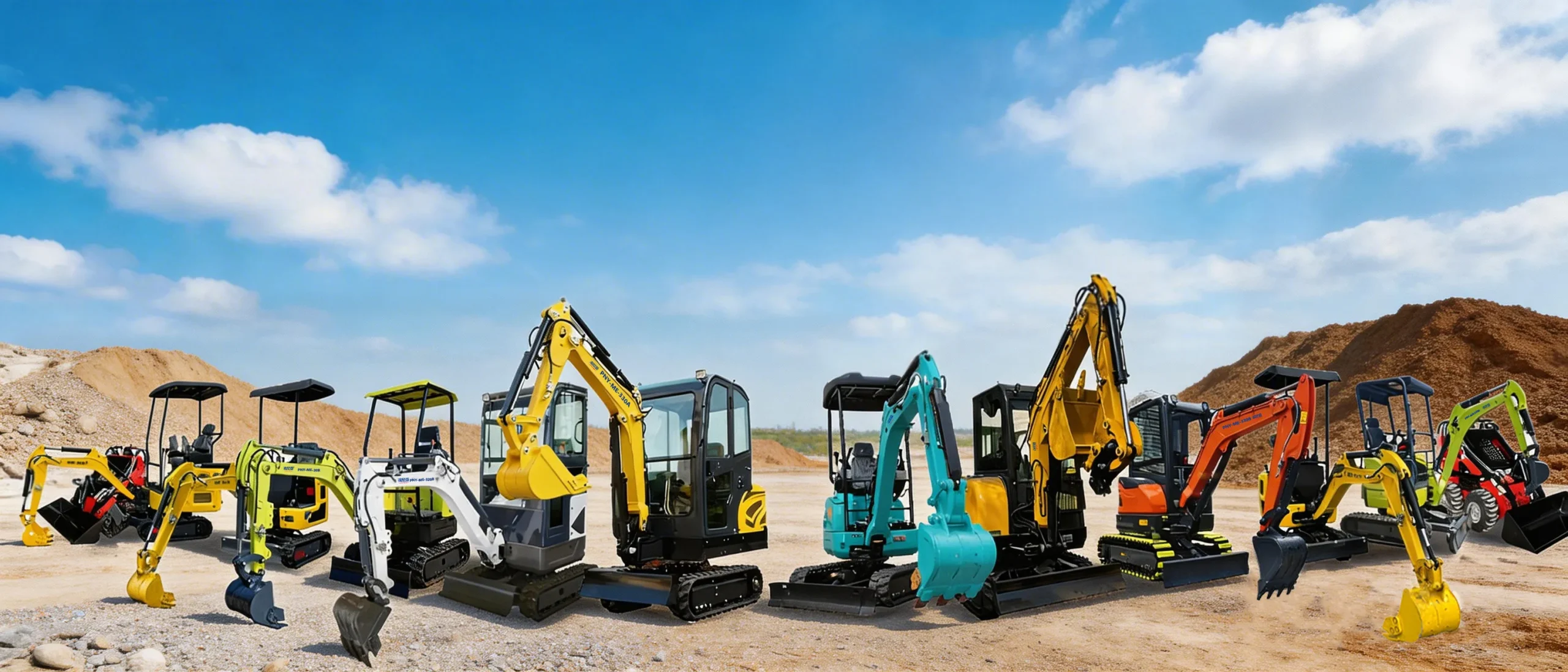
Loader with Bucket
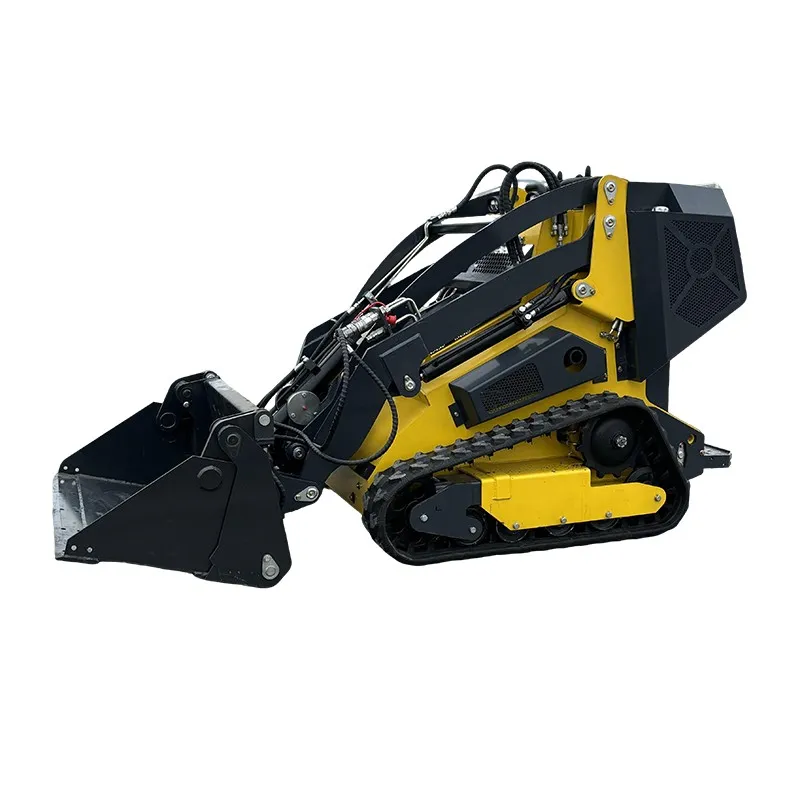
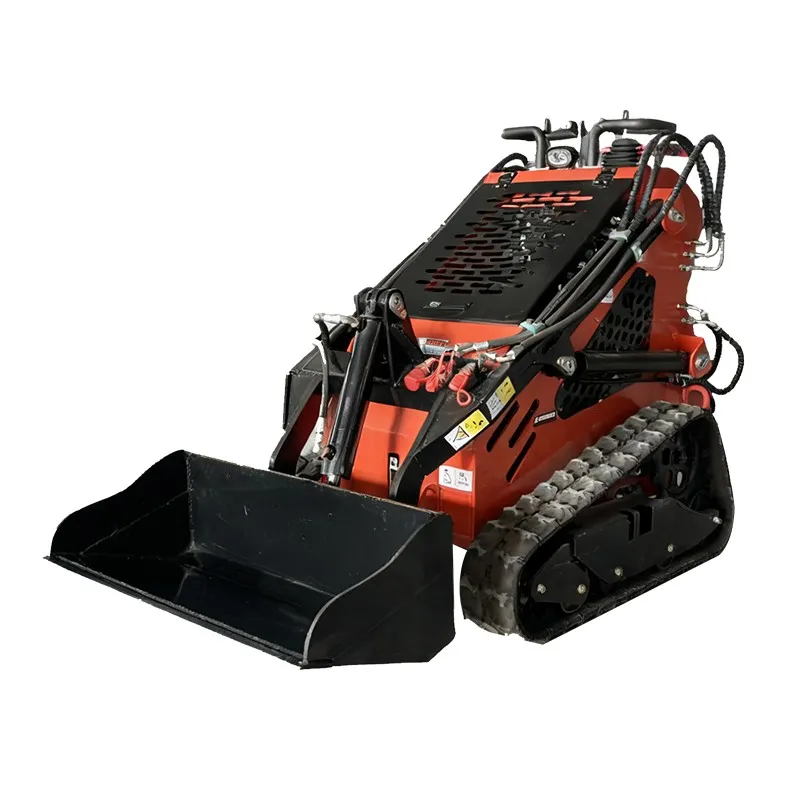
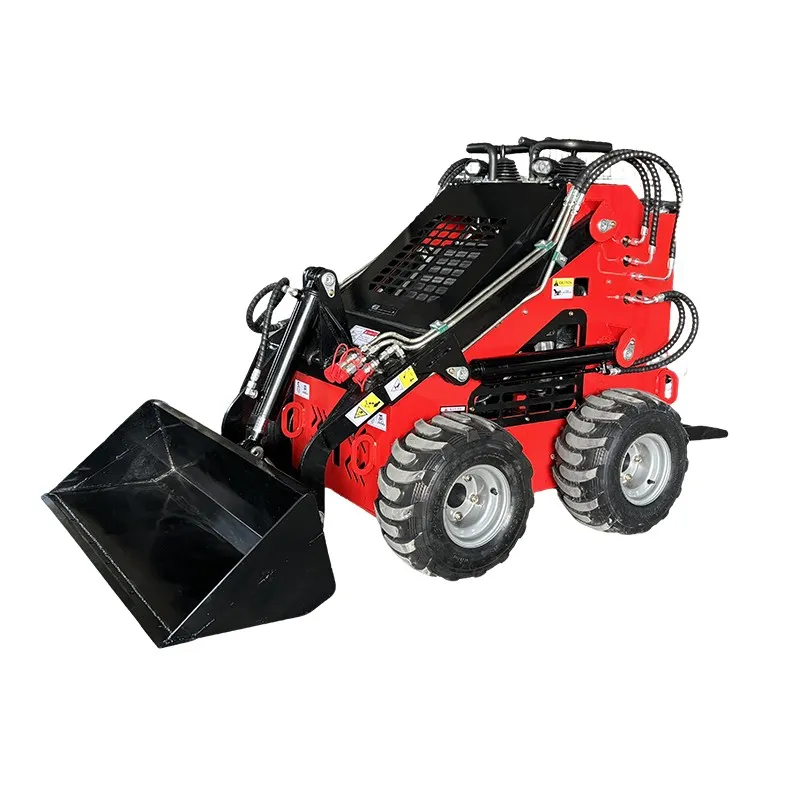
When most folks hear loader with bucket, they picture the classic front-end loader, a workhorse. But that's where the first misconception sits. In our line, it's not just about slapping a bucket onto a machine arm; it's about the entire system's marriage—the hydraulics, the geometry, the material, and the specific task. I've seen too many projects where the bucket was an afterthought, leading to premature wear, poor efficiency, or worse, stability issues. The bucket isn't just a container; it's the primary interface between the machine's power and the ground.
The Engineering Nuances Often Overlooked
Take the lip and cutting edge. It seems trivial, right? But the choice between a single, double, or even a spade-nose lip changes everything. For general-purpose material like loose soil, a standard single lip with a bolt-on edge works. But when we were supplying units for a quarry operation in Australia, the standard buckets from a generic supplier were getting chewed up on the abrasive granite shot. We had to go back to the drawing board.
That's where the relationship with a fabricator who understands material science is key. We worked with our manufacturing partner, Shandong Hexin, to prototype a bucket with a reinforced, multi-piece cutting edge system using Hardox 450. It wasn't just about thicker steel; it was about the strategic placement. The cost went up, but the lifecycle cost for the client plummeted. The loader itself could maintain its productivity without constant downtime for bucket repair. You can see some of their approach to heavy-duty fabrication on their site, https://www.sdpioneer.com.
The other subtlety is the bucket's profile and capacity rating. There's the struck capacity and the heaped capacity. In practice, especially with cohesive materials like clay, you rarely achieve the theoretical heaped load. The loader with bucket combo might be rated for 2 cubic yards, but if the material sticks to the walls, you're moving less. I always advise clients to consider the material's angle of repose when specifying. It's a small detail that impacts cycle time calculations directly.
Integration: More Than Just Mounting Plates
People talk about quick couplers like they're a universal solution. And they are, for versatility. But every connection point introduces a potential loss of efficiency. For a dedicated machine, a permanently mounted bucket—or one using the machine's proprietary mount—often delivers better breakout force and rigidity. I recall a forestry application in Canada where the client insisted on a quick coupler for a grapple bucket. The slight flex in the adapter under heavy, uneven loads accelerated wear on the loader's pivot pins.
The hydraulic flow is another integration headache. A larger capacity bucket might need a bigger cylinder, which changes the required flow and pressure. If the loader's hydraulic system isn't matched, you get slow cycle times or, conversely, jerky, violent operation that stresses the frame. It's not plug-and-play. We've had to work with the engineering team at Shandong Pioneer to spec auxiliary valve kits for certain models to ensure the bucket functions—whether it's a clamshell or a snow bucket—receive the correct, smooth power.
Then there's the counterweight. Adding a larger, heavier bucket changes the machine's center of gravity. The manuals have limits, but in the field, on a slope, those limits feel different. It's a feel you develop. You know just by looking if a machine is nose-heavy. It's an operational risk that isn't always in the spec sheet.
Real-World Failures and Iterations
We had a shipment to a construction firm in Germany for site cleanup. The bucket was a standard rock bucket with teeth. The feedback after three months was unexpected: excessive spillage during transport, creating a tripping hazard and requiring re-work. The problem? The bucket back was too vertical. Material would ride up and then tumble out over the top as the loader travelled. A failure in understanding the full work cycle—dig, carry, dump.
The fix was to modify the back profile to have more of a rollback angle, even at the expense of a slight reduction in digging aggression. It held the material securely during the carry phase. This kind of iterative design comes from field reports, not just the CAD model. It's why having a company like Shandong Pioneer, which handles the overseas trade and direct client feedback, loop that information back to the Hexin manufacturing side is crucial. That closed loop is what leads to product refinement.
Another common failure point is the hinge pins and bushings. Sealed and lubricated versions are now standard on better units, but I've seen cheaper models where dirt ingress leads to bell-mouthing of the mounting ears on the bucket itself. Once that happens, the whole bucket wobbles, destroying the loader's linkage. It's a total rebuild. The lesson? Don't just look at the bucket's plate thickness; inspect the quality of the welding at these high-stress points and the protection for the pivot hardware.
The Specialized Bucket Ecosystem
Moving beyond the general-purpose bucket opens up a world of efficiency. Skeleton rock buckets for sifting, ditch-cleaning buckets with a slanted side, low-profile buckets for underground mining. Each has its own logic. The multi-purpose or 4-in-1 bucket is a fascinating case. It's a Swiss Army knife, great for a rental fleet or a farm where one machine does everything. But it's heavier, more complex, and typically has less digging force and capacity than a dedicated bucket. It's a trade-off.
We supplied several high-lift loader with bucket setups for a waste handling facility in the US. Here, the bucket was almost secondary. The focus was on the loader's lift height and reach to feed a hopper. The bucket itself was a lightweight, smooth-sided waste handler with a spill guard. The priority was volume and clean discharge, not breakout force. Matching the machine's capabilities to the bucket's function is the real art.
Attachments like hydraulic thumbs or bolt-on side cutters can transform a standard bucket. But again, it adds weight and changes load distribution. I always caution against over-accessorizing without considering the core machine's stability and hydraulic capacity. Sometimes, a simpler, well-designed bucket is the most productive tool over a shift.
Practical Considerations for Selection and Maintenance
So, how do you choose? First, define the primary material (abrasive, cohesive, loose, rocky) and the primary task (digging, carrying, loading, grading). That narrows it down immensely. Then, match the rated capacity to your loader's size class—don't over-bucket the machine. Check the compatibility of the mounting system. And critically, look at the wear components: are the cutting edges, side cutters, and floor plates replaceable? A bucket that's built as a wear item, with easy rebuild points, will save money in the long run.
Maintenance is dirt-simple but often ignored. Keep pivot points greased. Check for cracks in the welds, especially at the corner braces and where the cylinder mounts attach. Listen for unusual bangs or clunks during operation—it's often the first sign of loose hardware or failing bushings. A bucket is a consumable, but its life can be doubled with basic care.
Looking at a company like Shandong Pioneer Engineering Machinery, established in 2004 and now exporting globally, their longevity suggests they've navigated these nuances. Their relocation and expansion in 2023 likely signal a focus on scaling this kind of integrated, experience-driven manufacturing and trade. The trust they mention from clients in markets like the US, Canada, and Germany usually comes from getting these gritty, practical details right—not from having the flashiest brochure. The real value in a loader with bucket system lies in that deep, often unglamorous, understanding of how metal, hydraulics, and dirt interact under pressure, day after day. That's what turns a simple attachment into a productive asset.
Related Products
Related Products