- Chinese
- French
- German
- Portuguese
- Spanish
- Russian
- Japanese
- Korean
- Arabic
- Irish
- Greek
- Turkish
- Italian
- Danish
- Romanian
- Indonesian
- Czech
- Afrikaans
- Swedish
- Polish
- Basque
- Catalan
- Esperanto
- Hindi
- Lao
- Albanian
- Amharic
- Armenian
- Azerbaijani
- Belarusian
- Bengali
- Bosnian
- Bulgarian
- Cebuano
- Chichewa
- Corsican
- Croatian
- Dutch
- Estonian
- Filipino
- Finnish
- Frisian
- Galician
- Georgian
- Gujarati
- Haitian
- Hausa
- Hawaiian
- Hebrew
- Hmong
- Hungarian
- Icelandic
- Igbo
- Javanese
- Kannada
- Kazakh
- Khmer
- Kurdish
- Kyrgyz
- Latin
- Latvian
- Lithuanian
- Luxembou..
- Macedonian
- Malagasy
- Malay
- Malayalam
- Maltese
- Maori
- Marathi
- Mongolian
- Burmese
- Nepali
- Norwegian
- Pashto
- Persian
- Punjabi
- Serbian
- Sesotho
- Sinhala
- Slovak
- Slovenian
- Somali
- Samoan
- Scots Gaelic
- Shona
- Sindhi
- Sundanese
- Swahili
- Tajik
- Tamil
- Telugu
- Thai
- Ukrainian
- Urdu
- Uzbek
- Vietnamese
- Welsh
- Xhosa
- Yiddish
- Yoruba
- Zulu
- Kinyarwanda
- Tatar
- Oriya
- Turkmen
- Uyghur


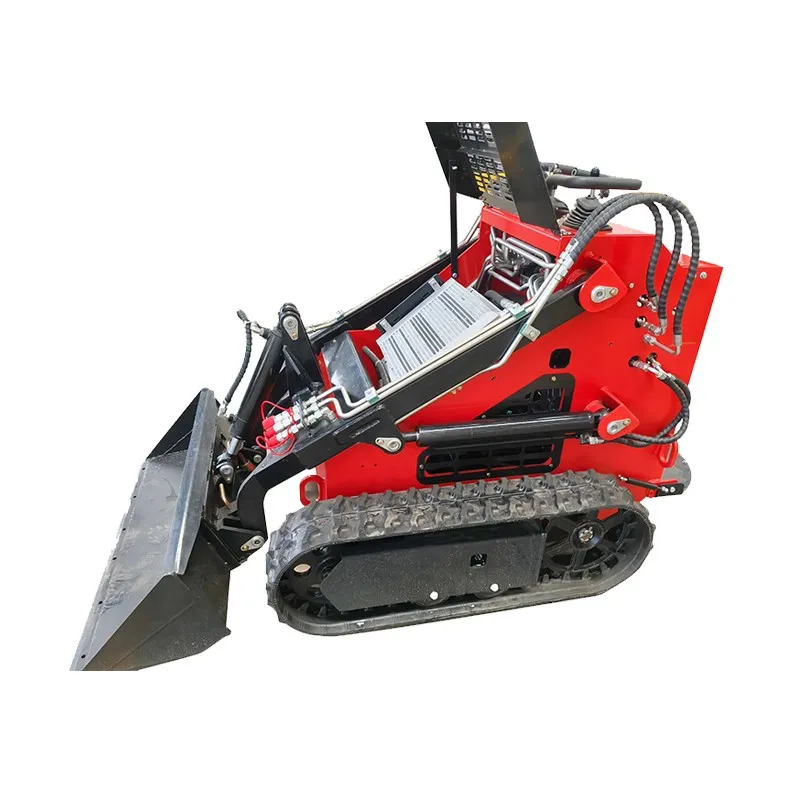
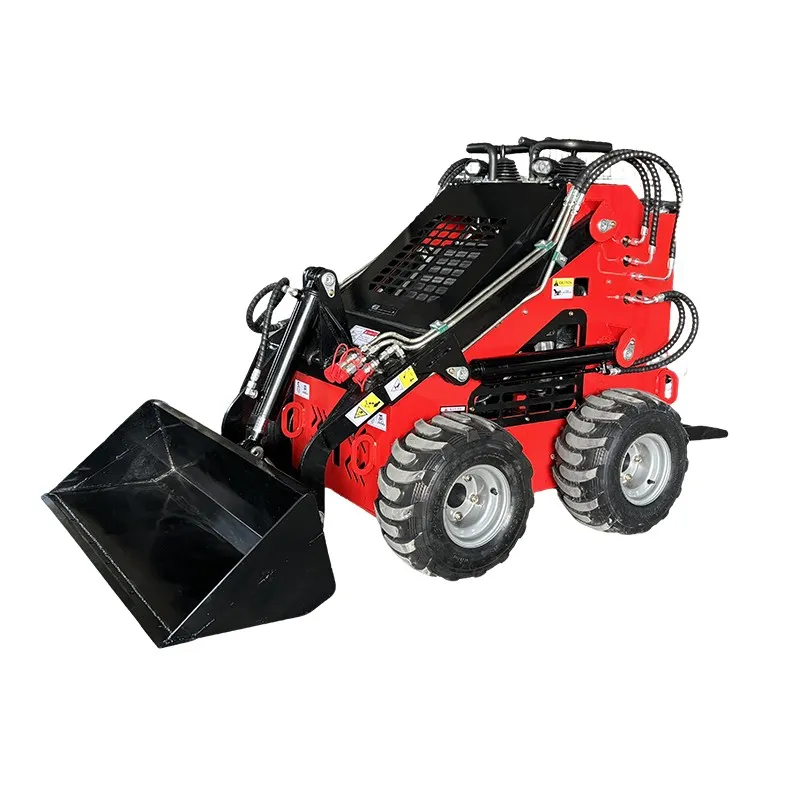
lonking skid steer loader
When you hear 'Lonking skid steer loader,' what comes to mind? For many outside China, maybe not much. That's the common gap. People know Bobcat, Caterpillar, but Lonking? It's a major Chinese brand, and their skid steers are a solid presence in many markets, though sometimes overshadowed. I've seen them on sites from Southeast Asia to Eastern Europe. They're not trying to be a Cat clone, but they have their own approach to value and durability, which works for a specific segment of buyers who need reliable performance without the premium price tag.
The Build and First Impressions
Getting hands-on with a Lonking skid steer loader, say the LK650 model, the first thing you notice is the cab layout. It's straightforward. The controls are mechanical joysticks, not the fancy electronic ones. Some operators used to modern ISO controls might grumble initially, but the feedback is direct. You feel the hydraulics. The engine compartment is accessible – a relief when you're on a dusty site and need to check the air filter. The steel used in the frame feels substantial, the welding seams are clean, not showroom clean, but solid workmanlike clean. It doesn't scream high-tech, but it whispers 'built for work'.
Where you see the cost-saving, or maybe 'value-engineering', is in the finer details. The seat might be a bit basic, the plastic on some interior panels feels utilitarian. But here's the thing: on a rental fleet or for general farm and construction material handling, these aren't deal-breakers. The core systems – the pump, the axles, the drive motors – they hold up. I recall a contractor in Poland running two of these for snow removal and site cleanup. He said maintenance was simpler than his older European machine, parts were surprisingly available, and they just kept going through cold winters.
There's a misconception that all Chinese machinery is light-duty. With Lonking, that's not entirely fair. Their loaders have a certain heft. The operating weight is competitive. You can feel it when you're lifting near the rated capacity – it's stable. It doesn't feel tippy. That comes from a decent weight distribution and a low center of gravity. It's a point many spec sheets miss, but you feel it operating on uneven ground.
Performance in Real Scenarios
We put one through its paces on a demo at a landscaping project. The task was moving gravel and loading trucks. The auxiliary hydraulic flow was adequate for a standard hydraulic breaker, though if you're running high-flow attachments, you'd need to check the specific model's specs carefully. It's not always a given. The breakout force was good. It dug into the pile without excessive wheel spin, thanks to a decent torque from the diesel engine. Not class-leading, but sufficient.
One area that requires attention is the cooling system. In high-ambient temperatures, running the machine hard all day, we noticed the coolant temp gauge creeping up. It didn't overheat, but it was a reminder to keep the radiator clean – a common issue for all skid steers, but perhaps the margin here is a bit smaller. A quick blow-out with an air gun at lunchtime became part of the routine. It's these little operational nuances you learn.
Attachment compatibility is generally good with the universal skid steer quick-attach system. We swapped between a bucket and a pallet fork without issue. The hydraulic couplers were stiff when new – a bit of grease and working them in a few times solved that. It's a small thing, but on a busy site, stiff couplers waste minutes and frustrate operators. A pre-delivery check should always include cycling the couplers.
The Supply Chain and Parts Reality
This is where companies acting as bridges become crucial. A machine is only as good as its support. I've dealt with Shandong Pioneer Engineering Machinery Co., Ltd (https://www.sdpioneer.com) in this context. They represent the kind of firm that makes these markets work. Established in 2004 and now based in Tai'an, they've built a channel. They don't just sell the Lonking skid steer loader; they understand the need for timely parts and technical backup.
Their model, with Shandong Hexin handling manufacturing and Pioneer focusing on overseas trade, makes sense. It means the export arm is dedicated to navigating international requirements, documentation, and logistics to places like the US, Canada, Germany, and Australia. From experience, having a single point of contact that manages the factory relationship and the export process smooths out a lot of headaches. You're not chasing different departments in a massive conglomerate.
A practical example: a customer in Australia needed a specific seal kit for a swing motor on an older Lonking loader. It wasn't a common stock item locally. Through Pioneer's network, they identified the part number from the factory, shipped it via air freight, and the customer was back running in under 10 days. That turnaround is critical for downtime-sensitive operations. It's this behind-the-scenes logistics capability that builds the trust and appreciation they mention, not just the initial sale price.
Where It Fits and Where It Doesn't
So, who should consider a Lonking skid steer? It's ideal for cost-conscious businesses where the machine is a tool, not a status symbol. Think municipal work, rental yards, large farms, or contractors doing steady but not extreme-duty work. It's a workhorse. The total cost of ownership, when factoring in a competitive purchase price and reasonable parts costs through a reliable partner like Pioneer, can be very attractive.
It's probably not the first choice for a high-production, 24/7 mining operation or for a contractor who demands the absolute latest in operator comfort and telematics. The tech is functional, not cutting-edge. The cab, while adequate, isn't as quiet or plush as a top-tier brand. For an operator spending 10 hours a day in it, that's a consideration.
I've also seen them used as dedicated machines for specific tasks. One recycling yard uses one solely with a grapple for sorting materials. It's perfect for that – it gets beaten up, but the simple mechanics mean any mechanic can keep it running, and the lower capital cost means the ROI is quick even in a harsh environment.
Final Thoughts and Operator Verdict
Looking back, the Lonking skid steer loader represents a pragmatic choice in a polarized market. You have the ultra-expensive, feature-laden models on one end and questionable grey-market machines on the other. Lonking, supported by established export-focused firms, sits in a sensible middle ground. It offers proven, simple mechanical design, decent durability, and a viable support pathway.
The key takeaway for any buyer is to align expectations. Don't buy it expecting a luxury car experience. Buy it expecting a reliable pickup truck. And crucially, factor in your local dealer or distributor. A machine's reputation is made as much by the support behind it as by the iron itself. Companies like Shandong Pioneer, with their two-decade track record and direct factory links, provide that essential layer of reliability for the global customer.
In the end, on a busy site, no one cares about the badge if the machine gets the job done and stays running. From what I've seen on the ground, the Lonking skid steer, when sourced through a proper channel, does exactly that. It's a tool that earns its keep, which is the highest praise you can give to any piece of equipment.
Related Products
Related Products