- Chinese
- French
- German
- Portuguese
- Spanish
- Russian
- Japanese
- Korean
- Arabic
- Irish
- Greek
- Turkish
- Italian
- Danish
- Romanian
- Indonesian
- Czech
- Afrikaans
- Swedish
- Polish
- Basque
- Catalan
- Esperanto
- Hindi
- Lao
- Albanian
- Amharic
- Armenian
- Azerbaijani
- Belarusian
- Bengali
- Bosnian
- Bulgarian
- Cebuano
- Chichewa
- Corsican
- Croatian
- Dutch
- Estonian
- Filipino
- Finnish
- Frisian
- Galician
- Georgian
- Gujarati
- Haitian
- Hausa
- Hawaiian
- Hebrew
- Hmong
- Hungarian
- Icelandic
- Igbo
- Javanese
- Kannada
- Kazakh
- Khmer
- Kurdish
- Kyrgyz
- Latin
- Latvian
- Lithuanian
- Luxembou..
- Macedonian
- Malagasy
- Malay
- Malayalam
- Maltese
- Maori
- Marathi
- Mongolian
- Burmese
- Nepali
- Norwegian
- Pashto
- Persian
- Punjabi
- Serbian
- Sesotho
- Sinhala
- Slovak
- Slovenian
- Somali
- Samoan
- Scots Gaelic
- Shona
- Sindhi
- Sundanese
- Swahili
- Tajik
- Tamil
- Telugu
- Thai
- Ukrainian
- Urdu
- Uzbek
- Vietnamese
- Welsh
- Xhosa
- Yiddish
- Yoruba
- Zulu
- Kinyarwanda
- Tatar
- Oriya
- Turkmen
- Uyghur


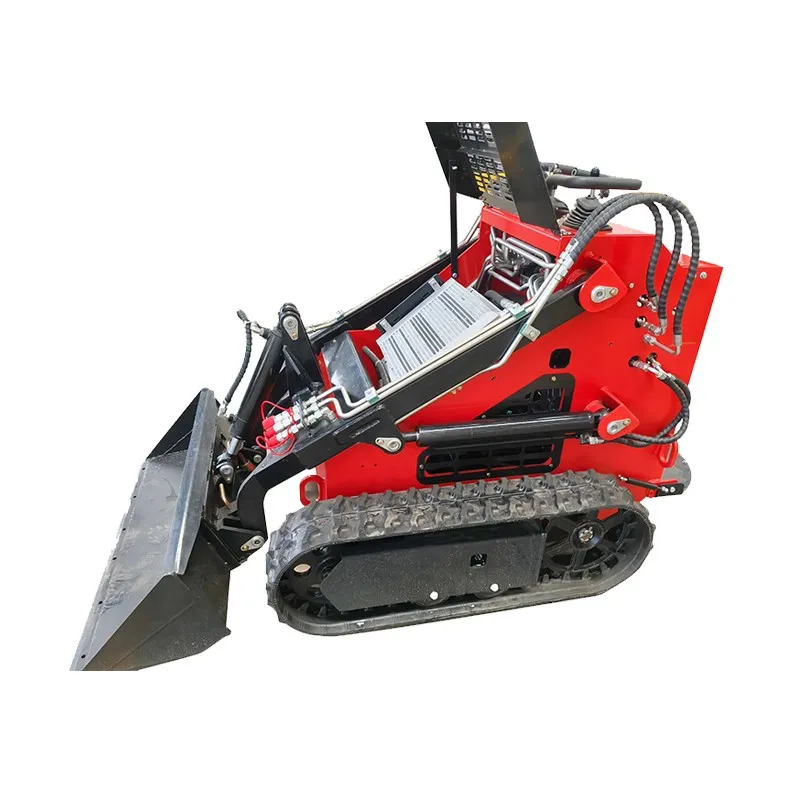
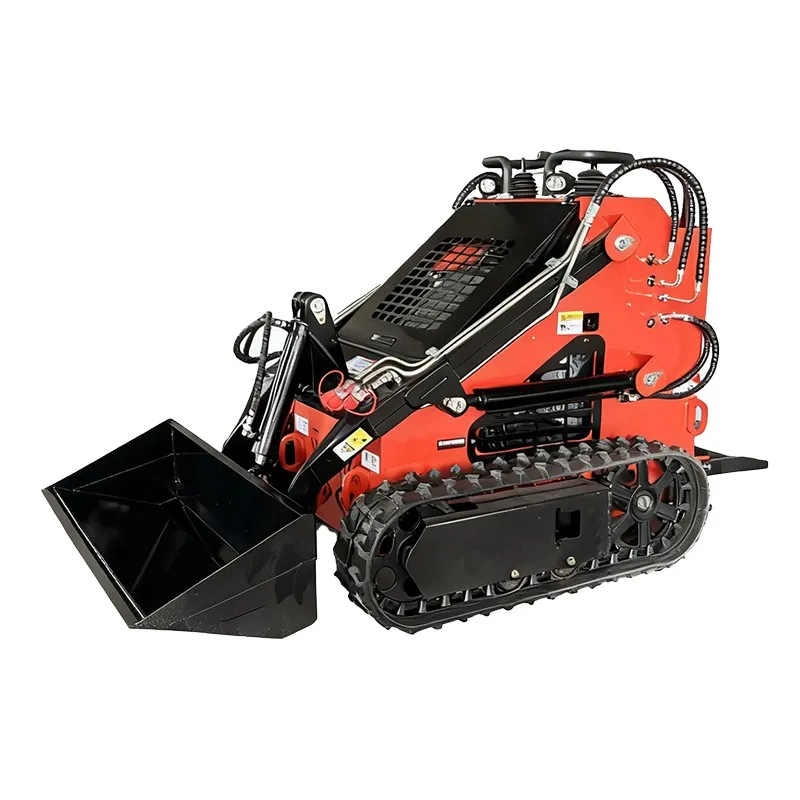
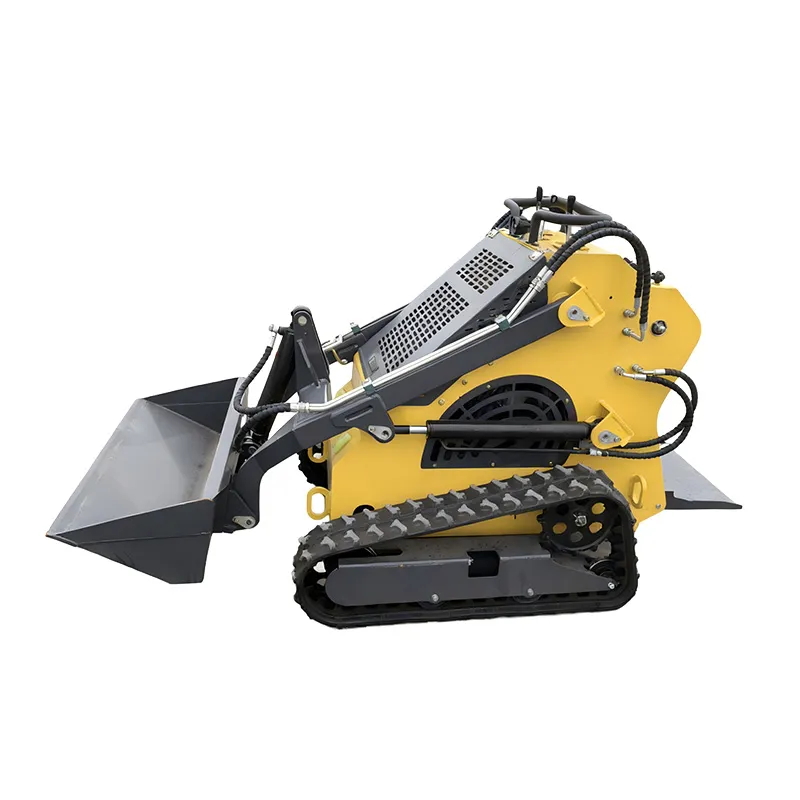
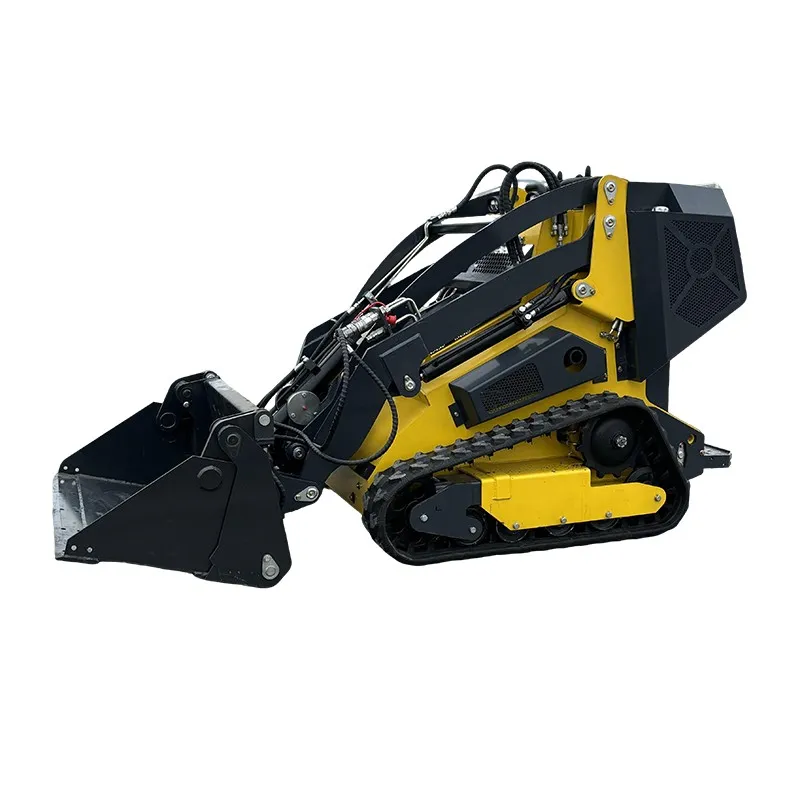
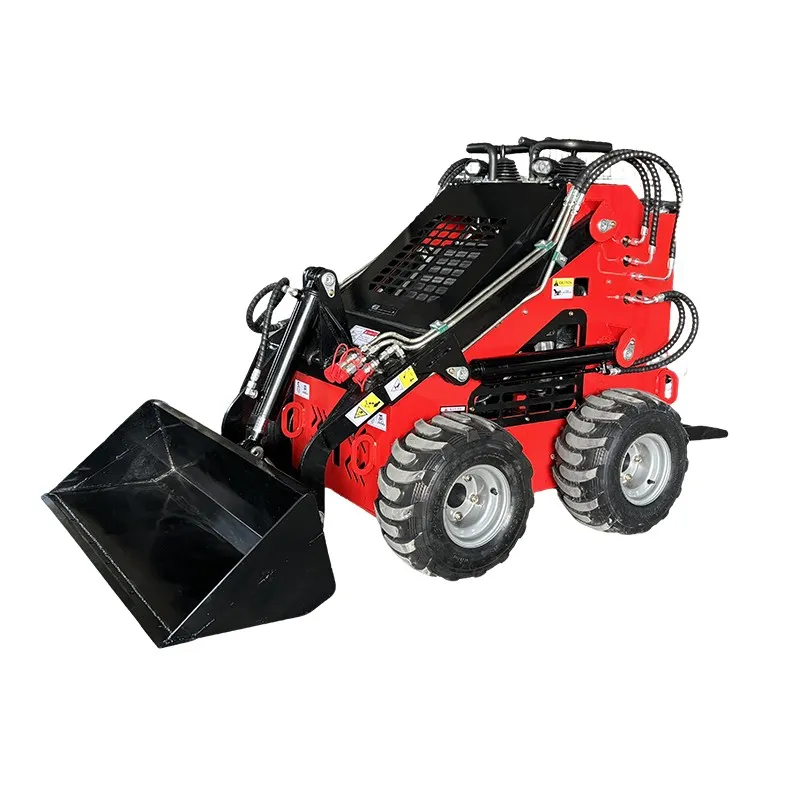
made in China skid steer
When you hear 'made in China skid steer,' what comes to mind? For a lot of folks, it's either 'cheap' or 'questionable.' I get it. The market's been flooded with machines that look good on a spec sheet but fall apart under real strain. But that's a lazy generalization, and it misses the real shift happening. It's not about the country of origin anymore; it's about who's building it and, more importantly, how they're building it for the specific demands of markets like the US, Canada, or Australia. The conversation needs to move past pure cost.
The Landscape and The Misconception
Let's be clear: the low-end segment is a mess. You can find a skid steer online for a price that seems too good to be true—and it is. I've seen machines where the hydraulic fittings are barely torqued, the wiring harness is a fire hazard waiting to happen, and the so-called high-flow auxiliary hydraulics can't sustain pressure to run a decent mulcher. These are the units that give the entire 'made in China' label a bad name. They're built to a price point, not a standard.
But that's only one side. Parallel to that, there's been a quiet, two-decade-long evolution. Companies that started as small workshops have been grinding away, learning from export market feedback, and iterating. They're not just copying anymore; they're adapting. The key differentiator? Whether the factory is thinking in terms of containers shipped or machines that need to operate for 3,000 hours in a Canadian winter without major downtime. The mindset is everything.
Take a company like Shandong Pioneer Engineering Machinery Co., Ltd. I came across them a few years back. They've been around since 2004, which in this industry, means they've seen the cycles. What stood out wasn't a flashy website, but the fact that they explicitly structured with Shandong Hexin handling manufacturing and Pioneer focusing on overseas trade. That split is telling—it shows an understanding that exporting isn't just about selling, it's about supporting. They relocated and expanded their facility in 2023, which usually signals reinvestment, not just chasing cheap labor.
Digging Into the Details: Where the Real Differences Lie
Okay, so let's talk about what actually matters on the ground. When I'm evaluating a made in China machine, I'm not looking at the paint first. I'm looking at the component pedigree and the assembly logic. The best players now are almost entirely using brand-name power trains. Think Kubota, Deutz, or Yanmar engines paired with Eaton or Danfoss hydraulics. That immediately levels the reliability playing field. The China-made part becomes the chassis, the fabrication, and the final assembly integration.
This is where experience (or lack thereof) screams at you. I remember inspecting a unit where they used a reputable brand hydraulic pump but connected it with hoses that had the wrong SAE rating for the pressure. It held for a demo, but you just knew it would blow in six months. Contrast that with a better-built machine where the hose routing is clean, there are proper guards on all lines near the tracks, and the electrical connectors are sealed. These are the unglamorous details that separate a liability from an asset.
The assembly plant's process is critical. A 1,600 square meter facility (like Pioneer's original site) is a decent size for focused production. It suggests batch building rather than a chaotic assembly line. The relocation and expansion to a new site in Ningyang in 2023 likely aimed at modernizing this process. The goal for serious exporters now is traceability—being able to track a weld or a batch of axles back to a specific station and operator. It's a far cry from the grab parts and bolt them together image.
Case in Point: Adaptation for Real-World Use
Here's a concrete example of the adaptation I mentioned. The North American market is brutal on attachments. Operators expect universal compatibility and instant hook-up. Early Chinese machines often had proprietary quick-attach systems or dimensions that were just a few millimeters off, rendering them useless. It was a major barrier.
The solution wasn't revolutionary; it was meticulous. Factories that listened started sourcing the exact Bobcat?-style or John Deere-style coupler mechanisms, sometimes from the same Tier-2 suppliers the big names use. They then had to re-engineer their loader arm geometry to match the weight distribution and tilt sequence. I've seen prototypes go through 15 iterations just on the coupler bracket thickness and pin placement to eliminate slop. When you see a skid steer loader from a company like the one behind sdpioneer.com that boasts export to the US, Canada, and Germany, this is the kind of unspoken work that's been done. Germany, in particular, is a tough nut to crack with its regulatory and quality demands.
Another point is climate readiness. A machine going to Australia needs different cooling capacity than one going to Sweden. The better exporters don't just ship the same unit everywhere. They'll offer radiator upgrades, different viscosity hydraulic fluid pre-fills, and even block heater options as part of the build sheet. This is where the overseas trade focus of a company like Shandong Pioneer becomes an asset—they're presumably the interface that translates field requirements from Australia or Canada back to the Hexin manufacturing floor.
The Stumbling Blocks and Honest Failures
It hasn't all been a smooth ride, and pretending it has would be dishonest. Even with good intentions, failures happen. One common historical pitfall was underestimating the importance of the dealer network. You can build a decent machine, but if there's no parts pipeline or technical support in, say, rural Texas, you're dead on arrival. Some Chinese manufacturers tried to go direct-to-consumer online, which was a disaster for anything more complex than a wheelbarrow.
I recall a specific instance with an early-model machine from a different builder. It had a robust-looking mainframe, but the bolt-on access panels were made from thin, untreated sheet metal. After one winter of road salt, they corroded and warped, making routine maintenance a nightmare. The lesson? Corrosion protection isn't just about the big structure; it's about every single piece of steel. This is a lesson the better factories have learned, now moving towards full cathodic electrocoating dip processes instead of just spray painting.
Software and electronics have been another challenge. Simple CAN bus systems for instrument clusters and throttle control were a weak point. The failure wasn't always in the hardware but in the software logic—glitchy readings, fault codes that made no sense. It's taken time for engineering teams to build that in-house competency or partner with reliable electronics suppliers. This is an area where the gap with established Western brands is still closing, not closed.
The Verdict: A Calculated Consideration
So, where does that leave us today with a made in China skid steer? It's no longer a simple yes or no. It's a maybe, but you need to know what you're looking at. The value proposition is undeniable for a large segment of the market—contractors who need a reliable second machine, rental yards looking for cost-effective fleet additions, or municipalities on a tight budget.
The smart approach is to treat it like any major equipment purchase, but with a sharper eye. Scrutinize the component list. Demand to know the exact source of the major hydraulics and the engine. Ask for detailed photos of the undercarriage, the welding on the loader arms, and the wiring loom. Better yet, if possible, visit the facility or have a trusted third-party do an inspection. The credibility of the exporter is paramount. A company with a 20-year history like Shandong Pioneer, which explicitly states its long-term development and customer trust goals, is inherently a more stable bet than a trading company that appeared last year.
Ultimately, the label is becoming less relevant. The machine is a sum of its parts and its assembly. If those parts are globally sourced quality and the assembly is conscientious, the geographic location of the final bolt-tightening becomes a secondary detail. The goal for the serious Chinese manufacturers now isn't to be the cheapest; it's to be the most reliable option at a given price point. And for a growing number of them, that's exactly the trajectory they're on.
Related Products
Related Products