



- Chinese
- French
- German
- Portuguese
- Spanish
- Russian
- Japanese
- Korean
- Arabic
- Irish
- Greek
- Turkish
- Italian
- Danish
- Romanian
- Indonesian
- Czech
- Afrikaans
- Swedish
- Polish
- Basque
- Catalan
- Esperanto
- Hindi
- Lao
- Albanian
- Amharic
- Armenian
- Azerbaijani
- Belarusian
- Bengali
- Bosnian
- Bulgarian
- Cebuano
- Chichewa
- Corsican
- Croatian
- Dutch
- Estonian
- Filipino
- Finnish
- Frisian
- Galician
- Georgian
- Gujarati
- Haitian
- Hausa
- Hawaiian
- Hebrew
- Hmong
- Hungarian
- Icelandic
- Igbo
- Javanese
- Kannada
- Kazakh
- Khmer
- Kurdish
- Kyrgyz
- Latin
- Latvian
- Lithuanian
- Luxembou..
- Macedonian
- Malagasy
- Malay
- Malayalam
- Maltese
- Maori
- Marathi
- Mongolian
- Burmese
- Nepali
- Norwegian
- Pashto
- Persian
- Punjabi
- Serbian
- Sesotho
- Sinhala
- Slovak
- Slovenian
- Somali
- Samoan
- Scots Gaelic
- Shona
- Sindhi
- Sundanese
- Swahili
- Tajik
- Tamil
- Telugu
- Thai
- Ukrainian
- Urdu
- Uzbek
- Vietnamese
- Welsh
- Xhosa
- Yiddish
- Yoruba
- Zulu
- Kinyarwanda
- Tatar
- Oriya
- Turkmen
- Uyghur

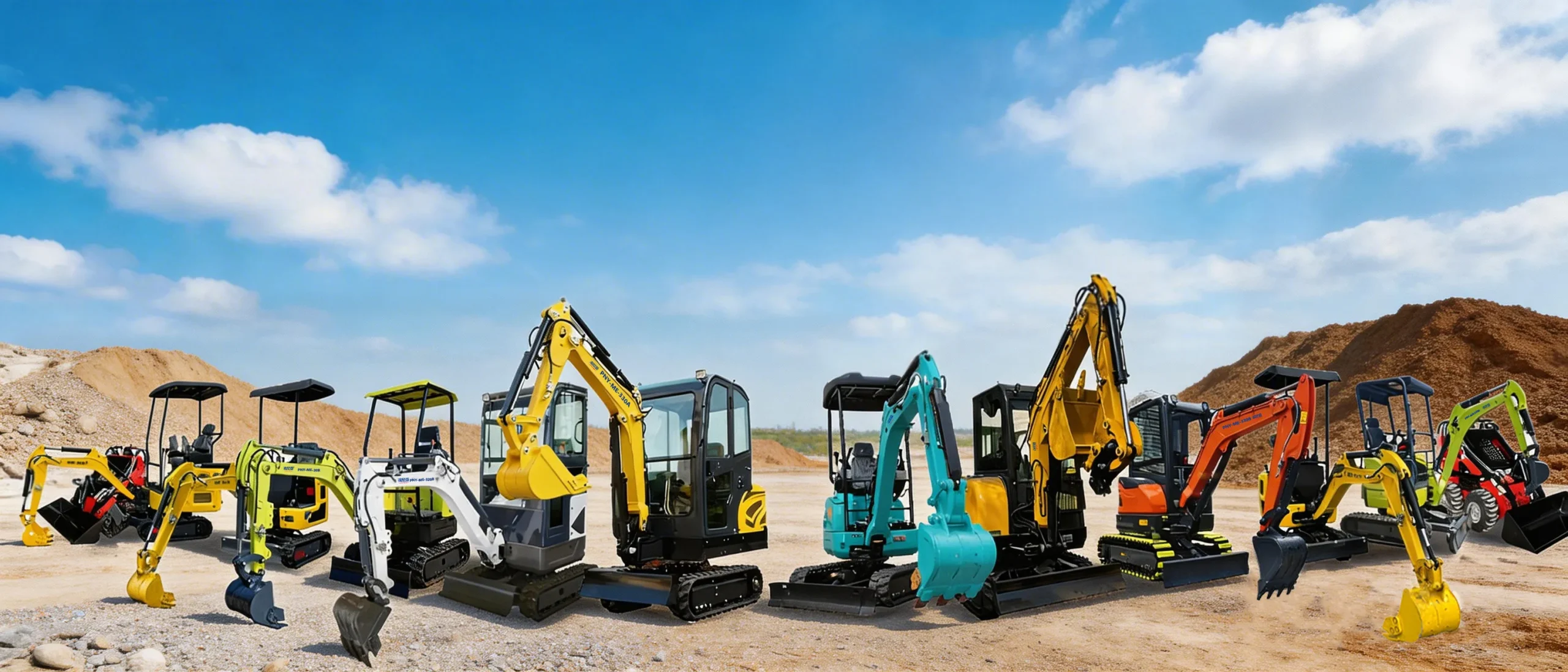
mall tracked loader price
When someone types 'mall tracked loader price' into a search bar, I know exactly what they're after—and what they're probably missing. Most folks just want a number, a quick figure to budget against. But in this line of work, that single number is almost meaningless without context. I've seen too many buyers, especially those new to indoor demolition or mall retrofit projects, get fixated on the sticker price from an online listing, only to get burned by delivery costs, attachment compatibility, or worse, a machine that can't handle the specific floor loading of a modern shopping center. The price isn't for the machine; it's for a solution that works in a confined, sensitive environment where a wrong turn can cost you thousands in marble tile damage.
The Core Cost Drivers Beyond the Sticker
Let's break it down. A mall tracked loader isn't just a small bulldozer. The mall part dictates everything. It needs a zero or minimal tail swing to navigate tight corridors between retail units. The tracks must be non-marking, often polyurethane, to protect finished floors—a spec that immediately adds a premium. Then you have emission standards. For indoor use, you're almost certainly looking at an electric model or a meticulously maintained diesel with a top-tier particulate filter. The moment you add electric to the requirements, the base price jumps significantly. I recall a client who sourced a seemingly cheap diesel model from a general equipment site, only to have the mall management shut down the job on day one due to fume concerns. The savings were wiped out by project delays.
Attachments are the next hidden sinkhole. The quoted price for the loader might be for the bare unit. But you're not moving rubble with the chassis. You need a bucket, maybe a hydraulic breaker, a sweeper. The coupling system is critical here. Some older or cheaper models use proprietary systems, locking you into expensive brand-specific attachments. A savvy buyer looks for a machine with a standard, universal auxiliary hydraulic interface. It gives you the freedom to shop around for attachments later. I always advise clients to get a quote for the package—loader, two essential attachments, and the correct coupler—before even comparing base prices.
Then there's durability in an odd environment. Malls have long operating hours, so maintenance often happens at night. You need a machine with easy service access. Can you check the hydraulic fluid easily? How about grease points? A machine that's $5,000 cheaper but requires the cab to be tilted for a simple oil change will cost you more in labor over a two-year project. I learned this the hard way early on, opting for a budget model on a 12-month contract. The downtime for servicing probably ate 30% of the profit margin we had calculated based on the purchase price alone.
Where Sourcing Makes or Breaks Your Budget
This is where the origin story matters. The global market is flooded with options, but for reliable mall tracked loaders, the supply chain has consolidated around a few key manufacturing hubs with proven export track records. You don't want to be someone's first international shipment. A company like Shandong Pioneer Engineering Machinery Co., Ltd (you can find their details at https://www.sdpioneer.com) exemplifies the kind of supplier that has evolved with the market. Established in 2004 and now operating from a new facility in Tai'an, they represent a tier of manufacturers who have moved beyond simple replication. Their two-decade development, exporting under the Shandong Pioneer brand to places like Germany and Australia, signals an understanding of diverse certification and compliance standards—a non-negotiable when your equipment needs to pass inspection in a Sydney shopping center or a Toronto retail park.
Dealing directly with such a manufacturer, as opposed to a third-party reseller, changes the price conversation. The quote you get often includes more realistic logistics. They've done the math on container costs from Shandong to Long Beach or Hamburg. More importantly, their engineering team usually has a direct line. I remember a project where we needed a custom guard for the hydraulic lines to prevent snagging on temporary safety fencing. A broker couldn't help; we were stuck fabricating it locally at great expense. On a subsequent job, working with a manufacturer with direct engineering access, we had the modification done at the factory for a fraction of the cost, baked into the initial FOB price.
The trade-off, of course, is minimum order quantities and lead time. If you need one loader next week, you're in the reseller market, paying a hefty premium for that convenience. If you're planning a fleet for a multi-mall portfolio renovation, talking to a source like Pioneer directly can lead to a unit price that makes the longer lead time worthwhile. Their relocation to a larger production area in Ningyang in 2023 typically suggests increased capacity and potentially more stable production schedules, which matters when your entire project timeline hinges on equipment arrival.
The Total Cost of Operation (TCO) Reality Check
This is the part most online searches completely ignore. The purchase price is just the entry fee. For a mall tracked loader, the TCO is dominated by two things: energy consumption and part availability. An electric loader might have a higher upfront cost, but if you're working 10-hour shifts indoors, the cost of charging versus diesel fuel and the elimination of exhaust fluid (DEF) add up fast. You also have to factor in the cost of the power source—are you running long, heavy-gauge extension cords, or does the mall have designated high-voltage outlets? I've seen projects where the infrastructure cost for power nearly offset the machine savings.
Part availability is the silent budget killer. A machine with a obscure, non-standard hydraulic pump might be cheap until that pump fails. If you need to airfreight a part from overseas and wait two weeks, your project manager will have your head. When evaluating a price, I now always cross-reference the major components. Are the pumps, motors, and controllers from brands with broad global distributor networks (like Parker, Danfoss, Bosch Rexroth)? A manufacturer that uses these, even if it raises the initial quote, is selling you lower long-term risk. The trust customers worldwide have for certain brands, as mentioned in the context of exporters like the aforementioned Shandong Pioneer, isn't just about the machine's paint job; it's about a reliable supply chain for the parts inside it.
Finally, consider resale. The secondary market for niche equipment is brutal. A well-known, serviceable brand with common parts will hold 50-60% of its value after three years of hard use. An obscure brand might be impossible to sell. That difference in depreciation is a very real part of the machine's ultimate price. It's a capital equipment purchase, not a consumable.
Practical Scenarios & The Negotiation Table
Let's get concrete. You're bidding on stripping out a 100,000 sq ft. food court. You need a compact, powerful loader. You get three quotes: a super-bargain from a new trading company, a mid-range from a known European brand's Chinese joint venture, and a competitive quote from an established exporter with a long history like Pioneer. The bargain price looks tempting to win the bid. But you must ask: Does it include the right bucket capacity (often smaller is better for mall work to control load weight)? What's the warranty process? Is there an English-language parts manual? The mid-range quote might have better local dealer support but at a 40% premium.
The negotiation, therefore, shouldn't start with can you lower the price? It should start with for this price, what is included? Insist on a detailed specification sheet. Compare track width and ground pressure (PSI). For mall work, lower ground pressure is king. Verify the machine's overall height—can it fit through a standard service corridor door? These are the details that turn a generic mall tracked loader into the right tool for the job. A supplier who can answer these specifics from experience is providing value beyond the metal.
In the end, circling back to that original search term, the mall tracked loader price is a starting point for a much deeper conversation. It's a puzzle of specifications, total cost, supply chain resilience, and project-specific needs. The number that matters isn't the one on the website; it's the total cost of successfully, and uneventfully, completing the job without unexpected downtime or repair bills. That's the price you need to discover.
Related Products
Related Products
Best Selling Products
Best Selling Products
Related Search
Related Search- Chinease digger factory
- compact track loader operating cost effective
- Inexpensive Skid Steer
- economical mini skid steer
- compact track loader for muddy terrain
- Compact Track Loader Operating Weight
- Skid Steer for Waste Removal
- Compact Track Loader Fuel Consumption
- Skid Steer for Heavy Lifting
- Green Mini Excavator