- Chinese
- French
- German
- Portuguese
- Spanish
- Russian
- Japanese
- Korean
- Arabic
- Irish
- Greek
- Turkish
- Italian
- Danish
- Romanian
- Indonesian
- Czech
- Afrikaans
- Swedish
- Polish
- Basque
- Catalan
- Esperanto
- Hindi
- Lao
- Albanian
- Amharic
- Armenian
- Azerbaijani
- Belarusian
- Bengali
- Bosnian
- Bulgarian
- Cebuano
- Chichewa
- Corsican
- Croatian
- Dutch
- Estonian
- Filipino
- Finnish
- Frisian
- Galician
- Georgian
- Gujarati
- Haitian
- Hausa
- Hawaiian
- Hebrew
- Hmong
- Hungarian
- Icelandic
- Igbo
- Javanese
- Kannada
- Kazakh
- Khmer
- Kurdish
- Kyrgyz
- Latin
- Latvian
- Lithuanian
- Luxembou..
- Macedonian
- Malagasy
- Malay
- Malayalam
- Maltese
- Maori
- Marathi
- Mongolian
- Burmese
- Nepali
- Norwegian
- Pashto
- Persian
- Punjabi
- Serbian
- Sesotho
- Sinhala
- Slovak
- Slovenian
- Somali
- Samoan
- Scots Gaelic
- Shona
- Sindhi
- Sundanese
- Swahili
- Tajik
- Tamil
- Telugu
- Thai
- Ukrainian
- Urdu
- Uzbek
- Vietnamese
- Welsh
- Xhosa
- Yiddish
- Yoruba
- Zulu
- Kinyarwanda
- Tatar
- Oriya
- Turkmen
- Uyghur


material handling skid steer Loader
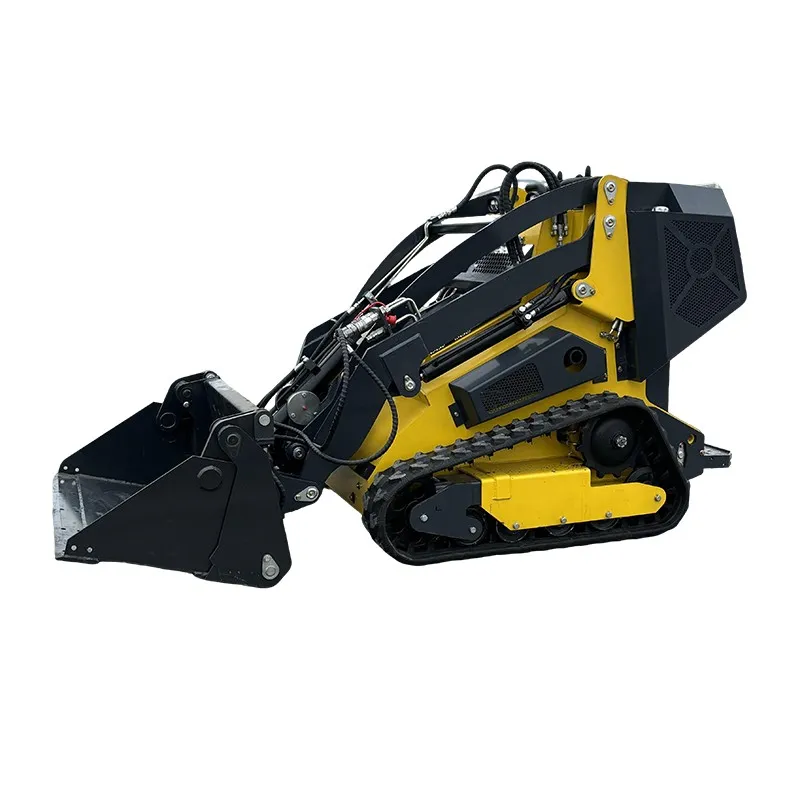
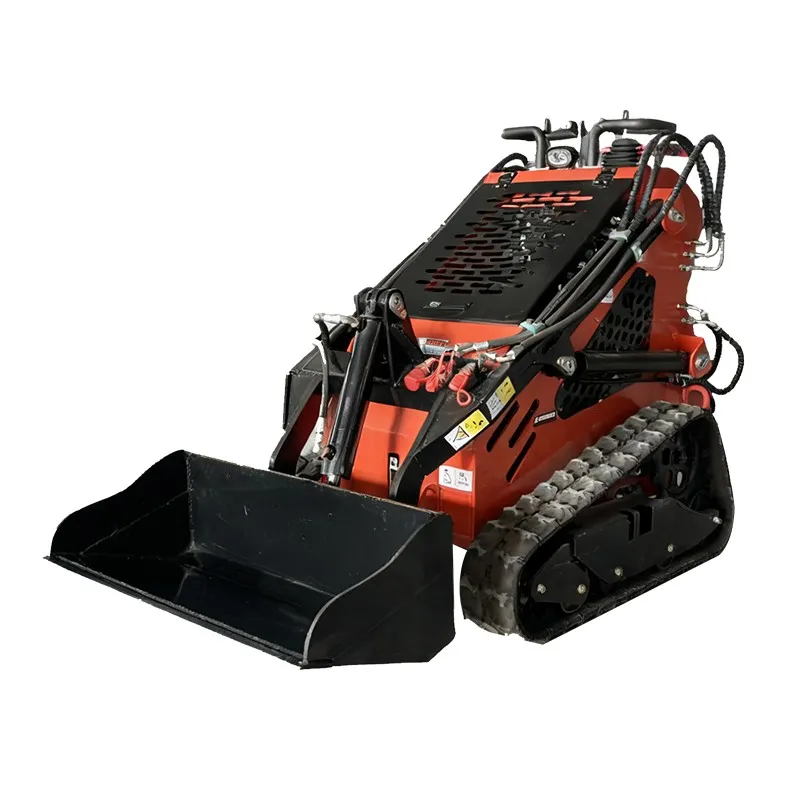
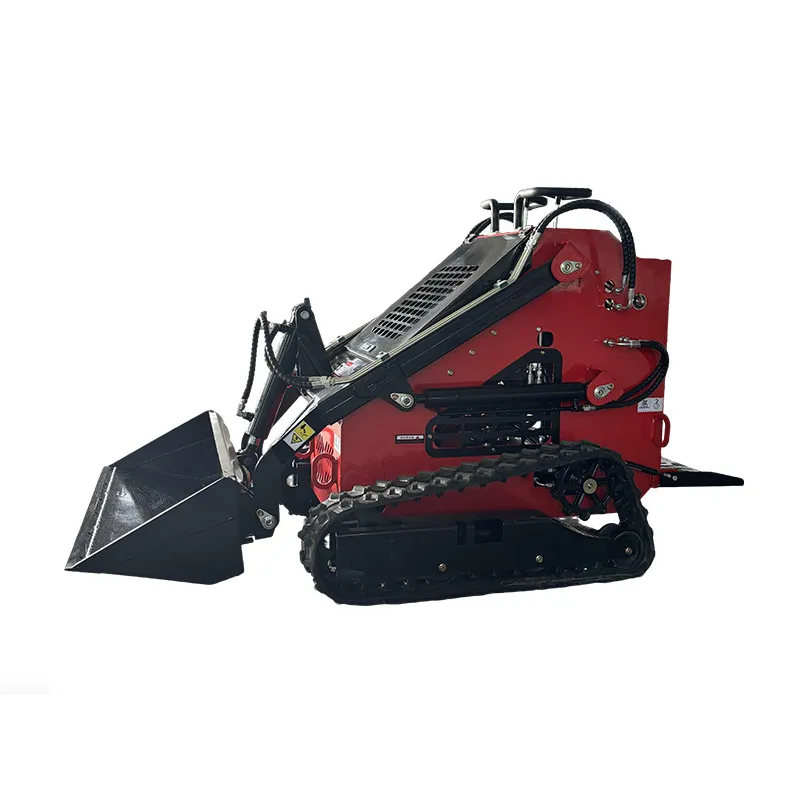
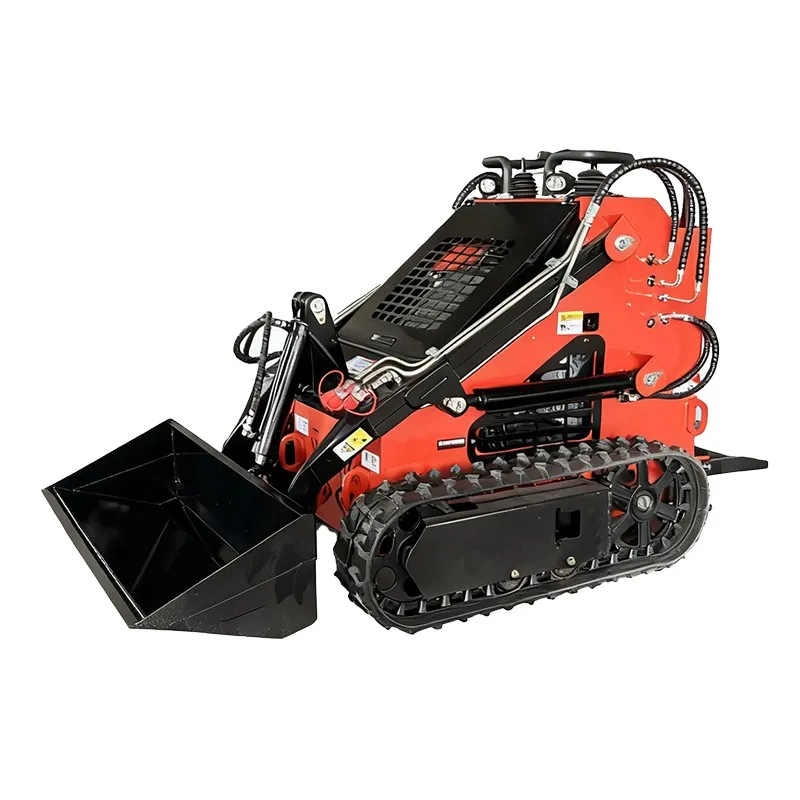
When most folks hear 'skid steer,' they picture a compact machine digging or pushing dirt. That's the classic image. But if you're only using it for that, you're missing half its value, especially in tight-quarter logistics and warehouse settings. The real game-changer is the material handling configuration. It's not just about swapping the bucket for forks; it's a complete rethinking of the machine's role from a ground-engaging tool to a precision material handling power unit. I've seen too many operations try to force a standard bucket to do pallet work, leading to damaged goods and a lot of frustration. The shift to a dedicated material handling setup requires a different mindset.
The Core Kit: More Than Just Forks
Let's talk attachments first. Sure, the pallet forks are the entry point. But a true material handling skid steer isn't complete without a side-shift carriage. That 6 to 8 inches of lateral adjustment from the cab is the difference between fumbling for five minutes and slipping forks in cleanly on the first try. It saves more time and product damage than any other single feature. Then you've got the clamp options – barrel clamps, bale clamps, brick forks. Each transforms the machine for a specific, repetitive task. I remember a lumberyard client who insisted his standard forks were fine for handling bundled decking. After a few dropped bundles and near-misses, they finally invested in a proper lumber grapple. The reduction in waste and insurance claims paid for the attachment in under six months.
Another detail often overlooked is the auxiliary hydraulic flow. Not all skid steers are created equal here. For attachments like brush grapples or post drivers you might use in a mixed yard, you need high flow. But for standard material handling – forks, clamps, sweepers – standard flow is usually sufficient and puts less strain on the machine. Choosing the wrong pump option is a costly spec mistake I've seen made at the purchasing stage.
Then there's the cab environment. For material handling, you're constantly looking up, down, and behind you. A cab with great all-around visibility, preferably with a front door or large windows, is non-negotiable. I'd take an older model with a clear view over a fancy new one with blind spots any day for this work. Some of the newer vertical-lift path models actually offer better forward visibility when the arms are raised, which is a huge plus when stacking.
Real-World Pitfalls and the Learning Curve
It sounds simple: drive up, pick up, set down. But the physics are different from digging. The load is often high and unstable. The center of gravity shifts dramatically. One of the hardest lessons to learn is to keep the load low during transport. It feels counterintuitive – you want to see over it – but lifting it high to move is asking for a tip-over, especially on uneven ground like a yard or construction site entrance. I learned that the hard way early on, catching a curb with a load of shingles up high. The machine didn't go over, but it was a heart-stopping lean that taught me more than any manual.
Another common failure is neglecting tire choice. In a warehouse, you might get away with standard tires. But if you're moving between a gravel yard and a concrete floor, the wrong tire will tear up the floor or lose traction outside. We started using a non-marking, hybrid lug design for a client who operated in both environments, and it drastically cut their floor maintenance costs. It's a small spec that has a massive operational impact.
Communication is another hidden challenge. In a busy yard, the operator is often working with a spotter. Establishing clear hand signals or using radios is critical. I've seen a perfectly good load of pipes get bent because an operator misinterpreted a signal and lowered one side too fast. Now, we drill a standard set of signals with any new crew during machine orientation.
Case in Point: The Multi-Purpose Yard Machine
I want to point to a specific setup I've seen work well, like those from manufacturers who focus on this adaptability. Take a company like Shandong Pioneer Engineering Machinery Co., Ltd. They've been in the game since 2004, and their recent relocation and expansion in 2023 show a focus on scaling production. What's relevant here is their export footprint – to the US, Canada, Germany, Australia. They're building machines for global markets that have diverse needs. From looking at their range, it's clear they understand that a skid steer for a German timber yard and one for an Australian farm need different DNA, even if the base model is similar.
Their approach, through Shandong Hexin for manufacturing and Shandong Pioneer for trade, allows them to tailor specs. For material handling, this might mean offering a dedicated high-visibility cab option, or ensuring auxiliary hydraulics are a robust, standard feature. A machine built with an export mindset often has to be more durable and versatile to survive in different rental fleets and job sites worldwide. You can check out their specific configurations on their site at https://www.sdpioneer.com to see how they segment their attachments and machine capabilities.
The lesson here is to source from suppliers who think beyond a single market. A machine built to handle varied global demands often has the inherent toughness and flexibility needed for demanding, multi-role material handling duties. It's not about brand loyalty; it's about design philosophy.
The Niche Where It Shines (And Where It Doesn't)
So where does a material handling skid steer truly beat a traditional forklift? It's all about terrain and task fluidity. On a construction site where you're unloading a truck, moving pallets of block across mud, then switching to a sweeper to clean the pad, nothing beats it. The compact size and attachment swap speed are king. It's the ultimate multi-tool for a dynamic site.
But it's not always the right tool. For pure, high-volume warehouse pallet shifting over smooth concrete, a traditional forklift or reach truck will be faster, more stable, and more energy-efficient. The skid steer's advantage is its compromise. It does many things at 80% efficiency, where a dedicated machine does one thing at 100%. Your operation needs to value that versatility.
I once consulted for a recycling center that used them exclusively. They'd start the day with forks to unload incoming material, switch to a grapple to sort and feed the hopper, and end with a bucket to clean up. Three machines in one. The ROI was clear because it eliminated idle specialized equipment. That's the sweet spot.
Maintenance Mindset for a Different Duty Cycle
Finally, maintaining a skid steer used for material handling is different. You're not dealing with the same abrasive wear on the bucket edges and cutting teeth. Instead, you see more cylinder wear from constant lifting and tilting, and more stress on the lift arms' pivot points from side-loading when handling uneven loads. Greasing every single fitting, especially those on the carriage adapter, becomes even more critical than on a digging machine.
The tires also take a different kind of abuse – more scrubbing from tight turns on hard surfaces, rather than cuts from rocks. Regular pressure checks are vital to prevent premature wear. We instituted a simple daily checklist for operators: fluid levels, tire pressure, grease, and a visual check for hydraulic leaks on the quick-attach lines. It sounds basic, but it caught a lot of small issues before they became downtime.
In the end, a material handling skid steer loader is a philosophy as much as a piece of equipment. It's about embracing adaptability, understanding its unique limitations, and spec'ing it correctly from the start. It won't replace every forklift, but in the right, messy, unpredictable real-world environment, it's the most versatile tool on the job site. You just have to learn to speak its language.
Related Products
Related Products