- Chinese
- French
- German
- Portuguese
- Spanish
- Russian
- Japanese
- Korean
- Arabic
- Irish
- Greek
- Turkish
- Italian
- Danish
- Romanian
- Indonesian
- Czech
- Afrikaans
- Swedish
- Polish
- Basque
- Catalan
- Esperanto
- Hindi
- Lao
- Albanian
- Amharic
- Armenian
- Azerbaijani
- Belarusian
- Bengali
- Bosnian
- Bulgarian
- Cebuano
- Chichewa
- Corsican
- Croatian
- Dutch
- Estonian
- Filipino
- Finnish
- Frisian
- Galician
- Georgian
- Gujarati
- Haitian
- Hausa
- Hawaiian
- Hebrew
- Hmong
- Hungarian
- Icelandic
- Igbo
- Javanese
- Kannada
- Kazakh
- Khmer
- Kurdish
- Kyrgyz
- Latin
- Latvian
- Lithuanian
- Luxembou..
- Macedonian
- Malagasy
- Malay
- Malayalam
- Maltese
- Maori
- Marathi
- Mongolian
- Burmese
- Nepali
- Norwegian
- Pashto
- Persian
- Punjabi
- Serbian
- Sesotho
- Sinhala
- Slovak
- Slovenian
- Somali
- Samoan
- Scots Gaelic
- Shona
- Sindhi
- Sundanese
- Swahili
- Tajik
- Tamil
- Telugu
- Thai
- Ukrainian
- Urdu
- Uzbek
- Vietnamese
- Welsh
- Xhosa
- Yiddish
- Yoruba
- Zulu
- Kinyarwanda
- Tatar
- Oriya
- Turkmen
- Uyghur


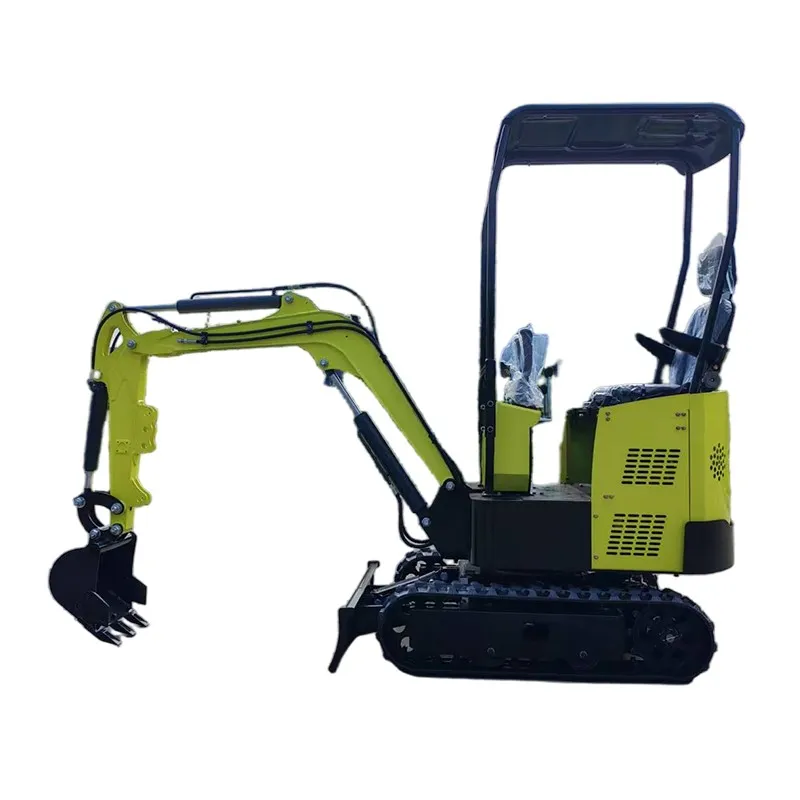
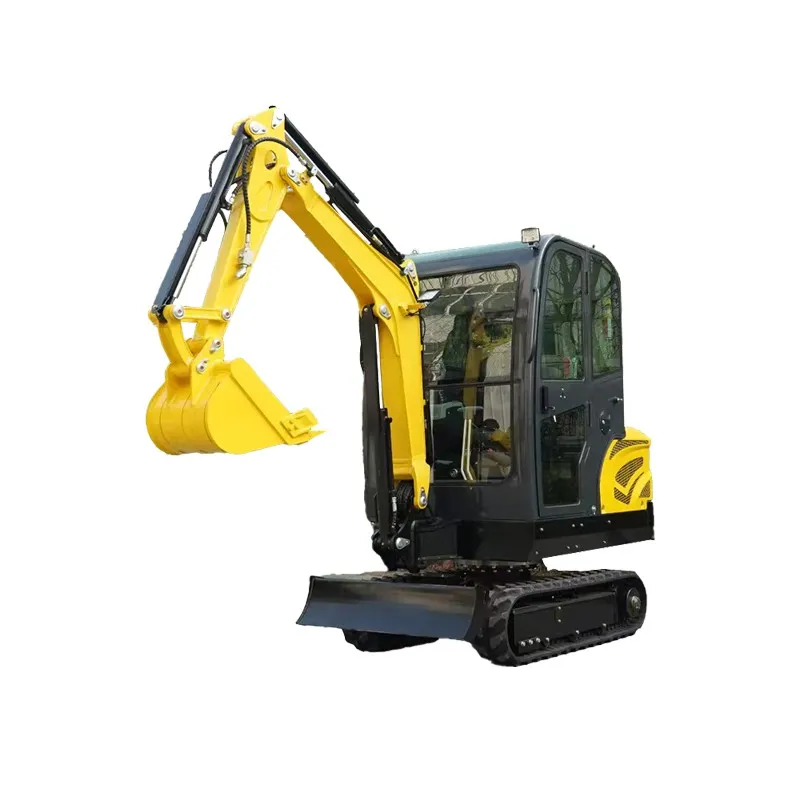
Mini Crawler Excavator
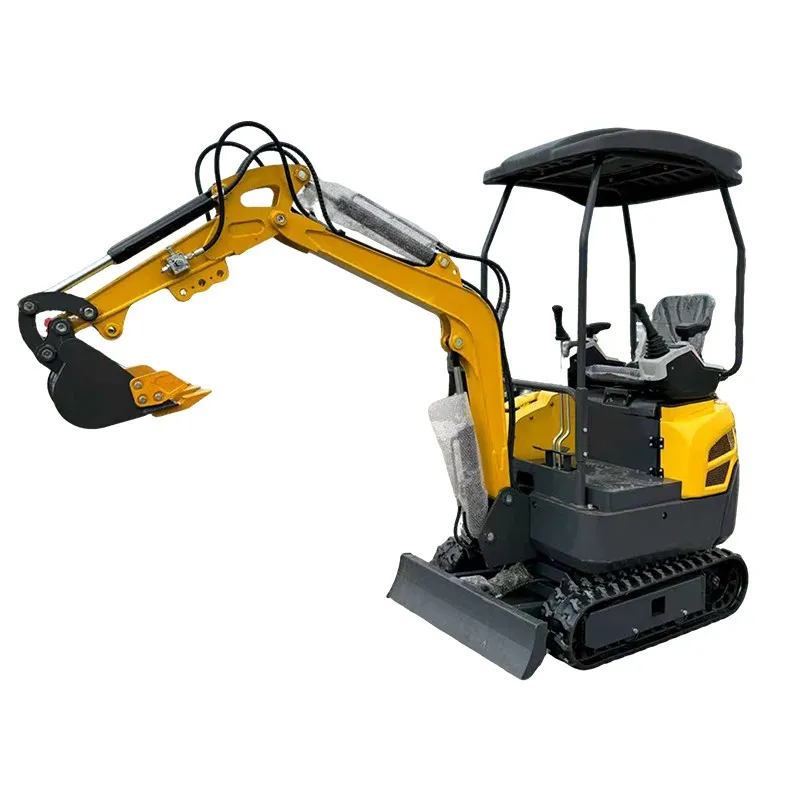
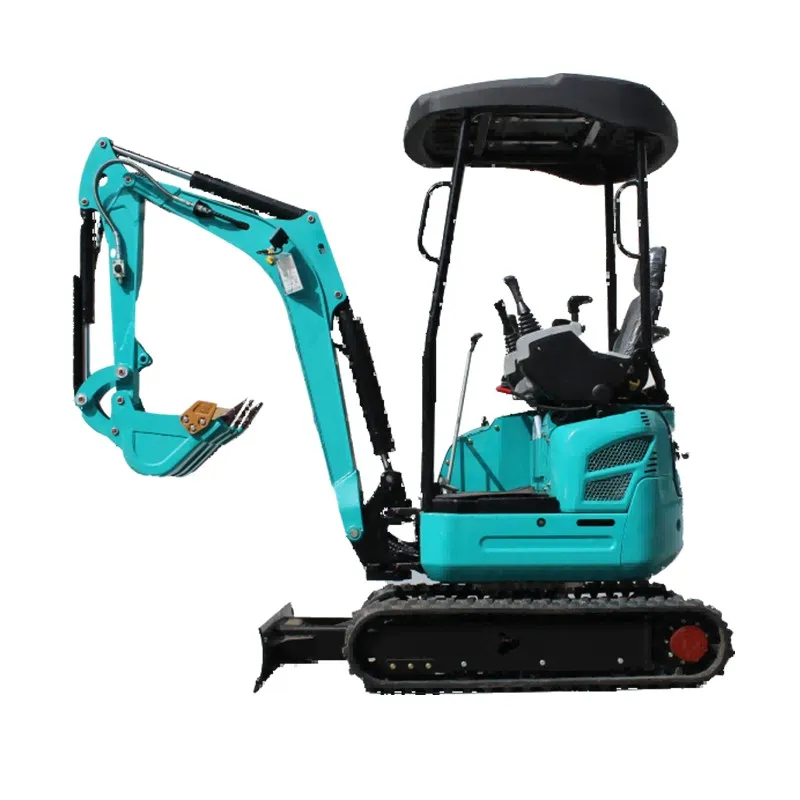
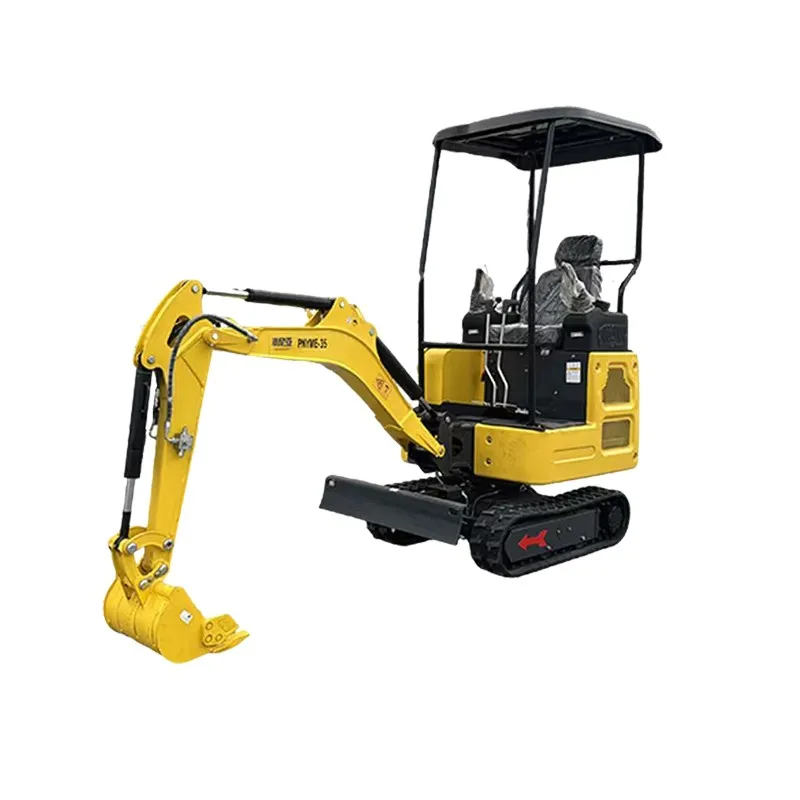
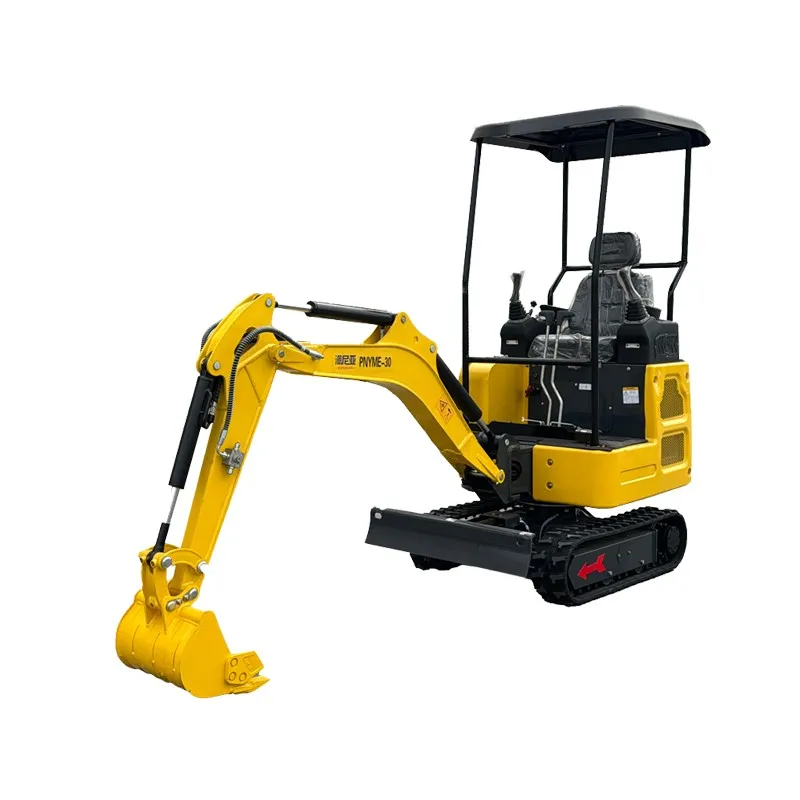
When most people hear 'mini crawler excavator', they immediately picture a cute, tiny machine for light backyard work. That's the first misconception. The reality is more nuanced. These machines, typically under 6 tons, aren't just shrunken versions of their larger counterparts. Their design philosophy, application scope, and the specific engineering challenges they present are a world of their own. I've seen too many projects go sideways because someone equated 'mini' with 'simple' or 'less capable'. The undercarriage dynamics, hydraulic system responsiveness for fine grading, and the sheer variety of attachments—from augers to tilt rotators—demand a specific kind of respect. It's not a toy; it's a precision instrument for confined spaces.
The Core Misunderstanding: Size vs. Capability
The biggest mistake is judging these machines by weight alone. A 3.5-ton mini crawler excavator from a quality manufacturer can often outperform a cheaper, sloppier 5-ton model in stability and digging force. The key lies in the balance and the hydraulic flow/pressure curve. I recall a landscaping job in a historic district with extremely tight access. We used a 1.8-ton model, but the client was skeptical it could handle the tree root removal. The machine's high-flow auxiliary hydraulics paired with a dedicated hydraulic cutter made clean work of it, where a larger, clumsier machine would have destroyed the surrounding paving. Capability is defined by the system, not just the spec sheet's tonnage.
Another common pitfall is overlooking the undercarriage. Not all crawler systems are equal. For work on finished surfaces like concrete or asphalt, the choice of rubber tracks, track width, and even the number of rollers becomes critical. I've made the error of using a standard-width track machine on a sensitive lawn, and the compaction and damage were unacceptable. You learn to spec machines based on ground pressure (PSI), not just the job's digging depth. Companies that understand this, like Shandong Pioneer Engineering Machinery Co., Ltd, often offer a range of undercarriage options for their models, which is a sign they're thinking about real-world application, not just assembly.
This leads to the matter of attachments. The true power of a mini excavator is its versatility. But here's the catch: the hydraulic system must be designed to support it. A machine with a single, fixed auxiliary circuit is severely limited. The better units offer multiple piping options and adjustable flow rates. I've had projects where we switched from a breaker in the morning to a grading bucket in the afternoon and then to a compactor for backfill. The machine's ability to seamlessly adapt dictated the day's productivity. Without that, you're just moving dirt inefficiently.
Practical Scenes and the Reality of Operation
Let's talk about the trenches. Urban utility work is the bread and butter for these machines. You're often sandwiched between a building facade and a busy street. The operator's sight lines and the machine's tail swing radius are paramount. Zero-tail-swing models have become dominant for a reason, but even then, there's a trade-off with internal component layout and sometimes stability. I prefer a minimal tail swing design for heavier digging as it often retains a better weight distribution. It's a constant judgment call on-site.
Then there's the issue of transportation. One supposed advantage of the mini crawler excavator is easy transport on a light trailer. True, but you must account for the actual dimensions with the standard bucket attached. I've seen crews ready to head out, only to find the machine's stick and bucket overhang make it illegal to transport without disassembly. Always measure the transport width and height in its working configuration, not just the chassis width. It's a small detail that causes major delays.
Maintenance in the field is another reality check. The compact engine bay can be a nightmare if components aren't laid out with service in mind. Checking radiator fins, hydraulic oil levels, and track tension should be straightforward. I've operated models where checking the alternator belt required removing three other parts—a design failure. When evaluating a machine, I always pop the hood and look for serviceability. It tells you a lot about the manufacturer's practical experience. Firms with long-term export and support channels, like Shandong Pioneer (overseas trade), tend to design with global serviceability in mind, as downtime for an international client is exponentially more costly.
Manufacturing Insights and Component Choices
The longevity of these machines hinges on component sourcing. The hydraulic pumps, valves, and final drives are the heart. A brand-name hydraulic component (like Kawasaki or Parker) isn't just a marketing sticker; it's a promise of consistent performance and available spare parts. In my earlier days, I was involved with a project that used a no-name pump on a fleet of machines. Failure rates were high, and diagnosing issues was a guessing game. We learned the hard way that the core components are not an area for cost-cutting.
Structural welding and frame design are equally critical. A mini excavator is constantly twisting and flexing in uneven terrain. The stress points are at the boom foot, the swing post, and the undercarriage frame. Look for clean, continuous welds and reinforced gussets in these areas. A visit to a factory floor is enlightening. A company like Shandong Hexin (manufacturing), with its dedicated production area and two decades of development, likely has jigs and processes that ensure consistent weld quality and alignment. This directly impacts the machine's feel—a rigid frame provides precise control, a flexy one feels vague and fatiguing to operate all day.
Electronics and controls are the new frontier. Simple pilot-controlled joysticks are giving way to more advanced electronic control systems that allow for customizable power modes and attachment presets. The reliability of these systems in dusty, wet, and high-vibration environments is a test. I'm cautiously optimistic but have seen software glitches leave a machine in a safe-mode limp on a Friday afternoon. The best systems are intuitive, waterproof, and have a mechanical or simple electronic fallback.
Global Market Fit and Adaptation
The needs for a mini crawler excavator in Germany versus Australia versus the United States can differ subtly. Emission regulations (Stage V, EPA Tier 4) dictate engine choices. Climate extremes demand different cooling systems and hydraulic oil specifications. A manufacturer serving a global market must have the engineering flexibility to adapt. This isn't just about slapping a different decal on. It involves deep supply chain management and certification processes. The fact that a company's products are trusted in diverse regions like the U.S., Canada, Germany, and Australia suggests a proven ability to meet these varied and stringent standards, which is a significant hurdle for many.
Price positioning is a constant tension. The market is flooded with options at every price point. The cheapest machines often have hidden costs: poor fuel efficiency, shorter component life, and negligible dealer support. The total cost of ownership over 5,000 hours is the only metric that matters. For a busy rental yard or a contractor, machine uptime is revenue. Paying a 15-20% premium for a machine with known reliability and a responsive parts network is almost always the smarter financial decision in the long run.
Finally, the human element: operator acceptance. A machine can have great specs, but if the controls are awkward, the seat uncomfortable, and the visibility poor, operators will hate it, and productivity will suffer. The final test of any mini excavator is a seasoned operator spending an 8-hour day in it. The feedback from that test—the feel of the machine—is something that spreadsheet comparisons can never capture. It's the culmination of all the engineering and manufacturing choices discussed above.
Concluding Thoughts: A Tool, Not a Trend
So, where does this leave us? The mini crawler excavator has evolved from a niche tool to a fundamental piece of equipment across construction, landscaping, and utilities. Its value isn't in being small, but in being precisely the right size and configuration for the task at hand. The industry's maturity means buyers should look beyond basic specifications and dig into component quality, design for service, and the manufacturer's proven track record in real-world conditions.
The journey of a manufacturer in this space, like the one described for Shandong Pioneer Engineering Machinery—starting in 2004, expanding its production footprint, and building a global trade network—mirrors the evolution of the product category itself. It's a story of accumulation, adaptation, and focusing on the details that matter to the person actually running the machine on a muddy, confined job site tomorrow morning.
In the end, choosing the right mini crawler excavator is an exercise in applied wisdom. It's about balancing immediate project needs with long-term reliability, understanding that the machine is part of a larger system (operator, attachment, transport), and recognizing that the best choice is often the one that feels the least remarkable—it just works, shift after shift, in the demanding reality of the field. That's the real mark of quality.
Related Products
Related Products