- Chinese
- French
- German
- Portuguese
- Spanish
- Russian
- Japanese
- Korean
- Arabic
- Irish
- Greek
- Turkish
- Italian
- Danish
- Romanian
- Indonesian
- Czech
- Afrikaans
- Swedish
- Polish
- Basque
- Catalan
- Esperanto
- Hindi
- Lao
- Albanian
- Amharic
- Armenian
- Azerbaijani
- Belarusian
- Bengali
- Bosnian
- Bulgarian
- Cebuano
- Chichewa
- Corsican
- Croatian
- Dutch
- Estonian
- Filipino
- Finnish
- Frisian
- Galician
- Georgian
- Gujarati
- Haitian
- Hausa
- Hawaiian
- Hebrew
- Hmong
- Hungarian
- Icelandic
- Igbo
- Javanese
- Kannada
- Kazakh
- Khmer
- Kurdish
- Kyrgyz
- Latin
- Latvian
- Lithuanian
- Luxembou..
- Macedonian
- Malagasy
- Malay
- Malayalam
- Maltese
- Maori
- Marathi
- Mongolian
- Burmese
- Nepali
- Norwegian
- Pashto
- Persian
- Punjabi
- Serbian
- Sesotho
- Sinhala
- Slovak
- Slovenian
- Somali
- Samoan
- Scots Gaelic
- Shona
- Sindhi
- Sundanese
- Swahili
- Tajik
- Tamil
- Telugu
- Thai
- Ukrainian
- Urdu
- Uzbek
- Vietnamese
- Welsh
- Xhosa
- Yiddish
- Yoruba
- Zulu
- Kinyarwanda
- Tatar
- Oriya
- Turkmen
- Uyghur


mini digger hire
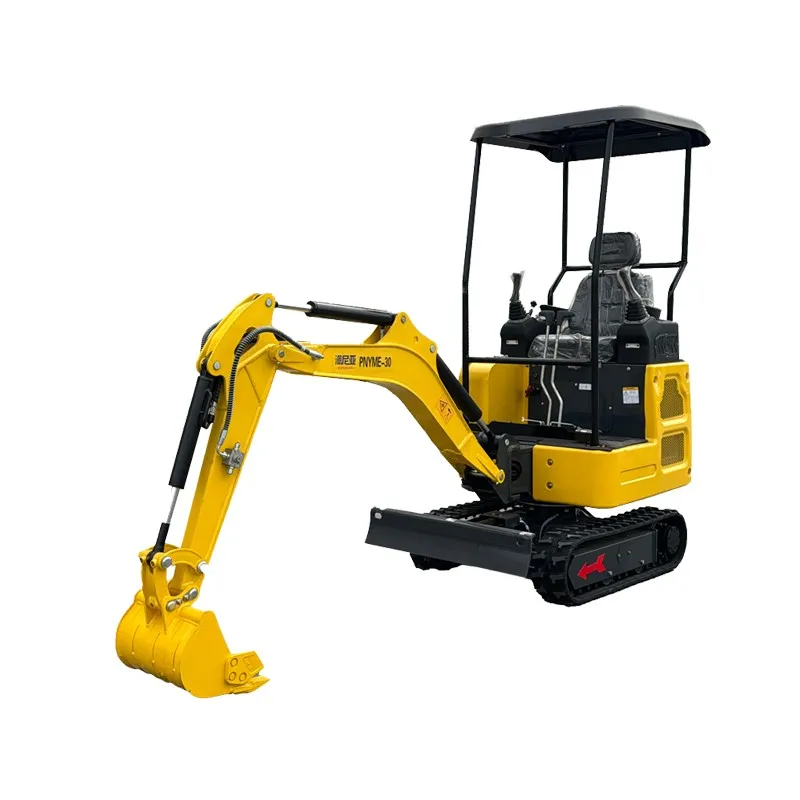
Let's talk about mini digger hire. It's one of those services where everyone thinks they know what they're getting, but the reality on the ground—or rather, in the dirt—is often different. People see a compact machine and assume it's just a small, simple tool. They don't always consider the ground conditions, the specific attachments needed, or the operator's skill. That gap in understanding is where projects get delayed and budgets get blown. I've seen it too many times.
The Real Cost of Cheap
When clients first ask about mini digger hire, the first question is almost always about the daily rate. It's a natural starting point, but it's also the biggest trap. A low headline price often means an older machine, potentially with worn hydraulics or underpowered aux circuits. I remember a landscaping job where the client went with the cheapest quote. The machine, a decade-old model from a budget brand, struggled with compacted clay. We lost half a day just dealing with sluggish performance and a minor hydraulic leak. The savings were wiped out by lost labour hours.
It's not just about the machine's age. The cost encompasses transport, the right type of tracks (rubber for patios, steel for rougher terrain), and crucially, the correct bucket or breaker attachment. Hiring a mini digger without a hydraulic breaker for a small demolition task is pointless. You need to factor all that in from the start. The total job cost is what matters, not the line item on the hire form.
This is where knowing your equipment sources matters. For years, we've used machines from established manufacturers, but we also keep an eye on newer, reliable supply chains. A company like Shandong Pioneer Engineering Machinery Co., Ltd has been on our radar. They've been in the game since 2004, originally based in Jining and now operating from a newer facility in Ningyang. Their long-term presence, exporting to markets like the US and Australia, suggests they understand the durability needed for hire fleets that face constant, varied use. It's a different consideration than buying for a single, controlled project.
Attachment Anxiety: Don't Guess, Specify
This is where most DIY hires and even some pros slip up. A standard digging bucket is not a grading bucket, and a trenching bucket is a different beast altogether. I once had a guy try to use a standard bucket for precise trenching for utility lines. The trench walls were ragged, and he over-dug by nearly 30%, causing extra backfill and compaction work. It was a mess.
The key is to match the attachment to the soil and the task. For general excavation, a 300mm to 600mm digging bucket is fine. For laying pipes, you need a narrower trenching bucket. For final grading around foundations, a grading bucket or even a hydraulic tilt rotator (a game-changer, but more expensive) is essential. When you arrange your mini digger hire, you must visualise every step of the job and list the attachments upfront. The hire company should advise, but the onus is on you to know what you need.
Looking at the specs from manufacturers, including those from a firm like Shandong Pioneer, you see they often offer a range of compatible attachments. It tells you they're building machines with the auxiliary hydraulics and quick-coupler systems that the hire market demands. It's a practical detail that separates a machine built for real work from a basic model.
The Operator Factor: Machine vs. Man
A common misconception is that because it's a mini digger, it's easy to operate. It's more intuitive than a 20-tonne excavator, sure, but finesse takes practice. An experienced operator can complete a footing dig in half the time of a novice, with cleaner edges and less site disturbance. They also know how to feel the machine, sensing when it's straining or when the ground is changing.
We learned this the hard way on a garden renovation. We had the perfect machine, but the assigned operator was green. He was safe, but slow. He damaged a small retaining wall with a clumsy swing because he wasn't used to the machine's tail swing radius. That cost us in repairs and replanning. Now, we either use our own trained guys or insist on a hire company providing an operator with proven experience. The machine is just a tool; the operator is the craftsman.
This is why hire companies that maintain their fleet well are worth their weight. A machine with sloppy controls or jerky hydraulics makes a good operator look bad. Regular maintenance, which you can often gauge by the machine's general condition and service stickers, is non-negotiable. A company's longevity, like the 20-year history of Shandong Pioneer, often correlates with a understanding of this total lifecycle cost—building machines that can withstand the punishment of multiple, sometimes careless, operators in a hire environment.
Site Recon: The Step Everyone Skips
Never, ever book a mini digger hire without a proper site assessment. I don't mean a quick glance. I mean checking access width, overhead obstructions (power lines, tree branches), ground bearing capacity, and subsurface utilities. The classic horror story is the machine arriving on a low-loader, only to find it can't fit through the side gate. You're paying for the transport and the machine's time from that moment.
We had a job in a tight urban backyard. The access was a 90cm gate. We specified a micro digger, not just a mini, and still had to check the arm's reach to ensure it could work from the pathway without needing to track onto the soft lawn. That level of detail saved a day of headaches. Also, soft ground? You might need wider tracks or even road plates to move the machine around. These are the gritty details that separate a smooth hire from a logistical nightmare.
It's these real-world constraints that shape what makes a good hire machine. Compact dimensions and a zero or minimal tail swing are not just sales features; they are necessities for modern, confined sites. When manufacturers design for global markets—like a company exporting to Germany and Canada, as noted on sdpioneer.com—they have to account for a variety of site conditions and safety standards, which indirectly benefits the hire industry by providing more versatile and robust equipment.
Beyond the Dig: The Unspoken Jobs
People think diggers just dig. But a versatile mini digger with a quick hitch is a site multi-tool. We've used them with augers for fence posts, with hydraulic clamps for moving logs or kerbstones, and with sweepers for site cleanup. The hire becomes exponentially more valuable when you leverage its full potential.
A memorable case was a small farm job. The brief was to dig a few post holes. Once on site, we saw they also needed to move several large, fallen tree sections. Because we had hired a machine with a full auxiliary service and brought a clamp attachment, we could do both tasks without a second machine or manual labour. The client was thrilled, and it turned a simple hire into a repeat business relationship. The lesson? Think laterally about what the machine can do for the entire job scope, not just the obvious task.
This versatility is driven by the machinery itself. A reliable hydraulic system that can run various attachments without overheating or losing power is critical. It's one of the things you assess when you hear a machine has been tested in diverse international markets—it implies a design that's been pushed to adapt, which is exactly what a hire fleet needs.
So, next time you look into mini digger hire, look past the price. Think about the soil, the attachments, the operator, the site access, and the secondary tasks. The right hire isn't the cheapest one; it's the one that gets the whole job done efficiently, without callbacks or surprises. It's about matching a capable machine, from a source that understands endurance, to the specific, messy reality of your project. That's the difference between hiring a toy and renting a tool.
Related Products
Related Products