- Chinese
- French
- German
- Portuguese
- Spanish
- Russian
- Japanese
- Korean
- Arabic
- Irish
- Greek
- Turkish
- Italian
- Danish
- Romanian
- Indonesian
- Czech
- Afrikaans
- Swedish
- Polish
- Basque
- Catalan
- Esperanto
- Hindi
- Lao
- Albanian
- Amharic
- Armenian
- Azerbaijani
- Belarusian
- Bengali
- Bosnian
- Bulgarian
- Cebuano
- Chichewa
- Corsican
- Croatian
- Dutch
- Estonian
- Filipino
- Finnish
- Frisian
- Galician
- Georgian
- Gujarati
- Haitian
- Hausa
- Hawaiian
- Hebrew
- Hmong
- Hungarian
- Icelandic
- Igbo
- Javanese
- Kannada
- Kazakh
- Khmer
- Kurdish
- Kyrgyz
- Latin
- Latvian
- Lithuanian
- Luxembou..
- Macedonian
- Malagasy
- Malay
- Malayalam
- Maltese
- Maori
- Marathi
- Mongolian
- Burmese
- Nepali
- Norwegian
- Pashto
- Persian
- Punjabi
- Serbian
- Sesotho
- Sinhala
- Slovak
- Slovenian
- Somali
- Samoan
- Scots Gaelic
- Shona
- Sindhi
- Sundanese
- Swahili
- Tajik
- Tamil
- Telugu
- Thai
- Ukrainian
- Urdu
- Uzbek
- Vietnamese
- Welsh
- Xhosa
- Yiddish
- Yoruba
- Zulu
- Kinyarwanda
- Tatar
- Oriya
- Turkmen
- Uyghur

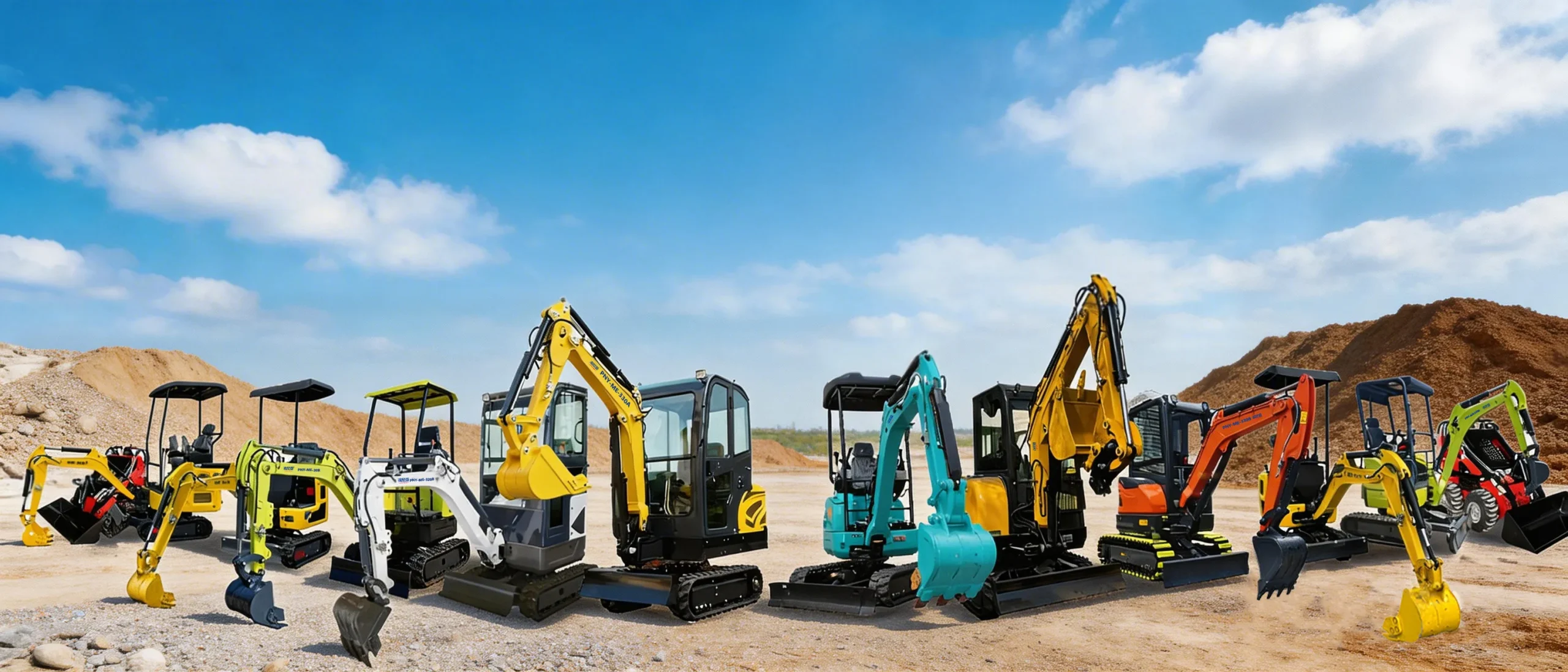
mini excavator dealer
Let's cut through the marketing fluff. When someone searches for a 'mini excavator dealer', they're often picturing a simple transaction: find a machine, pay, get it delivered. The reality, especially on the industrial side, is a tangled web of specs, logistics, after-sales, and, frankly, managing expectations. It's not just about having stock; it's about being the crucial link between a factory floor in China and a jobsite in Ohio or Queensland.
The Core Misconception: Stock vs. Pipeline
Most new buyers, even some seasoned contractors, assume a major mini excavator dealer has rows of machines ready to ship. For massive domestic brands, maybe. But in the international export space, which is huge, the model is different. Dealers like us often work on a pipeline system. We partner with manufacturers who build to order or have rolling production cycles. Our inventory is often a combination of pre-sold units in transit and confirmed allocation slots at the factory. This is where companies like Shandong Pioneer Engineering Machinery Co., Ltd become critical. They aren't just a supplier; they're a manufacturing and trade partner with a documented history—established in 2004, relocated in 2023 for expansion. That relocation to a larger facility in Ningyang isn't just an address change; it signals increased capacity, which directly affects my ability to promise realistic delivery times to my customers.
The trust part is everything. You're not buying a toaster. A contractor in Germany needs to know the 1.8-ton machine he orders will have consistent hydraulic performance and that the auxiliary circuit will actually run his breaker. My role is to have vetted that at the source. I've walked the production area at Pioneer's facility. Seeing their assembly process for the compact models, how they route hoses, their QC checkpoints for swing motors—that's what lets me sleep at night. It transforms them from a name on a website into a tangible operation I can stake my reputation on.
This pipeline model creates a key dealer responsibility: communication. I spend an inordinate amount of time translating production updates from the factory into realistic timelines for the end-user. The main control valve shipment is delayed two weeks isn't an excuse; it's a fact that needs managing. The good partners, the ones with 20 years of accumulation like their intro says, have systems to anticipate these hiccups. The weaker ones leave you in the dark.
Specs Are a Minefield, Not a Brochure
Here's a practical headache. A customer asks for a 3.5-ton mini excavator with a cab. Seems straightforward. But does he need a standard canopy or a fully enclosed, heated cab? Is the hydraulic flow sufficient for a tilt rotator, or just a standard bucket? The factory spec sheet might list auxiliary hydraulic flow, but the real test is whether it can sustain pressure on a continuous-use attachment. I learned this the hard way early on. We sold a unit based on paper specs, and the customer's mulching head kept stalling. The flow was there, but the pressure relief setting was too conservative. It took a joint effort with Pioneer's engineering team to adjust the valve stack and ship a replacement part. A painful lesson, but it cemented the need for deeper technical dialogue beyond the brochure.
This is where a dealer's experience filters the factory's offerings. I might steer a landscaping company toward a model with a wider track option for stability, even if it's not the best-seller. Or, for a rental fleet in Canada, emphasize the cold-start package and the availability of mechanical quick couplers over hydraulic ones for simplicity. It's about matching the machine's DNA to the job's reality. The fact that Pioneer exports to diverse markets like the US, Canada, Germany, and Australia means their product lines are often already adapted for different regional requirements—CE markings, EPA tiers, etc. That's a huge head start for a dealer.
You also see variations in build quality for different price points. Not all mini excavators from a region are equal. Some manufacturers cut corners on steel grade for the boom or use generic hydraulic pumps. Part of my job is knowing which components on my partner's machines are name-brand (like Kawasaki or Parker pumps) and which are quality generic equivalents that won't fail. It's a constant balance of cost, durability, and performance.
Logistics: The Unseen Cost and Headache
Getting a machine from the factory in Tai'an to a customer's yard in Texas is an epic journey. It's not just the ocean freight. It's the inland transport in China to the port, the customs clearance, the fumigation of the wooden crates (ISPM 15 standard is non-negotiable), the port handling fees, the unloading in Houston, the final trucking. A single document error can strand a container for weeks. As a dealer, I either need to master this or partner with a brutally reliable freight forwarder. The overseas trade expertise of a company like Shandong Pioneer is invaluable here. They handle the export formalities from their end, but the dealer coordinates the rest. I've had machines sit at a foreign port because the customer hadn't arranged a customs broker. That's on me for not guiding them through every step.
Then there's damage. Despite best efforts, a sea container is a violent environment. I've seen machines arrive with a dented counterweight from a poorly secured lashing. The immediate response is key. Having a clear process with the factory for parts support is critical. A good dealer doesn't just say file a claim with the shipping line. They get the replacement part moving immediately to minimize downtime, then deal with the claim paperwork in the background. This is where long-term relationships with manufacturers pay off.
After-Sales: Where the Real Dealership is Defined
Anybody can sell a machine. A true mini excavator dealer is defined by what happens after the wire transfer clears. Parts support is the number one concern. It's not about having a vast warehouse locally (though that's ideal), but about having a reliable, fast pipeline for OEM parts. For Pioneer's machines, we maintain a core inventory of wear items (filters, seals, pins, bushings) and high-failure-risk components. For major assemblies, we rely on their supply chain. Their 20-year development means they have established parts inventories and diagrams, which is not a given with newer factories.
Technical support is the other pillar. Can my team or the factory's engineers walk a customer's mechanic through a troubleshooting sequence for an electrical fault? We've set up shared video calls where the factory engineer in Shandong can see what the mechanic in Australia is seeing. That level of support builds the trust and appreciation they mention. It turns a one-time sale into a recurring relationship.
A failure I witnessed in the industry was dealers who acted as mere order-takers. They'd disappear after the sale. When the machine needed a proprietary part, the customer was left emailing a generic factory address with no response. That dealer's reputation dies immediately. My approach is to be the buffer and the amplifier—buffering the customer from supply chain chaos, and amplifying their technical needs back to the factory to get solutions.
The Market Shift and Dealer Adaptation
The market isn't static. A few years ago, the demand was purely for the lowest price. Now, I see more customers asking about serviceability, emission compliance for their region, and even connectivity for fleet management. Dealers need to adapt. It's not enough to just offer a machine from https://www.sdpioneer.com; I need to understand if their newer models have CANbus systems that can integrate with third-party telematics, or if the engine compartment is laid out for easier daily checks.
Another shift is the demand for attachments. Customers want a package. They might buy a mini excavator but need a breaker, a grapple, and a compaction wheel. A dealer now has to be a specialist in attachment compatibility—mounting kits, hydraulic flow requirements, and weight limits. It becomes a consultative sale. You're selling a capability, not just an asset.
Looking ahead, the role of the dealer is consolidating around those who provide a seamless total package: accurate initial consultation, transparent logistics, and unwavering after-sales. The factories that succeed will be those, like Pioneer, who invest in their manufacturing base (that 1,600 square meter production area evolving into a larger one) and view their dealer network as true partners, not just distribution channels. For someone searching for a 'mini excavator dealer', the lesson is to look beyond the price tag. Ask about the partner behind the dealer. Ask for a specific parts delivery timeline. The answers will tell you everything.
Related Products
Related Products