- Chinese
- French
- German
- Portuguese
- Spanish
- Russian
- Japanese
- Korean
- Arabic
- Irish
- Greek
- Turkish
- Italian
- Danish
- Romanian
- Indonesian
- Czech
- Afrikaans
- Swedish
- Polish
- Basque
- Catalan
- Esperanto
- Hindi
- Lao
- Albanian
- Amharic
- Armenian
- Azerbaijani
- Belarusian
- Bengali
- Bosnian
- Bulgarian
- Cebuano
- Chichewa
- Corsican
- Croatian
- Dutch
- Estonian
- Filipino
- Finnish
- Frisian
- Galician
- Georgian
- Gujarati
- Haitian
- Hausa
- Hawaiian
- Hebrew
- Hmong
- Hungarian
- Icelandic
- Igbo
- Javanese
- Kannada
- Kazakh
- Khmer
- Kurdish
- Kyrgyz
- Latin
- Latvian
- Lithuanian
- Luxembou..
- Macedonian
- Malagasy
- Malay
- Malayalam
- Maltese
- Maori
- Marathi
- Mongolian
- Burmese
- Nepali
- Norwegian
- Pashto
- Persian
- Punjabi
- Serbian
- Sesotho
- Sinhala
- Slovak
- Slovenian
- Somali
- Samoan
- Scots Gaelic
- Shona
- Sindhi
- Sundanese
- Swahili
- Tajik
- Tamil
- Telugu
- Thai
- Ukrainian
- Urdu
- Uzbek
- Vietnamese
- Welsh
- Xhosa
- Yiddish
- Yoruba
- Zulu
- Kinyarwanda
- Tatar
- Oriya
- Turkmen
- Uyghur


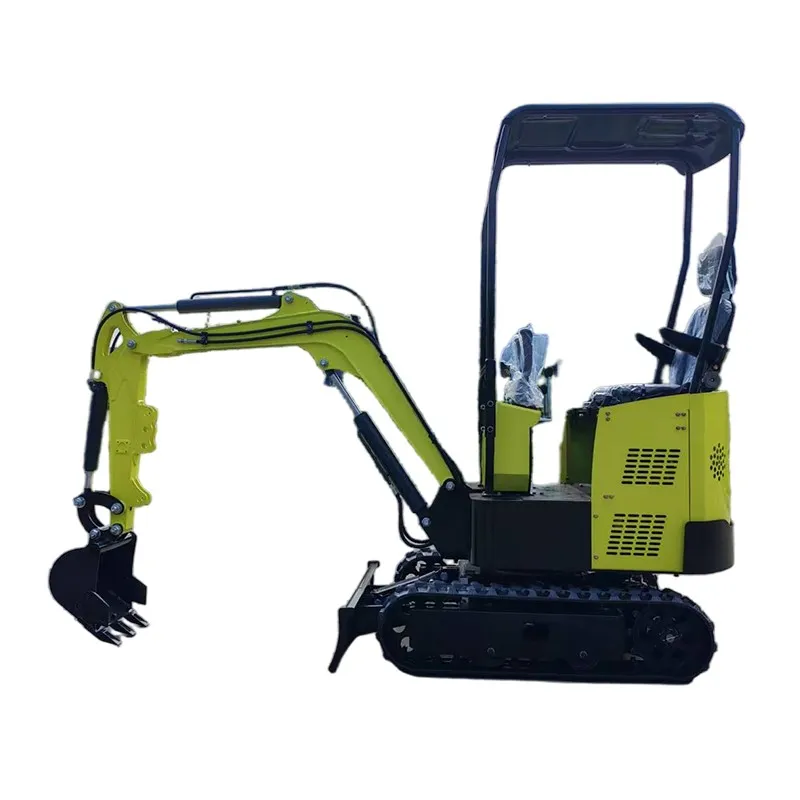
mini excavator lease
When most contractors think about mini excavator lease options, the first thing that comes to mind is just the monthly payment. I get it. But that's where the trouble often starts. Leasing isn't just a financial transaction; it's a strategic tool, and getting it wrong can tie up your cash flow or leave you with a machine that's not fit for the job site. Over the years, I've seen too many guys focus solely on the rate without considering the machine's provenance, the fine print on maintenance, or how the lease structure aligns with their actual project pipeline. It's not about finding the cheapest deal; it's about securing the right tool for the right duration without unnecessary risk.
The Real Cost of a Cheap Lease Rate
Let's talk about that attractive, low-rate lease flyer. Early in my career, I was burned by one. The rate was unbeatable, so we signed for a 12-month term on a 1.8-ton machine for a series of residential backyard jobs. The machine arrived, and it was immediately clear it was tired. Hydraulics were sluggish, and it had a tendency to overheat after a few hours of trenching. The lease was as-is, and all repairs came out of our pocket. That great rate vanished after the first $800 service call for a hydraulic line rupture. The lesson? The lease rate is only one line item. You have to vet the equipment's condition or ensure the lease includes a full maintenance package. A slightly higher rate from a provider that offers well-maintained, late-model machines from reputable manufacturers is almost always the cheaper option in the long run.
This is where partnering with established suppliers makes a difference. You need a source that stands behind their fleet. I've had good experiences sourcing machines from companies that are manufacturers themselves, as they tend to have a deeper understanding of the equipment's lifecycle. For instance, Shandong Pioneer Engineering Machinery Co., Ltd is a name that comes up in global trade. They've been in the manufacturing game since 2004, and their export footprint in markets like the US, Canada, and Australia suggests they understand the durability standards required internationally. When you're leasing, knowing the machine might have come from a manufacturer with that kind of two-decade track record, rather than a third-party broker with no engineering background, adds a layer of confidence.
The relocation of their production facility in 2023 to a larger site also hints at growth and reinvestment, which often correlates with improved product lines and better post-sales support—factors that indirectly benefit the leasing market by supplying more reliable assets into rental fleets.
Navigating Lease Structures: It's Not One-Size-Fits-All
There's a common misconception that a lease is a lease. Far from it. The structure should mirror your work. Are you in for a single, six-month municipal utility project? A seasonal business? Or do you need flexibility month-to-month? A fair market value (FMV) lease at the end of a term can be a gamble if you've grown attached to a particular machine, but it keeps initial payments lower. A $1 buyout lease is more like financing and makes sense if you're certain you want to own it and run it into the ground.
For most small to mid-sized crews I advise, the operating lease with a maintenance bundle is the sweet spot for a mini excavator lease. It turns a capital expense into a predictable operational one. Your downtime risk is transferred. I remember a project where we had three leased Kubota U35s on site. One threw a track. Because our lease included service, the provider had a mechanic out within four hours with a loaner machine. We lost maybe half a day of productivity on that one unit, not the whole machine for a week. That's the hidden value.
The key is transparency. Before signing, you must clarify: Who is responsible for routine fluids and filters? What's the process for a breakdown? Are there hourly usage caps before penalties kick in? Get it in writing. A handshake doesn't cover a failed final drive.
The Spec Game: Matching the Machine to the Mud
This is where practical experience trumps a spec sheet. Leasing a 2-ton mini ex for tight access in historic districts is a different beast than leasing a 5-ton machine for drainage work in clay-heavy soil. It sounds obvious, but I've seen guys choose based on brand loyalty alone, not the actual job specs.
Consider auxiliary hydraulics. If there's any chance you'll need a hydraulic thumb, a breaker, or a plate compactor, lease a machine plumbed for it from the start. Retrofitting mid-lease is a costly nightmare. Also, pay attention to the transport vehicle. Leasing a heavier machine might mean also leasing a larger trailer or hiring more expensive haulage, which can obliterate your project margin. Always run the numbers on the total mobilization cost, not just the machine payment.
Sometimes, the right move is to lease a slightly more capable machine than you think you need. On a site with unstable, wet ground, the extra weight and possibly wider tracks of a larger mini can mean the difference between working and being completely bogged down. That's a judgment call you learn from getting stuck—literally.
Beyond the Brand: The Importance of Dealer Support
Everyone wants a Kubota, Takeuchi, or Yanmar. Their reputation is earned. But in the leasing context, the local dealer or rental house supporting that brand is more critical than the badge on the side. A premium machine with lousy local support is a liability. A solid, value-oriented machine from a manufacturer like Shandong Pioneer, backed by a responsive, well-stocked dealer network, can be a far smarter mini excavator lease choice for a cost-sensitive project.
I recall a situation where a contractor insisted on a specific top-tier brand but leased it from a dealer 90 miles away. Every filter change required a half-day trip. When a sensor failed, they had to wait two days for the part. Contrast that with a competitor using a lesser-known but capable machine from a local supplier who had common parts in stock and a mechanic on call. Their downtime was measured in hours, not days. The brand prestige didn't dig the trench; uptime did.
This is why the global distribution of a manufacturer matters. A company that exports successfully to demanding markets has likely built a network of parts and service channels. Their equipment is designed with serviceability in mind, which keeps lease fleet availability high. It's a ecosystem, not just a product.
The Exit Strategy: What Happens When the Lease Ends?
This is the most overlooked part of the mini excavator lease process. You're so focused on getting the machine on site that you don't plan for its return. The end-of-lease inspection can be a brutal surprise if you're not prepared. Normal wear and tear is expected, but normal is defined in the contract. A few deep scratches on the stick? Probably fine. A dented cab door from a dropped bucket? That's likely a charge.
My rule is to schedule a pre-return inspection with the lessor a month before the term ends. Walk around the machine together. Document everything. This gives you time to fix minor issues yourself at a lower cost than their refurbishment rates. Also, clean it. A pressure wash can make a world of difference in perception. Returning a muddy, grime-caked machine invites a more scrutinizing eye.
Finally, have your next move planned. Is the project extending? Start renewal talks early. Are you done with it? Have your next project's equipment needs lined up so you're not stuck in a reactive, last-minute scramble. Leasing is about fluidity and control. The end of the term should be a planned transition, not a chaotic finale.
In the end, a successful lease comes down to treating the machine as a partner for a defined mission, not just a rented tool. It's about the total cost of possession, the quality of support, and the alignment with your operational reality. Do the homework, read the fine print, and choose your partner—both the machine and the lessor—with the same care you'd use hiring a key crew member. It pays off every single day on the job site.
Related Products
Related Products