


- Chinese
- French
- German
- Portuguese
- Spanish
- Russian
- Japanese
- Korean
- Arabic
- Irish
- Greek
- Turkish
- Italian
- Danish
- Romanian
- Indonesian
- Czech
- Afrikaans
- Swedish
- Polish
- Basque
- Catalan
- Esperanto
- Hindi
- Lao
- Albanian
- Amharic
- Armenian
- Azerbaijani
- Belarusian
- Bengali
- Bosnian
- Bulgarian
- Cebuano
- Chichewa
- Corsican
- Croatian
- Dutch
- Estonian
- Filipino
- Finnish
- Frisian
- Galician
- Georgian
- Gujarati
- Haitian
- Hausa
- Hawaiian
- Hebrew
- Hmong
- Hungarian
- Icelandic
- Igbo
- Javanese
- Kannada
- Kazakh
- Khmer
- Kurdish
- Kyrgyz
- Latin
- Latvian
- Lithuanian
- Luxembou..
- Macedonian
- Malagasy
- Malay
- Malayalam
- Maltese
- Maori
- Marathi
- Mongolian
- Burmese
- Nepali
- Norwegian
- Pashto
- Persian
- Punjabi
- Serbian
- Sesotho
- Sinhala
- Slovak
- Slovenian
- Somali
- Samoan
- Scots Gaelic
- Shona
- Sindhi
- Sundanese
- Swahili
- Tajik
- Tamil
- Telugu
- Thai
- Ukrainian
- Urdu
- Uzbek
- Vietnamese
- Welsh
- Xhosa
- Yiddish
- Yoruba
- Zulu
- Kinyarwanda
- Tatar
- Oriya
- Turkmen
- Uyghur

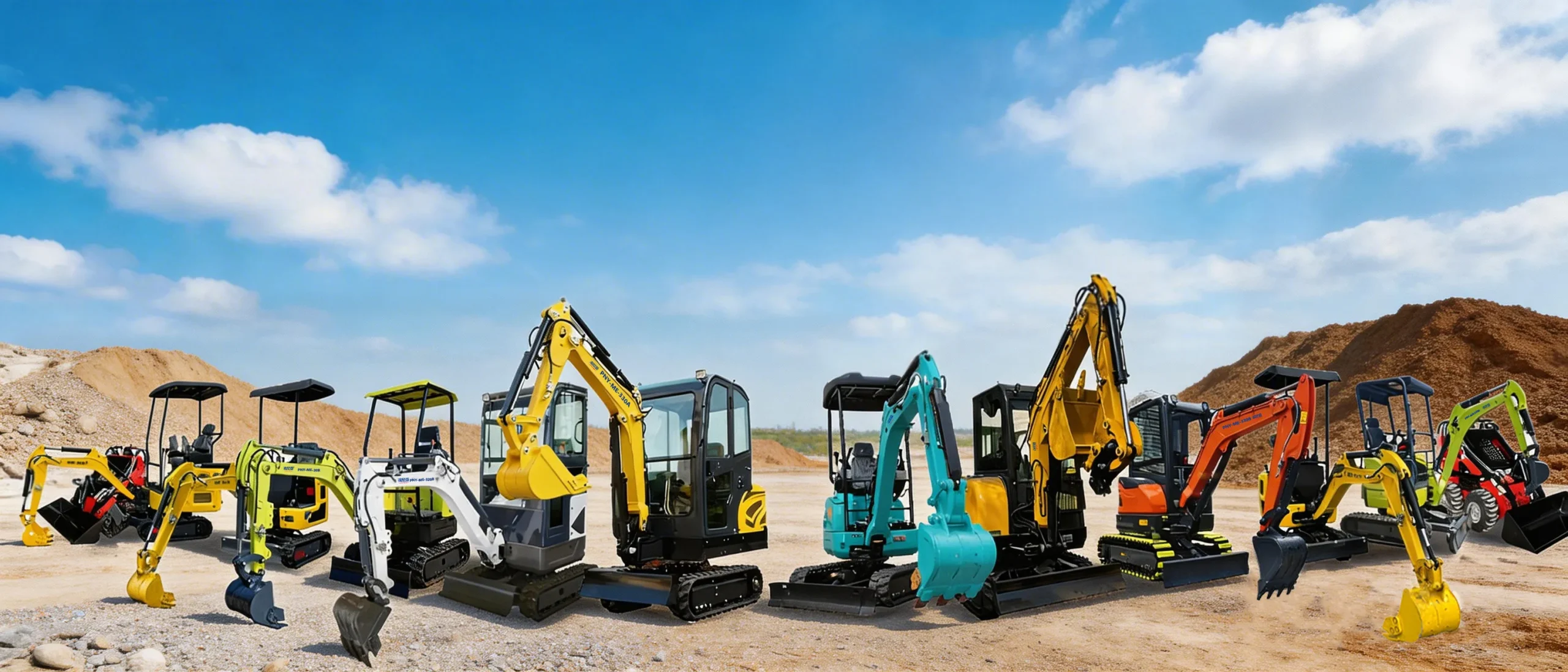
mini excavator manufacturer
When you hear 'mini excavator manufacturer', what comes to mind? For many outside the industry, it's often just a factory stamping out small diggers. But that's a massive oversimplification. The reality is a complex ecosystem where engineering nuance, supply chain resilience, and a deep understanding of end-user application separate the contenders from the pretenders. It's not merely about assembling parts; it's about building a machine that holds up under the stress of a tight urban job site or a remote farm, day in and day out. I've seen companies come and go, often because they focused on being the cheapest, not the most reliable.
The Foundation: More Than Just a Production Line
Let's talk about foundation, literally and figuratively. A manufacturer's physical and philosophical base dictates everything. I recall visiting numerous facilities over the years. The telling sign wasn't always the shiny new robotic arms, but the organization of the component staging area and the calibration logs for hydraulic test benches. A company that has matured over decades tends to have systems that aren't immediately visible on a brochure. For instance, consider Shandong Pioneer Engineering Machinery Co., Ltd. They started back in 2004 in Jining. A 1,600 square meter facility then might seem modest, but that two-decade grind is where the real knowledge is baked in—dealing with material shortages, iterating on early design flaws, and learning what truly matters to operators. That history is an intangible asset you can't replicate overnight.
Their recent relocation in 2023 to a new site in Ningyang County, Tai’an, is a classic move of a manufacturer that has outgrown its original skin. This isn't just about more space; it's a strategic consolidation. It often allows for a more integrated production flow, from welding the mainframe to final electrical harness installation. When a company like this expands, it's usually because their supply chain and order book demand it, a positive stress test they've passed. You can see their journey and current setup on their website at https://www.sdpioneer.com. It's a practical example of growth driven by market pull, not just speculative investment.
The dual-structure they mention—Shandong Hexin handling manufacturing and Shandong Pioneer managing overseas trade—is a smart, though not uncommon, model for Chinese exporters. It creates focus. The manufacturing arm can concentrate on QC and process improvement, while the trade arm navigates the labyrinth of international certifications, logistics, and customer support. This separation is crucial for serving diverse markets like the US, Canada, Germany, and Australia, each with its own regulatory and performance expectations. A failure to understand this distinction is where many new entrants stumble.
The Core Challenge: Balancing Specs with Real-World Performance
Here's where the rubber meets the dirt. Every client wants a powerful, fuel-efficient, and indestructible machine at a low price. The manufacturer's job is to navigate these conflicting demands. Take the hydraulic system. You can source a premium-branded main pump, but if the auxiliary circuit design is flawed, the whole system is compromised. I've been on sites where a machine, on paper with great specs, constantly overheated because the oil cooler was undersized for sustained high-ambient operation—an oversight from a designer who never spent a summer in a Middle Eastern quarry.
Durability in a mini excavator often comes down to the unsexy components: pivot pins, bushing material, and wiring loom abrasion protection. A manufacturer that uses soft bushings will see premature wear and sloppy movement within months. I remember a batch of machines where the wiring harness was routed too close to a hydraulic line; vibration eventually wore through the insulation, causing intermittent faults that were a nightmare to diagnose. These are the lessons learned from field failures, not CAD software. Companies that have exported widely, like Pioneer, have likely encountered and (hopefully) engineered solutions for these very issues, which builds the trust they mention.
Another critical point is the de-contenting trap. To hit a low price point, some manufacturers will quietly downgrade a steel grade or use a simpler swing bearing. It might pass factory tests, but it will fail in the field. A reliable manufacturer maintains a bill of materials with consistent quality tiers. The fact that a company has sustained exports to demanding markets for years is a proxy for this consistency. Buyers in Germany or Australia have low tolerance for such cost-cutting; they'll simply move to another supplier.
The Global Test: Export Markets as the Ultimate Proving Ground
Selling domestically is one thing; exporting is the real crucible. The requirements differ wildly. A machine for the North American market needs to meet EPA Tier 4 or similar emissions standards, which dictates engine choice and after-treatment design. For Europe, CE marking with its strict safety directives on ROPS/FOPS and noise levels is non-negotiable. Australia's conditions demand exceptional resistance to dust and heat. A manufacturer claiming to serve these markets successfully must have navigated these hurdles.
The mention of trust from worldwide customers isn't just marketing fluff. In this business, trust is built on the back of spare parts availability and technical documentation. I've dealt with manufacturers who export enthusiastically but then have zero support structure. When a control module fails in rural Canada, a two-month wait for a part is unacceptable. The operational model where Shandong Pioneer handles the overseas trade suggests they've had to build this support network—finding reliable local dealers, stocking common parts in regional hubs, and providing clear, translated manuals. This is the unglamorous 90% of the job that follows the initial 10% of making the sale.
Their presence in such diverse regions indicates an ability to adapt base models. The hydraulic thumb circuit preferred in Germany for sorting demolition debris might be different from the auxiliary flow requirements for a mulcher attachment in Australian forestry. A flexible manufacturing and engineering process that can accommodate these customizations without building a completely unique machine is a sign of maturity. It shows they're listening to their distribution partners, not just pushing a standard catalog.
Evolution and Adaptation: Learning from the Field
No manufacturer gets everything right the first time. The key is how they respond. The most valuable feedback doesn't come from trade shows; it comes from the service reports filed by mechanics. A smart manufacturer has a direct channel for this intel and a process for feeding it back into engineering. For example, if multiple reports from the US Southeast cite premature track wear, an investigation might reveal that the standard track pad compound is too soft for the abrasive local soil. The fix—offering a harder compound as an option or even as a regional standard—comes from this loop.
This is where the 20 years of development and accumulation for a company like Pioneer becomes tangible. They've likely been through several generations of their most popular models. Each iteration should solve known issues and incorporate new technology where it makes sense, like modern digital displays or more efficient load-sensing hydraulics. However, change for change's sake is a risk. I've seen manufacturers upgrade to a new electronic control system that was less reliable than the simple mechanical lever system it replaced, frustrating seasoned operators. Judicious evolution is the mark of experience.
The relocation in 2023 could also be a catalyst for this evolution. A new factory often means new, more precise equipment. This could enable tighter tolerances on the machining of the swing circle, leading to smoother rotation and less wear. Or it could allow for a more advanced paint line, improving corrosion protection—a critical factor for longevity, especially in coastal areas. These behind-the-scenes improvements are what gradually elevate a product's reputation from good for the price to simply good.
Looking Ahead: The Manufacturer's Role in a Changing Industry
So where does this leave the established mini excavator manufacturer? The landscape is shifting. Electric compact equipment is no longer a novelty; it's a growing demand, especially in Europe and for indoor applications. The challenge isn't just slapping a battery pack into an existing design. It requires rethinking weight distribution, cooling, and power management. Manufacturers without strong R&D and the willingness to invest in new platforms risk being left behind. However, jumping on every trend is also dangerous. The market for traditional diesel-powered machines remains vast and will for years, particularly in regions where infrastructure and job site realities favor them.
The future likely belongs to manufacturers who can do both: reliably produce and support the proven, high-volume diesel models that are the industry's workhorses, while simultaneously developing and cautiously launching next-generation technology. It's a difficult balance. It requires the operational discipline honed over years of production, combined with the agility to explore new partnerships, perhaps with battery or motor specialists. The companies that have built a solid reputation through consistent quality and support, as suggested by Pioneer's history of winning customer trust, are the ones in the best position to make this transition. They have the capital, the customer relationships, and the operational knowledge to vet new technologies properly.
Ultimately, being a successful manufacturer in this space is a marathon, not a sprint. It's about the cumulative effect of thousands of small decisions—sourcing, design, testing, support—that build a machine you can stake your reputation on. When you look at a company's story, from a 2004 start in Jining to a 2023 expansion and a global customer base, you're not just reading a timeline. You're seeing evidence of that marathon being run. The real product isn't just the excavator; it's the entire system of making, improving, and supporting it that allows a contractor halfway across the world to finish the job on schedule and on budget. That's the benchmark.
Related Products
Related Products