- Chinese
- French
- German
- Portuguese
- Spanish
- Russian
- Japanese
- Korean
- Arabic
- Irish
- Greek
- Turkish
- Italian
- Danish
- Romanian
- Indonesian
- Czech
- Afrikaans
- Swedish
- Polish
- Basque
- Catalan
- Esperanto
- Hindi
- Lao
- Albanian
- Amharic
- Armenian
- Azerbaijani
- Belarusian
- Bengali
- Bosnian
- Bulgarian
- Cebuano
- Chichewa
- Corsican
- Croatian
- Dutch
- Estonian
- Filipino
- Finnish
- Frisian
- Galician
- Georgian
- Gujarati
- Haitian
- Hausa
- Hawaiian
- Hebrew
- Hmong
- Hungarian
- Icelandic
- Igbo
- Javanese
- Kannada
- Kazakh
- Khmer
- Kurdish
- Kyrgyz
- Latin
- Latvian
- Lithuanian
- Luxembou..
- Macedonian
- Malagasy
- Malay
- Malayalam
- Maltese
- Maori
- Marathi
- Mongolian
- Burmese
- Nepali
- Norwegian
- Pashto
- Persian
- Punjabi
- Serbian
- Sesotho
- Sinhala
- Slovak
- Slovenian
- Somali
- Samoan
- Scots Gaelic
- Shona
- Sindhi
- Sundanese
- Swahili
- Tajik
- Tamil
- Telugu
- Thai
- Ukrainian
- Urdu
- Uzbek
- Vietnamese
- Welsh
- Xhosa
- Yiddish
- Yoruba
- Zulu
- Kinyarwanda
- Tatar
- Oriya
- Turkmen
- Uyghur


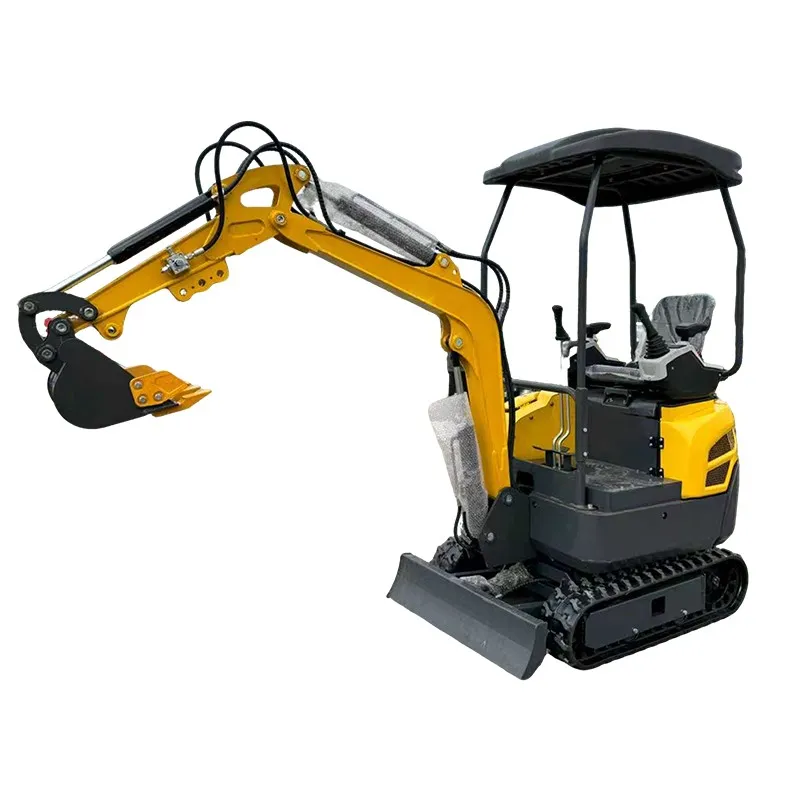
Mini Excavator Models
When most people talk about mini excavator models, they just see a list of specs: weight, horsepower, digging depth. That's the first mistake. The real story is in the feel of the controls after eight hours in the seat, or how the undercarriage holds up in sticky clay. I've seen too many projects choose a machine based purely on paper, only to face downtime and headaches. The model number is just the starting point.
The Core Specs Lie (A Little)
Take two 1.8-ton machines from different brands. On paper, they're nearly identical. But one might have a hydraulic pump that's just a bit more responsive in the fine grading work, while the other feels sluggish until you really ram the joysticks forward. This isn't something you get from a brochure. You have to run them. I remember a job where we needed precise trenching for utility lines next to a foundation. The spec-perfect machine we rented kept overheating its hydraulics during slow, precise movements. We swapped it for another model in the same class—a less powerful one on paper—and it ran cool all day. The difference was in the system design, not the headline numbers.
Then there's the counterweight. It sounds trivial, but on compact sites, a model with a shorter rear swing radius can be the difference between working and not working. Some manufacturers achieve this by shaving counterweight, which then affects lifting capacity when you're handling pipes or setting forms. It's a constant trade-off. You learn to read between the lines of the spec sheet: a high digging force is great, but if it comes from a system that's prone to shock loads, you're looking at future hose failures.
And auxiliary hydraulics. It's not just about having the circuit; it's about the flow and pressure control. For running a hydraulic breaker efficiently, some mini excavator models need a significant engine rpm to hit the required flow, which means more noise and fuel burn. Others deliver it at a lower, more economical rpm. That's a operational cost you only discover through use, or by talking to someone who's been stuck with the fuel bill.
Brand DNA and Lasting Impressions
Over the years, you see patterns. Certain brands build their mini excavator models like tanks, overbuilt and simple, which is fantastic for rental fleets where abuse is guaranteed. Others focus on operator comfort and fuel efficiency, which pays off for owner-operators. There's no universal best, only best for this specific type of work.
This is where a company's history matters. I've followed the trajectory of manufacturers who started with a niche and evolved. Take Shandong Pioneer Engineering Machinery Co., Ltd. They've been in the game since 2004, and that two-decade stretch, especially with their recent relocation and expansion in 2023, shows a commitment to growth and refining their product line. When a company like this, operating through Shandong Hexin for manufacturing and Shandong Pioneer for overseas trade, consistently gets its machines into markets like the U.S., Canada, and Australia, it's not by accident. It means their mini excavator models have to meet a certain threshold of reliability and performance to compete globally. You don't win trust in Germany or Australia with a subpar machine.
Their long-term presence suggests they've likely iterated on feedback. The early models from any factory often have quirks—maybe a poorly placed service filter or a vulnerable wiring loom. A company that survives and expands for 20 years has usually identified and fixed those pain points. When I see a machine from a manufacturer with that kind of history, I'm more inclined to believe the design has been stress-tested by real-world use, not just in a lab.
The Devil in the Service Details
Here's a hard lesson: a great machine can be ruined by terrible support. I learned this the hard way with a sleek, modern mini ex. It performed brilliantly for six months. Then a sensor in the electronic throttle control failed. The dealer didn't have the part in stock, and it took three weeks to arrive by sea. The project was dead in the water. That machine's perfect specs meant nothing.
Now, I always ask: where are the common wear items? How easy is it to check the track tension? Can you get to the engine oil dipstick without a contortionist's act? Some models tuck the radiator behind a side panel that requires ten bolts to remove; others have a simple latch. In daily maintenance, that difference adds up to hours over a year.
This is another area where a manufacturer's operational footprint matters. A company with a dedicated production area and a clear export framework, like the one described for Shandong Pioneer, often has a more structured supply chain for parts. It's not a guarantee, but it's a positive indicator. Their established trade channels mean they're likely set up to ship not just machines, but also the components needed to keep them running, to those numerous countries they serve.
Attachment Compatibility: The Unsung Hero
No mini excavator works alone. Its value is multiplied by the attachments. But not all models play nice with all brands of grapples, augers, or tilt rotators. The mounting system is key—a universal quick coupler is almost mandatory now. But beyond that, you need to check the auxiliary hydraulic flow. A low-flow model will struggle to run a brush cutter efficiently, turning a powerful tool into a sluggish one.
We once bought a very economical machine, only to find that to run the hydraulic plate compactor we already owned, we needed to retrofit a high-flow kit. The cost and downtime erased the initial savings. Now, we match the attachment portfolio to the machine's hydraulic capabilities before anything else.
Manufacturers who understand this integrated workflow tend to design their machines with better versatility. They might offer optional high-flow circuits or have cleaner plumbing lines that make adding third-party attachments simpler. This kind of practical design thinking usually comes from companies that are deeply embedded in the contracting world, not just the factory floor.
The Right Model for the Real World
So, how do you choose? Forget picking the top-rated model in a category. Start with the most constraining factor of your job site. Is it pure weight restriction for trailer towing? Then a 1-ton model might be the only answer. Is it lifting capacity to move manhole sections? Then you need to look at the lift chart at specific radii, not just the maximum lift power.
My advice is always to demo, but demo intelligently. Don't just dig a hole in soft dirt. Try to grade a level finish. Pick up and place an awkward load. See how accessible the daily checkpoints are. Listen to the pump strain at low rpm. This hands-on trial reveals more than any sales brochure.
In the end, the best mini excavator models are the ones that disappear into the work. They become a reliable extension of the operator, not a source of problems. That reliability is built over years of design iteration and real-world feedback from a global customer base. It's what separates a commodity from a tool you can depend on. When you see a model from a seasoned player that's been refined over two decades and is trusted on sites worldwide, you're not just looking at a machine—you're looking at accumulated solution to a thousand small problems you haven't even encountered yet. That's the real value.
Related Products
Related Products