- Chinese
- French
- German
- Portuguese
- Spanish
- Russian
- Japanese
- Korean
- Arabic
- Irish
- Greek
- Turkish
- Italian
- Danish
- Romanian
- Indonesian
- Czech
- Afrikaans
- Swedish
- Polish
- Basque
- Catalan
- Esperanto
- Hindi
- Lao
- Albanian
- Amharic
- Armenian
- Azerbaijani
- Belarusian
- Bengali
- Bosnian
- Bulgarian
- Cebuano
- Chichewa
- Corsican
- Croatian
- Dutch
- Estonian
- Filipino
- Finnish
- Frisian
- Galician
- Georgian
- Gujarati
- Haitian
- Hausa
- Hawaiian
- Hebrew
- Hmong
- Hungarian
- Icelandic
- Igbo
- Javanese
- Kannada
- Kazakh
- Khmer
- Kurdish
- Kyrgyz
- Latin
- Latvian
- Lithuanian
- Luxembou..
- Macedonian
- Malagasy
- Malay
- Malayalam
- Maltese
- Maori
- Marathi
- Mongolian
- Burmese
- Nepali
- Norwegian
- Pashto
- Persian
- Punjabi
- Serbian
- Sesotho
- Sinhala
- Slovak
- Slovenian
- Somali
- Samoan
- Scots Gaelic
- Shona
- Sindhi
- Sundanese
- Swahili
- Tajik
- Tamil
- Telugu
- Thai
- Ukrainian
- Urdu
- Uzbek
- Vietnamese
- Welsh
- Xhosa
- Yiddish
- Yoruba
- Zulu
- Kinyarwanda
- Tatar
- Oriya
- Turkmen
- Uyghur

mini excavator private label
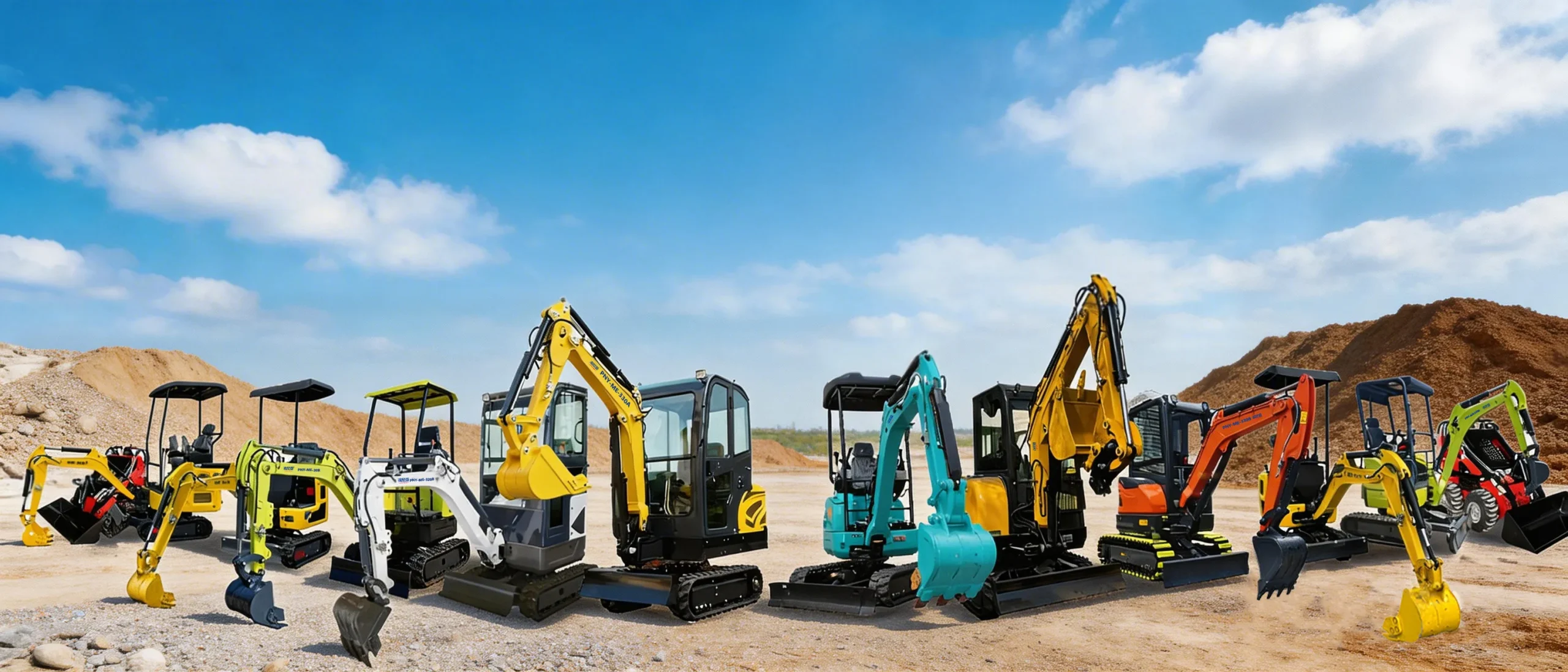
When you hear 'mini excavator private label', a lot of folks immediately picture slapping their logo on a generic machine and calling it a day. That’s the first and biggest misconception. The reality is far more nuanced, involving deep supply chain navigation, engineering compromises, and a constant battle between cost, quality, and market expectations. It's not just branding; it's a full-scale product development and sourcing operation disguised as a simple rebadge.
The Foundation: Choosing Your Partner Isn't About Price Alone
Early on, I made the mistake of sourcing purely on unit cost. Found a factory offering a 0.8-ton model at a price that seemed too good to be true. It was. The first shipment had chronic hydraulic leaks, and the swing motor mounts cracked under moderate strain. The savings were obliterated by warranty claims and a damaged reputation. You're not just buying a machine; you're buying the factory's engineering capability, quality control ethos, and willingness to stand behind the product. This is where long-established manufacturers with a track record in exports become critical.
Take a company like Shandong Pioneer Engineering Machinery Co., Ltd. They’ve been in the game since 2004, which in Chinese manufacturing terms, is a substantial history. Their recent relocation to a new facility in Ningyang in 2023 isn't just an address change; it typically signals investment in production lines and possibly more automated QC processes. For a private label client, this operational stability is a safety net. Their export footprint to markets like the US, Canada, and Germany through their trade arm, Shandong Pioneer, suggests they're accustomed to the compliance and quality expectations of those regions. That experience is intangible but invaluable.
The conversation with a potential partner like this shouldn't start with What's your cheapest 1.5-ton model? It should start with Can you show me your welding procedure specifications? or What's your process for testing hydraulic circuit integrity? Their ability to answer those questions in detail separates a true manufacturing partner from a mere assembler.
Specification Deep Dive: Where the Devil Lives
This is the core of the private label process. The factory provides a base model, and you customize the spec sheet. This is where you earn your margin or sink your project. Every component is a decision point. Do you opt for the well-known Japanese hydraulic pump or a reputable Chinese brand that cuts $150 per unit? The answer depends entirely on your target market segment.
For a rental fleet machine in North America, you might need that brand-name component for reliability and resale value. For a price-sensitive emerging market, the local brand might be perfectly adequate, but you need to have personally seen it perform over 500 hours in a test machine. I learned to never approve a component based on a datasheet alone. We once specified a particular brand of track motor, only to find its sealing was inadequate for muddy conditions, a flaw not apparent in initial testing. It led to a mid-production change order and delays.
Another critical, often-overlooked detail is the electrical system and instrumentation. Will you use a simple analogue gauge cluster or a digital CAN-BUS display that shows fault codes? The latter is a huge selling point for ease of maintenance but adds complexity and cost. The factory, like Shandong Pioneer's manufacturing entity Shandong Hexin, can usually offer tiers. Your job is to know which tier matches your customer's technical aptitude and service network.
The Assembly Line Reality Check
Visiting the factory floor is non-negotiable. You need to see where your brand will be built. Look at the torque wrenches on the hydraulic fitting stations—are they digital and calibrated, or old and rusty? Check the paint booth—is it a clean, controlled environment or open to dust? At one facility, I noticed they were using a single common grease for every lubrication point on the machine, from swing gear to bucket linkages. That's a red flag; different points often require different grease types. These are the granular details that separate a good private label product from a liability.
Logistics, Compliance, and the Landed Cost Shock
Quoting an FOB price from the factory is just the beginning. The real cost is the landed cost—machine on your dock, certified for sale. For the US, you're dealing with EPA Tier 4 Final and CARB regulations for diesel engines. Does your factory partner understand the documentation required? Can they provide a valid Engine Family Number? I've seen containers stuck at customs because the factory provided incomplete emission certification paperwork, incurring demurrage fees that killed the project's profitability.
Ocean freight for a 20ft container holding two mini excavators is one thing, but have you factored in the crating? Machines must be secured to withstand a 30-day voyage. Poor crating leads to damaged booms or scratched paint. A professional partner will have a standardized, tested crating process. The logistical capability hinted at by Shandong Pioneer's export history to diverse, high-standard markets is a strong indicator they've navigated these hurdles repeatedly.
Then there's parts support. Your private label agreement must include an initial spare parts package and a clear process for reordering. You don't want to sell 50 machines and then find out the lead time for a specific hydraulic valve is 90 days. Building a buffer inventory of critical wear parts is a cost, but it's a cost of doing business responsibly.
Branding Beyond the Decal
Putting your logo on the side is the easy part. True private label branding extends to the operator's manual, the warranty card, the service documentation, and even the style of the warning labels. Does the factory allow you to provide your own translated manuals, or must you use their generic English version full of Chinglish? Can you customize the seat fabric or the control lever grips? These touchpoints define the customer experience.
We worked with a partner to develop a simplified, graphically-heavy troubleshooting guide for one of our models. It was a minor investment, but dealers loved it because their mechanics could use it instantly. This kind of value addition is only possible with a factory that is collaborative, not just transactional. It requires a relationship where they see you as a long-term channel, not a one-off order.
Marketing materials matter too. You need high-resolution photos and videos of your branded machine, not stock photos of the factory's standard model. A professional partner should facilitate a photoshoot during pre-shipment inspection. It sounds trivial, but trying to market a machine with poorly lit, generic images is an uphill battle.
The Long Game: Iteration and Evolution
A successful private label program isn't static. Based on field feedback, you'll need to iterate. Maybe customers want a wider bucket option, or a different pattern of auxiliary hydraulic ports. You need a factory partner agile enough to implement these Engineering Change Orders (ECOs) without exorbitant fees or 12-month delays.
This is where the manufacturer's own R&D comes into play. A company with two decades of development, as mentioned in the background of Shandong Pioneer, is likely to have the in-house engineering talent to work with you on these modifications. Perhaps they've already developed a high-flow auxiliary system for another client that you can adopt. This collaborative evolution turns a sourcing project into a genuine product line you can grow.
The ultimate test is the second and third order. If the first batch goes smoothly, the real work begins: refining the spec, improving the packaging, streamlining parts supply. The goal is to build a machine that carries your name with pride, not one that you have to constantly apologize for. It's a grind, but getting it right means you own an asset—a trusted product bearing your brand—not just a inventory line item.
Related Products
Related Products