


- Chinese
- French
- German
- Portuguese
- Spanish
- Russian
- Japanese
- Korean
- Arabic
- Irish
- Greek
- Turkish
- Italian
- Danish
- Romanian
- Indonesian
- Czech
- Afrikaans
- Swedish
- Polish
- Basque
- Catalan
- Esperanto
- Hindi
- Lao
- Albanian
- Amharic
- Armenian
- Azerbaijani
- Belarusian
- Bengali
- Bosnian
- Bulgarian
- Cebuano
- Chichewa
- Corsican
- Croatian
- Dutch
- Estonian
- Filipino
- Finnish
- Frisian
- Galician
- Georgian
- Gujarati
- Haitian
- Hausa
- Hawaiian
- Hebrew
- Hmong
- Hungarian
- Icelandic
- Igbo
- Javanese
- Kannada
- Kazakh
- Khmer
- Kurdish
- Kyrgyz
- Latin
- Latvian
- Lithuanian
- Luxembou..
- Macedonian
- Malagasy
- Malay
- Malayalam
- Maltese
- Maori
- Marathi
- Mongolian
- Burmese
- Nepali
- Norwegian
- Pashto
- Persian
- Punjabi
- Serbian
- Sesotho
- Sinhala
- Slovak
- Slovenian
- Somali
- Samoan
- Scots Gaelic
- Shona
- Sindhi
- Sundanese
- Swahili
- Tajik
- Tamil
- Telugu
- Thai
- Ukrainian
- Urdu
- Uzbek
- Vietnamese
- Welsh
- Xhosa
- Yiddish
- Yoruba
- Zulu
- Kinyarwanda
- Tatar
- Oriya
- Turkmen
- Uyghur

mini excavator spare parts
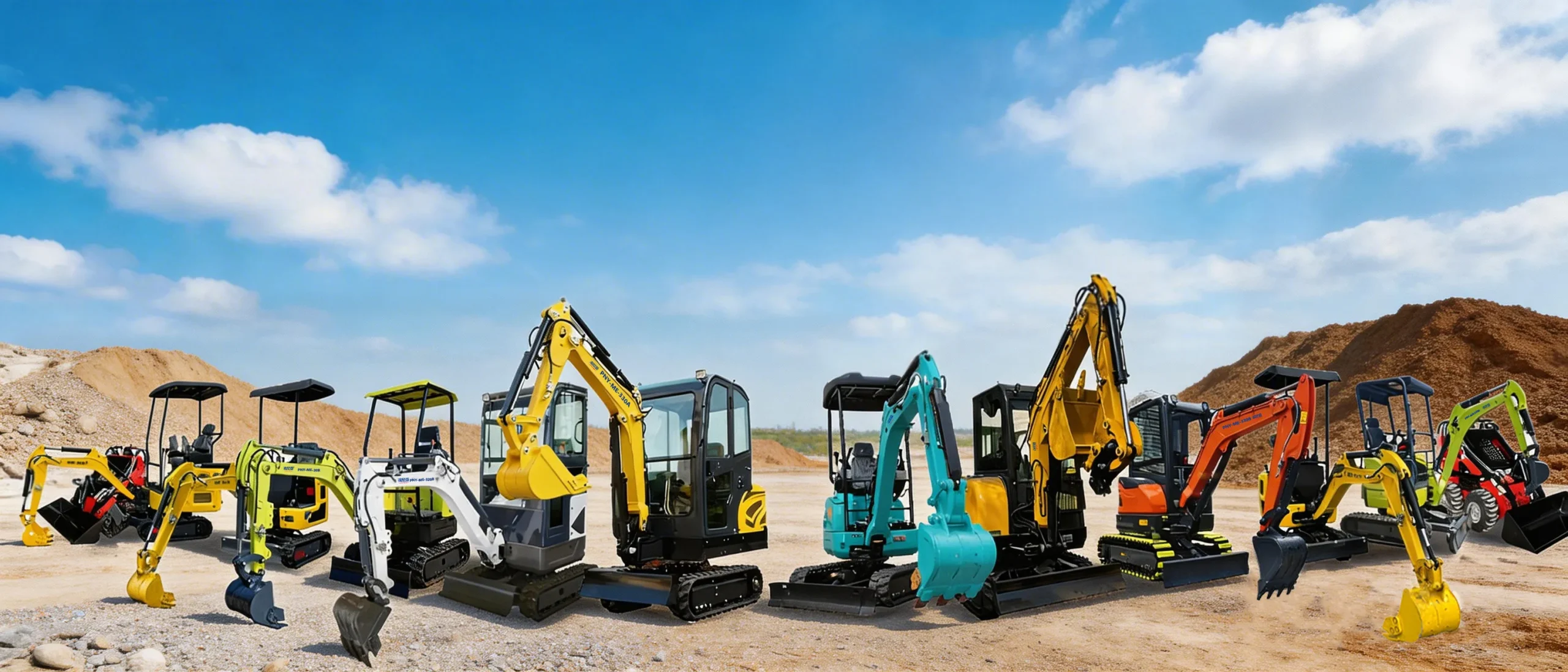
When you hear 'mini excavator spare parts', most folks immediately think of buckets and teeth. That's the first mistake. The real complexity, and where the money and downtime are lost, is in the undercarriage components and the hydraulic system. I've seen too many operators order a slew of common wear parts only to find the machine still down because a seemingly minor spare part like a swing motor seal or a pilot line filter housing was overlooked. It's not just about having parts; it's about having the right ones, and knowing which ones fail together.
The Undercarriage Illusion
Let's talk tracks. For a 1.8-ton machine, you might assume any brand of track link or roller will do. In a pinch, maybe. But fit a non-OEM compatible roller on a Kubota U35 and you'll notice uneven wear within 50 hours, leading to premature failure of the sprocket. The tolerances are tighter than they look. We learned this the hard way on a site where we mixed two brands of track shoes. The mismatch in pitch, even by a millimeter, accelerated wear on the entire drive train. The cost saved on the spare parts was tripled in repair bills later.
Then there's the issue of material. Not all steel is equal. A lower-cost idler wheel might have the right dimensions but lacks the proper hardening. In sandy or abrasive conditions, it'll wear down to a nub while the original part is still serviceable. You're not just buying a piece of metal; you're buying the engineering and heat treatment behind it. This is where long-term suppliers with proven manufacturing pedigree matter.
I recall a specific case with a Bobcat E35. The customer kept replacing front carrier rollers, complaining they lasted only 300 hours. The issue wasn't the roller itself, but a slightly bent track frame from an old impact. No amount of premium mini excavator components would solve that. You have to diagnose the system, not just swap parts. Sometimes, the spare part is a red herring for a larger mechanical issue.
The Hydraulic Heart: More Than Just Pumps and Motors
Hydraulics are where the real diagnostic skill comes in. A loss of power or a jerky swing isn't always a major pump failure. Nine times out of ten, it's a ancillary component. The suction line filter, for instance, is a classic culprit. A clogged filter causes cavitation, which sounds and feels like a failing pump. Replacing a $5,000 pump for a $50 filter is a painful lesson many learn only once.
Control valves and their solenoids are another gray area. An intermittent function could be a sticky spool, a failing coil, or just a corroded connector pin. I keep a multimeter and a pressure gauge in my service truck specifically for this. Blindly replacing the entire valve block is expensive and often unnecessary. Sourcing individual spools or solenoid coils from a reliable specialist can save thousands. Companies that understand this breakdown, like Shandong Pioneer Engineering Machinery Co., Ltd, often stock these sub-components, not just the major assemblies. Their catalog (found at https://www.sdpioneer.com) reflects an understanding of what actually fails in the field, which is telling of their practical experience.
Hose assemblies are another point. Don't just match the length and fittings. The pressure rating and the wire braid pattern matter. A two-wire braid hose might fit, but if the system calls for a four-spiral wire hose for impulse resistance, it will burst. It's a safety issue. I always cross-reference the OEM hose part number to get the exact specification before having one made up locally.
The Sourcing Dilemma: OEM, Compatible, or Will-Fit?
This is the eternal debate. For critical, high-wear items like final drive gears or hydraulic pump rotors, I lean heavily toward OEM or certified premium compatible parts. The risk is too high. For less critical items—buckets, side cutters, some pins and bushings—a quality compatible part from a reputable manufacturer is perfectly fine. The key is reputable.
I've had good experiences with certain manufacturers who specialize in aftermarket support. For example, Shandong Pioneer, operating since 2004, has built its business on exporting these compatible mini excavator spare parts to markets like the US, Canada, and Australia. Their two-decade development suggests they've had to adapt to the rigorous demands of these markets. When I evaluate a new supplier, I look for that kind of longevity and specific market penetration—it usually means they've solved real-world quality and fitment problems. Their recent relocation to a larger facility in Ningyang in 2023 also signals growth and likely an expansion in their production capability and quality control.
The will-fit category, often the cheapest, is a gamble. Sometimes you win, sometimes you get a pallet of parts that require a grinder and a sledgehammer to install. The labor to make a wrong part fit always erases any savings. My rule is: if the part requires any modification beyond light cleaning or lubrication, send it back.
Inventory Logic: What to Stock and What to Order
No one can stock everything. For a small fleet, your inventory should be based on failure rate and criticality. Always have a set of common hydraulic hoses, bucket teeth, and a few key seals (swing circle, arm cylinder rod). Filters—hydraulic, fuel, air—are a no-brainer; they're cheap and stop everything.
For everything else, your supply chain is your inventory. This is where your relationship with a supplier matters. Can they get you a track motor for a Yanmar VIO55 in three days, or three weeks? The difference is massive in project cost. A supplier with a coherent export framework, like the Shandong Hexin (manufacturing) and Shandong Pioneer (overseas trade) structure, often has more streamlined logistics for international shipping, which translates to predictable lead times.
I also keep a bone yard of one or two decommissioned machines of my most common models. They are the ultimate spare parts source for brackets, wiring harnesses, cabs, and other parts that are expensive and slow to order but rarely fail. It's saved my project more times than I can count.
The Human Factor: Documentation and Communication
The best part is useless if you don't know what it is. I mandate my team to tag every removed part with the machine serial number, model, and date. When re-ordering, this eliminates guesswork. So many parts have subtle revisions; a seal kit for a 2018 Takeuchi TB216 and a 2020 model might differ by one O-ring, but that O-ring will cause a leak.
When communicating with parts suppliers, be specific. Don't just say I need a seal for a mini excavator boom cylinder. Provide the machine make, model, serial number, and if possible, the OEM part number stamped on the cylinder. A good technical team, like the one you'd expect from a company with 20 years of accumulation in this field, will ask for these details. It shows they're trying to get it right the first time.
Finally, trust but verify. When a new batch of parts arrives, especially from a new source, fit one first. Check the clearance, the thread, the hardness. It's a five-minute step that can prevent a five-day downtime. The goal isn't to just buy parts; it's to maintain machine uptime. Every decision, from sourcing to stocking to installation, revolves around that single point.
Related Products
Related Products