


- Chinese
- French
- German
- Portuguese
- Spanish
- Russian
- Japanese
- Korean
- Arabic
- Irish
- Greek
- Turkish
- Italian
- Danish
- Romanian
- Indonesian
- Czech
- Afrikaans
- Swedish
- Polish
- Basque
- Catalan
- Esperanto
- Hindi
- Lao
- Albanian
- Amharic
- Armenian
- Azerbaijani
- Belarusian
- Bengali
- Bosnian
- Bulgarian
- Cebuano
- Chichewa
- Corsican
- Croatian
- Dutch
- Estonian
- Filipino
- Finnish
- Frisian
- Galician
- Georgian
- Gujarati
- Haitian
- Hausa
- Hawaiian
- Hebrew
- Hmong
- Hungarian
- Icelandic
- Igbo
- Javanese
- Kannada
- Kazakh
- Khmer
- Kurdish
- Kyrgyz
- Latin
- Latvian
- Lithuanian
- Luxembou..
- Macedonian
- Malagasy
- Malay
- Malayalam
- Maltese
- Maori
- Marathi
- Mongolian
- Burmese
- Nepali
- Norwegian
- Pashto
- Persian
- Punjabi
- Serbian
- Sesotho
- Sinhala
- Slovak
- Slovenian
- Somali
- Samoan
- Scots Gaelic
- Shona
- Sindhi
- Sundanese
- Swahili
- Tajik
- Tamil
- Telugu
- Thai
- Ukrainian
- Urdu
- Uzbek
- Vietnamese
- Welsh
- Xhosa
- Yiddish
- Yoruba
- Zulu
- Kinyarwanda
- Tatar
- Oriya
- Turkmen
- Uyghur

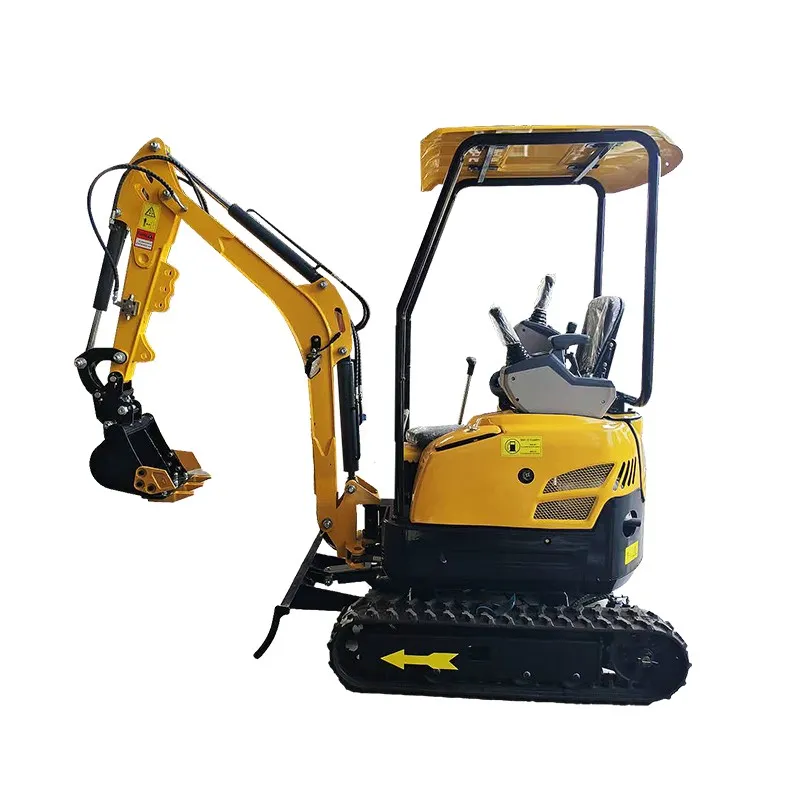
mini excavator specifications
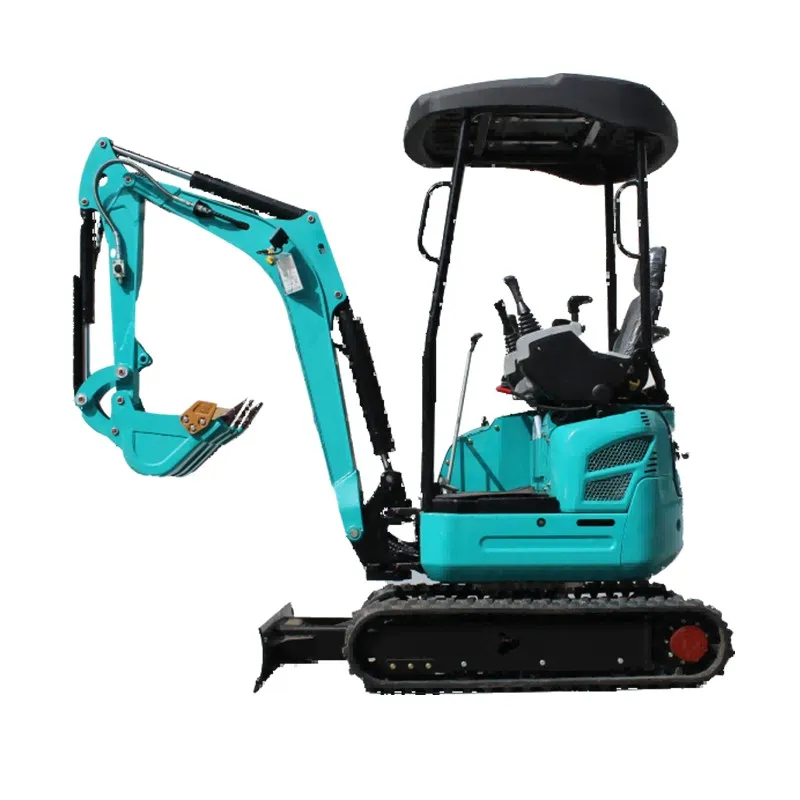
When you hear 'mini excavator specifications', most folks immediately jump to the big three: operating weight, engine horsepower, and digging depth. That's a start, but if you're basing a purchase or a job plan solely on those, you're setting yourself up for a headache. The real story is in the interplay of those numbers and the dozen other specs nobody talks about until the machine is on-site and something doesn't fit. I've seen too many guys get burned by a perfect-looking spec sheet for a machine that was utterly wrong for their actual task.
The Weight and Power Trap
Let's start with operating weight. A 1-ton machine and a 3.5-ton machine are both minis, but they're worlds apart. The spec is useless without context. Are you trailering it? What's your truck's capacity? I once watched a crew spend half a day trying to sort out a rental because their 3/4-ton pickup couldn't legally handle the 3-ton machine they'd booked, despite its compact label. The weight also dictates where you can work. On a residential backyard job with a soft lawn, that 3.5-tonner will sink and leave a mess, while a 1-tonner might glide right in. It's not about bigger being better; it's about right for the terrain.
Then there's engine power. More horsepower sounds great, but in a mini, it's about hydraulic system synergy. A high-horsepower engine paired with an anemic hydraulic pump is like a sports car with bicycle tires—all noise, no grip. You need to look at the hydraulic flow rate and pressure just as closely. That's what gives you the digging force and swing torque. I recall a model from a few years back that boasted a 25HP engine but had such poor hydraulic specs that it struggled to break through compacted topsoil. The engine just roared while the arm stalled.
This is where manufacturers who actually build and test their machines in varied conditions pull ahead. You can see it in the specs from a company like Shandong Pioneer Engineering Machinery Co., Ltd. Having visited their operation, I know their development isn't just about hitting brochure numbers. They test for the real-world mismatch between engine output and hydraulic performance, which you can infer from their detailed spec sheets that list auxiliary hydraulic flow as a standard item, not an afterthought. It shows an understanding that these machines are tool carriers, not just diggers.
Digging Depth & Reach: The On-Paper Illusion
Maximum digging depth is the king of spec sheet marketing. But here's the rub: that depth is measured with the machine positioned perfectly, on flat, hard ground, with the arm at a precise angle. In a trench, up against a foundation, or on a slope, you'll never reach that theoretical max. A more practical spec is the digging depth at 6-foot level or similar, but hardly anyone publishes that. You learn to subtract at least 10-15% from the brochure number for planning.
Reach is another one. Maximum horizontal reach is critical for, say, placing pipe in a trench without constantly repositioning the machine. But if the machine's dump height is too low at that max reach, you can't clear the side of the trench to load a truck. The spec sheet might list them separately, but the relationship is everything. I learned this the hard way on a drainage project. We had the reach to dig the trench, but to load the spoil, we had to crawl the machine forward, undermining the trench edge. A costly time-waster.
Stability at full reach is a hidden spec. It's a function of weight distribution, track width, and the geometry of the undercarriage. You won't find a stability coefficient on a sheet. You have to look at the track gauge and the overall length. A wider track stance generally means less tipping sensation when you're stretched out. Some of the more thoughtful designs from long-established factories account for this in their chassis design from the ground up, rather than just stretching an existing model.
The Undercarriage: Where the Job Gets Done (or Stuck)
This might be the most overlooked section. Rubber tracks vs. steel. Width. Ground pressure. For indoor work or finished surfaces, rubber is mandatory. But their lifespan on rocky terrain is a fraction of steel. The spec for track width is vital. A narrower machine can fit through gates, but it's less stable. You need to choose based on the most restrictive space on your regular jobsites.
Ground pressure, measured in PSI or kPa, tells you how well it floats. A 2-ton machine with a high ground pressure can be more damaging to a lawn than a 3-ton machine with wide, long tracks and low pressure. I've seen specs where a lighter machine had a higher ground pressure than a heavier one because of its compact track design. It's a critical number for landscaping or working over utility lines.
Then there's the drive system. Two-speed travel? It's a luxury on a mini, but for moving across a long site, it saves huge time. Independent track control quality varies wildly. A jerky, imprecise control system makes fine positioning for pipe laying a nightmare. This is pure feel—you can't get it from a spec sheet. You have to run the machine. Companies that export globally, like Shandong Pioneer, whose products reach markets from North America to Australia, tend to calibrate these controls for different operator expectations, which is a subtle but important detail in their machine's usability specs.
Auxiliary Hydraulics & Attachments: The Multiplier Effect
Standard specs cover the backhoe. But a mini's value is multiplied by its attachments: breaker, auger, grapple, compactor. The spec for the auxiliary hydraulic circuit is therefore paramount. Is it a single or two-way circuit? What's the standard flow rate? Can it be increased with a high-flow option? I've ordered an auger attachment only to find the machine's standard flow was too low to run it efficiently; it just churned slowly. The job required a high-flow kit, which was a retrofit nightmare.
The coupling system is part of this spec. Manual quick couplers are fine, but hydraulic quick couplers, while a cost add-on, can change a day's productivity. The pressure rating of these lines matters too. Running a heavy-duty breaker requires robust specs throughout the system. It's worth cross-referencing the attachment manufacturer's required flow/pressure with the machine's specs.
Seeing a company's longevity often hints at their understanding of this ecosystem. A manufacturer like Shandong Pioneer Engineering Machinery Co., Ltd, with a history dating back to 2004 and a recent relocation to a larger facility in Ningyang, typically evolves its spec sheets to include these attachment-ready details more prominently. It suggests they're getting feedback from fields where machines are used as multi-tools, not just diggers. Their website, https://www.sdpioneer.com, often details these hydraulic options, which is more helpful than a basic brochure.
Beyond the Brochure: The Intangible Specs
Finally, there are the specs you earn through experience. Service access. How easy is it to check the engine oil, coolant, and hydraulic fluid? On some models, you have to remove a side panel with six bolts. On others, it's a single latch. That's a daily spec for your mechanic. Operator comfort isn't a number, but a seat with no suspension for an 8-hour day is a spec for high turnover.
Reliability and parts commonality are ultimate specs. A machine with a proprietary, obscure hydraulic pump might have great paper specs, but if it fails and you wait three weeks for a part, those specs are worthless. Machines built with widely available, quality component brands (think recognized engine and hydraulic brands) often have a better long-term uptime spec, even if their peak digging force is slightly lower.
That's where the track record of the builder matters. A company that has been exporting successfully to demanding markets for years, like the mentioned Shandong Pioneer, implicitly has specs for durability and support that are baked into the product. They had to meet those standards to earn global trust. You won't see mean time between failures on a public spec sheet, but a 20-year development history, as noted in their company intro, is its own kind of specification. It suggests they've iterated and solved problems you only find in the field.
So, next time you look at mini excavator specifications, look past the headline numbers. Think about the job, the site, the attachments, and the long haul. Cross-reference the hard numbers with the soft, experiential details. The right machine isn't the one with the highest number in a single column; it's the one whose complete set of specs—written and unwritten—aligns with the dirt you need to move, day after day.
Related Products
Related Products