


- Chinese
- French
- German
- Portuguese
- Spanish
- Russian
- Japanese
- Korean
- Arabic
- Irish
- Greek
- Turkish
- Italian
- Danish
- Romanian
- Indonesian
- Czech
- Afrikaans
- Swedish
- Polish
- Basque
- Catalan
- Esperanto
- Hindi
- Lao
- Albanian
- Amharic
- Armenian
- Azerbaijani
- Belarusian
- Bengali
- Bosnian
- Bulgarian
- Cebuano
- Chichewa
- Corsican
- Croatian
- Dutch
- Estonian
- Filipino
- Finnish
- Frisian
- Galician
- Georgian
- Gujarati
- Haitian
- Hausa
- Hawaiian
- Hebrew
- Hmong
- Hungarian
- Icelandic
- Igbo
- Javanese
- Kannada
- Kazakh
- Khmer
- Kurdish
- Kyrgyz
- Latin
- Latvian
- Lithuanian
- Luxembou..
- Macedonian
- Malagasy
- Malay
- Malayalam
- Maltese
- Maori
- Marathi
- Mongolian
- Burmese
- Nepali
- Norwegian
- Pashto
- Persian
- Punjabi
- Serbian
- Sesotho
- Sinhala
- Slovak
- Slovenian
- Somali
- Samoan
- Scots Gaelic
- Shona
- Sindhi
- Sundanese
- Swahili
- Tajik
- Tamil
- Telugu
- Thai
- Ukrainian
- Urdu
- Uzbek
- Vietnamese
- Welsh
- Xhosa
- Yiddish
- Yoruba
- Zulu
- Kinyarwanda
- Tatar
- Oriya
- Turkmen
- Uyghur

mini excavator wholesale
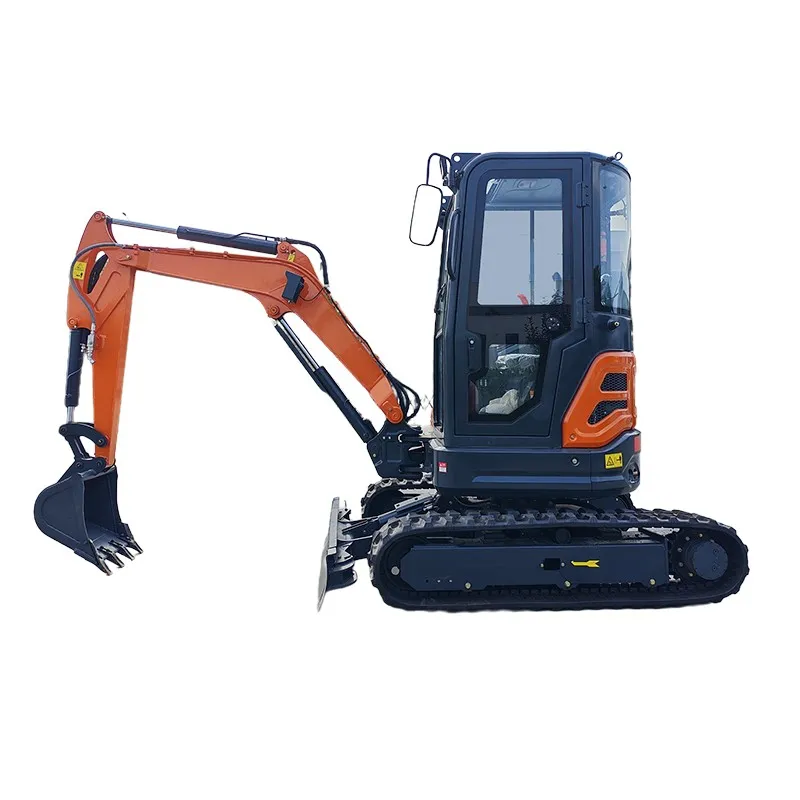
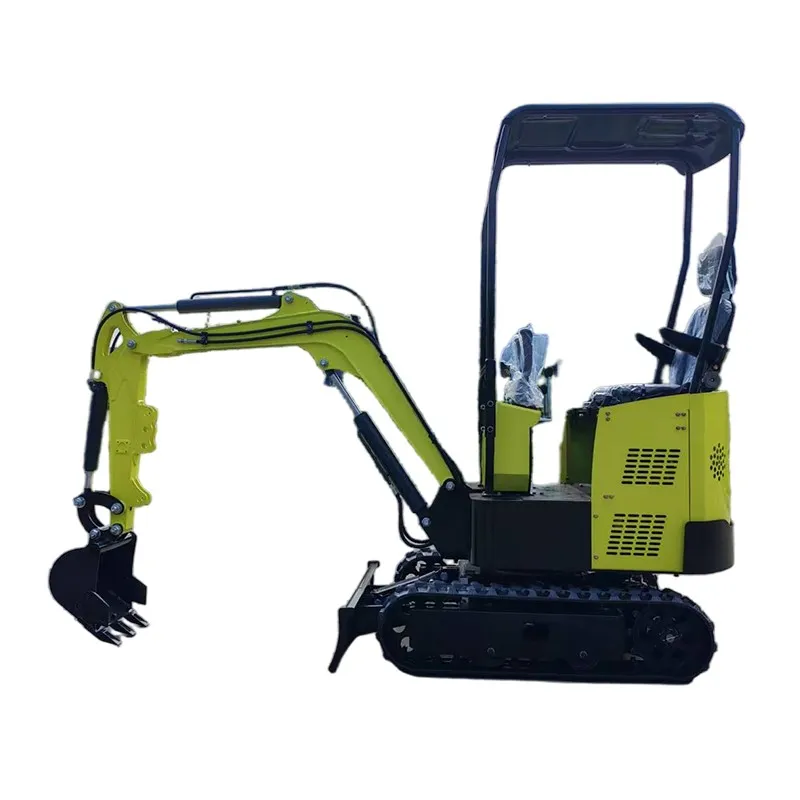
When you hear 'mini excavator wholesale', the immediate image for many is just finding the lowest price per unit. That’s the biggest trap. It’s not a simple commodity play; it’s about the total cost of ownership, which includes the machine's durability, parts availability, and the supplier’s ability to support you long after the wire transfer clears. I’ve seen too many dealers burn cash on a 'great deal' only to be stuck with a yard full of machines that can’t hold up under real work or, worse, have zero backup when a hydraulic line blows. The real game is in the details most spec sheets don't show you.
The Foundation: What You're Actually Buying
Let’s strip it back. A mini excavator isn't just an assembly of steel and hydraulics. You're buying into an engineering philosophy. Is the undercarriage designed for easy track adjustment or replacement? Are the common service points—grease fittings, filters, drain plugs—actually accessible without removing half the machine? I learned this the hard way early on, importing a batch where changing the engine oil required disassembling a guard that was welded on. A two-hour job turned into a full day. That's the hidden cost of a poor design.
This is where a manufacturer's history matters. A company like Shandong Pioneer Engineering Machinery Co., Ltd (https://www.sdpioneer.com), established back in 2004, has had two decades to iterate. They’ve moved through phases—their recent relocation to a new facility in Tai’an in 2023 isn't just an address change. It usually signals an investment in more streamlined production and better QC processes. When you're in wholesale, you need partners who are evolving, not just surviving. Their dual-structure with Shandong Hexin handling manufacturing and Pioneer focusing on overseas trade is a common but effective model; it separates production pressures from market-facing support.
The specs tell one story, but the build tells another. A 1-ton machine from a mature factory will often have a more robust swing motor mounting or better hose routing than a newcomer's 1.2-ton model. Weight distribution is everything. I’ve put identical spec machines from different lines side-by-side on a slight slope, and the difference in stability was startling. You can't wholesale what you wouldn't put your own name on for a rental fleet.
Sourcing and the Supplier Relationship
Finding a supplier is easy. Finding a reliable partner is the work. The initial contact is just a dance. The real due diligence starts when you ask for the 'non-catalog' information. Can I get a breakdown of the major component suppliers? Who makes the main hydraulic pump? The travel motors? A quality-conscious factory will share this, often with pride. If they're evasive, consider it a red flag.
My process now involves a 'tiered' request. First, the standard brochure and specs. Then, a request for service manuals and parts catalogs for a specific model—if these are well-organized and detailed, it’s a good sign of after-sales preparedness. Finally, I ask for unedited video of the factory floor, specifically the testing bay. Are they doing full function and pressure tests, or just starting the engine and calling it a day? Shandong Pioneer’s long-term export to markets like the U.S., Canada, and Germany suggests they’ve had to meet certain thresholds of documentation and testing rigor that less disciplined factories ignore.
Negotiating price is expected, but the smart negotiation is on terms and support. What’s the warranty process actually like? If a control valve fails in month 11, who pays the freight for the replacement part? Getting a clear, written procedure for this is worth more than a $50 per unit discount. A supplier confident in their product, like one with 20 years of accumulation, will have a clear protocol.
Logistics and Landed Cost Surprises
The FOB price is a mirage. Your true cost is the Landed Cost. This is where new wholesalers get gutted. You must factor in everything: inland freight in China to the port, customs clearance fees, export declarations, ocean freight (which fluctuates wildly), marine insurance, destination port charges, customs duty (which varies massively by country), trucking from the port to your warehouse, and then pre-delivery inspection (PDI).
For mini excavators, crating is critical. Poor crating leads to shipping damage, which leads to claims, delays, and pissed-off customers. I specify reinforced timber crates with internal blocking to prevent the machine from shifting. It costs more, but it prevents thousands in damage. Always, always inspect a pre-shipment sample of the crate design.
Another nuance: battery disconnection. Regulations require batteries to be disconnected for sea transport. A good supplier will do this properly and include clear reconnection instructions. A lazy one just pulls a cable, and you get a machine that won't start at the other end, thinking it's a major electrical fault. It's the small operational disciplines that separate the pros from the order-takers.
The After-Sales Ecosystem
This is the ultimate test. Selling the machine is the beginning. The wholesale business is built on repeat orders, and those come from end-users not having downtime. Your supplier’s after-sales capability directly defines your brand's reputation.
Parts availability is the cornerstone. Does the supplier maintain a realistic inventory of wear-and-tear parts? Track shoes, sprockets, seals, hose assemblies? Can they ship an urgent part via DHL within 48 hours, not on the next slow boat? The operational footprint of a company like the one behind https://www.sdpioneer.com, serving diverse markets from Germany to Australia, forces them to have a more responsive parts logistics system than a factory only selling to one region.
Technical support is next. Can your contact at the factory connect you directly with an engineer for a tricky diagnostic issue? Or are you stuck with a salesperson who just repeats the manual? The time zone difference is a challenge, but a dedicated after-sales team with decent English (or your local language) is non-negotiable. I value a supplier who provides detailed, step-by-step troubleshooting guides with photos over one who just says we have support.
Finally, feedback loop. A good partner wants to know what fails in the field. They use that data to improve the next generation. I share service reports with my key suppliers—it makes the next batch better for both of us.
Market Positioning and Your Niche
You can't wholesale everything to everyone. The 'mini excavator' category spans from 1-ton to 8-ton machines. Your choice of supplier and models dictates your niche. Are you targeting landscape contractors who need ultra-compact, zero-tail-swing models for backyards? Or are you focusing on rental fleets that need standardized, easy-to-maintain 3-ton workhorses?
From observation, the offerings from a manufacturer with Pioneer's tenure tend to stabilize around proven, popular tonnages—think the 1.8-ton, 3.5-ton, and 5-ton classes. These are the bread and butter. They're less likely to chase every weird new configuration, which, ironically, makes them more reliable for a wholesaler. You want consistency in your core inventory.
Branding is your layer. Even when wholesaling, applying your own decals, offering customized accessory packages (like specific buckets or hydraulic breaker lines), and creating your own operator manuals and warranty package adds tremendous value. It moves you from being a mere distributor to being a solution provider. Your supplier should support this, not fight it. They should be willing to ship machines in primer coat or with your specified decal kit applied at the factory.
In the end, mini excavator wholesale is a grind of details. It’s not glamorous. It’s about knowing that a certain pinion seal tends to weep on a specific model batch and having the fix ready before your customer calls. It's about choosing partners who have been through economic cycles and have chosen to invest in a 1,600-square-meter production area and then a new facility, rather than just cutting corners. The price is the entry ticket, but the real transaction is based on trust built through a thousand small, correct decisions. That’s what you're really buying into.
Related Products
Related Products