- Chinese
- French
- German
- Portuguese
- Spanish
- Russian
- Japanese
- Korean
- Arabic
- Irish
- Greek
- Turkish
- Italian
- Danish
- Romanian
- Indonesian
- Czech
- Afrikaans
- Swedish
- Polish
- Basque
- Catalan
- Esperanto
- Hindi
- Lao
- Albanian
- Amharic
- Armenian
- Azerbaijani
- Belarusian
- Bengali
- Bosnian
- Bulgarian
- Cebuano
- Chichewa
- Corsican
- Croatian
- Dutch
- Estonian
- Filipino
- Finnish
- Frisian
- Galician
- Georgian
- Gujarati
- Haitian
- Hausa
- Hawaiian
- Hebrew
- Hmong
- Hungarian
- Icelandic
- Igbo
- Javanese
- Kannada
- Kazakh
- Khmer
- Kurdish
- Kyrgyz
- Latin
- Latvian
- Lithuanian
- Luxembou..
- Macedonian
- Malagasy
- Malay
- Malayalam
- Maltese
- Maori
- Marathi
- Mongolian
- Burmese
- Nepali
- Norwegian
- Pashto
- Persian
- Punjabi
- Serbian
- Sesotho
- Sinhala
- Slovak
- Slovenian
- Somali
- Samoan
- Scots Gaelic
- Shona
- Sindhi
- Sundanese
- Swahili
- Tajik
- Tamil
- Telugu
- Thai
- Ukrainian
- Urdu
- Uzbek
- Vietnamese
- Welsh
- Xhosa
- Yiddish
- Yoruba
- Zulu
- Kinyarwanda
- Tatar
- Oriya
- Turkmen
- Uyghur


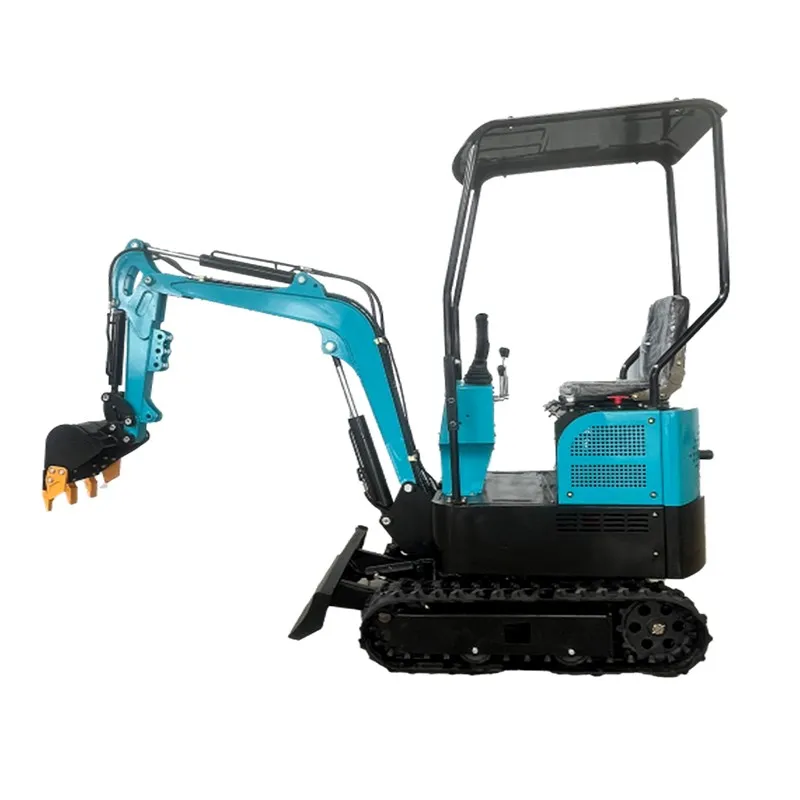
mini excavator with breaker
When you hear 'mini excavator with breaker', most guys immediately think about the attachment itself—the hammer, the power, the impact. But that's where the first mistake happens. The real story isn't just the breaker; it's the marriage between the machine and the tool, and how that combo holds up when you're six hours into breaking concrete in a tight backyard with no easy exit. I've seen too many projects stall because someone picked a machine based on the breaker's max impact energy alone, without considering the carrier's hydraulic flow, the stability on side slopes, or even the simple logistics of getting the rig to the site. Let's talk about what actually matters on the ground.
The Hydraulic Handshake: It's Not Just About Flow
You can bolt a massive breaker onto a 1.5-ton machine, but if the hydraulic system isn't tuned for it, you're in for a world of frustration. The key is the auxiliary circuit's pressure and flow consistency. I remember a job where we used a popular European-branded breaker on a standard 2-ton mini. On paper, it matched. In reality, the hammer would stutter and lose power after continuous use because the machine's pump couldn't sustain the required flow, especially when the hydraulic oil got hot. The operator kept blaming the breaker, but the issue was the excavator's capacity. It's a handshake—both sides need to agree.
That's why some manufacturers, like Shandong Pioneer Engineering Machinery Co., Ltd, focus on this integration from the factory. They don't just sell you a machine and say 'go fit a breaker'. They have specific models where the hydraulic system is configured with higher-capacity valves and coolers to handle sustained breaker use. Checking their lineup on https://www.sdpioneer.com, you'll see specs that mention 'breaker-ready circuits'—that's not marketing fluff. It means they've oversized certain components to prevent that power fade. It's a detail you only appreciate after suffering through a sluggish hammer on a Friday afternoon.
Another nuance is the control pattern. A good mini-ex for breaker work should have a proportional auxiliary control, not just an on/off switch. It lets the operator 'feather' the hammer, starting it gently to find the right spot before going full power. This saves wear on the tool and the machine's mounting bracket. I've cracked mounting ears on a bracket because the machine only had a binary switch; the sudden, full-force engagement was brutal on the metal. A smooth, variable control is cheaper than replacing brackets every few months.
Stability and Weight Distribution: The Silent Killers
Here's a classic site error: assuming a heavier mini excavator is automatically better for breaker work. It's about where the weight is. A breaker is heavy on the stick end, creating a major forward moment. If the machine's counterweight isn't sufficient, you'll find the rear end getting light, especially when you're positioned on a slope to break a foundation wall. I've had a 3-ton machine's tracks lift off the ground because we were using a breaker that was too heavy for its class. Terrifying and a total project stopper.
The design of the undercarriage matters immensely. Wider tracks aren't just for flotation; they provide lateral stability when you're swinging the boom side-to-side to break a trench bottom. A narrow-track machine might tip if the breaker catches on a rebar and jerks the stick. I tend to look for machines that offer optional wide-track configurations specifically for attachment work. It's a simple modification that changes the machine's entire character.
This is where the 20 years of development mentioned in Shandong Pioneer's company history shows. Their newer models, post the 2023 relocation and expansion, seem to have addressed this. Looking at their specs, they often list an 'attachment stability package' that includes not just a counterweight but also reinforced boom cylinders and a lower center of gravity. This kind of thinking comes from field feedback, not just an engineering CAD model. They've been exporting to tough markets like Australia and Canada, where operators won't hesitate to point out a tippy machine.
The Breaker Itself: Mojo vs. Maintenance
Everyone wants the breaker with the highest joules rating. But on a mini, a super-high-impact hammer can be overkill and actually harmful. It transmits massive shock back into the machine's front linkage. For most urban demolition—sidewalks, small foundations, block walls—a medium-impact, high-frequency breaker often does the job faster and is easier on the machine. The goal is to crack and break, not pulverize into dust.
Tool steel quality is everything. A cheap breaker will have its piston and front head wear out quickly, leading to loss of impact energy. You'll be hitting away, but nothing breaks. I learned this the hard way by trying to save money on a no-name breaker attachment. Within 40 hours, the performance dropped by half. We had to stop, source a proper tool steel chisel, and rebuild the front head—downtime that cost more than buying a reputable brand in the first place.
Lubrication is the breaker's lifeblood. An auto-luber system is a godsend for a mini excavator with breaker setup. On a long day, an operator will forget to grease the breaker bushing every two hours. Without constant grease, the bushing heats up, wears out, and causes misalignment. Next thing you know, the piston is striking off-center, damaging the tool internally. Some integrated kits from manufacturers now include a centralized greasing point or even an automatic timer. It's a small feature that prevents a very big repair bill.
Real-World Logistics and Downtime
The perfect machine is useless if you can't get it to the job. A common oversight is the machine's total transport weight and dimensions with the breaker mounted. If you leave the breaker on, does it exceed trailer width limits? Can you still legally tow it without a CDL? We once had to make two trips—one for the excavator, one for the breaker—because the combined width on our trailer was over the legal limit. That killed the job's profitability.
Service access is another big one. When a hydraulic hose on the breaker circuit blows, can you easily get to the connection points? On some compact models, the auxiliary line connections are buried behind panels or under the cab. I've spent an hour just removing covers to get to a single fitting. Better designs have quick-connect fittings mounted externally on the boom. It sounds trivial until you're lying in the mud trying to reach a wrench into a 4-inch gap.
This focus on serviceability and user experience is something I associate with companies that have a long trade history. Shandong Pioneer Engineering Machinery Co., Ltd, operating through its Hexin manufacturing and Pioneer trade arms, mentions exporting to numerous countries. That global exposure forces them to design for varied conditions and easier maintenance, because supporting a machine in Germany or the United States requires different logistics than a purely domestic model. Their products have to be robust and user-servicable to win trust in those competitive markets.
Cold Weather and Other Curveballs
Nothing tests a mini excavator with breaker like cold weather. Hydraulic oil thickens, hoses get stiff, and breaker internal seals can contract and leak. A machine meant for global use has to account for this. I've used machines where the hydraulic reservoir was too small, causing the oil to overheat in summer and fail to warm up properly in winter, leading to poor breaker performance in both seasons. A larger reservoir with a proper cooler and heater (or at least provisions for one) is a sign of thoughtful design.
Then there's dust. Demolition creates clouds of abrasive concrete dust. It gets into every joint, the cooler fins, the radiator. Machines need good, sealed compartments for critical components and easily cleanable coolers. I've seen radiators clog in a day on some indoor jobs, causing immediate overheating. A design that allows for quick radiator blow-out or has a reversible fan to self-clean is a massive operational advantage.
Ultimately, choosing the right setup comes down to honest assessment of your most common tasks. Don't buy for the one biggest job you might get. Buy for the ten smaller jobs you'll definitely get. The integration, stability, and serviceability often matter more than the top-line power number. It's the difference between a tool that earns you money and a tool that costs you money in downtime and frustration. The real value is in the machine that just keeps working, shift after shift, in the conditions you actually face. That's the professional's take, anyway.
Related Products
Related Products