- Chinese
- French
- German
- Portuguese
- Spanish
- Russian
- Japanese
- Korean
- Arabic
- Irish
- Greek
- Turkish
- Italian
- Danish
- Romanian
- Indonesian
- Czech
- Afrikaans
- Swedish
- Polish
- Basque
- Catalan
- Esperanto
- Hindi
- Lao
- Albanian
- Amharic
- Armenian
- Azerbaijani
- Belarusian
- Bengali
- Bosnian
- Bulgarian
- Cebuano
- Chichewa
- Corsican
- Croatian
- Dutch
- Estonian
- Filipino
- Finnish
- Frisian
- Galician
- Georgian
- Gujarati
- Haitian
- Hausa
- Hawaiian
- Hebrew
- Hmong
- Hungarian
- Icelandic
- Igbo
- Javanese
- Kannada
- Kazakh
- Khmer
- Kurdish
- Kyrgyz
- Latin
- Latvian
- Lithuanian
- Luxembou..
- Macedonian
- Malagasy
- Malay
- Malayalam
- Maltese
- Maori
- Marathi
- Mongolian
- Burmese
- Nepali
- Norwegian
- Pashto
- Persian
- Punjabi
- Serbian
- Sesotho
- Sinhala
- Slovak
- Slovenian
- Somali
- Samoan
- Scots Gaelic
- Shona
- Sindhi
- Sundanese
- Swahili
- Tajik
- Tamil
- Telugu
- Thai
- Ukrainian
- Urdu
- Uzbek
- Vietnamese
- Welsh
- Xhosa
- Yiddish
- Yoruba
- Zulu
- Kinyarwanda
- Tatar
- Oriya
- Turkmen
- Uyghur


mini loader
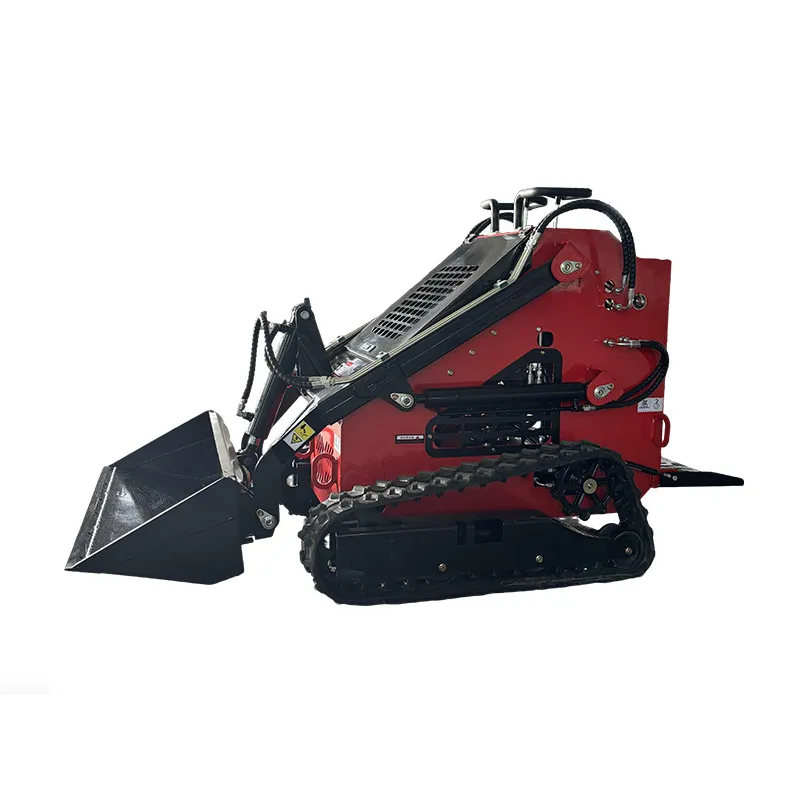
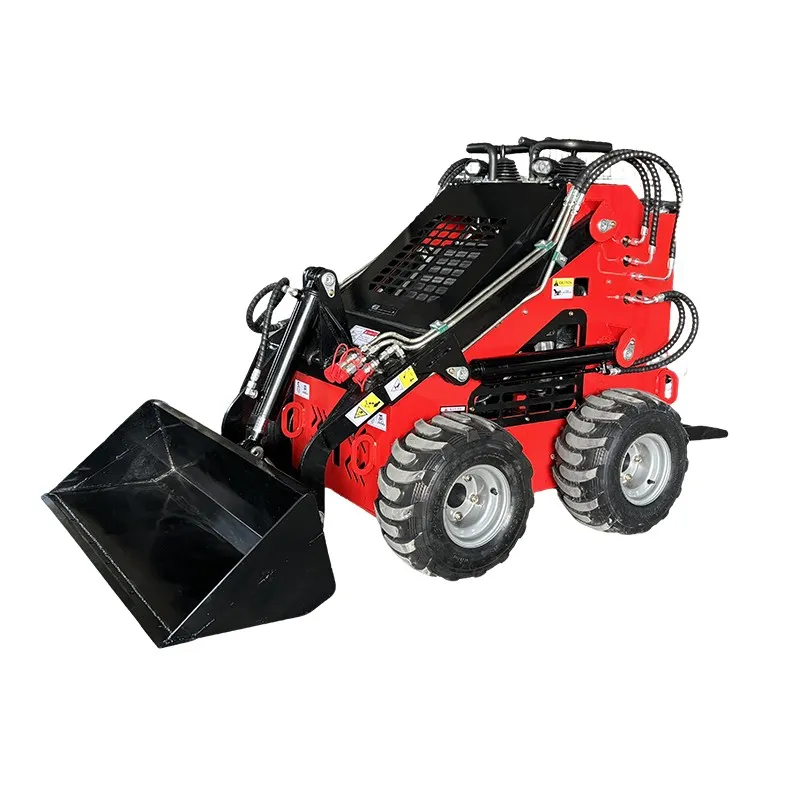
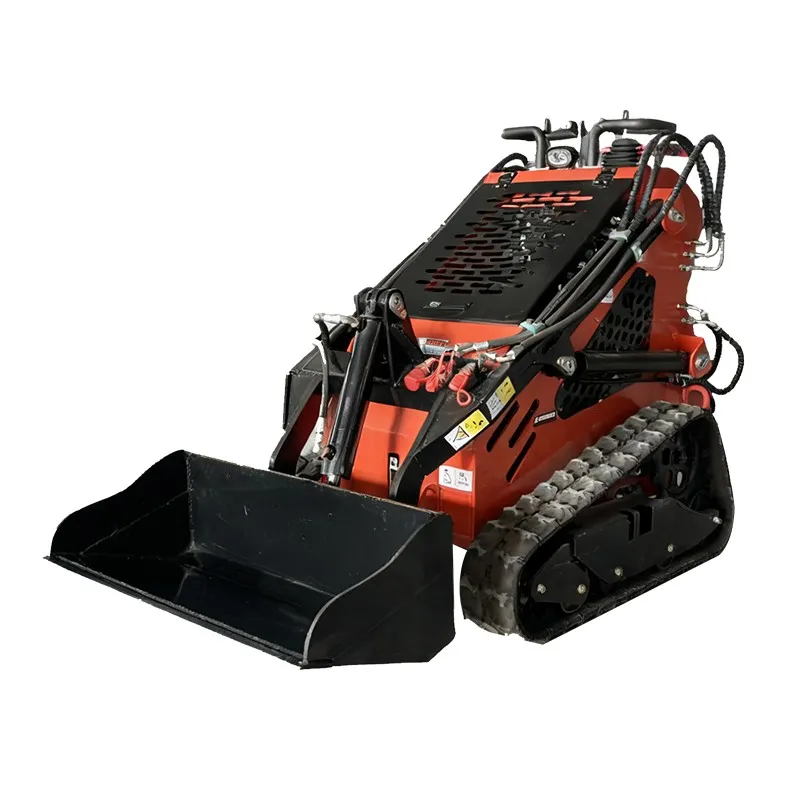
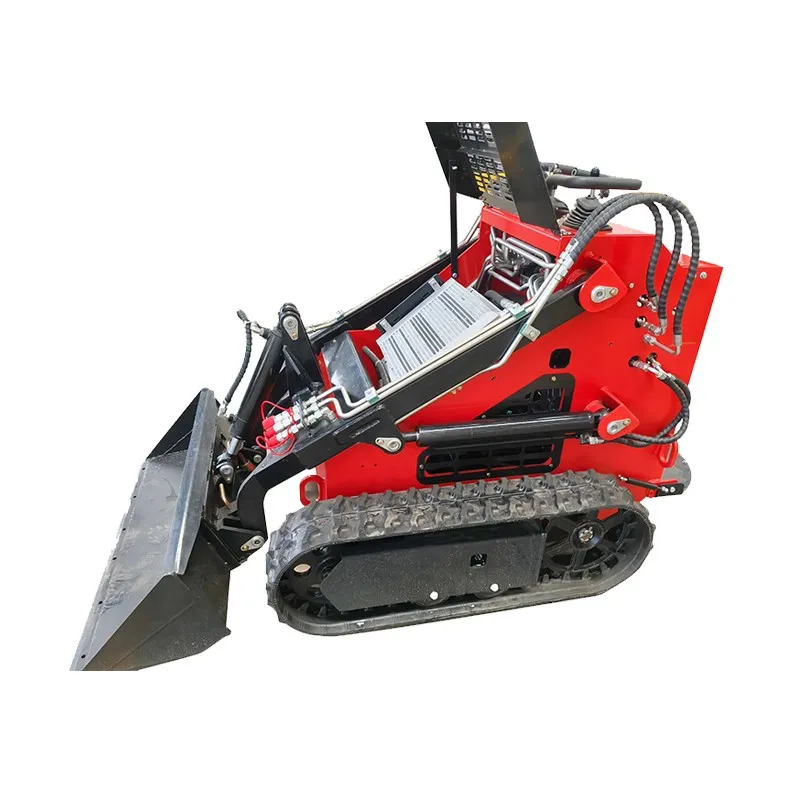
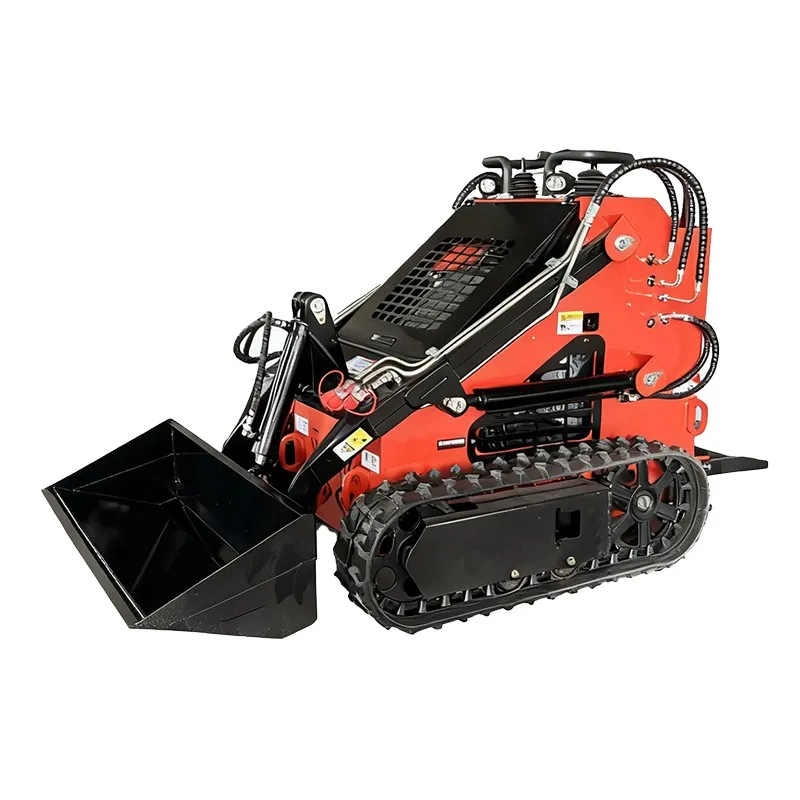
When most people hear 'mini loader', they picture a cute, tiny machine, maybe for a hobbyist. That's the first mistake. In reality, a proper mini loader is a serious piece of compact equipment, and its value isn't just in its size, but in its specific power-to-space ratio and attachment versatility. The real debate in the field isn't about whether they're useful—they are—but about matching the right machine, with the right hydraulic flow and weight distribution, to a job that doesn't justify a full-sized skid steer. I've seen too many guys buy based on price or brand name alone and end up with a machine that either bogs down in soft soil or can't handle the continuous duty cycle of a grading job.
The Core Misconception: It's Just a Toy
Let's get this straight. A lawn tractor with a bucket slapped on the front is not a mini loader. The distinction lies in the chassis design and the hydraulic system. A true compact tool carrier has a rigid frame or a robust torsion axle system, not a mower's flimsy setup. The pump needs to deliver consistent flow to run attachments like trenchers or hydraulic breakers, not just raise and lower a light bucket. I recall a client who bought a cheap, underpowered model for his landscaping business. It worked for moving mulch for a week, then the pump gave out trying to run a post-hole auger. The repair cost nearly matched the machine's price. That's the trap.
This is where specs matter, but not in the brochure sense. You need to look at the operating weight, not the shipping weight. A machine that's too light loses traction and becomes dangerous on slopes. The auxiliary hydraulic pressure (PSI) and flow (GPM) are the lifeblood for attachments. If you're just moving material, lower specs might fly. But if you're planning on using a mini loader for, say, site cleanup with a grapple or digging with a mini hoe, you need reserves. I tend to advise looking for a machine that offers at least 8 GPM at 2500+ PSI as a baseline for real work.
Another practical point often missed is the machine's width. The genius of a mini loader is accessing confined spaces. But compact varies. Some are 36 inches wide, others 48. That 12-inch difference is the gap between fitting through a standard garden gate and having to tear down a fence panel. Always measure your choke points—gateways, alleyways, interior doors if you're doing renovation work. I learned this the hard way on a backyard pool project years ago; we had to partially disassemble a beautiful pergola because we didn't check the machine's width against the side access. A costly half-day delay.
Attachments: Where the Real Value Unlocks
The machine itself is just a power source. The attachments are where you get your return on investment. The quick-attach system is critical. Many brands use their own proprietary plate, which locks you into their (often expensive) attachment ecosystem. Some are moving toward a more universal skid-steer style pattern, which gives you flexibility. I'm partial to the universal route—it lets you shop around for used or third-party attachments.
Beyond the common bucket, the most transformative attachment I've used is a power rake or dethatcher. For lawn renovation or fine grading, it's a game-changer. You drive, it prepares the seedbed. Simple. But you need the hydraulic flow to run it smoothly. A trencher is another one. For laying small irrigation lines or electrical conduit, it's far more efficient than a walk-behind trencher and easier on the operator. The key is counterweight. When you put a heavy attachment on the front, the machine's rear can get light. Some models offer optional rear ballast boxes or even a rear-mounted implement like a roller to compensate. It's a detail, but it affects stability immensely.
Pallet forks are probably the most underrated. You think forklift, but on a mini loader, they're for moving bagged goods, lumber, blocks, even delicate things like pre-formed ponds. The low center of gravity and precise controls allow for placement in tight spots a forklift could never reach. I've used them to unload a delivery of pavers directly onto the job site, saving hours of manual labor. The trick is to always keep the load low and tilted back when traveling.
Durability and Service: The Long Game
Anyone can make a machine that runs for 200 hours. The test is 2,000 hours. The wear points are the axle seals, the hydraulic hoses routing near the wheels, and the pivot points for the lift arms. Cheaper models use bushings where you want bearings. The difference is in maintenance frequency and downtime. A machine that needs greasing every 10 hours might be fine for a rental yard, but for an owner-operator, that's a hassle that gets skipped, leading to premature wear.
I've had good experiences with machines that have simple, accessible service points. Can you check the hydraulic fluid and engine oil easily? Is the fuel filter in a spot where mud won't immediately coat it? These design choices separate a thoughtful manufacturer from one just assembling parts. It reminds me of the philosophy of manufacturers who focus on the export and industrial markets, where reliability is non-negotiable because downtime is catastrophic. Companies that build for that environment, like Shandong Pioneer Engineering Machinery Co., Ltd, understand this. They've been in the game since 2004, and their recent relocation to a new facility in Ningyang in 2023 suggests a focus on scaling production without, hopefully, sacrificing the build quality that gets their machines into markets like the U.S., Canada, and Australia. You can see their approach on their site at https://www.sdpioneer.com. It's not about flashy specs, but about engineering for varied, demanding conditions worldwide.
Electrical systems are another failure point. Corroded connectors, poorly routed wiring that chafes, weak alternators—these are the ghosts that haunt you later. A machine with a sealed, centralized electrical harness is worth its weight. I'd take a simpler machine with a robust electrical system over a feature-packed one with spaghetti wiring any day.
Operational Nuances You Learn by Doing
There's a feel to operating a good mini loader that you don't get from a spec sheet. The control response—whether it's hand levers, foot pedals, or a joystick—is personal. I prefer two-hand joystick controls for fine work; they allow simultaneous lift, tilt, and auxiliary control smoothly. But some older operators swear by the hand/foot combo. There's no right answer, only what lets you work precisely without fatigue.
Ground engagement is an art. You don't just drive into a pile. You approach at a slight angle, lower the bucket flat, then curl as you drive forward to get a full load. On soft ground, you need to keep moving; stopping digs you in. And always, always know where your attachment's cutting edge is. It's easy to scrape a wall, a curb, or a tree root you meant to avoid because you were focused on the lift arms. I've dinged a few things in my time learning that lesson.
Transport is a final, critical piece. A mini loader is often towed behind a truck on a trailer. The weight distribution on the trailer matters. You want it centered. And securing it—not just with chains over the tires, but with positive attachment to the machine's frame points. I saw a near-disaster once where a machine shifted in transit because it was only strapped by the wheels; the trailer started fishtailing violently. It was a lesson in proper rigging that stuck with me.
The Bottom Line: A Specialist, Not a Generalist
So, is a mini loader right for every job? Absolutely not. It's not a replacement for a full-sized skid steer on a major excavation, nor is it a substitute for a dedicated trencher on a long, linear utility project. Its niche is the interstitial work: the backyard remodels, the tight-access landscaping, the indoor demolition, the material handling in congested sites. It's a force multiplier for a small crew.
The investment only pays off if you have a steady stream of work that fits its profile. For a general contractor doing a bit of everything, it might sit more than it works. For a landscaper, a rental operation, or a specialty trade working in established areas, it can be the most valuable machine in the fleet. The goal is to stop thinking of it as a small loader and start seeing it as a compact tool carrier. That mental shift changes how you select and use it.
In the end, it comes down to honest assessment. Look at your last ten jobs. How many had access issues or tasks too small for big iron but too punishing for pure labor? That's your answer. And when you look, look beyond the sticker price. Consider the total cost of ownership, the availability of parts and service, and the machine's reputation in the field. A reliable partner from a manufacturer with a long-term view, like the one built through the 20-year journey of Shandong Pioneer, often proves cheaper in the long run than a bargain that can't handle the grind. It's not the only factor, but in this business, proven durability is a currency that never devalues.
Related Products
Related Products