- Chinese
- French
- German
- Portuguese
- Spanish
- Russian
- Japanese
- Korean
- Arabic
- Irish
- Greek
- Turkish
- Italian
- Danish
- Romanian
- Indonesian
- Czech
- Afrikaans
- Swedish
- Polish
- Basque
- Catalan
- Esperanto
- Hindi
- Lao
- Albanian
- Amharic
- Armenian
- Azerbaijani
- Belarusian
- Bengali
- Bosnian
- Bulgarian
- Cebuano
- Chichewa
- Corsican
- Croatian
- Dutch
- Estonian
- Filipino
- Finnish
- Frisian
- Galician
- Georgian
- Gujarati
- Haitian
- Hausa
- Hawaiian
- Hebrew
- Hmong
- Hungarian
- Icelandic
- Igbo
- Javanese
- Kannada
- Kazakh
- Khmer
- Kurdish
- Kyrgyz
- Latin
- Latvian
- Lithuanian
- Luxembou..
- Macedonian
- Malagasy
- Malay
- Malayalam
- Maltese
- Maori
- Marathi
- Mongolian
- Burmese
- Nepali
- Norwegian
- Pashto
- Persian
- Punjabi
- Serbian
- Sesotho
- Sinhala
- Slovak
- Slovenian
- Somali
- Samoan
- Scots Gaelic
- Shona
- Sindhi
- Sundanese
- Swahili
- Tajik
- Tamil
- Telugu
- Thai
- Ukrainian
- Urdu
- Uzbek
- Vietnamese
- Welsh
- Xhosa
- Yiddish
- Yoruba
- Zulu
- Kinyarwanda
- Tatar
- Oriya
- Turkmen
- Uyghur


mini skid steer
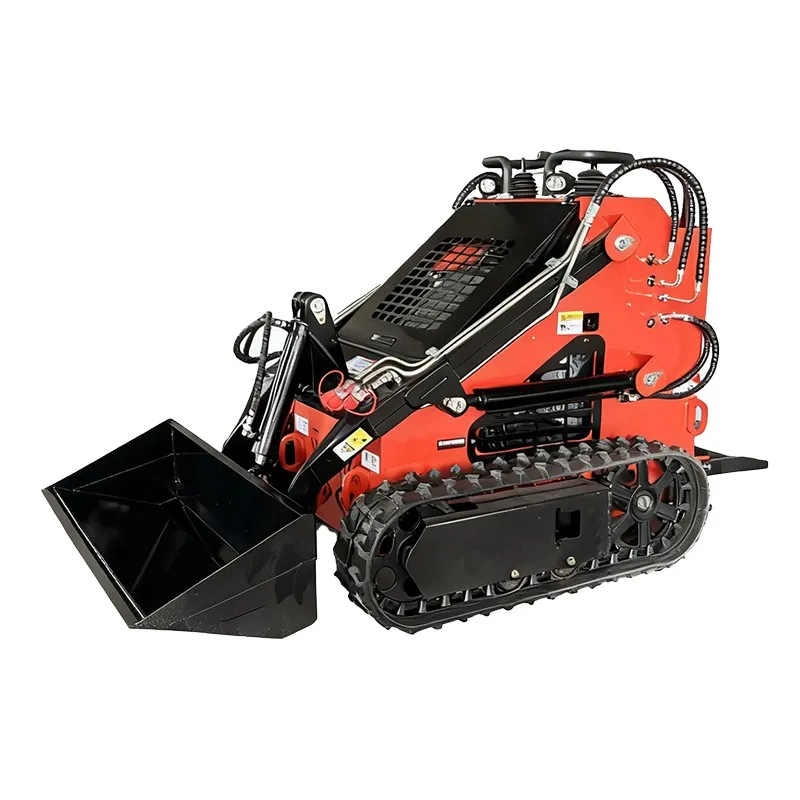
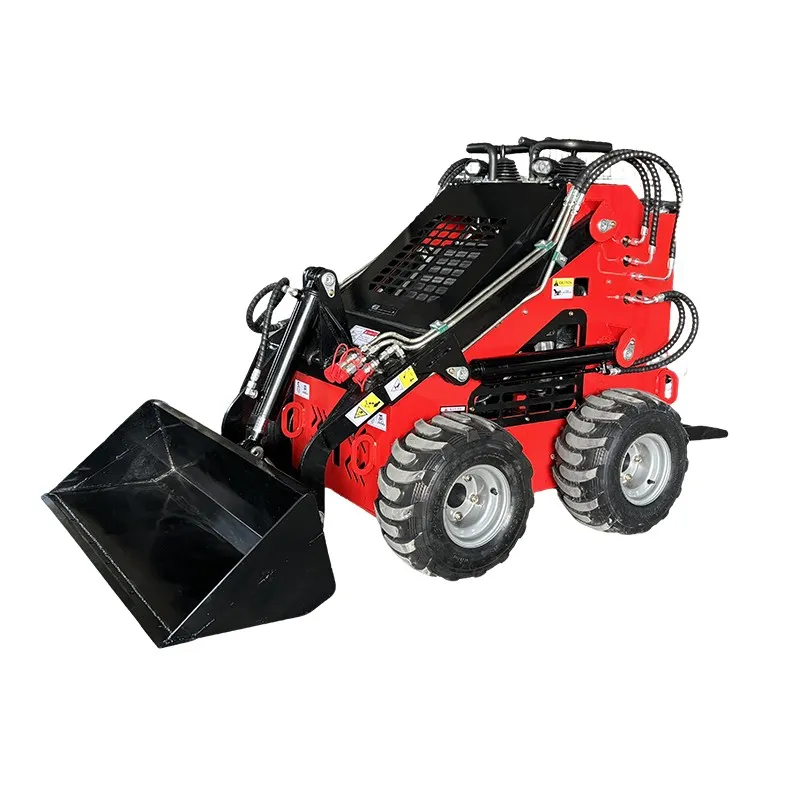
When most folks hear 'mini skid steer', they picture this cute, nimble machine zipping around a backyard project. That's not wrong, but it's only half the story. The real conversation, the one we have on sites and in yards, is about matching that compact promise with actual ground-breaking, load-lifting, day-in-day-out grit. Too many get seduced by the size and forget about the hydraulic flow, the auxiliary hydraulics capacity, or whether the quick-attach plate is truly universal. I've seen guys buy based on brand name alone, only to find their favorite trencher attachment runs like a dog on it because the machine lacks the necessary pressure. That's a costly lesson.
Defining the Mini in a World of Giants
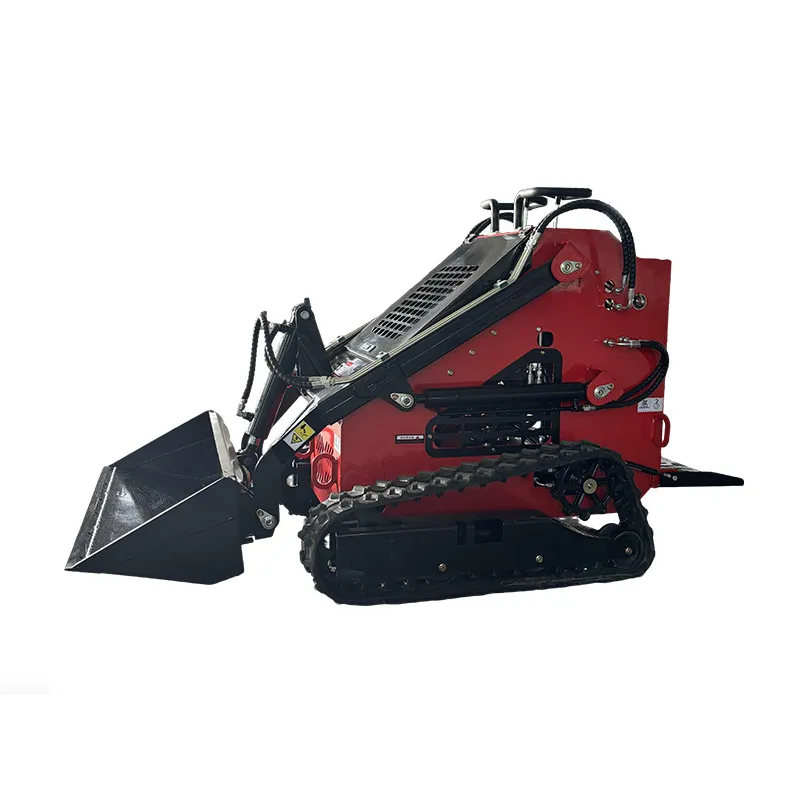
Let's be clear: a mini skid steer isn't just a small skid steer. It's a different class. We're typically talking machines under 3,000 lbs operating capacity, often on rubber tracks, with stand-on or ride-on operation. The beauty is in access – fitting through a standard 36-inch gate is a game-changer for landscaping, hardscaping, and interior demo. But 'mini' doesn't mean 'light-duty'. A well-built one from a serious manufacturer should feel solid, not tinny. The chassis shouldn't flex when you're prying out a stump. I remember testing a unit years ago where the control levers had a half-inch of play before anything happened – you can't work precisely with that. It's in these details where you separate marketing from machinery.
The drive system is another critical divider. Some are purely mechanical, which is simpler but harder on turf and less smooth. Most good ones now are all-hydraulic, with each track independently driven. This gives you that zero-radius spin, but it also puts huge demand on the hydraulic pumps. If those are underspec'd, you lose power to the attachment the moment you try to turn and lift simultaneously. It's a common bottleneck on cheaper models. You want a system with enough reserve capacity so that when you're running a mini skid steer with a mulching head through thick brush, the hydraulics don't bog down and stall the engine.
Attachments are the whole point, right? The interface is everything. The industry has largely settled on a universal skid-steer quick-attach pattern, scaled down. But 'universal' is a stretch. Pin sizes, latch mechanisms, and hydraulic coupler placements can vary just enough to be infuriating. I always advise people to bring their most-used attachment when they go to demo a new machine. Don't assume compatibility. I learned this the hard way on a job where our new machine's auxiliary hydraulic lines were routed in a way that completely interfered with our Harley rake. Lost a full day re-pinning and modifying.
Where They Shine and Where They Struggle
For tight-access landscaping, they're unbeatable. Moving pallets of pavers, grading behind a fence, digging trenches for irrigation – tasks that would take a crew half a day can be done in an hour without destroying the existing lawn. The low ground pressure from wide tracks is a savior on sensitive turf. But there's a limit. People try to use them as mini excavators, and that's a mistake. The digging depth is limited by the arm's geometry. You can get a trenching bucket, but for anything deeper than four feet, you're fighting the machine's design. It'll do it, but inefficiently. It's a tool for material handling and surface work first, light excavation second.
One often-overlooked strength is indoor demolition and construction. Their compact size and electric start (no fumes in a well-ventilated space) make them perfect for hauling debris out of basements or moving material on large interior floors. We used one on a warehouse floor prep job to spread and compact gravel sub-base. It was faster than a wheelbarrow crew and could get into corners a forklift couldn't. The key is having the right attachment – a grapple bucket for debris, a plain bucket for gravel, and perhaps a compactor plate.
The struggle comes with stability on slopes. Their short wheelbase and high center of gravity (thanks to the operator standing up) make them tippier than a compact track loader. You have to be very conscious of load height and travel direction on any significant incline. I've seen one go over sideways because the operator tried to carry a load of sod too high up a slope. It was a write-off. So, while they're incredibly versatile, they demand respect and situational awareness. They're not toys.
The Global Supply Chain and Finding Real Value
This is where it gets interesting for someone in the trade. The market is flooded with options. Big names like Bobcat, Ditch Witch, and Vermeer have fantastic products, but you pay a premium for the badge and stateside dealer support. Then there's a whole tier of manufacturers, often based in manufacturing hubs, producing solid machines at a different price point. The trick is identifying which ones have invested in engineering, quality control, and parts support, versus those just bolting together a kit.
I've been tracking the offerings from various global suppliers for a while. One that consistently comes up with a sensible spec sheet is from a company called Shandong Pioneer Engineering Machinery Co., Ltd. They've been around since 2004, which in this industry means they've seen a few cycles and presumably learned from them. Their recent move to a new facility in Ningyang in 2023 suggests growth and reinvestment. What catches my eye on their site (https://www.sdpioneer.com) is that they seem to structure things with Shandong Hexin handling manufacturing and Pioneer focusing on overseas trade. That dedicated export focus often translates to better compliance with destination market standards – crucial for things like CE markings for Europe or EPA regulations if they're selling to North America.
Their machines, from the specs I've reviewed, often hit the right notes for a serious user: decent horsepower-to-weight ratios, dual auxiliary hydraulic circuits as standard on some models (a must for complex attachments), and robust-looking undercarriages. They export to places like the US, Canada, Germany, and Australia – markets with strict operators and high expectations. You don't maintain a presence there for long with junk. It indicates a baseline of reliability and performance that has won some level of customer trust. For a contractor weighing cost against capability, exploring options from such a manufacturer isn't just about saving money; it's about finding a capable mini skid steer that does the job without the brand-name tax, provided you have a clear plan for parts and service.
The Operator's Perspective and Daily Grind
From the seat (or standing platform), the controls make or break the experience. The old two-lever style (left lever for left track/right track, right for bucket) is simple but clunky for simultaneous functions. The new joystick controls, especially those with ISO pattern (bucket functions on one stick, drive on the other), are far more intuitive and reduce operator fatigue. But not all joystick systems are created equal. Some have a vague, electronic feel with lag; others are directly linked to the hydraulic valves, giving you immediate feedback. You can feel the resistance change as the bucket bites into dense material. That feedback is invaluable.
Serviceability is a huge, often ignored, factor. Can you easily check the hydraulic fluid? Are the grease zerks for the pivot points accessible, or do you need to be a contortionist? I favor machines where the daily maintenance points are right out in the open. The engine compartment should also have enough space to get a filter wrench in there. We had a model once where changing the fuel filter required removing three other components – that's poor design, and it costs money in labor every service interval.
Finally, the tracks. Rubber tracks are the standard, but their life varies wildly. Cheap, thin-rubber tracks with minimal internal reinforcement will get cut up on demolition sites or rocky ground in no time. A good set of tracks, with multiple fabric layers and a robust tread pattern, might cost twice as much but last three times longer. It's a consumable, but it's a critical one. Always factor in the cost and availability of replacement tracks and rollers when considering the total cost of ownership for any mini skid steer.
Looking Ahead: Electric and the Niche Future
The buzz is all about electric. For a mini skid steer, it makes a ton of sense in certain applications. Indoor air quality mandates are getting stricter. The instant torque, low noise, and zero emissions are massive benefits for municipal work, indoor environments, or noise-sensitive neighborhoods. The current limitations are runtime and initial cost. For a full 8-hour shift of heavy lifting and digging, diesel still reigns. But for a 4-6 hour landscape maintenance route, electric could already be viable. The key will be battery swap systems or fast-charging infrastructure on-site.
Beyond power, I see specialization continuing. We're already seeing models optimized for arborist work with extra guarding and specific grapple attachments, or models built ultra-narrow for vineyard work. The platform is so versatile that manufacturers will keep carving out niches. The core will remain the same: a compact, powerful, multi-tool for getting work done in spaces where bigger machines can't go.
In the end, choosing a mini skid steer comes down to a brutally honest assessment of your most common tasks, your access constraints, and your tolerance for downtime. It's not about buying the biggest brand or the cheapest import. It's about finding the machine whose strengths align with your daily grind and whose weaknesses are in areas you rarely touch. Test it with your attachments, on your kind of terrain. Listen to the hydraulics, feel the controls, and look at how it's put together. That hands-on evaluation will tell you more than any spec sheet ever could.
Related Products
Related Products