


- Chinese
- French
- German
- Portuguese
- Spanish
- Russian
- Japanese
- Korean
- Arabic
- Irish
- Greek
- Turkish
- Italian
- Danish
- Romanian
- Indonesian
- Czech
- Afrikaans
- Swedish
- Polish
- Basque
- Catalan
- Esperanto
- Hindi
- Lao
- Albanian
- Amharic
- Armenian
- Azerbaijani
- Belarusian
- Bengali
- Bosnian
- Bulgarian
- Cebuano
- Chichewa
- Corsican
- Croatian
- Dutch
- Estonian
- Filipino
- Finnish
- Frisian
- Galician
- Georgian
- Gujarati
- Haitian
- Hausa
- Hawaiian
- Hebrew
- Hmong
- Hungarian
- Icelandic
- Igbo
- Javanese
- Kannada
- Kazakh
- Khmer
- Kurdish
- Kyrgyz
- Latin
- Latvian
- Lithuanian
- Luxembou..
- Macedonian
- Malagasy
- Malay
- Malayalam
- Maltese
- Maori
- Marathi
- Mongolian
- Burmese
- Nepali
- Norwegian
- Pashto
- Persian
- Punjabi
- Serbian
- Sesotho
- Sinhala
- Slovak
- Slovenian
- Somali
- Samoan
- Scots Gaelic
- Shona
- Sindhi
- Sundanese
- Swahili
- Tajik
- Tamil
- Telugu
- Thai
- Ukrainian
- Urdu
- Uzbek
- Vietnamese
- Welsh
- Xhosa
- Yiddish
- Yoruba
- Zulu
- Kinyarwanda
- Tatar
- Oriya
- Turkmen
- Uyghur

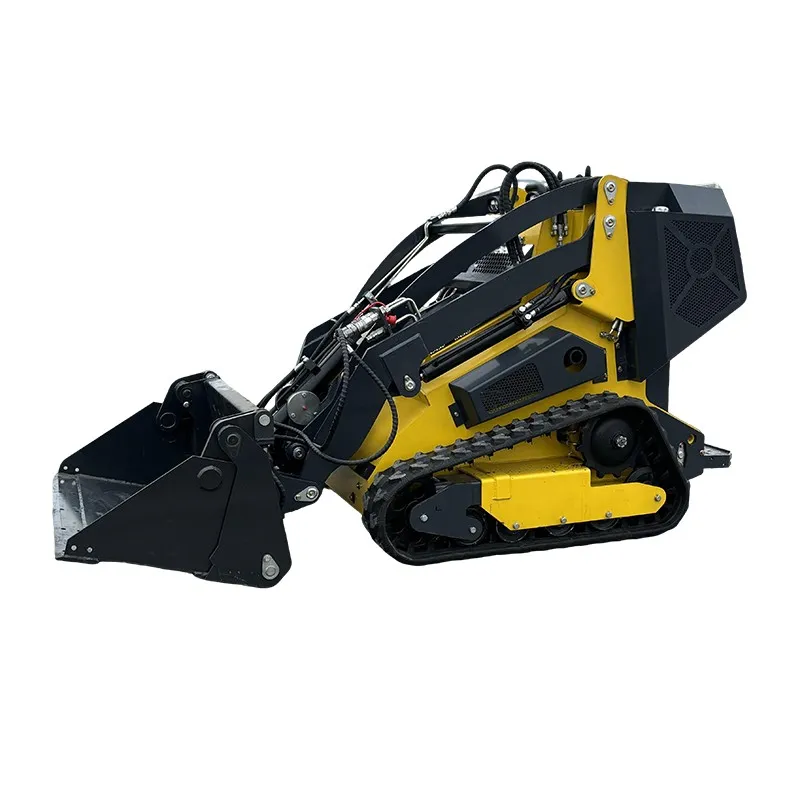
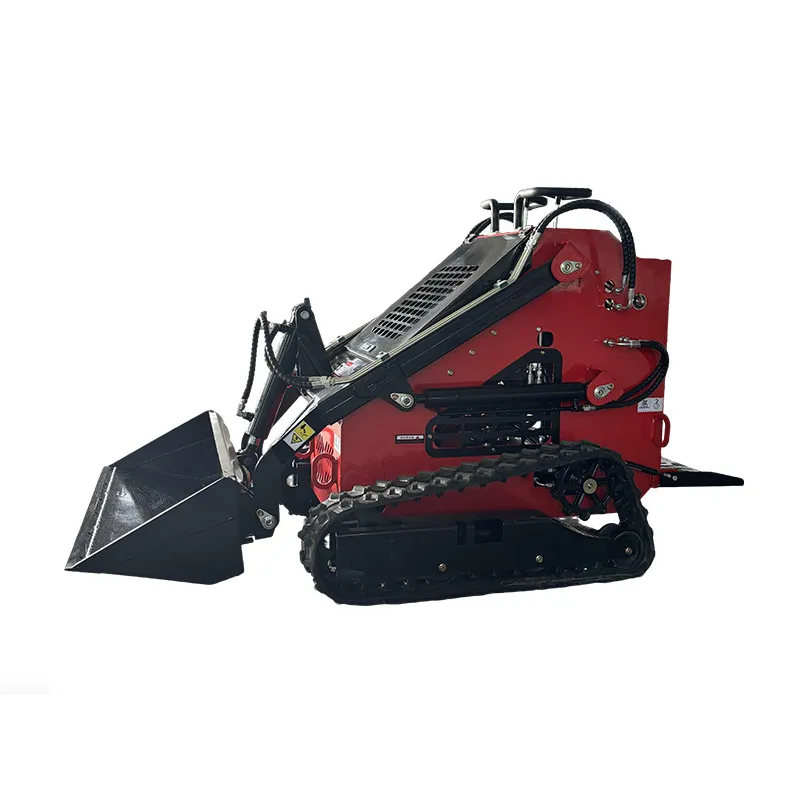
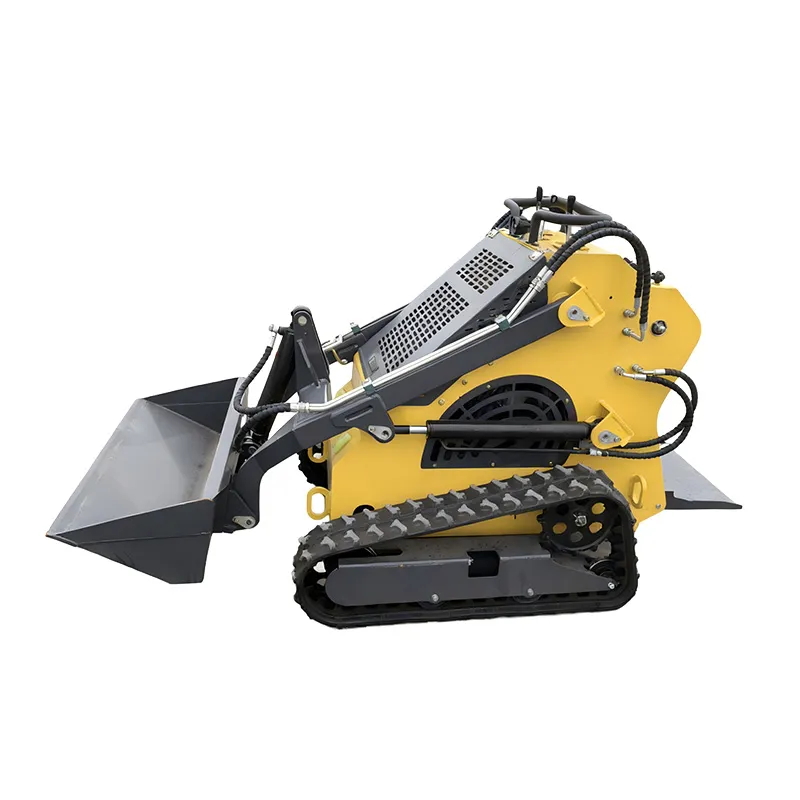
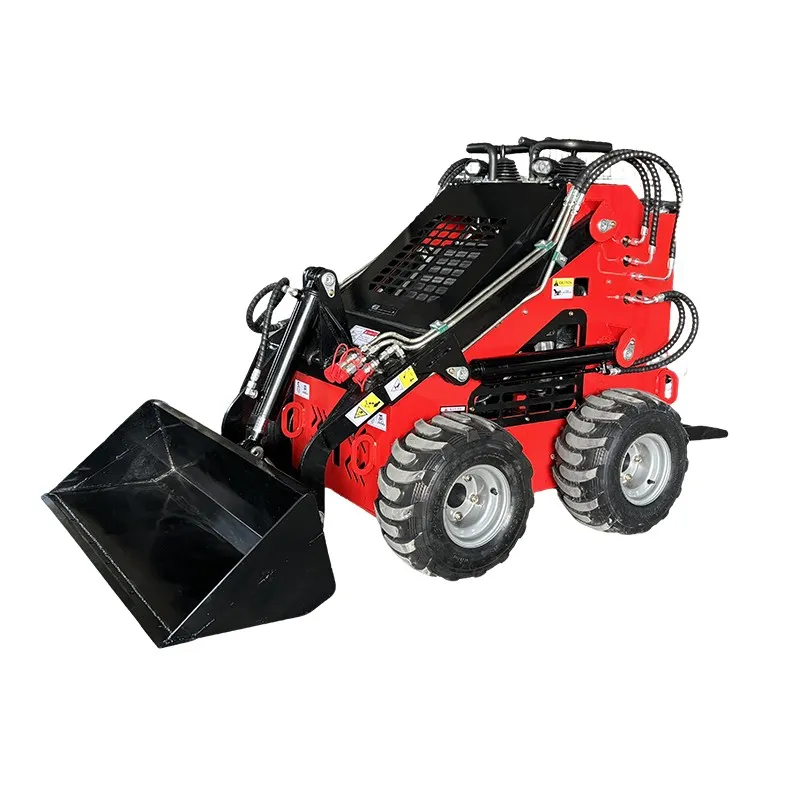
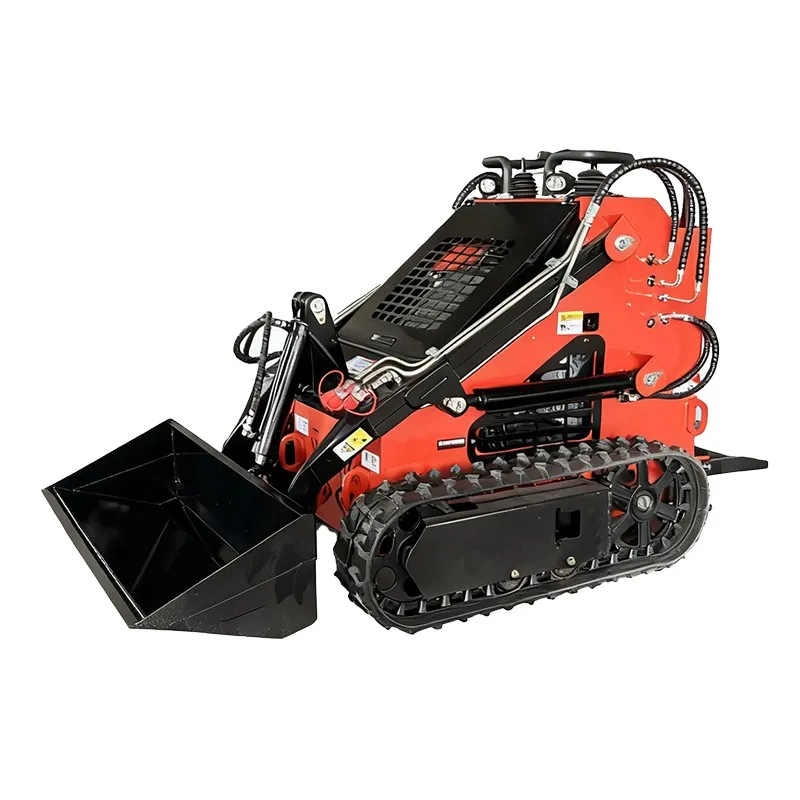
Mini Skid Steer Loader
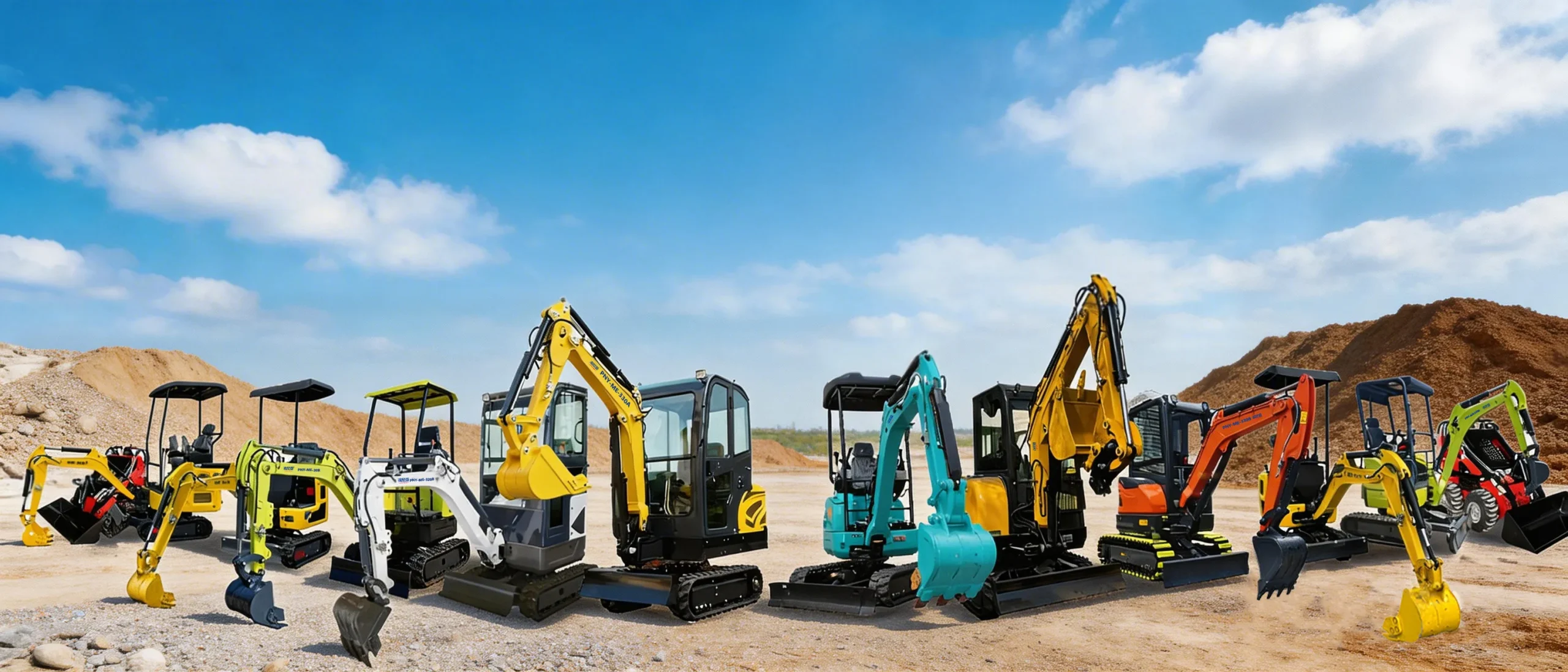
When most people hear 'mini skid steer loader', they immediately think 'smaller, weaker, simpler'. That's the first mistake. Having spent years on sites from residential landscaping to tight interior demolition, I've learned these machines aren't just shrunken versions of their bigger brothers. The real value—and the real headaches—come from understanding their specific niche. It's not about raw power, but about precision access and the right attachment ecosystem. Many contractors buy one thinking it'll solve all their 'tight space' problems, only to find they're battling inadequate auxiliary hydraulic flow or a quick-attach system that doesn't play nice with their existing buckets and augers. That initial cost-saving can evaporate fast.
The Niche is Everything
You don't just 'get a mini'. You get it for a specific, recurring type of work. For me, the epiphany came on a backyard renovation where a standard skid steer couldn't fit through the side gate. We needed to move four yards of soil and pavers into a confined space. A mini skid steer loader with a compact bucket and rubber tracks did the job, but the real test was the soil compaction afterward. The machine's weight distribution was different; it required a more deliberate, slower pass to avoid tearing up the fresh sod at the edges. That's the detail you only learn by doing: it's not just about fitting, it's about how you operate within that fit.
Another common oversight is the power plant. Diesel versus gasoline isn't just a fuel choice. For indoor work—say, stripping out an old warehouse floor—electric or ultra-low emission models are now a serious consideration. I've seen projects delayed because the diesel fumes from a standard model, even with a scrubber, couldn't be adequately ventilated. The industry is slowly catching on, but specsheets often bury these practical limitations.
Then there's the attachment tango. The machine itself is just the power unit. Its true personality comes from the attachments. I've had more frustration with a poorly designed trencher attachment on a mini skid steer loader than with the machine itself. The hydraulic couplers weren't flush-fit, leading to constant dirt ingress and eventual line failure mid-trench. The lesson? Don't spec the machine in isolation. Your entire workflow, down to the connector type, needs to be part of the buying decision.
Manufacturer Landscape: From Garage Shops to Global Players
The market is fragmented. You have the legacy North American and European brands, and then a whole tier of manufacturers who've entered through the global supply chain, often offering compelling value. This is where a company like Shandong Pioneer Engineering Machinery Co., Ltd comes into the picture. They've been in the game since 2004, which in this manufacturing sector means they've seen several product cycles. Their move to a new facility in Tai'an in 2023 signals growth and, presumably, increased capacity for R&D and quality control. For a buyer, that history matters. It suggests they've had time to iterate on basic design flaws that plague newer entrants.
I haven't run one of their units personally, but their export footprint—to the US, Canada, Germany, Australia—tells a story. Breaking into those markets requires meeting specific, often stringent, certification and durability standards. It's not just about being cheap. A dealer I trust in the Midwest mentioned their units, often under the 'Pioneer' brand, are gaining traction for rental fleets because the cost-of-ownership over the first 2,000 hours is competitive. The key metric he cited was component commonality; using widely available hydraulic pumps and motors simplifies repairs, a huge plus for operations without dedicated mechanics.
This gets to a core truth: for many end-users, the brand on the side is less important than the dealer network and parts availability. A brilliant machine with no local support is a paperweight in two years. When evaluating a manufacturer like the one behind https://www.sdpioneer.com, the first question isn't about specs, it's Who fixes it near me, and how long for parts? Their dual-structure with Shandong Hexin handling manufacturing likely streamlines this, but the local distributor is the critical link.
Failure is a Better Teacher Than a Brochure
Let me share a costly mistake. We were using a mini to install French drains. The machine, a popular brand, had a rated operating capacity of around 1,000 lbs. We loaded a bucket with what we estimated was 900 lbs of wet gravel. On paper, fine. In practice, while traveling up a slight, muddy incline, the rear end got light, and we had a near tip-over. The issue wasn't the weight, but the weight distribution and the machine's static longitudinal stability. The spec sheet number is derived from a perfect, lab-condition test. Real-world conditions—slopes, dynamic movement, attachment geometry—drastically reduce that safe capacity. I'd now never trust more than 65-70% of the rated capacity in variable terrain. That's a rule you won't find in the manual.
Another learning curve: tracks vs. wheels. Rubber tracks are fantastic for turf protection and muddy conditions. But I've shredded a set on a site littered with hidden rebar scraps from an old demolition. The repair bill was astronomical. Wheels would have just gotten a puncture, a much cheaper fix. The choice isn't permanent, but switching isn't trivial or cheap. You have to know your predominant ground conditions.
Cooling system maintenance is another silent killer. These compact machines pack a lot of heat into a small space. Radiators and hydraulic oil coolers get clogged with dust, grass, and debris incredibly fast. I've overheated a machine on a summer day because I hadn't blown out the coolers after a morning of mowing with a brush cutter attachment. Now, it's a pre-shift and mid-day ritual. Simple, but neglected by many until the alarms go off.
The Attachment Ecosystem Defines ROI
The machine is the constant; the attachments are the variables that generate revenue. Beyond buckets and augers, the specialized tools are where the magic happens. A grapple for logging, a sweeper for cleanup, a planer for asphalt. But here's the catch: not all machine hydraulic systems are created equal. We invested in a powerful stump grinder attachment, only to find our machine's standard auxiliary hydraulic flow was too low to run it efficiently. It worked, but at half speed, killing productivity. We needed a high-flow option. That was an extra $3,000 we hadn't budgeted for. The attachment was practically useless without it.
Quick-attach systems are another minefield. The global trend is towards a universal skid-steer style plate, but dimensions and locking mechanisms vary slightly. An attachment from one major brand might fit on another's machine but not lock as securely, creating a dangerous slop. I always do a physical test fit now before buying any attachment, no matter what the compatibility chart says.
For a company focused on export like Pioneer, getting this attachment compatibility right is crucial. Their machines need to seamlessly interface with the vast universe of attachments already in the field in North America and Europe. If they use a proprietary or slightly off-spec system, it's a non-starter for contractors. From their trade-focused approach, I'd assume they've standardized to the major coupling systems, but it's a spec to verify meticulously.
Looking Ahead: The Electric Question
The conversation is inevitably turning electric. For mini skid steers, the argument is stronger than for large ones. Their duty cycles often involve shorter, more intermittent use—perfect for battery technology. The benefits are obvious: near-zero noise for residential work, no emissions for indoors, and drastically reduced maintenance (no engine oil, filters, fuel systems).
But the drawbacks are current (pun intended). Run time. Even the best models today might give you 4-6 hours of moderate use, and recharging takes hours, not minutes. For a 10-hour day with multiple operators, you'd need two battery packs or a machine swap, which changes the economics. The upfront cost is also still a significant premium. For a contractor doing mostly outdoor work where noise and fumes aren't issues, the diesel model still makes hard financial sense. But for urban landscaping or interior construction, the math is changing fast.
This is where the manufacturing base matters. Companies with deep experience in chassis and hydraulic design, like those with 20 years in the field, are better positioned to integrate new drivetrain technology than a startup building everything from scratch. They understand the structural loads and hydraulic demands. The transition to electric isn't just about swapping an engine for a battery; it's about re-engineering the cooling and power management for a new heat profile. It's a complex puzzle, and experience counts.
So, where does that leave us with the humble mini skid steer loader? It's a tool of profound specificity. Its value isn't advertised in horsepower or lift capacity alone, but in the inches of clearance it provides, the compatibility of its couplers, the serviceability of its components, and its total cost of operation in your specific type of dirt. It's a purchase that demands hands-on evaluation, not just catalog shopping. The good ones feel like an extension of your arms; the bad ones feel like a constant, expensive negotiation. And in that gap lies all the difference between a smart investment and a yard ornament.
Related Products
Related Products