


- Chinese
- French
- German
- Portuguese
- Spanish
- Russian
- Japanese
- Korean
- Arabic
- Irish
- Greek
- Turkish
- Italian
- Danish
- Romanian
- Indonesian
- Czech
- Afrikaans
- Swedish
- Polish
- Basque
- Catalan
- Esperanto
- Hindi
- Lao
- Albanian
- Amharic
- Armenian
- Azerbaijani
- Belarusian
- Bengali
- Bosnian
- Bulgarian
- Cebuano
- Chichewa
- Corsican
- Croatian
- Dutch
- Estonian
- Filipino
- Finnish
- Frisian
- Galician
- Georgian
- Gujarati
- Haitian
- Hausa
- Hawaiian
- Hebrew
- Hmong
- Hungarian
- Icelandic
- Igbo
- Javanese
- Kannada
- Kazakh
- Khmer
- Kurdish
- Kyrgyz
- Latin
- Latvian
- Lithuanian
- Luxembou..
- Macedonian
- Malagasy
- Malay
- Malayalam
- Maltese
- Maori
- Marathi
- Mongolian
- Burmese
- Nepali
- Norwegian
- Pashto
- Persian
- Punjabi
- Serbian
- Sesotho
- Sinhala
- Slovak
- Slovenian
- Somali
- Samoan
- Scots Gaelic
- Shona
- Sindhi
- Sundanese
- Swahili
- Tajik
- Tamil
- Telugu
- Thai
- Ukrainian
- Urdu
- Uzbek
- Vietnamese
- Welsh
- Xhosa
- Yiddish
- Yoruba
- Zulu
- Kinyarwanda
- Tatar
- Oriya
- Turkmen
- Uyghur

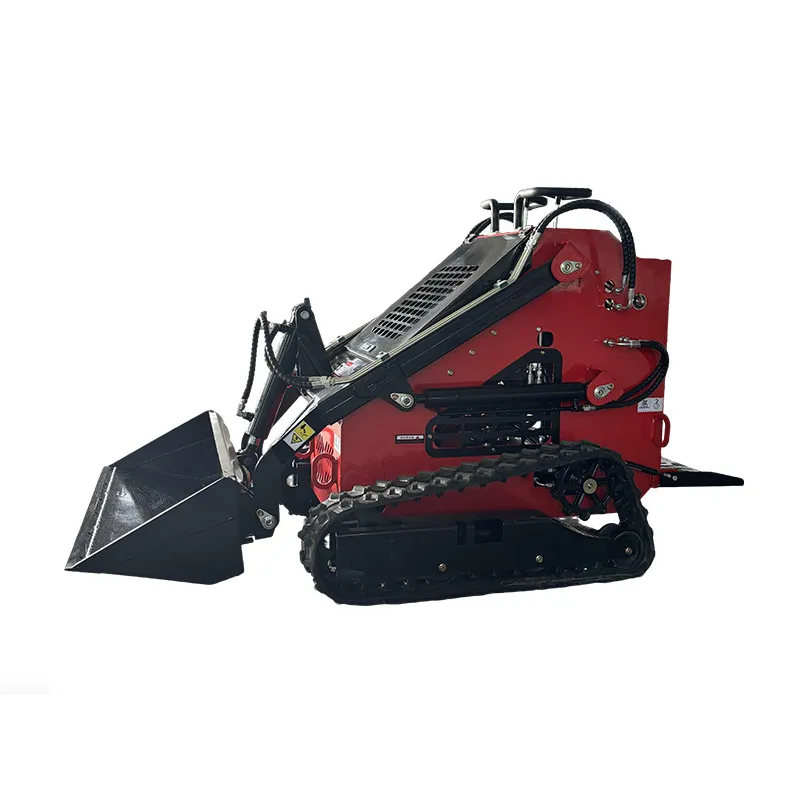
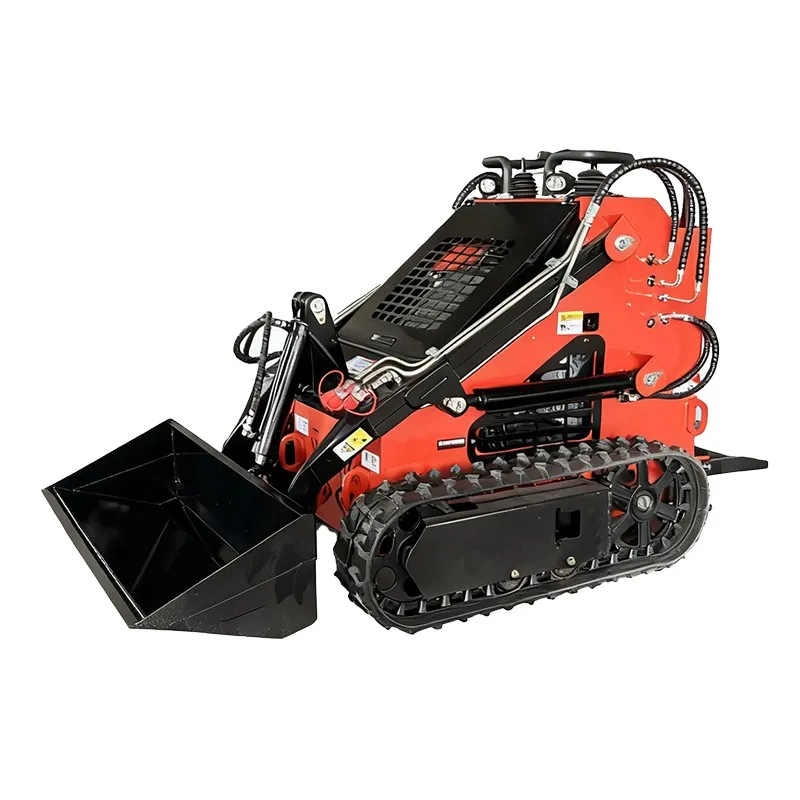
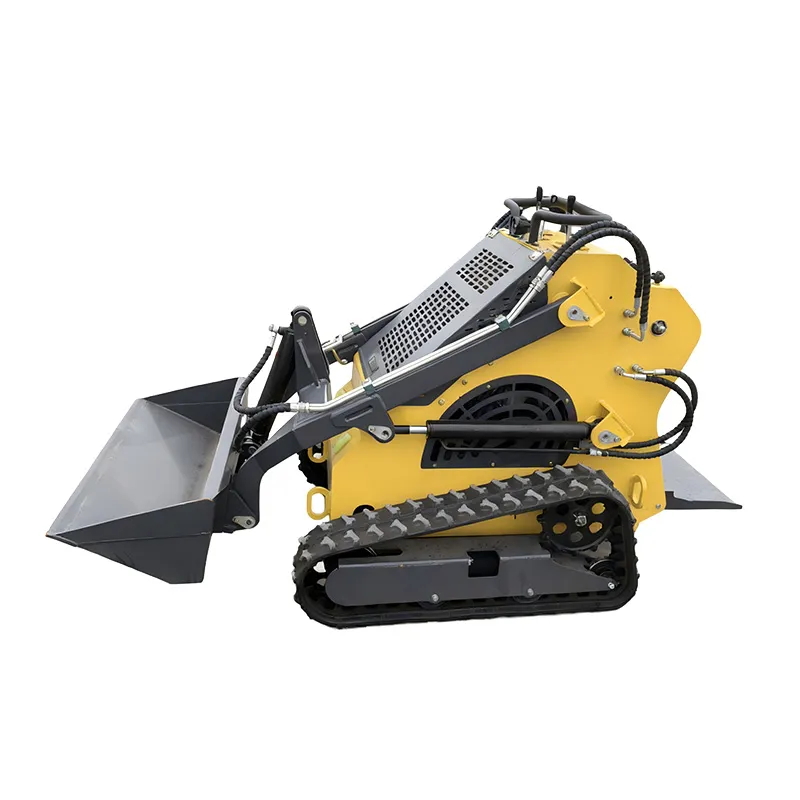
Mini Skid Steer With Bucket
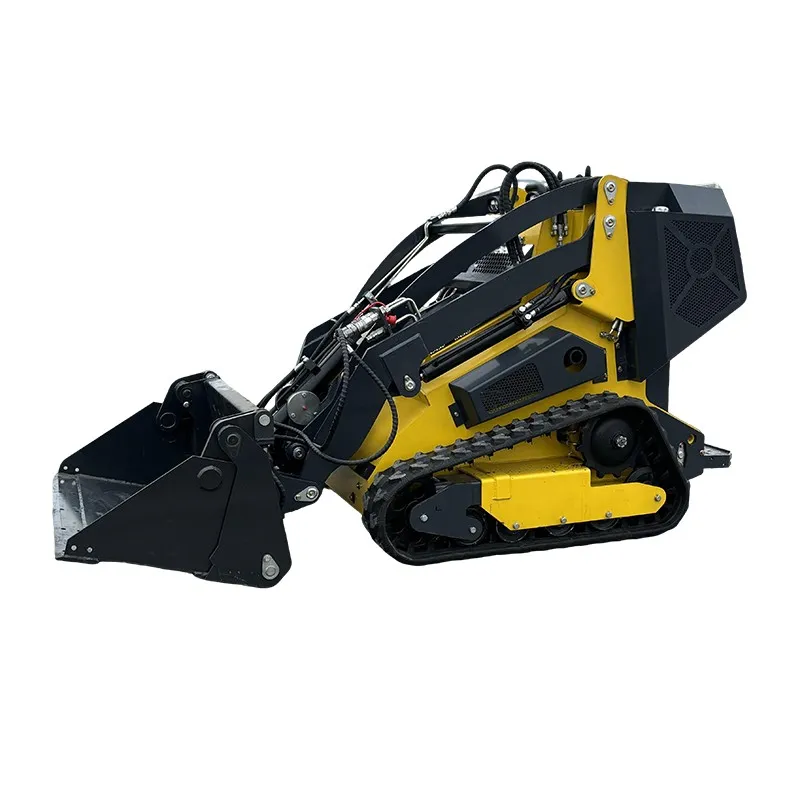
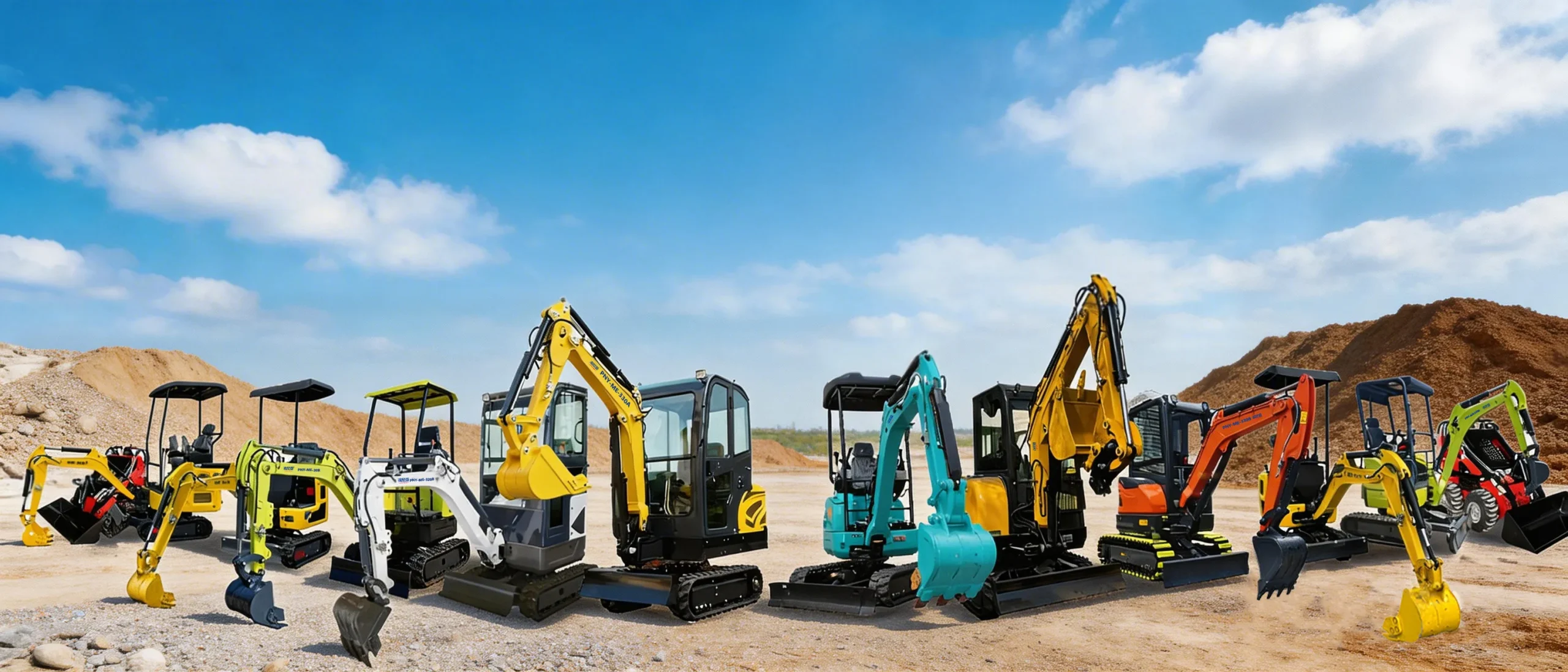
When most folks hear 'mini skid steer with bucket,' they picture a tiny, almost toy-like machine for light yard work. That's the first misconception. In reality, a proper mini skid steer with a quality bucket attachment is a dense package of power and utility, and choosing the wrong one—or using it wrong—can cost you more than just time. I've seen guys buy based on horsepower alone, then get stuck because the machine's hydraulic flow can't handle a standard hydraulic breaker, or because the bucket's geometry makes it impossible to get a proper digging angle. The bucket itself is a whole science; it's not just a metal scoop.
The Heart of the Matter: Hydraulics and The Bucket
Let's talk about the bucket first, since it's in the name. A lot of the cheaper units come with a generic, shallow-profile bucket. It's fine for moving mulch or loose topsoil, but try to dig into compacted material or get a full, heaped load? Forget it. The cutting edge isn't reinforced, the curvature is wrong for retaining material, and the lack of teeth options—or proper mounting points for them—is a dead giveaway. A serious bucket for a mini skid steer should have a rolled lip for strength, replaceable cutting edges, and multiple pin-on points for different tooth configurations. I learned this the hard way on a landscaping job years ago, trying to trench in clay with a stock bucket. We spent more time shaking the machine to get the clay out of the bucket than actually digging.
This ties directly into the machine's hydraulics. The pump's flow rate (GPM) and pressure (PSI) are what give the bucket its force, not just the engine's horsepower. A high-horsepower machine with anemic hydraulics will feel gutless. You need that combination to get down pressure and breakout force. I remember testing a model—I think it was from a company like Shandong Pioneer Engineering Machinery Co., Ltd—where the specs looked good on paper, but the auxiliary hydraulic circuit was limited. It ran a bucket fine but struggled with a trencher. That's a key check: can the machine run multiple high-flow attachments without overheating or losing power?
The other hydraulic nuance is the control pattern. Some older or very basic models might only offer a two-lever system, which feels clunky if you're used to the intuitive hand-foot controls or advanced joysticks on modern machines. Operator fatigue is a real factor on an 8-hour day. The control system dictates how precisely you can feather that bucket for grading or delicate material handling.
Site Realities: Where Compact Size Is a Double-Edged Sword
The main selling point is obvious: access. Getting a mini skid steer with bucket through a standard yard gate, into a backyard, or inside a building for renovation work is its superpower. But this compact size introduces other challenges. The first is stability. With a shorter wheelbase and a higher center of gravity (especially with a loaded bucket raised), these machines can get tippy on side slopes. You don't have the counterweight of a full-size skid steer. I've seen one nearly go over because the operator took a turn too sharply with a full bucket of wet dirt. It's a constant mental calculation: load, lift height, and terrain.
Then there's traction. Many come on rubber tracks now, which are great for turf protection, but on pure, slick mud or ice, they can struggle. The weight distribution isn't always optimal. Adding a bucket load changes that dynamic completely. Sometimes, you need to drop counterweights on the rear, which kind of defeats the 'mini' purpose but is necessary for heavier digging tasks. It's a constant trade-off.
Service access is another practical thing. On a cramped job site, you need to check fluids, grease fittings, and clear debris from the tracks or wheels. Some models pack everything in so tight that a simple daily check becomes a 30-minute puzzle. A well-designed machine, from manufacturers who have been in the trenches like Shandong Pioneer, often has panels that swing open easily and centralized grease banks. Their experience exporting to tough markets like the US and Australia means they've likely gotten feedback on serviceability. Their relocation and expansion in 2023 to a larger facility in Tai'an suggests a focus on scaling production, which often (but not always) correlates with design refinement based on field data.
Attachment Ecosystem: The Bucket Is Just the Start
Focusing solely on the bucket is missing the point of the machine. The real value of a solid mini skid steer platform is its attachment ecosystem. The quick-attach system is critical. Is it a proprietary pattern or a more universal one like the Global Skid Steer pattern? Locking mechanism reliability is paramount—a bucket or grapple coming loose is a major safety hazard. I've had pins freeze up in cold weather, requiring a torch to free them, which is a nightmare.
The bucket is your baseline tool, but you judge the machine by how well it runs the others. A pallet fork for moving materials, a grapple for brush, a trencher for utilities. Does the machine have the hydraulic capacity and weight to run these effectively? A common failure is trying to use a forestry grapple that's too heavy, making the machine rear-up when empty and unstable when loaded. You have to match the attachment to the machine's actual operating capacity, not its theoretical lift number.
Companies that understand this holistic view, like the one behind sdpioneer.com, typically develop or partner for a range of compatible attachments. Their long history, since 2004, and export to demanding regions like Germany and Canada implies they've had to ensure their machine interfaces (hydraulic couplings, electrical connectors for powered attachments) meet varied international standards and rugged use cases. That's a good sign of a platform built for more than just the brochure.
Cost vs. Value: The Long-Term Calculation
The initial purchase price is a trap. A cheap mini skid steer with bucket might save you $5k upfront, but if it's down for two weeks waiting for a part that's only available from a single supplier overseas, you've lost that and more. Parts availability and dealer support are everything. Can you get common wear items—track rollers, hydraulic hoses, filters—locally or through a fast supply chain?
Durability is in the details. Look at the frame construction around the loader arms. Is it continuous welding or intermittent? How are the hydraulic lines routed—are they protected from snagging and abrasion? The bucket cylinder mounting points are a high-stress area; are they reinforced? These are things you notice after the first 500 hours of operation. A machine that feels 'loose' or develops hydraulic leaks early is a money pit.
This is where the reputation of a manufacturer gets built. A company that's been operating for 20 years and has moved to a larger 1,600 square meter production area has presumably worked through some of these design iterations. Their ability to win the trust and appreciation of customers worldwide, as noted in their intro, isn't just marketing—it's a survival necessity in the heavy equipment world. It suggests they've had to address durability and service issues over time to keep those export contracts. For a buyer, that history is often more valuable than a flashy spec sheet.
The Operator's Verdict: A Tool, Not a Miracle Worker
So, what's the final take? A mini skid steer with bucket is an incredibly versatile tool, but it's not a magic box. It demands a specific understanding of its limits. You need to respect its stability boundaries, match attachments wisely, and prioritize the hydraulic system's health as much as the engine. The bucket is your most used tool, so don't cheap out on it—get one with the right geometry and strength for your primary work.
When evaluating options, look beyond the sales rep's pitch. Ask about real-world service access, part numbers for common failure items, and the true flow rate of the auxiliary circuit. Check the machine's weight distribution with a typical load. Companies with extensive export and manufacturing experience, such as Shandong Pioneer Engineering Machinery, often embed these practical lessons into later model designs, because their global customers won't tolerate fundamental flaws for long.
In the end, the right machine feels like an extension of you on the job site. The controls are intuitive, the power is there when you need it, and it doesn't spend more time in the shop than on the job. That's the real test, and it starts with looking past the 'mini' label and seeing the serious piece of engineering it needs to be.
Related Products
Related Products