- Chinese
- French
- German
- Portuguese
- Spanish
- Russian
- Japanese
- Korean
- Arabic
- Irish
- Greek
- Turkish
- Italian
- Danish
- Romanian
- Indonesian
- Czech
- Afrikaans
- Swedish
- Polish
- Basque
- Catalan
- Esperanto
- Hindi
- Lao
- Albanian
- Amharic
- Armenian
- Azerbaijani
- Belarusian
- Bengali
- Bosnian
- Bulgarian
- Cebuano
- Chichewa
- Corsican
- Croatian
- Dutch
- Estonian
- Filipino
- Finnish
- Frisian
- Galician
- Georgian
- Gujarati
- Haitian
- Hausa
- Hawaiian
- Hebrew
- Hmong
- Hungarian
- Icelandic
- Igbo
- Javanese
- Kannada
- Kazakh
- Khmer
- Kurdish
- Kyrgyz
- Latin
- Latvian
- Lithuanian
- Luxembou..
- Macedonian
- Malagasy
- Malay
- Malayalam
- Maltese
- Maori
- Marathi
- Mongolian
- Burmese
- Nepali
- Norwegian
- Pashto
- Persian
- Punjabi
- Serbian
- Sesotho
- Sinhala
- Slovak
- Slovenian
- Somali
- Samoan
- Scots Gaelic
- Shona
- Sindhi
- Sundanese
- Swahili
- Tajik
- Tamil
- Telugu
- Thai
- Ukrainian
- Urdu
- Uzbek
- Vietnamese
- Welsh
- Xhosa
- Yiddish
- Yoruba
- Zulu
- Kinyarwanda
- Tatar
- Oriya
- Turkmen
- Uyghur


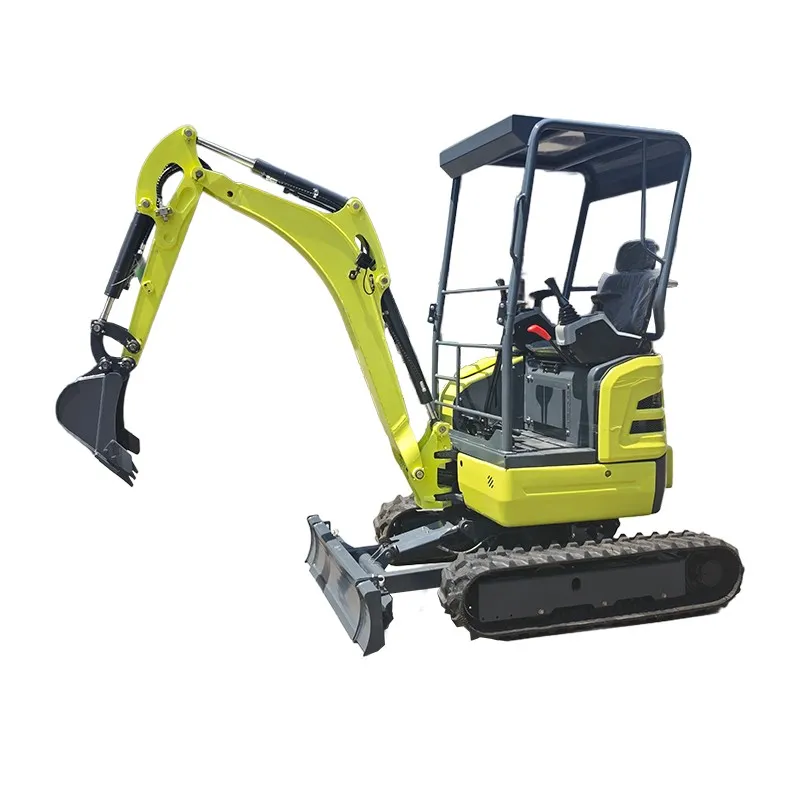
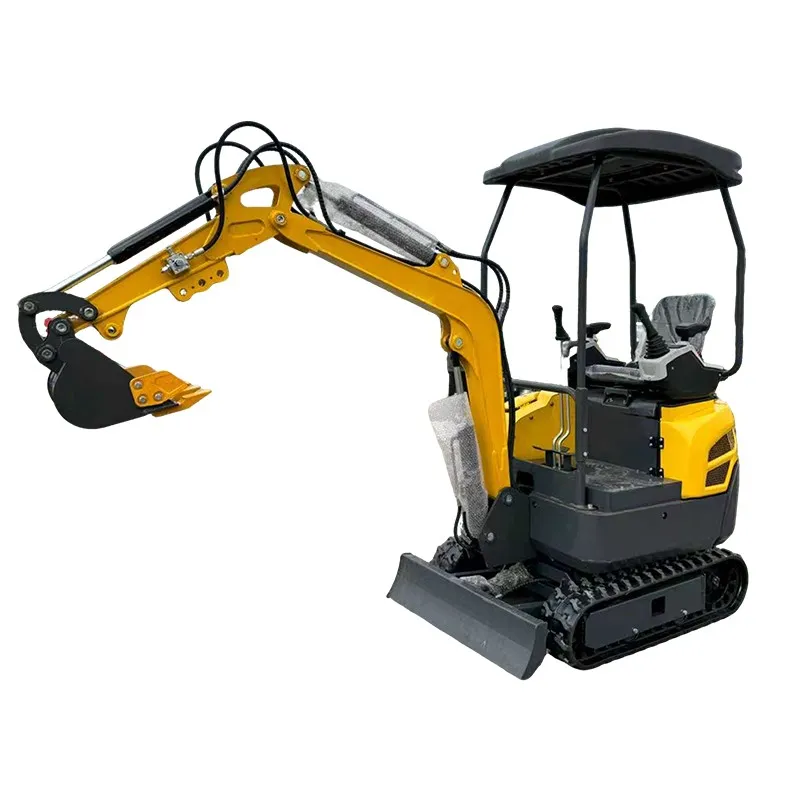
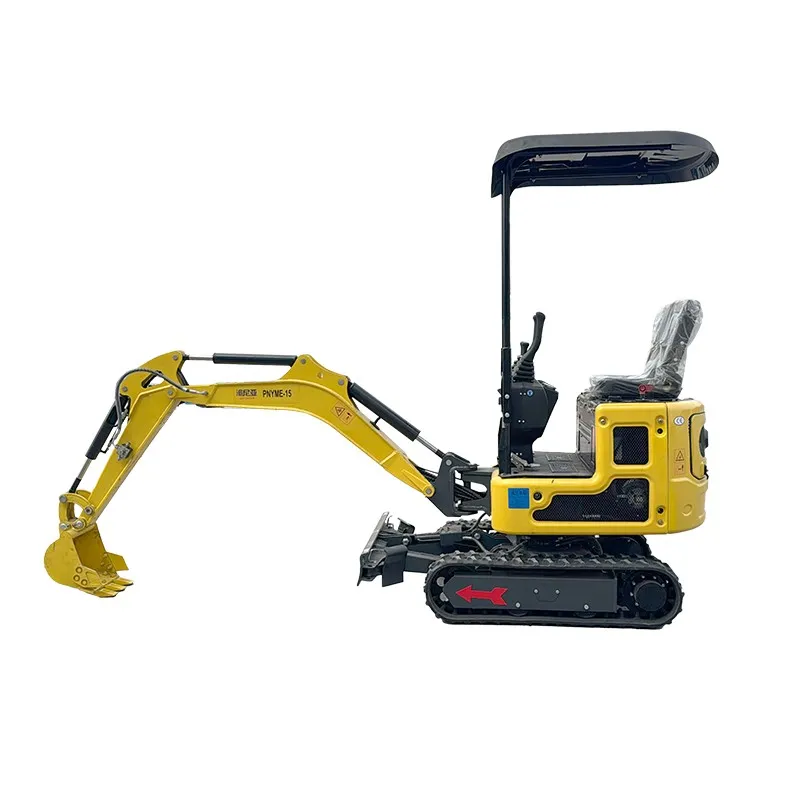
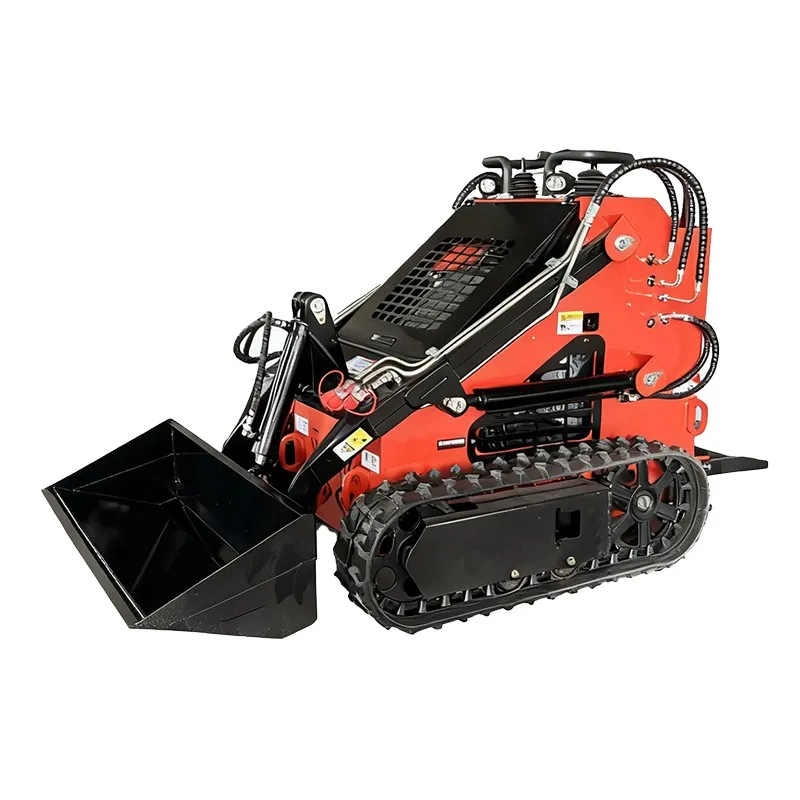
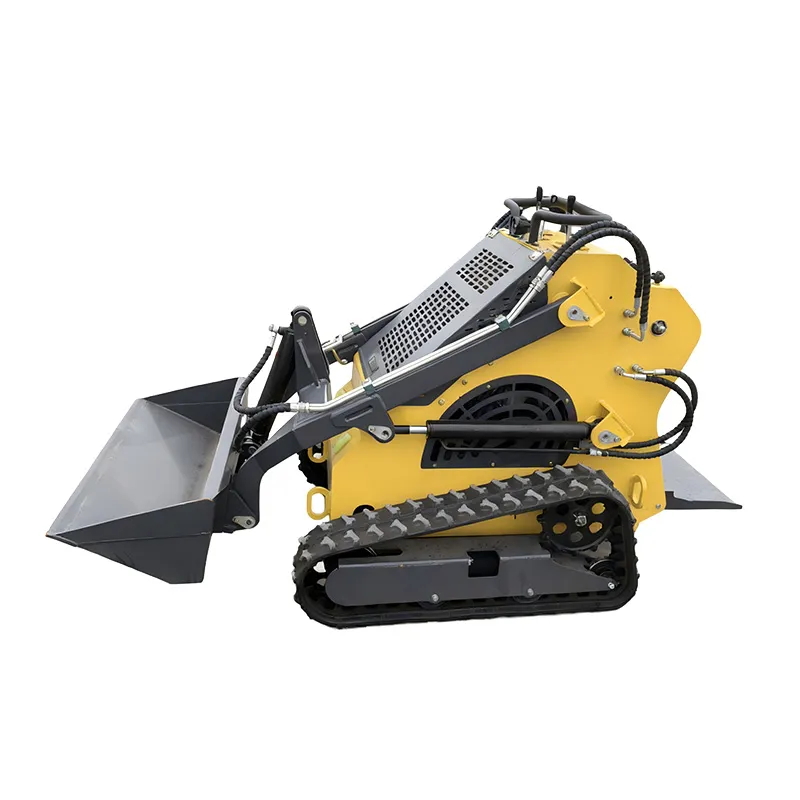
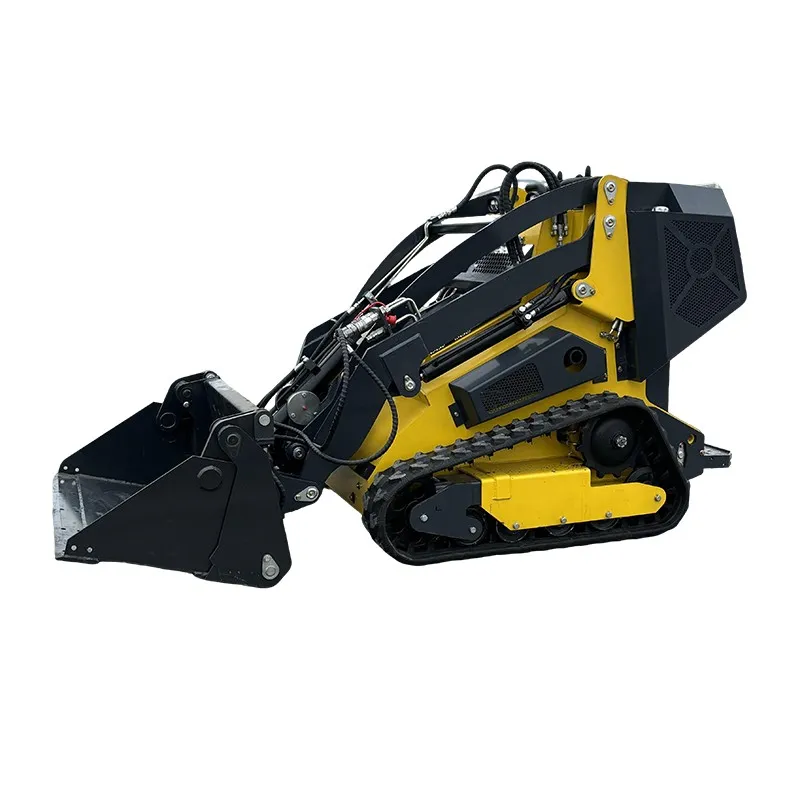
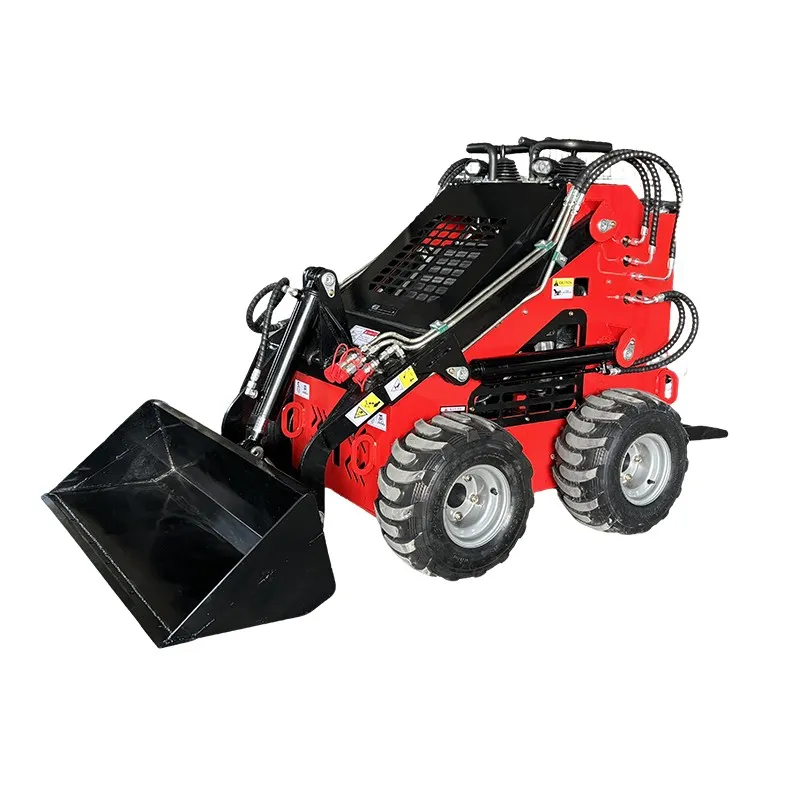
mini track loader with bucket
When most people hear 'mini track loader with bucket', they picture a cute, tiny machine for light gardening. That's the first misconception. In reality, a proper mini track loader is a dense package of power and engineering, and the bucket is its most critical, and often most misunderstood, interface with the job site. It's not just about moving dirt; it's about precision, stability, and not tearing up the ground you're working on. I've seen too many projects where the wrong machine or the wrong bucket attachment turned a simple task into a costly redo.
The Core of the Machine: Under the Rubber Tracks
Let's start with the basics everyone glosses over: the undercarriage. The track system on a mini loader isn't just for show. It's what gives it the ground pressure to work on soft turf without sinking, unlike skid-steers that can shred a lawn in one pass. But not all tracks are equal. I've had machines where the track tension was a constant battle – too loose and you risk derailment in a turn with a full bucket, too tight and you wear out sprockets and rollers prematurely. The sweet spot is subtle, and you learn it by feel and sound, not just by the manual.
The hydraulic system is another silent hero. A weak pump means you're waiting for the bucket to curl or lift while the engine screams. A common pitfall is operators trying to run high-flow attachments on a standard-flow machine, starving the system and causing overheating. I remember a job where we were using a trencher on a standard-flow unit; within an hour, the hydraulic oil was smoking. Lesson learned: know your machine's flow rate (gpm) and match your attachments. Companies that build them right, like Shandong Pioneer Engineering Machinery Co., Ltd, usually provide clear specs for this, which saves a lot of headaches down the line.
Speaking of buckets, the bucket itself is a tool, not a given. The standard general-purpose bucket is fine for mixed materials, but I always kept a heavy-duty rock bucket with a bolt-on edge on another trailer. The difference in digging into compacted clay or gravel is night and day. The geometry matters too – a deeper bucket holds more but is harder to get a full load; a wider bucket is great for grading but can be unwieldy in tight spaces. You choose based on the day's first task, and often, you're wrong and make do.
On the Ground: Real Scenarios and Stubborn Problems
Here's a scenario fresh from memory: a backyard renovation with a narrow side gate access. The client swore a mini track loader with bucket would fit. We measured, it was tight, but doable. What we didn't account for was the slight slope of the path, which reduced our clearance by another inch. We had to partially deflate the tracks to squeeze it through. It worked, but it's a hack, not a procedure. This is the kind of field knowledge you don't get from brochures on https://www.sdpioneer.com – you get it from scraping paint off a machine's counterweight.
Another constant issue is maintenance in gritty environments. The track rollers and idlers are mud and sand magnets. If you don't wash them out at the end of the day, that abrasive paste grinds away at seals. I've replaced more roller seals from neglect than from actual wear. The grease points on the bucket linkage are easy to forget when you're packing up, but a dry pin and bushing will wallow out the hole, causing bucket slop. That slop translates directly into less digging force and less precise control when you're trying to grade a floor.
Then there's operator technique. It seems intuitive, but I've watched new guys try to dig by just driving into a pile. You need to use the bucket's curl function almost like a hand, scooping and breaking material loose. And when lifting, keeping the load low to maintain stability is crucial. A mini loader can tip forward surprisingly easily if you raise a full, heavy bucket (like wet clay) too high while on an incline. It's a gut-clenching moment that teaches respect for the machine's center of gravity better than any safety video.
The Global Workshop: Sourcing and Reliability
In this business, where a machine is sourced from matters, but not in the simplistic way people think. It's about the supply chain for parts and the design philosophy. A manufacturer with a long history has usually ironed out the major flaws. Shandong Pioneer, for instance, has been in the game since 2004. That two-decade span means they've likely seen the common failure points – maybe a hydraulic hose routing that chafes, or a filter location that's impossible to service – and redesigned them. Their recent relocation to a new facility in Ningyang in 2023 suggests growth and reinvestment, which often correlates with improved production quality and R&D.
Exporting to markets like the US, Canada, Germany, and Australia, as their company profile states, is a real test. These markets have strict emissions regulations (like EPA Tier 4), different climate extremes, and operators who expect a certain level of fit and finish. A machine that survives and gains trust there has to be robust. It tells me their engineering has to account for cold starts in Canada, continuous operation in Australian heat, and the precision demanded by German contractors. It's a good proxy for reliability.
However, buying a machine is just the start. The real test is getting a replacement hydraulic cylinder or a track motor in a week, not in three months. A company's global distribution network is key. When a machine is down, it's costing money every day. The practicality of support often outweighs a slight price advantage on the initial purchase. This is where established exporters with dedicated trade arms, like their Shandong Pioneer overseas trade division, prove their value beyond the product sheet.
Beyond the Bucket: The Attachment Ecosystem
The bucket is the default, but the true power of a mini track loader is its versatility. We've used augers for fencing, trenchers for irrigation, grapple forks for clearing brush, and even cold planers for asphalt. Each attachment transforms the machine. But each also stresses it differently. A trencher puts a high, intermittent torsional load on the auxiliary hydraulics. An auger, if it hits a root or rock, can send a shock back through the machine that feels like it'll snap something.
The quick-attach system is the linchpin here. A reliable, slop-free system is worth its weight in gold. I've used systems where the attachment wouldn't quite lock in without a hefty whack from a sledgehammer – a terrible design on a muddy, unstable job site. The good ones engage with a positive clunk and a visual lock indicator. It seems minor, but when you're changing attachments three times a day, it becomes a major factor in productivity and safety.
It also changes how you think about a job. Instead of we need a mini excavator and a loader, you start thinking, we can do it all with the mini track loader if we have the right attachments. This reduces mobilization costs and site congestion. But it requires planning and a capital investment in the attachments themselves, which can sometimes rival the cost of the base machine. It's a calculated bet on workflow efficiency.
Wrapping It Up: The Professional's Tool
So, circling back, a mini track loader with bucket is far from a toy. It's a compact, highly capable tool defined by its limitations as much as its strengths. Its value is unlocked by understanding its mechanics, respecting its operational envelope, and maintaining it with obsessive care. The choice of manufacturer matters in the long run, not just for the iron you get on day one, but for the support network that keeps it running for years.
Looking at companies that have evolved over time, like the one mentioned earlier that started in Jining and now operates from a new base in Ningyang, you see a trajectory focused on manufacturing and global trade. That evolution usually reflects in the product – more refined, more tested, more adapted to real-world demands from places like Australia or Germany. It's a cycle of feedback and improvement.
In the end, the best machine is the one that disappears into the work. You're not fighting the controls, worrying about the hydraulics, or wondering if the tracks will hold. You're just focused on moving that pile, grading that slope, or digging that trench. When the machine becomes an extension of your intention, that's when you know you've got the right piece of equipment for the job. Everything else is just noise.
Related Products
Related Products