


- Chinese
- French
- German
- Portuguese
- Spanish
- Russian
- Japanese
- Korean
- Arabic
- Irish
- Greek
- Turkish
- Italian
- Danish
- Romanian
- Indonesian
- Czech
- Afrikaans
- Swedish
- Polish
- Basque
- Catalan
- Esperanto
- Hindi
- Lao
- Albanian
- Amharic
- Armenian
- Azerbaijani
- Belarusian
- Bengali
- Bosnian
- Bulgarian
- Cebuano
- Chichewa
- Corsican
- Croatian
- Dutch
- Estonian
- Filipino
- Finnish
- Frisian
- Galician
- Georgian
- Gujarati
- Haitian
- Hausa
- Hawaiian
- Hebrew
- Hmong
- Hungarian
- Icelandic
- Igbo
- Javanese
- Kannada
- Kazakh
- Khmer
- Kurdish
- Kyrgyz
- Latin
- Latvian
- Lithuanian
- Luxembou..
- Macedonian
- Malagasy
- Malay
- Malayalam
- Maltese
- Maori
- Marathi
- Mongolian
- Burmese
- Nepali
- Norwegian
- Pashto
- Persian
- Punjabi
- Serbian
- Sesotho
- Sinhala
- Slovak
- Slovenian
- Somali
- Samoan
- Scots Gaelic
- Shona
- Sindhi
- Sundanese
- Swahili
- Tajik
- Tamil
- Telugu
- Thai
- Ukrainian
- Urdu
- Uzbek
- Vietnamese
- Welsh
- Xhosa
- Yiddish
- Yoruba
- Zulu
- Kinyarwanda
- Tatar
- Oriya
- Turkmen
- Uyghur

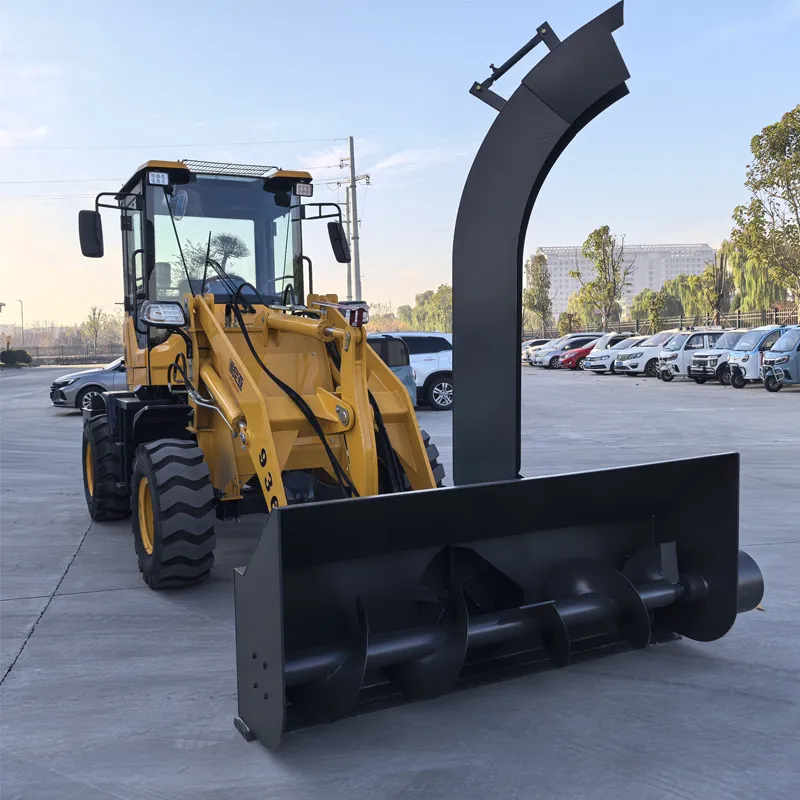
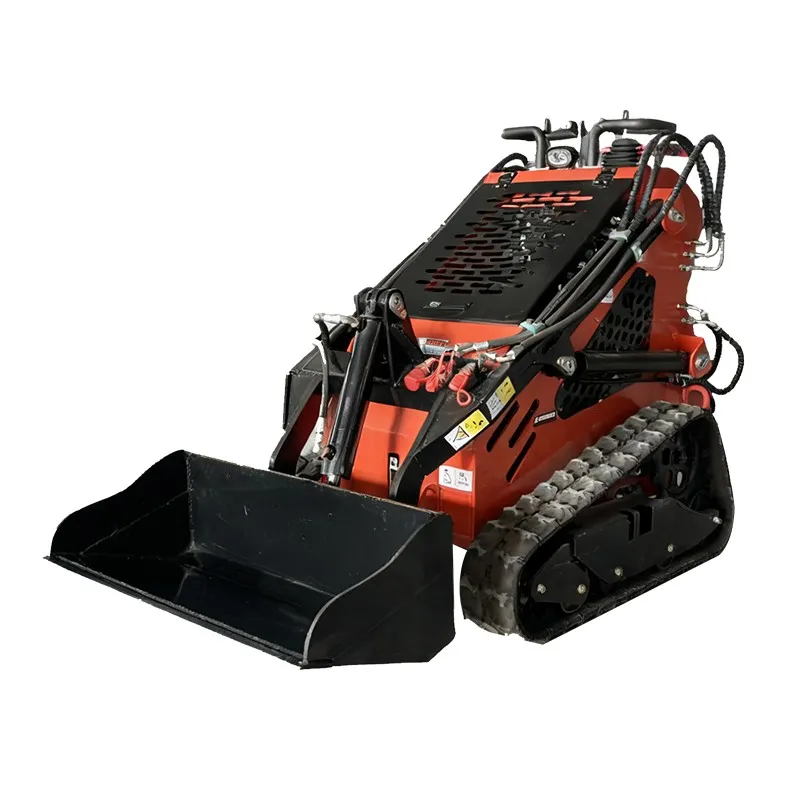
Mini Wheel Loader
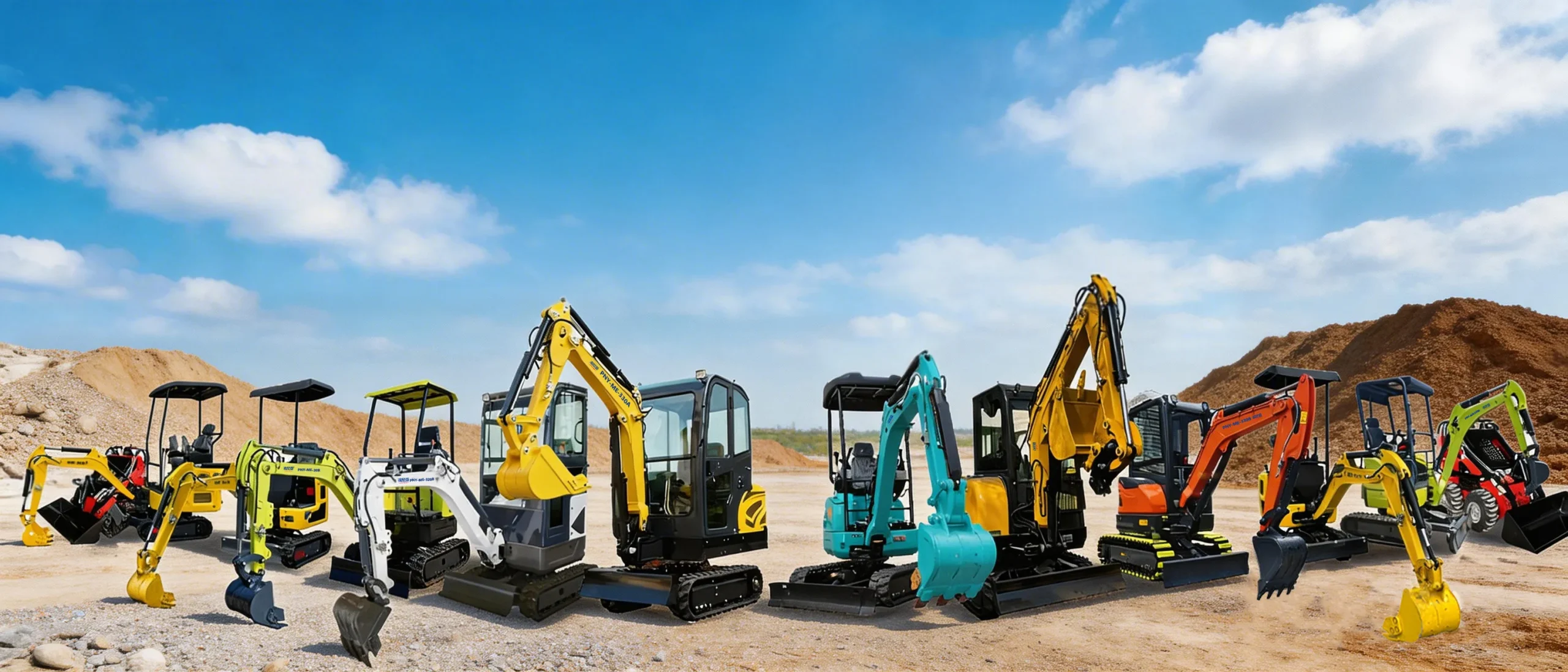
Look, everyone talks about compactness and versatility, but the real story with a Mini Wheel Loader isn't in the brochure specs. It's in the mud, the tight spaces, and the 10-hour days where the wrong choice costs you thousands. Too many guys see the small size and think it's just a toy, a sidekick to the big machines. That's the first mistake. A proper mini loader isn't a downgrade; it's a different tool for a different kind of battlefield, often more demanding because you're asking it to do precise, punishing work in places a skid steer would just get stuck.
Beyond the Spec Sheet: The On-Ground Reality
When I first started sourcing these machines, I was obsessed with lift capacity and horsepower. You learn quickly that those numbers are almost meaningless without context. A machine might list a 1-ton lift, but can it actually do that with the bucket at full height without tipping forward? Probably not. The real test is stability on a slight incline with a damp load of gravel. That's where you see the difference between a boxy frame with a wide wheelbase and a cheaper, narrower model. The good ones, like some units I've seen from manufacturers who focus on core structure, feel planted. The bad ones get nervous, and you're constantly feathering the hydraulics, which kills your cycle time.
Then there's the attachment system. Quick couplers are standard now, but not all are created equal. I've had pins seize up after a month in wet conditions because the grease fittings were placed where no mechanic's arm could reach. A smart design considers serviceability. You start noticing things like whether the hydraulic lines for attachments are routed internally through the boom arms or just strapped on the outside where they get snagged. It's these details that separate a machine built for a catalog from one built for a job site.
We once tried a batch of loaders for a landscaping contractor. The specs were perfect on paper. But the auxiliary hydraulic flow rate was just a bit too low for the trencher attachment they used most. The machine would stall, or the trencher would move at a crawl. It wasn't a failure, but it made the machine practically useless for their primary task. You have to match the machine to the actual work, not the other way around. That's a lesson you only learn by putting iron on dirt.
The Manufacturing Mindset: Where Reliability is Built
This is where the origin story matters. A factory that's been iterating on the same core designs for decades has a different approach than a new assembly line just following drawings. There's institutional knowledge in the welding shop, in how they stress-relieve frames, in the brand of bearings they default to. I've visited plants where the difference was palpable. One that comes to mind is Shandong Pioneer Engineering Machinery Co., Ltd. You can check their footprint at https://www.sdpioneer.com. They've been at this since 2004, and that history shows. They didn't just spring up overnight.
Their recent move to a new facility in Ningyang in 2023 isn't just about more space—it's about refining a process they've honed for nearly 20 years. When a company like that, operating through Shandong Hexin for manufacturing and Shandong Pioneer for overseas trade, consistently gets its products into tough markets like the US, Canada, and Australia, it's not a fluke. Those markets have brutal standards for reliability and parts support. A machine that survives on a farm in Australia or a construction site in Germany has passed a real-world test no lab can fully simulate.
What you're looking for in a manufacturer is evidence of learning. Have they fixed the common failure points from five years ago? On some older Pioneer models, for instance, the focus was on rugged simplicity. The newer iterations I've seen integrate better sealing for the electronics and more accessible service points. That's a direct response to field feedback from those global customers they mention. It's an evolution, not a revolution, which is what you want in heavy equipment.
The Operator's Caveats: Power, Precision, and Pain Points
Let's talk about the operator environment. A mini loader isn't a bulldozer; the operator is right on top of the action. Noise, vibration, and control layout are everything. A joystick that's slightly too stiff leads to operator fatigue by lunchtime. I prefer pilot-controlled hydraulics over mechanical linkages—they're smoother and less prone to wear. But even then, the feel is crucial. Can the operator sense the bucket digging in, or is the feedback numb? A good machine talks to you. A bad one just shakes and groans.
Another pain point everyone discovers the hard way: cooling systems. In a compact machine, everything is packed tight. Radiators for the engine and hydraulic oil get clogged with dust, chaff, or mulch in minutes. The best designs I've worked with have reversible fans or easy-to-clean, layered cores. I've seen machines shut down on a hot day not because of a lack of power, but because the radiator was a nightmare to access and clean. Now, when I evaluate a loader, I spend as much time looking at the service access panels as I do at the engine.
Precision work is another killer app for a good Mini Wheel Loader. We used one for indoor demolition and material handling in a warehouse retrofit. The tight turning radius and smooth low-speed control were worth their weight in gold. But it required a variable displacement hydraulic pump to avoid herky-jerky movements. Not all mini loaders have that; some use cheaper fixed-flow systems. The difference in control for placing a pallet of tiles exactly where you want it is night and day. It's a spec that's rarely highlighted but defines the machine's capability for delicate tasks.
The Global Test: Adapting to Unforgiving Conditions
Exporting machinery isn't just about shipping containers; it's about adaptation. A loader that works fine in a temperate climate might have its hydraulic hoses crack in a Canadian winter or its air filter choke in Middle Eastern dust. Manufacturers that succeed internationally build in tolerance. This might mean sourcing seals from a different supplier, specifying a different grade of hydraulic oil for different regions, or offering optional heavy-duty air pre-cleaners.
The fact that companies like Pioneer have their products operating in such diverse environments—from the cold of Canada to the dust of Australia—tells me their engineering accounts for variance. It's not one-size-fits-all; it's a robust platform that can be specified for local conditions. This is critical for an end-user. You need to know that the machine you're buying, even if it's a standard model, comes from a lineage that's been tested in extremes. It's about the supply chain and the engineering philosophy as much as the final product.
I recall a shipment to a logging operation in the Pacific Northwest. The standard tires were useless in the deep mud. The local dealer, working with the factory, had a kit for wider, more aggressive tires and even different weight distribution recommendations. That level of application-specific support doesn't come from a company that just slaps a logo on a generic machine. It comes from accumulated field knowledge and a supply chain that can support customization. That's the hidden value in a long-established manufacturing and trade operation.
The Bottom Line: Value Versus Cost
In the end, the conversation always circles back to cost. But with mini loaders, the cheapest upfront price is almost always the most expensive long-term. Downtime is the killer. A $5,000 savings evaporates when the machine is down for two weeks waiting for a proprietary hydraulic valve that's on a slow boat from somewhere. You need to evaluate the total cost of ownership: part availability, dealer network strength, and the machine's known failure intervals.
A reliable machine from a seasoned manufacturer might have a higher sticker price, but it holds its value. Its design is proven, its parts are accessible, and its weaknesses are documented and often addressed in later models. When you see a company that has grown from a 1,600 square meter facility to a major new plant over two decades, it's a safe bet they're doing something right. They've survived the market's filter by building machines that people come back to.
So, when you're looking at a Mini Wheel Loader, don't just look at it. Think about the mud it'll sit in, the 95-degree heat it'll work through, the operator who'll curse or praise it, and the mechanic who has to fix it. The right machine disappears into the work, becoming just an extension of the job that needs doing. The wrong one becomes the job itself. That's the real choice you're making.
Related Products
Related Products