- Chinese
- French
- German
- Portuguese
- Spanish
- Russian
- Japanese
- Korean
- Arabic
- Irish
- Greek
- Turkish
- Italian
- Danish
- Romanian
- Indonesian
- Czech
- Afrikaans
- Swedish
- Polish
- Basque
- Catalan
- Esperanto
- Hindi
- Lao
- Albanian
- Amharic
- Armenian
- Azerbaijani
- Belarusian
- Bengali
- Bosnian
- Bulgarian
- Cebuano
- Chichewa
- Corsican
- Croatian
- Dutch
- Estonian
- Filipino
- Finnish
- Frisian
- Galician
- Georgian
- Gujarati
- Haitian
- Hausa
- Hawaiian
- Hebrew
- Hmong
- Hungarian
- Icelandic
- Igbo
- Javanese
- Kannada
- Kazakh
- Khmer
- Kurdish
- Kyrgyz
- Latin
- Latvian
- Lithuanian
- Luxembou..
- Macedonian
- Malagasy
- Malay
- Malayalam
- Maltese
- Maori
- Marathi
- Mongolian
- Burmese
- Nepali
- Norwegian
- Pashto
- Persian
- Punjabi
- Serbian
- Sesotho
- Sinhala
- Slovak
- Slovenian
- Somali
- Samoan
- Scots Gaelic
- Shona
- Sindhi
- Sundanese
- Swahili
- Tajik
- Tamil
- Telugu
- Thai
- Ukrainian
- Urdu
- Uzbek
- Vietnamese
- Welsh
- Xhosa
- Yiddish
- Yoruba
- Zulu
- Kinyarwanda
- Tatar
- Oriya
- Turkmen
- Uyghur


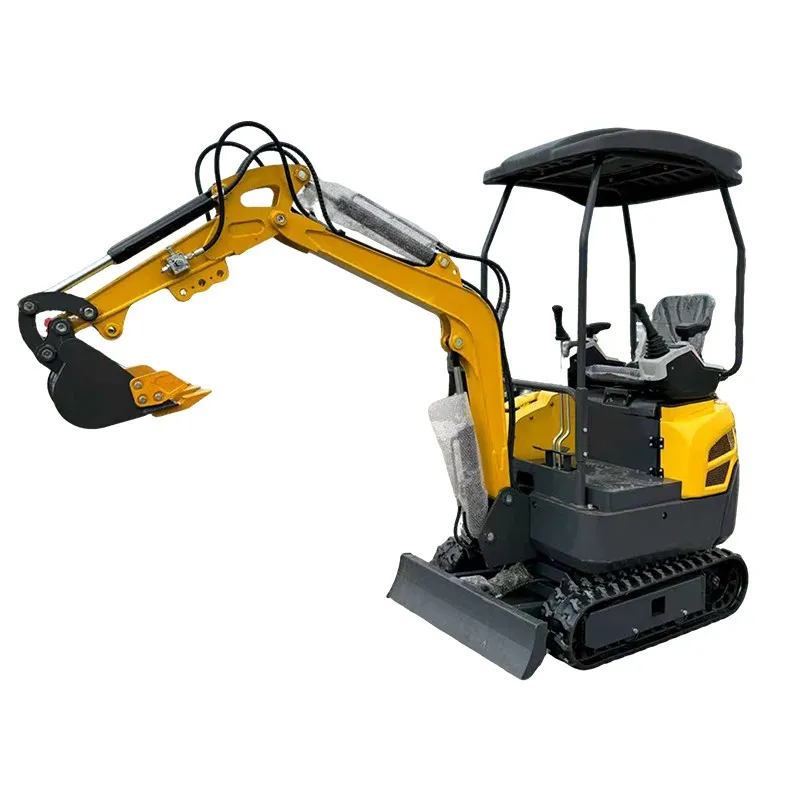
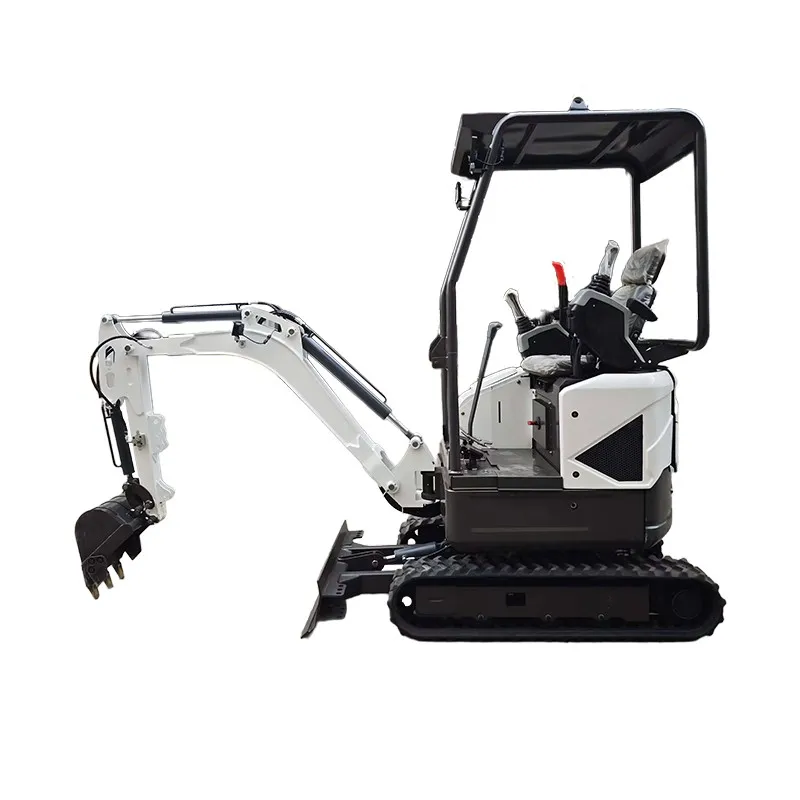
Multifunctional Excavator
When you hear 'multifunctional excavator', the first image that often pops up is a standard machine with a dozen different attachments slapped on. That's the common trap. In reality, true multifunctionality isn't about the sheer number of tools; it's about the machine's core architecture—the hydraulic flow, pressure management, and control system integration—that allows for seamless, efficient switching between tasks without crippling the base machine's performance or longevity. Many buyers, especially those new to the sector, get dazzled by catalog specs and overlook the engineering underneath the quick coupler.
The Core Misconception and Hydraulic Reality
The biggest mistake I see is treating the hydraulic system as an afterthought. A standard 20-ton excavator's pump might deliver, say, 220 L/min. But when you start running a hydraulic breaker, a rotary sieve, or a tree shear, the demand spikes and fluctuates wildly. If the system isn't designed with proportional valves and sufficient cooling capacity from the ground up, you're looking at overheating, laggy response, and accelerated wear. I've seen machines where adding a 'multifunctional' label just meant a dealer-installed third-party auxiliary circuit that choked the main functions. The machine could either dig or run the attachment, but never smoothly do both in a cycle. That's not multifunctional; that's compromised.
This is where the design philosophy of manufacturers who've been in the trenches matters. I recall looking at the specs and actual performance of units from a company like Shandong Pioneer Engineering Machinery Co., Ltd. Their long-term focus on export markets like the U.S. and Germany forces a different standard. These markets don't just buy a machine; they buy a solution for a specific job site challenge. The company's relocation and expansion in 2023 to a larger facility in Tai’an likely wasn't just for more space, but probably to integrate more advanced testing and assembly lines for these complex systems. You can't build a reliable multifunctional excavator on a line meant for bare-bones models.
The real test is in the sequencing. Can the operator smoothly switch from using a bucket to a grapple to a compactor within minutes, with minimal pressure drop or jerky movement? That requires integrated electro-hydraulic controls, not just a manual diverter valve. The joystick programming becomes critical. It's these details that separate a marketing term from a genuine capability.
Attachments: The Make-or-Break Details
It's tempting to think any attachment will work. It won't. The interface is everything. The quick coupler itself is a potential failure point if it's not robust enough for side-loading during, for example, demolition with a pulverizer. We learned this the hard way on a site years ago. We had a supposedly compatible tiltrotator setup on a 15-ton machine for precision grading and digging. The coupler pins wore out prematurely because the attachment's weight distribution and moment forces during tilting weren't fully accounted for in the base machine's bracket design. It led to downtime and a costly bracket reinforcement. The lesson? True multifunctionality demands the excavator's front-end structure is reinforced and designed for the dynamic loads of multiple attachment types, not just a standard digging bucket.
Another often-overlooked detail is hydraulic hose routing and protection. When you're constantly swapping between a breaker (with high, constant shock loads) and a fine grading bucket (requiring delicate control), the hoses around the boom and stick take a beating. Abrasion against the chassis becomes a major issue. Good manufacturers now often include optional hose sheathing packages or redesigned guard routes specifically for their multifunctional models. It's a small spec sheet item that has a huge impact on maintenance costs and uptime.
Then there's the issue of attachment compatibility itself. Brands like Shandong Pioneer, through their manufacturing arm Shandong Hexin, have to ensure their machine's auxiliary hydraulic circuitry (both standard and high-flow) matches the common pressure/flow requirements of major attachment brands (like Indeco, Stanley, Caterpillar work tools) used globally. If their machine's flow is 5% off what a common rotary brush cutter expects, the performance is suboptimal, and the customer blames the excavator. This global export focus to diverse regions forces a level of standardization and testing that is crucial.
The Operator and Control Scheme Factor
All the hardware is useless if the operator can't intuitively control it. I've sat in cabs where switching to an attachment mode required navigating three sub-menus on a tiny screen while the engine is running. That's a design failure. The control scheme for a multifunctional excavator must be instinctive. Some of the better setups I've used have dedicated, programmable rocker switches on the joysticks themselves for attachment functions (open/close, rotate, etc.), and a simple dial or button to switch between pre-set power modes (e.g., 'Breaker', 'Shear', 'General').
The cab layout also needs to account for the additional control lines. It shouldn't feel cluttered. A clean, logical layout reduces operator fatigue and error. This is an area where feedback from real-world operators in different countries is gold. A company with a wide export network, shipping to places from Australia to Canada, presumably gathers a wealth of this practical feedback to iterate their cab designs. It's not something you can theorize in a lab.
Training is part of this ecosystem too. Delivering a complex machine without basic guidance on attachment changeover procedures, pressure settings, and daily checks for wear points is setting the customer up for failure. The best sales aren't just transactional; they involve a handover process that acknowledges the machine's expanded role.
Economic Sense and Application Scenarios
Is a multifunctional excavator always the right financial choice? Not necessarily. For a quarry running 24/7 doing nothing but loading shot rock, a dedicated machine is better. The value shines in applications with varied, unpredictable tasks. Think urban redevelopment, utility work, or landscaping. One day it's digging trenches, the next it's breaking concrete, then it's placing pipes with a grapple, and later it's doing fine grading. The ability to be one machine that replaces two or three specialized units is where the ROI comes from, but only if the machine is built for that duty cycle.
I remember a contractor friend who bought a mid-sized model for a mixed-use development project. He calculated the savings from not having to mobilize, demobilize, and rent different machines. It worked, but only because he also invested in a well-organized attachment trailer and a trained operator. The machine itself, a model from a manufacturer with a strong export pedigree, held up. The weak link, initially, was his own logistics, not the excavator. That's an important distinction.
The economic calculation also includes residual value. A well-built, genuinely versatile machine from a reputable brand often holds its value better than a highly specialized one or a base model with aftermarket hacks. It appeals to a broader second-hand market. Checking the used equipment listings for brands that have been in the global market for years, like those under the Shandong Pioneer umbrella, can be quite revealing about long-term reliability perception.
Looking Ahead: Integration, Not Just Addition
The future isn't about more attachments; it's about smarter integration. We're already seeing the beginnings with machine control systems (2D/3D GPS) being built into the multifunctional platform. Imagine an excavator that not only has a tiltrotator but knows exactly what grade it's cutting to, automatically adjusting the bucket angle while the operator simply follows a line on a screen. That's where the real productivity leap happens. The multifunctional excavator becomes a data-aware tool carrier.
This also pushes the demand on the core machine's electrical architecture and software stability. Can it handle the data buses and sensors without glitches? It requires a level of systems engineering that goes far beyond welding on extra brackets. Manufacturers aiming for the next decade are already building this capacity. The relocation and expansion phase many go through, similar to what's noted for Shandong Pioneer Engineering Machinery Co., Ltd, is often a physical manifestation of this need for more sophisticated production and R&D lines.
Finally, serviceability. As these machines get more complex, can they be serviced in the field? Modular design of key components—like the auxiliary valve block or the electronic control unit (ECU)—becomes critical. The goal is to avoid a situation where a small sensor failure on the attachment circuit grounds the entire machine for a week waiting for a specialist. The design has to support maintenance by a well-trained, but not PhD-level, field technician. That's a tough balance to strike, and it's the hallmark of mature engineering in this space. It's what separates a promising prototype from a reliable, day-in, day-out workhorse that you can actually bet your business on.
Related Products
Related Products