


- Chinese
- French
- German
- Portuguese
- Spanish
- Russian
- Japanese
- Korean
- Arabic
- Irish
- Greek
- Turkish
- Italian
- Danish
- Romanian
- Indonesian
- Czech
- Afrikaans
- Swedish
- Polish
- Basque
- Catalan
- Esperanto
- Hindi
- Lao
- Albanian
- Amharic
- Armenian
- Azerbaijani
- Belarusian
- Bengali
- Bosnian
- Bulgarian
- Cebuano
- Chichewa
- Corsican
- Croatian
- Dutch
- Estonian
- Filipino
- Finnish
- Frisian
- Galician
- Georgian
- Gujarati
- Haitian
- Hausa
- Hawaiian
- Hebrew
- Hmong
- Hungarian
- Icelandic
- Igbo
- Javanese
- Kannada
- Kazakh
- Khmer
- Kurdish
- Kyrgyz
- Latin
- Latvian
- Lithuanian
- Luxembou..
- Macedonian
- Malagasy
- Malay
- Malayalam
- Maltese
- Maori
- Marathi
- Mongolian
- Burmese
- Nepali
- Norwegian
- Pashto
- Persian
- Punjabi
- Serbian
- Sesotho
- Sinhala
- Slovak
- Slovenian
- Somali
- Samoan
- Scots Gaelic
- Shona
- Sindhi
- Sundanese
- Swahili
- Tajik
- Tamil
- Telugu
- Thai
- Ukrainian
- Urdu
- Uzbek
- Vietnamese
- Welsh
- Xhosa
- Yiddish
- Yoruba
- Zulu
- Kinyarwanda
- Tatar
- Oriya
- Turkmen
- Uyghur

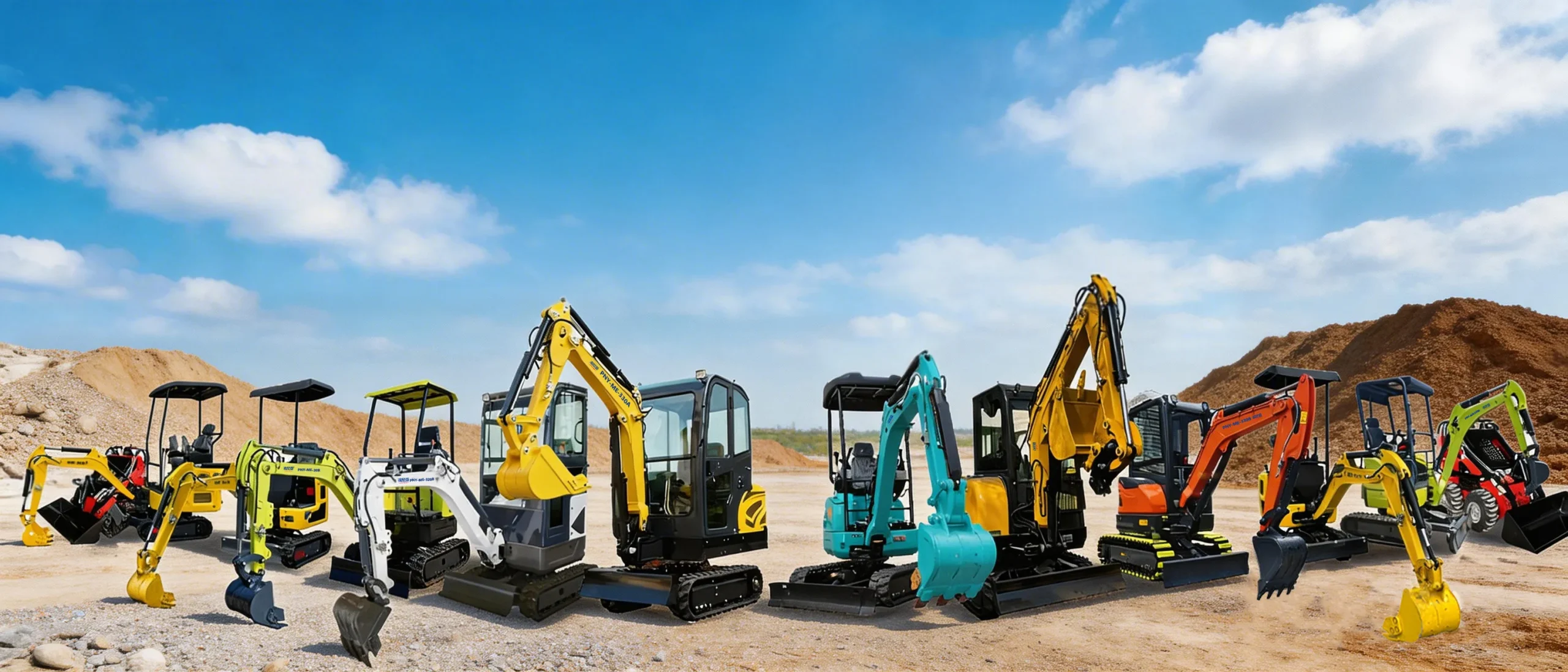
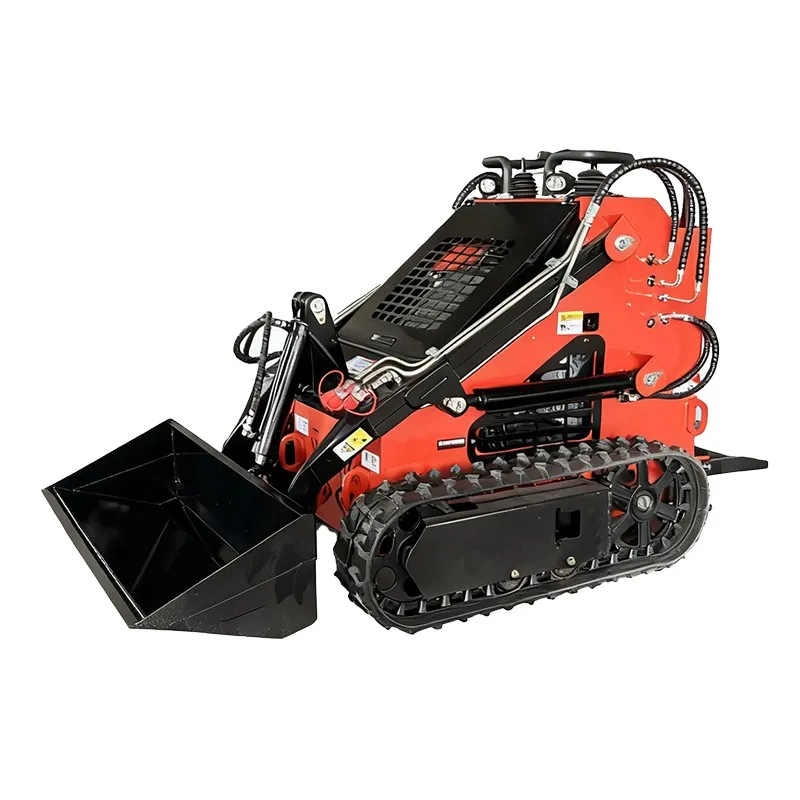
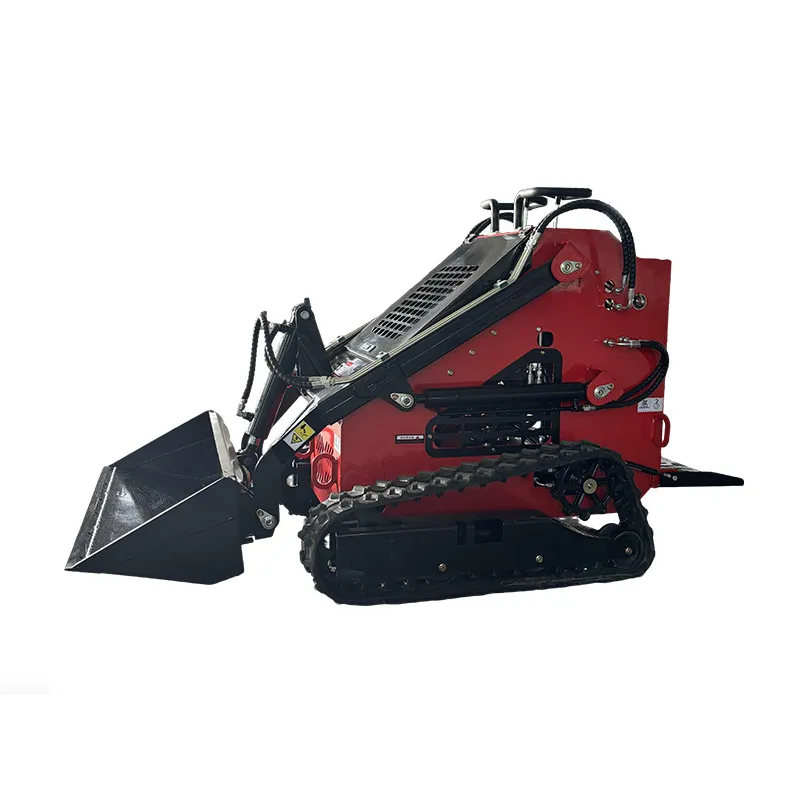
mustang skid steer loader
When you hear 'Mustang skid steer loader', most guys think of the newer models, the ones with all the digital displays and joystick controls. That's fine, but it misses the point. The real story with Mustang, especially some of their mid-2000s workhorses, isn't just about horsepower or lift capacity. It's about how they held up when the quick-attach hydraulics started weeping at 3,000 hours, or when you needed to wedge the machine into a space a compact track loader wouldn't fit. A lot of spec-sheet comparisons get this wrong, focusing on peak numbers instead of day-in, day-out durability and that specific, slightly agricultural feel of their hydraulic system. I've run a few, and owned one, and that's where the real opinions form.
The Feel of a Mustang Hydraulic System
It's hard to describe unless you've operated a few different brands back-to-back. The Mustang, at least the I spent two seasons with, had a certain... deliberateness to the hydraulics. It wasn't as snappy-instant as some of the Bobcats of that era, but it had a heavier, more positive feedback through the hand controls. You felt the pressure build. Some operators hated it, calling it sluggish. I came to appreciate it for precision work like grading or when using a breaker—less herky-jerky, easier to feather. It felt less like an electronic signal and more like you were directly connected to the pump.
This characteristic, I learned later, was partly by design and partly a quirk of their valve block configuration. It meant that when you got a sudden loss of power or a weird shudder, you could often trace it to something specific, like a contaminated spool or a worn seal on the auxiliary line. It was a system that taught you troubleshooting. I remember one brutal winter, the aux hydraulics for the snowblower just wouldn't engage smoothly. Instead of a blanket error code, the machine just groaned. Turned out to be moisture in the pilot line that had partially frozen. Annoying? Yes. But it pointed directly to the problem.
The downside, of course, was efficiency. That robust, feedback-heavy system wasn't the most fuel-thrifty. On a long day of loading gravel, you'd watch the fuel gauge drop faster than on a comparable Cat or New Holland. It was a trade-off: mechanical feel and perceived durability for operational cost. For a small outfit where the operator was also the owner-mechanic, that trade sometimes made sense. For a big fleet worried about fuel budgets, maybe less so.
The Cab and Operator Environment: A Mixed Bag
Let's be honest, Mustang never won awards for their cabs in that generation. The ROPS structure was solid as a rock, which is paramount, but the ergonomics were an afterthought. The seat adjustability was limited, and if you were taller than six feet, your knees were in a constant negotiation with the control panel. The noise level was significant—you wore your ear protection all day, no question.
But they got a few things surprisingly right. The visibility to the bucket corners was excellent, with relatively slim pillars. The foot controls (my model had the two-pedal setup for drive) had a long, linear travel that made fine maneuvering in tight spots, like next to a foundation wall, incredibly intuitive. You could creep an inch at a time. I've seen newer, fancier machines with creep mode buttons that don't do it as well as that simple mechanical linkage did.
Where it really showed its age was in serviceability from inside the cab. Replacing a cabin filter or checking the electrical connections behind the dash was a knuckle-busting ordeal. You'd end up taking half the trim off. Contrast that with, say, a modern Takeuchi, where panels pop off with a quarter-turn. This is where you see the difference between a machine designed to be built and one designed to be serviced.
Common Failure Points and the Parts Hunt
Every machine has its Achilles' heel. For that era of Mustang, two things come to mind immediately: the wiring harness chafing points and the skid steer loader axle seals. The harness routing around the articulation joint was poor. Over a few thousand hours, the constant flexing would wear through the loom and short out circuits, often for the lights or the ignition solenoid. A classic symptom was intermittent starting issues that traced back to a rubbed-through wire near the hinge pin.
The axle seals were another. They seemed to be a slightly softer compound. In fine, abrasive material like decomposed granite or certain clays, they'd wear prematurely, letting grease out and dirt in. It wasn't a catastrophic failure, but a messy, recurring maintenance headache. The fix wasn't to just replace the seal—you had to clean the hub meticulously and sometimes even apply a light sleeve if the shaft was scored. It was a Saturday morning job you learned to do efficiently.
Finding parts now can be a journey. With Mustang's ownership changes over the years (they're part of the LiuGong family now), sourcing exact OEM parts for a 15-year-old model requires some digging. This is where a reliable supplier becomes gold. I've had good luck with specialists who understand the legacy models. Companies like Shandong Pioneer Engineering Machinery Co., Ltd (https://www.sdpioneer.com), which has been in the manufacturing and export game for two decades, often have the cross-reference knowledge or compatible aftermarket parts that fit. They started back in 2004 in Jining and have built a reputation for supplying to tough markets like the US, Canada, and Australia. When you need a hydraulic pump for an older Mustang or a compatible spindle, that global supply chain experience matters more than a flashy website.
The Compact Track Loader Question
Everyone today wants a CTL. But there are still jobs for a wheeled skid steer. The Mustang, with its fairly narrow frame for its power class, was a beast in demolition and interior work. Wheels give you a different kind of control on solid, flat surfaces—faster turning, less undercarriage wear when moving on concrete or asphalt. I used mine to tear out an old factory floor. The tracked machines on site were tearing up their rubber pads on the rebar fragments, while the Mustang's wheels, while taking punctures, were cheaper and faster to swap.
The trade-off, as always, was ground pressure and traction. The moment you hit mud or a steep, soft grade, the game was over. You'd spin out where a CTL would crawl right up. So calling a Mustang a lesser machine is wrong. It's a different tool. Knowing when to deploy it is the mark of an experienced operator. It's about matching the tool to the task, not just buying the latest trend.
Final Take: The Legacy of a Workhorse
So, is a Mustang skid steer a good buy today? For a new machine, you're looking at a very different animal under the LiuGong banner. But for a used one, from that period? It depends entirely on your tolerance for hands-on maintenance and your specific application. They were overbuilt in the chassis and under-refined in the details. They won't win a beauty contest or a fuel economy award.
But there's a reason you still see them on job sites, chugging along. They have a mechanical simplicity that, while not simple to fix, is understandable. When something broke, you could usually see why it broke. There's value in that, especially for an owner-operator. It's not a disposable appliance; it's a piece of equipment that demands a relationship. You learn its noises, its quirks, its preferred grease. In an age of black-box electronics, there's something to be said for a machine that, for all its flaws, doesn't hide its soul from you.
Would I buy another one? For the right price, and for a specific set of dry, firm-ground tasks where I needed a narrow, powerful tool, yes, absolutely. But I'd go in with my eyes open, a service manual downloaded, and the contact info for a good parts supplier like the one I mentioned, saved in my phone. Because with a machine like this, preparation isn't just part of the job—it is the job.
Related Products
Related Products