- Chinese
- French
- German
- Portuguese
- Spanish
- Russian
- Japanese
- Korean
- Arabic
- Irish
- Greek
- Turkish
- Italian
- Danish
- Romanian
- Indonesian
- Czech
- Afrikaans
- Swedish
- Polish
- Basque
- Catalan
- Esperanto
- Hindi
- Lao
- Albanian
- Amharic
- Armenian
- Azerbaijani
- Belarusian
- Bengali
- Bosnian
- Bulgarian
- Cebuano
- Chichewa
- Corsican
- Croatian
- Dutch
- Estonian
- Filipino
- Finnish
- Frisian
- Galician
- Georgian
- Gujarati
- Haitian
- Hausa
- Hawaiian
- Hebrew
- Hmong
- Hungarian
- Icelandic
- Igbo
- Javanese
- Kannada
- Kazakh
- Khmer
- Kurdish
- Kyrgyz
- Latin
- Latvian
- Lithuanian
- Luxembou..
- Macedonian
- Malagasy
- Malay
- Malayalam
- Maltese
- Maori
- Marathi
- Mongolian
- Burmese
- Nepali
- Norwegian
- Pashto
- Persian
- Punjabi
- Serbian
- Sesotho
- Sinhala
- Slovak
- Slovenian
- Somali
- Samoan
- Scots Gaelic
- Shona
- Sindhi
- Sundanese
- Swahili
- Tajik
- Tamil
- Telugu
- Thai
- Ukrainian
- Urdu
- Uzbek
- Vietnamese
- Welsh
- Xhosa
- Yiddish
- Yoruba
- Zulu
- Kinyarwanda
- Tatar
- Oriya
- Turkmen
- Uyghur


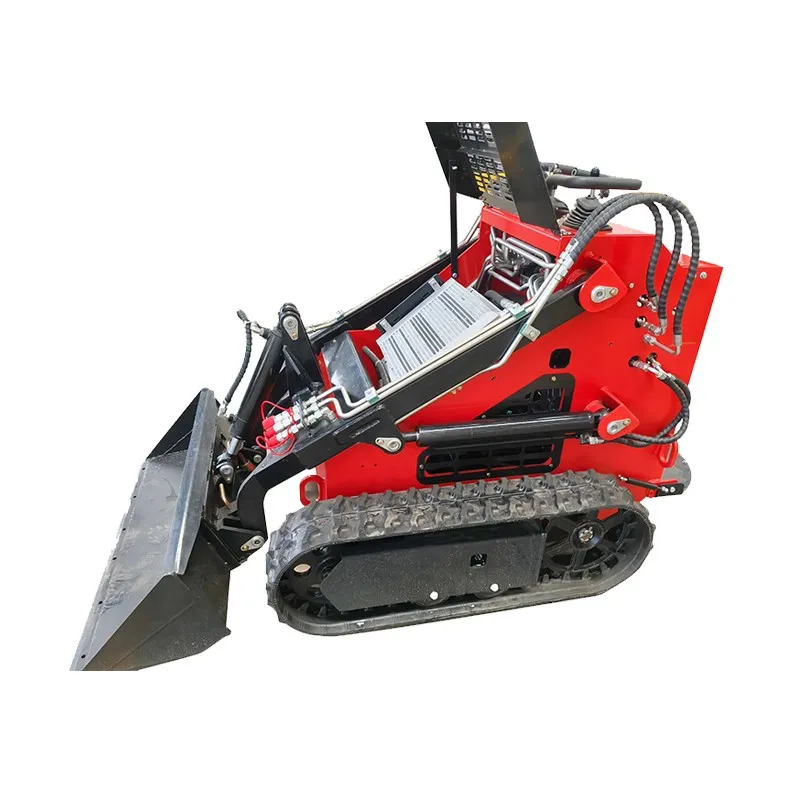
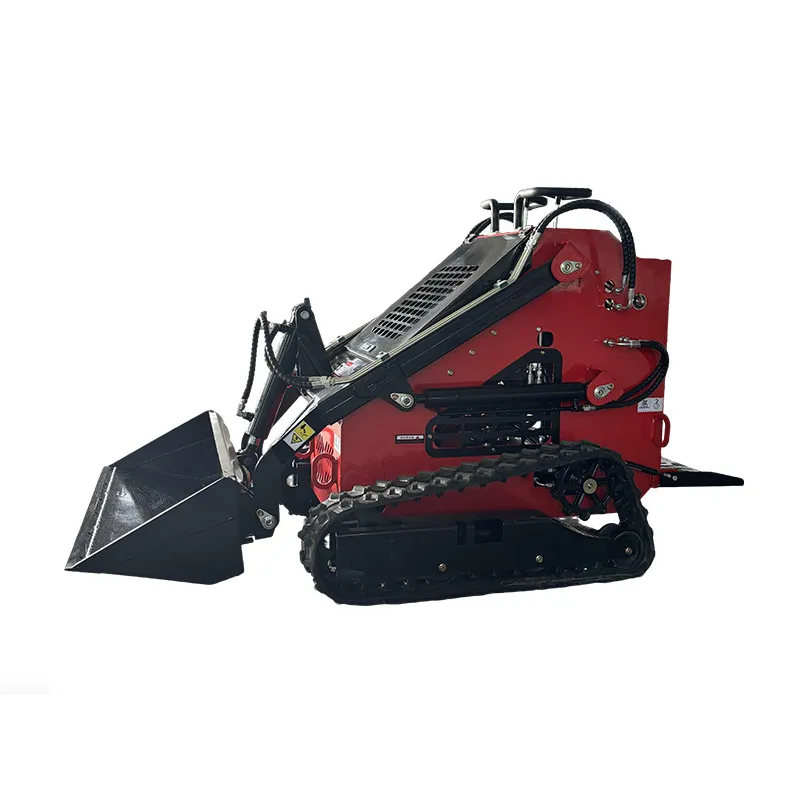
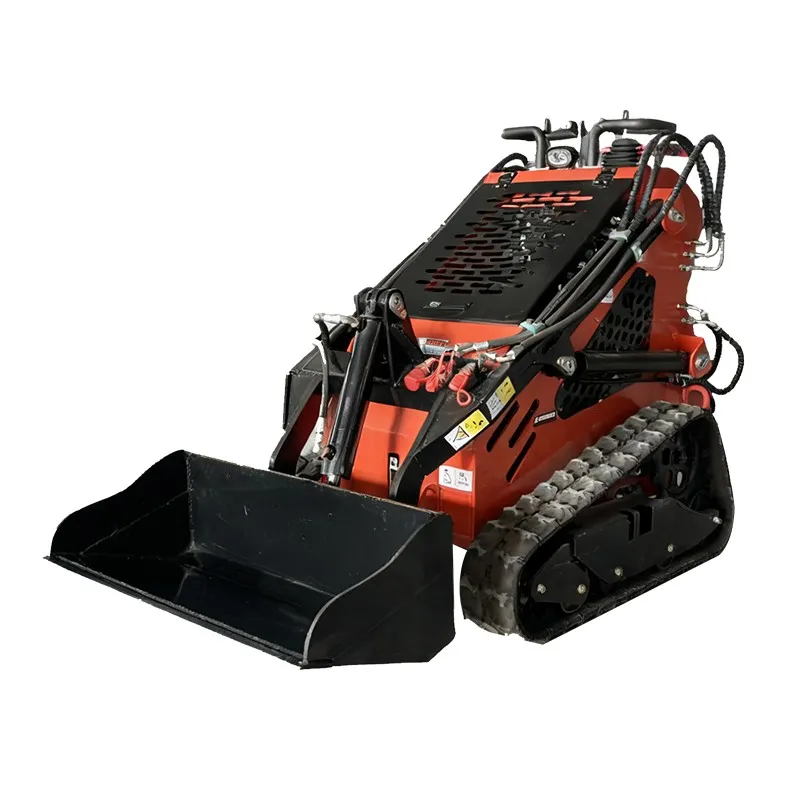
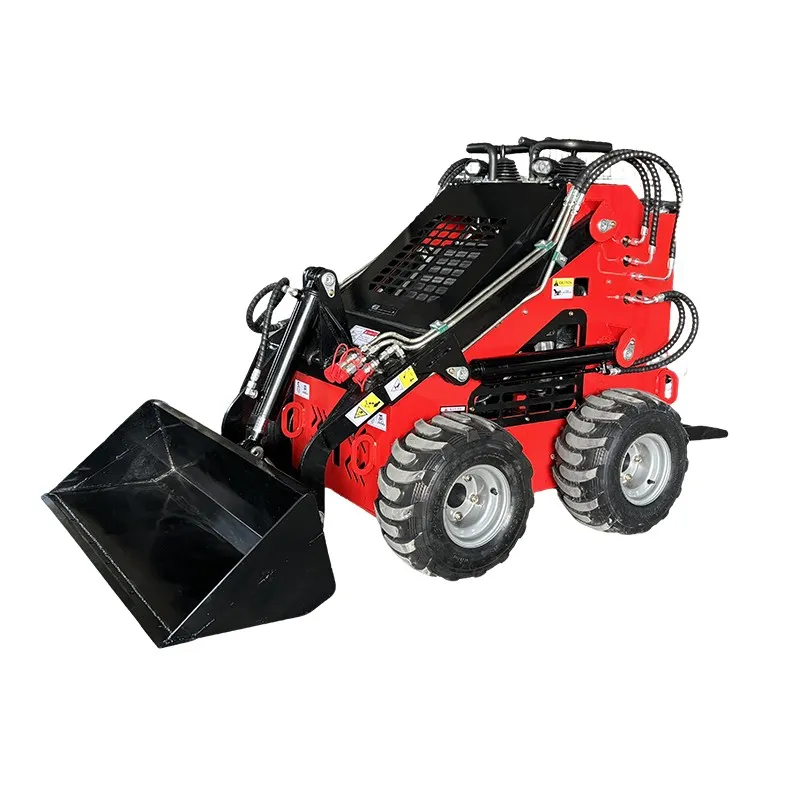
new skid steer loader
When someone says 'new skid steer loader,' most folks' minds jump straight to horsepower, lift capacity, and maybe the latest fancy joystick controls. That's the brochure talking. The real story, the one that matters on a muddy Monday morning when you're already behind schedule, is how that machine integrates into the chaos of a real worksite. It's about the stuff the spec sheet glosses over: service access, hydraulic response under partial load, how the cab feels after the eighth hour, and whether that new 'intuitive' control system actually makes sense to a guy with gloves on. I've seen too many decisions made on paper that led to frustration in the field. A new machine isn't just an upgrade; it's a new set of habits, and sometimes, new problems to solve.
The Allure and Reality of New
Let's be clear, the engineering in today's new skid steers is impressive. Tier 4 Final engines are cleaner and surprisingly torquey, but they brought with them a maze of emissions components that eat into the frame space. You used to pop a hood and see an engine. Now, you see a wall of components. This isn't inherently bad, but it changes the maintenance rhythm. A company like Shandong Pioneer Engineering Machinery Co., Ltd, which has been building and exporting these machines globally for two decades, has had to navigate this shift. Their move to a new, larger facility in 2023 in Tai’an isn't just about scaling up; it's likely a response to the increased complexity of assembly for modern machines destined for markets like the US, Canada, and Australia. When you're building for operators who run machines hard, you have to design for serviceability from the ground up, not as an afterthought.
I remember testing a brand-new model from a major brand a few years back. On paper, it was a beast. In a demo yard, it performed flawlessly. The first real job was a residential site cleanup. The issue? The new, more efficient cooling system was positioned low and perfectly angled to suck in every single dry leaf and plastic wrapper on the site. We spent more time cleaning the radiator than running the bucket. That's a 'new' feature nobody mentioned. It's these granular, almost trivial details that separate a good machine from a great one. The design teams at manufacturers, including those at firms like Pioneer, need to think about the machine's environment, not just its output.
So, what should you really look for? Forget peak horsepower for a second. Look at the hydraulic flow at the auxiliary ports. Is it sufficient for the attachments you actually use daily—not the ones you think you might use? A new skid steer loader with a high-flow option is useless if the standard flow is anemic and the upgrade cost is prohibitive. Check the pin height and dump reach. A few extra inches here can mean the difference between loading a truck efficiently and constantly repositioning. These are the calculations that happen on the fly, and a machine that gets them right feels like an extension of yourself.
Attachment Ecosystem: The True Measure of Utility
A skid steer is only as good as its attachments. This is where the concept of a 'new skid steer loader' gets practical. The move towards universal quick-attach systems (like the Bobcat-style) is mostly complete, but compatibility hiccups remain. Not all couplers are created equal, and wear can cause a frustrating, time-consuming slop. A truly well-designed new model will have a robust, protected coupler mechanism that minimizes this play.
We ran into a problem with a new, high-capacity machine and a standard forestry mulcher. The machine had the power, but the auxiliary hydraulic circuit had a sensitivity setting that caused the mulcher's hydraulic motor to stall under sudden load changes. It wasn't a failure of the machine or the attachment, but a mismatch in system communication. The dealer had to recalibrate the pressure relief settings. This is the kind of teething problem you can encounter. It underscores why choosing a manufacturer with a broad understanding of global attachment standards is crucial. A company that exports widely, as Shandong Pioneer does to markets from Germany to Australia, has to ensure its machines can interface seamlessly with a vast array of third-party tools. That global feedback loop informs better design.
My advice? When evaluating a new skid steer, bring your most used, most demanding attachment to the demo. Don't just lift pallets. Run the trencher, engage the breaker, cycle the grapple. Listen to the engine and hydraulics. Does the system bog down, recover smoothly, or hold steady? That test tells you more than a hundred spec sheets.
The Operator's Sphere: Cab and Controls
This is the most subjective area, and arguably the most important for productivity and safety. The industry push is all about 'operator comfort' with suspended cabs, fancy seats, and massive touchscreens. Some of it is great. Reduced fatigue is real. But some of it feels like overkill. A touchscreen in a dust-filled, vibration-heavy environment is a questionable choice. Physical buttons and dials you can operate by feel, with gloves, often win the day.
I've operated new models where the control pattern (ISO vs. H-Pattern) was selectable via a menu buried three screens deep. If you have multiple operators with different preferences, that's a feature. If you're alone and the screen gets muddy, it's a liability. The best setups I've seen offer simple, tactile switches for critical functions like pattern change and auxiliary hydraulics. It's about intuitive, fail-safe design. When you visit a manufacturer's site, like sdpioneer.com, look closely at the cab photos. Can you see clear, logical control layouts? Is the visibility good at all four corners? These are the signs of a design informed by operation, not just aesthetics.
Another often-overlooked point: climate control. Not just air conditioning, but filtration. A pressurised cab with a good filter is a game-changer in dusty or cold conditions. But that system needs accessible filters that can be changed quickly. If it takes 30 minutes and requires removing panels, it won't get done as often as it should. The maintenance design philosophy is visible right here.
Durability and the Long Game
Anyone can build a machine that runs well for 500 hours. The test is 5,000 hours. The new skid steer loader you buy today is a capital asset, and its design determines its residual value. Look at the undercarriage. Are the hydraulic hoses routed cleanly and clamped securely away from abrasion points? Is the wiring harness protected? How are the cylinder rods guarded? These are the hallmarks of thoughtful engineering.
I recall a batch of machines from several years ago that had a fantastic powertrain but used a slightly thinner-grade steel for the bucket hinge points. Under severe, constant loading, they developed stress cracks well before the rest of the machine showed wear. It wasn't a catastrophic failure, but it was a costly repair and downtime event. This is where a manufacturer's longevity and production experience matter. A company like Shandong Pioneer, with 20 years of development and accumulation, has presumably seen such issues in the field and iterated their designs accordingly. Their relocation and expansion suggest an investment in more advanced manufacturing processes, which should translate to better consistency and material quality.
The point is, 'new' shouldn't just mean 'the latest model.' It should mean 'improved based on what came before.' Ask your dealer or look for evidence of design evolution. Have common failure points from previous models been addressed? Are wear items like pins and bushings standard sizes you can source locally? This is the practical, long-term thinking that defines a reliable partner and a reliable machine.
Making the Choice: A Synthesis of Factors
So, you're in the market. You've got brochures, specs, and dealer promises. Strip it all back. Start with your specific, most common applications. Match the machine's core capabilities—not its peak, but its sustained performance—to those tasks. Then, physically inspect the machine like a mechanic would. Get on the ground and look underneath. Sit in the cab and operate all the controls without starting the engine. Does it feel right?
Consider the support network. A new skid steer loader from a manufacturer with a strong global export footprint, such as Shandong Pioneer Engineering Machinery Co., Ltd, often indicates a product built to more universal standards, which can simplify parts sourcing and technical support internationally. Their presence in demanding markets implies a certain level of durability and compliance has been met.
Finally, trust but verify. Demos are essential. Run your workload. Talk to other owners of that specific model, not just the brand. The real-world feedback from a site foreman in Canada or a rental yard in Australia is worth more than any marketing claim. In the end, the right new skid steer isn't the one with the highest number on the spec sheet. It's the one that disappears into the work, becoming a reliable, predictable, and efficient tool that you stop thinking about as 'new' and start thinking of as simply indispensable.
Related Products
Related Products