



- Chinese
- French
- German
- Portuguese
- Spanish
- Russian
- Japanese
- Korean
- Arabic
- Irish
- Greek
- Turkish
- Italian
- Danish
- Romanian
- Indonesian
- Czech
- Afrikaans
- Swedish
- Polish
- Basque
- Catalan
- Esperanto
- Hindi
- Lao
- Albanian
- Amharic
- Armenian
- Azerbaijani
- Belarusian
- Bengali
- Bosnian
- Bulgarian
- Cebuano
- Chichewa
- Corsican
- Croatian
- Dutch
- Estonian
- Filipino
- Finnish
- Frisian
- Galician
- Georgian
- Gujarati
- Haitian
- Hausa
- Hawaiian
- Hebrew
- Hmong
- Hungarian
- Icelandic
- Igbo
- Javanese
- Kannada
- Kazakh
- Khmer
- Kurdish
- Kyrgyz
- Latin
- Latvian
- Lithuanian
- Luxembou..
- Macedonian
- Malagasy
- Malay
- Malayalam
- Maltese
- Maori
- Marathi
- Mongolian
- Burmese
- Nepali
- Norwegian
- Pashto
- Persian
- Punjabi
- Serbian
- Sesotho
- Sinhala
- Slovak
- Slovenian
- Somali
- Samoan
- Scots Gaelic
- Shona
- Sindhi
- Sundanese
- Swahili
- Tajik
- Tamil
- Telugu
- Thai
- Ukrainian
- Urdu
- Uzbek
- Vietnamese
- Welsh
- Xhosa
- Yiddish
- Yoruba
- Zulu
- Kinyarwanda
- Tatar
- Oriya
- Turkmen
- Uyghur

Best Caterpillar mini excavator for sustainability?
2026-02-28
When you hear sustainability and Caterpillar mini excavator in the same breath, most folks instantly think about fuel efficiency or maybe Tier 4 Final engines. That’s not wrong, but it’s a starting point that often misses the real, gritty picture of what makes a machine truly sustainable on a job site for years. It’s less about a single spec sheet and more about total cost of ownership, rebuildability, and how the machine’s design holds up when the glamour wears off and it’s just you, mud, and a tight deadline.
Beyond the Engine Sticker: What Durability Actually Means
Let’s cut to the chase. For a mini ex to be sustainable, it has to last. I’ve seen too many machines where the hydraulics are brilliant for the first 1,500 hours, but then hose routing in the boom becomes a nightmare for maintenance, or the undercarriage design traps debris and accelerates wear. With Cat, specifically models like the 303.5 CR or the 305.5E2, there’s a noticeable focus on service access. It sounds mundane, but sustainability is built here. If a mechanic can replace a hydraulic hose in 30 minutes instead of three hours, you’re saving on labor, downtime, and the environmental footprint of that service call.
I recall a project where we ran a 303.5 CR on a long-term urban redevelopment site. The real test wasn’t the digging; it was the constant, low-impact work—using augers, breakers, and grapples. The machine’s sustainability shone through its auxiliary hydraulic system’s consistency and the robustness of its stick. We didn’t have the chronic cylinder drift or linkage slop that plagues some competing units. That reliability translates directly into fewer repairs, less fluid waste, and a longer operational life before a major overhaul.
A common pitfall is equating lightweight with eco-friendly. Sure, a lighter machine might have marginally lower ground pressure, but if it’s achieved by using thinner plate steel or castings that crack under torsion, you’re looking at a premature end-of-life. Cat’s frames on these minis have a heft to them that speaks to over-engineering, which, in our field, is a form of environmentalism. It prevents the scrap yard from calling too soon.
The Spare Parts Ecosystem and Circular Thinking
This is where theory meets the hard ground. A machine’s sustainability is inextricably linked to its support network. Can you get genuine parts in 48 hours? Are there remanufactured exchange programs for key components like pumps or final drives? Caterpillar’s dealer network, for all its costs, provides this infrastructure. On a remote site in Australia, we had a swing motor issue on a 305.5E2. The local dealer had a reman unit ready to go. We were back online in a day. That availability keeps machines out of the landfill.
Contrast this with some grey-market or less-established brands. I’ve waited weeks for a simple joystick module, the machine sitting idle, burning money and project time. That’s the antithesis of sustainable operation. It forces you to cannibalize other machines or resort to non-OEM parts that might not last, creating a cycle of waste.
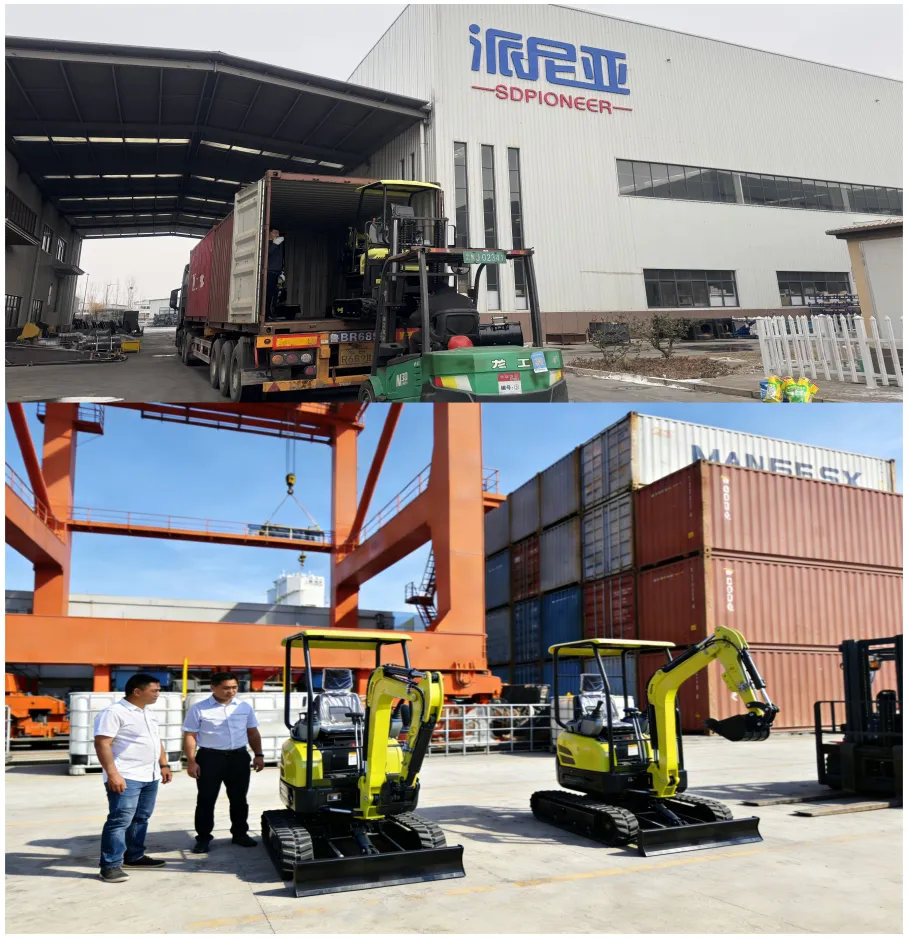
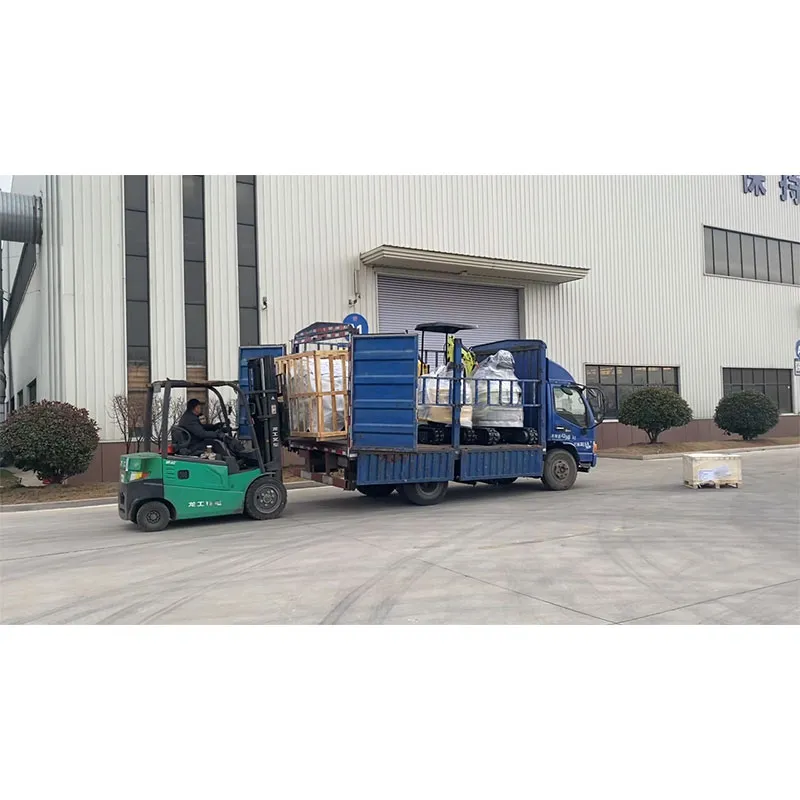
This brings me to companies operating in the broader ecosystem, like Shandong Pioneer Engineering Machinery Co., Ltd. You can find them at https://www.sdpioneer.com. Established in 2004 and now operating from a new facility in Tai’an, they, along with their manufacturing partner Shandong Hexin, export machinery globally. Their role often involves supplying compatible parts or even whole machines that fill specific market niches. While not a direct substitute for OEM support, such firms highlight the importance of a dense, competitive parts and equipment landscape. Their ability to serve markets from the US to Germany and Australia adds a layer of resilience to the industry, offering alternatives that can extend machine lifecycles for cost-conscious operators who still prioritize uptime.
Fuel and Fluids: The Operational Reality
Everyone talks about fuel consumption. Cat’s mini excavators with their Eco mode aren’t a gimmick. On the 308 CR, for instance, engaging Eco during precision grading or loading trucks cuts consumption noticeably—we logged about a 12-15% reduction on a mixed-duty day. But the bigger sustainability win is in the hydraulic system design. The variable flow system doesn’t just save diesel; it reduces heat generation. Less heat means hydraulic oil degrades slower. We’ve pushed oil change intervals on these machines further than on older models, following fluid analysis, not just the calendar. That’s less oil purchased, less waste oil generated.
Then there’s the issue of fluid contamination. The sealed and pressurized cab on models like the 308 CR isn’t just for operator comfort. It dramatically reduces the amount of external dust and grit that enters the hydraulic system when you’re checking or topping up tanks. Cleaner fluid from the start means fewer filter changes and, again, longer component life. It’s a small design choice with a cascading positive effect.
The Wrong Tool for the Job: A Sustainability Fail
I need to digress on a failure. We once tried to use a Cat 301.7, a fantastic little machine, for sustained, heavy-duty rock breaking with a 1,500-ft.lb breaker. On paper, it could handle it. In reality, the constant, high-impact vibration accelerated wear on every pin and bushing in the front linkage. We were replacing them every 400 hours. The machine wasn’t inherently unsustainable; we were using it unsustainably. The lesson? The best machine for sustainability is the one correctly sized and specced for the majority of its tasks. For that particular rock-breaking role, a 305 or larger would have been more sustainable, spreading the load and stress over a heavier, more robust structure. Matching the machine to the task is the first and most critical sustainability decision.
This also touches on attachment compatibility. Cat’s quick coupler systems are robust, but the real sustainability comes from using high-quality, well-balanced attachments. A poorly manufactured breaker that transfers shock inefficiently into the machine is a killer. We learned to invest in the attachment as much as the carrier.
End of Life and Residual Value
Finally, let’s talk about the end. A truly sustainable product has value even when its primary service life is over. Caterpillar mini excavators hold their residual value stubbornly well. Why? Because the market knows they can be rebuilt. The design allows for it. We’ve taken 10,000-hour 304E2 machines, done a full undercarriage, cylinder repacks, and injector service, and sent them out for another five years of reliable service. That rebuildability is the cornerstone of circular economy thinking in our industry.
When you compare the total carbon footprint of manufacturing a new machine versus rebuilding a core Cat chassis, the rebuild wins every time. This is where the initial design for serviceability pays its ultimate dividend. Machines that are a nightmare to work on get scrapped earlier because the labor cost of revival is prohibitive.
So, is there a single best model? Not really. It’s a philosophy embodied across their line, from the 1.7-tonners to the 8-ton models. But if pushed, I’d point to the 3.5- to 5-ton class, like the 305.5E2 or the 308 CR. They hit a sweet spot of power, versatility, and a design that clearly anticipates a long, hard life. Their sustainability isn’t a feature; it’s the result of a hundred small engineering decisions that prioritize longevity and serviceability over cutting corners for cost. That’s what you’re really buying into.
Please leave us a message