



- Chinese
- French
- German
- Portuguese
- Spanish
- Russian
- Japanese
- Korean
- Arabic
- Irish
- Greek
- Turkish
- Italian
- Danish
- Romanian
- Indonesian
- Czech
- Afrikaans
- Swedish
- Polish
- Basque
- Catalan
- Esperanto
- Hindi
- Lao
- Albanian
- Amharic
- Armenian
- Azerbaijani
- Belarusian
- Bengali
- Bosnian
- Bulgarian
- Cebuano
- Chichewa
- Corsican
- Croatian
- Dutch
- Estonian
- Filipino
- Finnish
- Frisian
- Galician
- Georgian
- Gujarati
- Haitian
- Hausa
- Hawaiian
- Hebrew
- Hmong
- Hungarian
- Icelandic
- Igbo
- Javanese
- Kannada
- Kazakh
- Khmer
- Kurdish
- Kyrgyz
- Latin
- Latvian
- Lithuanian
- Luxembou..
- Macedonian
- Malagasy
- Malay
- Malayalam
- Maltese
- Maori
- Marathi
- Mongolian
- Burmese
- Nepali
- Norwegian
- Pashto
- Persian
- Punjabi
- Serbian
- Sesotho
- Sinhala
- Slovak
- Slovenian
- Somali
- Samoan
- Scots Gaelic
- Shona
- Sindhi
- Sundanese
- Swahili
- Tajik
- Tamil
- Telugu
- Thai
- Ukrainian
- Urdu
- Uzbek
- Vietnamese
- Welsh
- Xhosa
- Yiddish
- Yoruba
- Zulu
- Kinyarwanda
- Tatar
- Oriya
- Turkmen
- Uyghur

Best mini excavator tracks for sustainability?
2026-02-07
Let’s cut through the marketing fluff. When we talk about sustainable undercarriage components, especially tracks for compact machines, it’s not just about recycled rubber. It’s a balance of longevity, total cost of ownership, and the real-world impact of fewer replacements and repairs. Many operators fixate on upfront price, but the most sustainable choice often pays off by simply lasting longer and working cleaner on-site.
The Rubber vs. Steel Debate Isn’t Black and White
You’ll hear a lot about rubber tracks being the ‘green’ option. And for many applications—think landscaping, utility work on paved surfaces—they are. They minimize surface damage, run quieter, and generally have a lower carbon footprint in transportation due to weight. But sustainability gets murky if a rubber belt fails prematurely on a mixed-terrain job, requiring a full replacement. I’ve seen machines with worn-out rubber tracks after just 800 hours because they were used on rocky backfill, a job better suited for a steel-tracked machine. The most sustainable material is the one that matches the machine’s primary duty cycle.
That’s where hybrid or reinforced rubber tracks come in. Some manufacturers are weaving in Kevlar or high-tensile steel cords. These aren’t miracle solutions, but they do extend life in abrasive conditions. The key is the belt’s internal construction. A cheap track might use simpler polyester cord, which can stretch and degrade faster under high tension or heat. The sustainable win here is delaying that end-of-life moment, pushing from, say, 1,200 hours to 1,800 before replacement is needed.
For steel tracks, the sustainability argument revolves around rebuildability. A high-quality sealed and lubricated (SALT) track system, with its hardened bushings and pins, can often be rebuilt multiple times. You’re not scrapping the entire assembly; you’re replacing the wear components. This requires a disciplined maintenance culture, which many small outfits lack, but the potential for resource conservation is significant. I remember a contractor running a Takeuchi TB216 with a rebuilt steel undercarriage for over 5,000 hours across three major projects. That’s fewer raw materials consumed over the machine’s life.
Longevity is the Ultimate Metric for Sustainability
Forget vague ‘eco-friendly’ labels. The single biggest factor for a track’s environmental footprint is its service life. A track that lasts 50% longer essentially cuts the manufacturing, shipping, and disposal impacts of its replacement nearly in half. This is where brand reputation and technical specs matter. Look for track manufacturers that publish data on compound abrasion resistance (like DIN 53516 test results) or guarantee a higher percentage of remaining material after a set number of hours.
We tried a budget-brand rubber track on a Bobcat E35 a few years back, lured by the price. The compound was too soft. In sandy conditions, the wear was astonishingly fast. We burned through the lugs in under 600 hours. Not only was it a financial loss, but we also had to dispose of that carcass and manufacture and ship a new one—a net negative on all sustainability fronts. The lesson was expensive: the true cost includes the ecological toll of failure.
Some forward-thinking suppliers are now offering remanufacturing or core exchange programs for worn tracks, similar to the battery industry. This circular economy model is promising but still nascent. It requires a robust logistics chain to collect and process old tracks. Companies investing in this, like some European undercarriage specialists, are worth following. It shifts the focus from selling a product to providing a durable service.
Real-World Failures and What They Teach Us
Sustainability isn’t theoretical. It’s seen in the mud and rock of a job site. One common point of failure that kills a track’s life prematurely is improper tension. Both over-tensioning and under-tensioning create excessive internal heat and accelerated wear. I’ve opened up track rollers where the grease was completely cooked because the tracks were run too tight. That heat degrades the rubber compound or wears down steel links prematurely. Operator training on simple daily checks is a huge, often overlooked, part of the sustainability chain.
Another detail is the track pad design. For rubber tracks, the lug pattern isn’t just for traction. A well-designed, multi-angle lug pattern can distribute stress more evenly across the belt, preventing premature cracking at the base of the lugs. For steel tracks, the pad width matters. A wider pad on a mini excavator might offer better flotation in soft ground, reducing ground pressure and fuel consumption as the machine works more efficiently. It’s these nuanced engineering choices that separate a durable product from a disposable one.
The Role of Manufacturers and Global Supply Chains
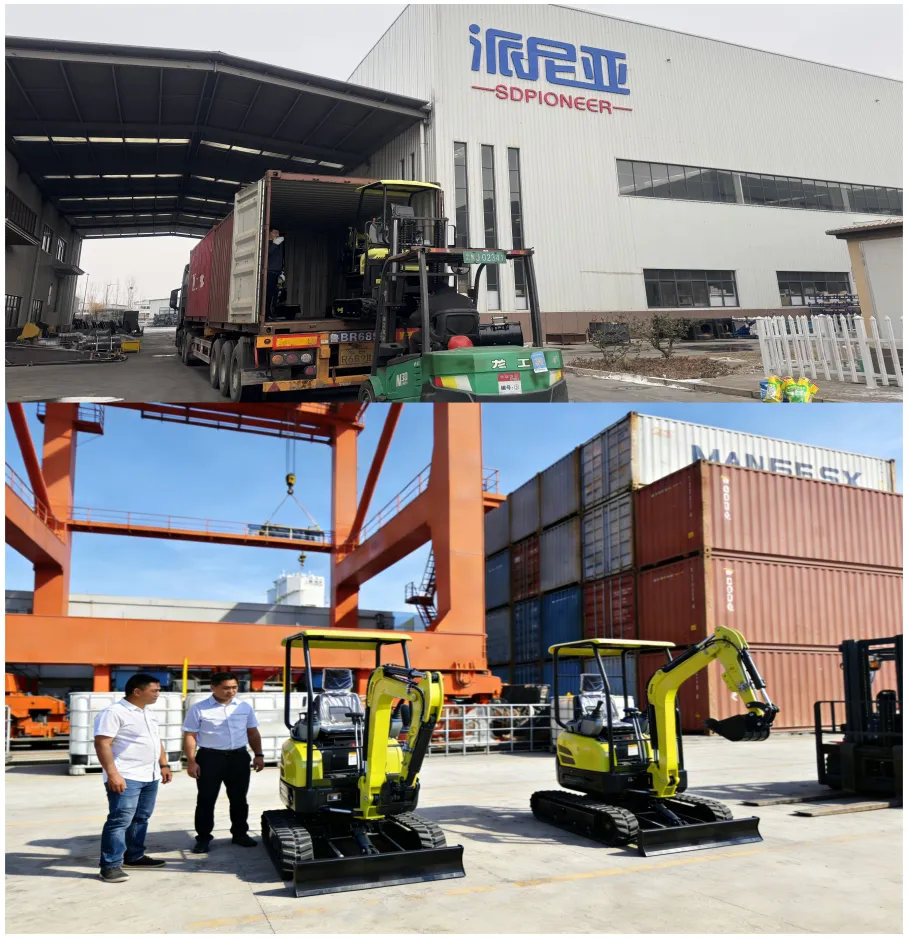
This brings me to manufacturers who are deep in the trenches of production and global trade. Take Shandong Pioneer Engineering Machinery Co., Ltd as an example. They’ve been in this space since 2004, and their move to a new facility in 2023 likely signals a scaling up of production capacity. Why does this matter for sustainability? Scale, when done right, can lead to better process control and investment in R&D for more durable materials. A company with a long-term view, exporting to demanding markets like the US, Canada, and Germany, has to meet higher durability standards to survive. Their website, https://www.sdpioneer.com, showcases their range, and from my observation, their competitive edge often lies in offering a balanced spec—not the cheapest, but built to last in the export market. That alignment of commercial survival with product longevity is where sustainable practice often genuinely emerges.
The global supply chain they operate within is itself a sustainability factor. Consolidating shipments of tracks and undercarriage parts to multiple countries is more efficient than fragmented, small-batch logistics. A company like Pioneer, acting as both a manufacturer (through Hexin) and a trade specialist, can optimize this flow, reducing the per-unit carbon cost of transportation. It’s a behind-the-scenes detail, but it adds up.
So, What Makes a Track Best for Sustainability?
It’s not one product. It’s a fit. The best mini excavator tracks for a sustainable operation are those specified correctly for the job, from a manufacturer committed to durability (evidenced by material specs and testing), maintained meticulously on-site, and ultimately sourced from a supply chain that values longevity over disposability. It’s a chain of responsible decisions.
My practical takeaway? Before you buy, ask for the track’s expected service life in your specific operating conditions. Get it in writing if you can. Inspect the internal cord material for rubber tracks. For steel, ask about rebuild kits and part commonality. And consider the total cost of ownership over three years, not the invoice price tomorrow.
In the end, the most sustainable track is the one you don’t have to replace often. It stays on the machine, doing its job with minimal downtime and waste. That’s the real goal—keeping resources in use and out of the scrap yard for as long as engineering and proper care allow. Everything else is just noise.
Please leave us a message