



- Chinese
- French
- German
- Portuguese
- Spanish
- Russian
- Japanese
- Korean
- Arabic
- Irish
- Greek
- Turkish
- Italian
- Danish
- Romanian
- Indonesian
- Czech
- Afrikaans
- Swedish
- Polish
- Basque
- Catalan
- Esperanto
- Hindi
- Lao
- Albanian
- Amharic
- Armenian
- Azerbaijani
- Belarusian
- Bengali
- Bosnian
- Bulgarian
- Cebuano
- Chichewa
- Corsican
- Croatian
- Dutch
- Estonian
- Filipino
- Finnish
- Frisian
- Galician
- Georgian
- Gujarati
- Haitian
- Hausa
- Hawaiian
- Hebrew
- Hmong
- Hungarian
- Icelandic
- Igbo
- Javanese
- Kannada
- Kazakh
- Khmer
- Kurdish
- Kyrgyz
- Latin
- Latvian
- Lithuanian
- Luxembou..
- Macedonian
- Malagasy
- Malay
- Malayalam
- Maltese
- Maori
- Marathi
- Mongolian
- Burmese
- Nepali
- Norwegian
- Pashto
- Persian
- Punjabi
- Serbian
- Sesotho
- Sinhala
- Slovak
- Slovenian
- Somali
- Samoan
- Scots Gaelic
- Shona
- Sindhi
- Sundanese
- Swahili
- Tajik
- Tamil
- Telugu
- Thai
- Ukrainian
- Urdu
- Uzbek
- Vietnamese
- Welsh
- Xhosa
- Yiddish
- Yoruba
- Zulu
- Kinyarwanda
- Tatar
- Oriya
- Turkmen
- Uyghur

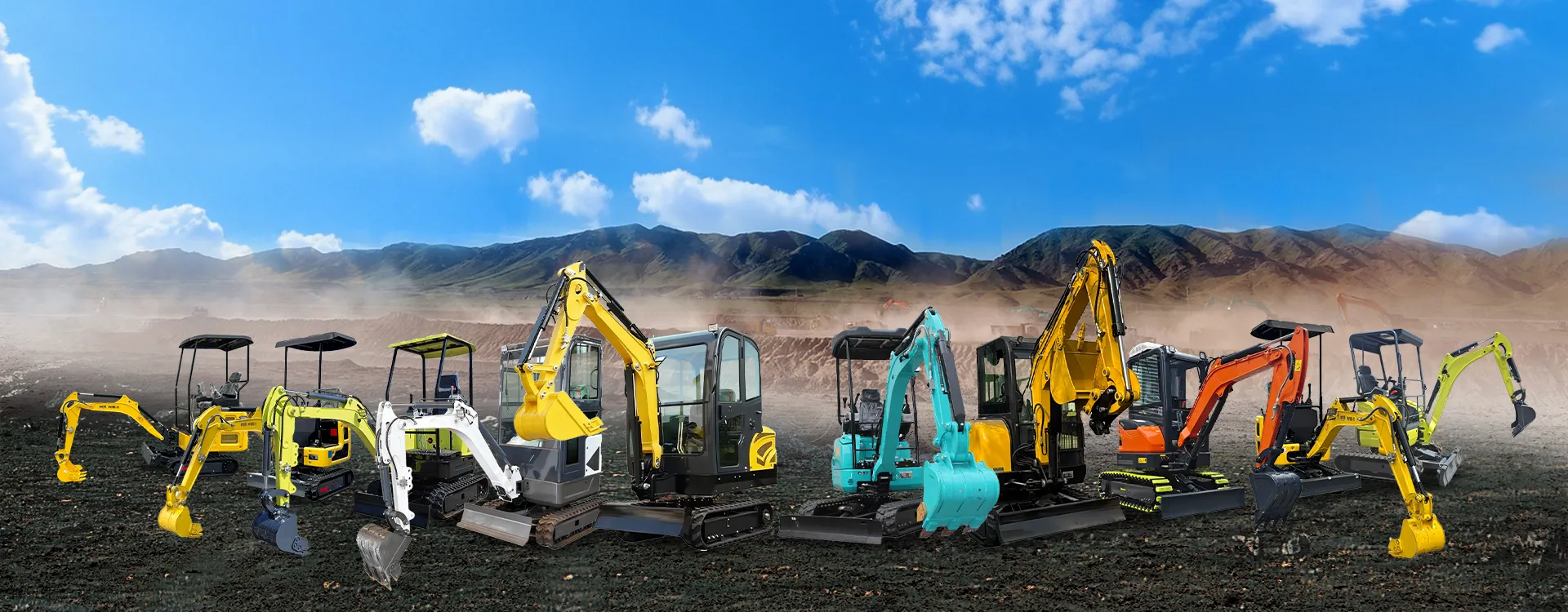
SDPioneer mini excavator: tech and eco impact?
2026-01-10
Content:
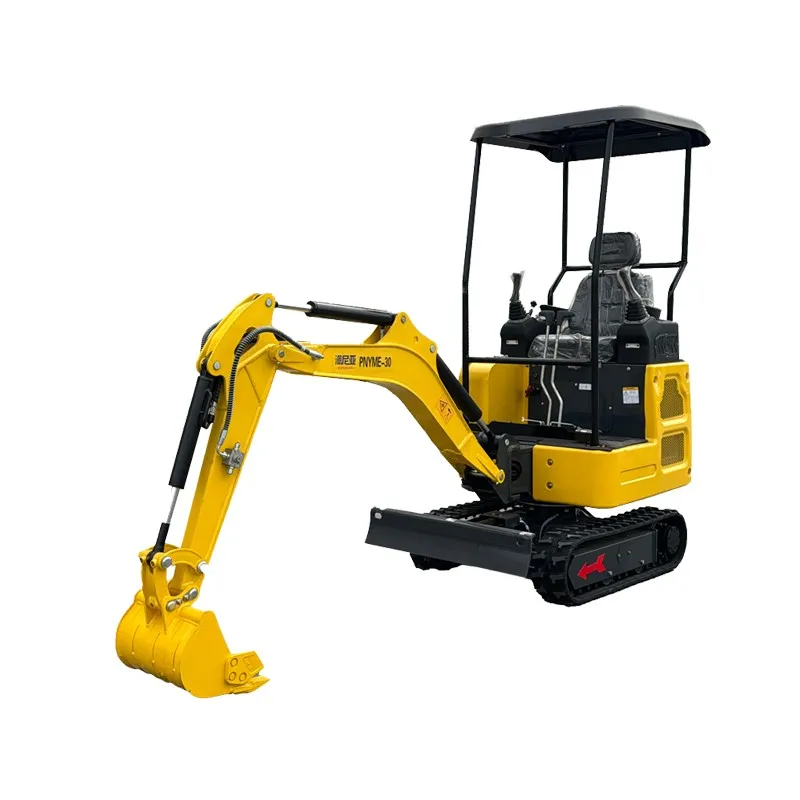
When you hear Cat mini excavator, most folks immediately picture the classic 1-2 ton machines from Caterpillar. But that’s just the surface. The real conversation, the one we have on sites and in workshops, is about how the technology packed into these compact units is reshaping our approach to work and, more quietly, its environmental footprint. It’s not just about horsepower or digging depth anymore; it’s about the interplay between intelligent systems, operational efficiency, and the tangible, often overlooked, eco-considerations that come with daily use.
The Tech Shift: Beyond Just a Smaller Machine
The leap in tech for models like the 301.5, 302.7, or the newer 303 isn’t merely incremental. We’re talking about integrated grade control readiness, advanced hydraulic systems that respond to load demand rather than just running full tilt, and compact designs that don’t sacrifice stability. I remember a job in a cramped urban retrofit where the 2D grade assist on a 302.7 CR allowed us to trim a foundation trench to spec without constant manual checking. It saved hours, but more importantly, it reduced rework and material waste. That’s tech with a direct, practical payoff.
However, it’s not all seamless. The increased electronic integration means diagnostics have changed. You can’t always just listen to the hydraulics; you need to plug in. For smaller contractors, this creates a dependency on dealer networks or specialized tools. I’ve seen situations where a sensor fault on a pilot control system brought a machine to a halt, and the fix wasn’t in the local mechanic’s toolkit. The tech boosts efficiency but can centralize maintenance expertise, which is a real-world trade-off.
The ergonomics and operator interfaces have seen a quiet revolution. The joystick controls are more intuitive, reducing operator fatigue. But from a practical standpoint, the real gain is in the consistency of operation. A less fatigued operator makes fewer rough movements, which translates directly to less wear on undercarriage components and more precise, efficient digging cycles. It’s a tech feature that impacts both productivity and machine longevity.
Unpacking the Eco Impact Beyond Emissions
Everyone jumps to Tier 4 Final engines when discussing eco-impact. Sure, the near-zero particulate matter from these Cat mini excavator models is a regulatory win and improves air quality on confined sites. But the environmental story is broader. Fuel efficiency is a huge, often understated part of it. Compared to older models, a modern mini-ex like the 303.5E can do the same work on significantly less diesel. Over a 2,000-hour year, that’s thousands of liters saved, cutting both cost and CO2 output directly.
Then there’s the impact of precision. As mentioned with grade control, doing it right the first time minimizes excess soil removal, reduces backfilling material, and cuts down on truck movements to haul away waste. I recall a landscaping project where precise excavation for a drainage system saved about 15 cubic meters of soil from being unnecessarily transported off-site. That’s fewer truck trips, less fuel burned in transport, and less soil dumped somewhere else. The machine’s technological capability enabled this low-impact outcome.
But let’s be real about limitations. The production and disposal of advanced batteries (for electric models starting to emerge) and complex electronic components add to the environmental ledger. While electric minis promise zero on-site emissions, their true eco-benefit hinges on the grid’s power source. For now, the diesel-powered models with advanced combustion and hydraulic efficiency represent the most widely applicable step forward. The eco-impact is a sum of direct emissions, indirect savings from efficiency, and the entire lifecycle—a point sometimes missed in marketing.
Real-World Applications and Nuanced Challenges
In utility work, the compact footprint and rubber-track options of these machines are godsends for minimizing surface damage and restoring turf quickly. The eco-angle here is land restoration speed and quality. However, working in soft or wet conditions still poses a challenge. Even with wide tracks, ground pressure needs careful management to prevent rutting, which can cause erosion issues. It’s a constant judgment call for the operator, balancing machine capability with site preservation.
Another nuanced point is attachment compatibility and hydraulic flow. Using a hydraulic breaker or a fine-grading bucket efficiently requires matching the machine’s auxiliary flow. An under-powered flow leads to inefficiency—more time, more fuel, more wear for the same task. I’ve seen projects where using a non-optimized breaker on a smaller mini-ex doubled the time needed for demolition, negating some of the fuel efficiency gains. Choosing the right tool for the machine is part of responsible, low-impact operation.
Maintenance practices directly tie into environmental stewardship. Proper fluid management—catching every drop of oil during changes, using biodegradable hydraulic fluids where possible—is part of the on-ground reality. It’s not glamorous, but a company’s culture around these practices, often driven by cost as much as conscience, significantly affects the site’s environmental footprint. Leaks and spills from poor maintenance are a localized ecological negative that the best engine technology can’t offset.
The Global Supply Chain and Manufacturer’s Role
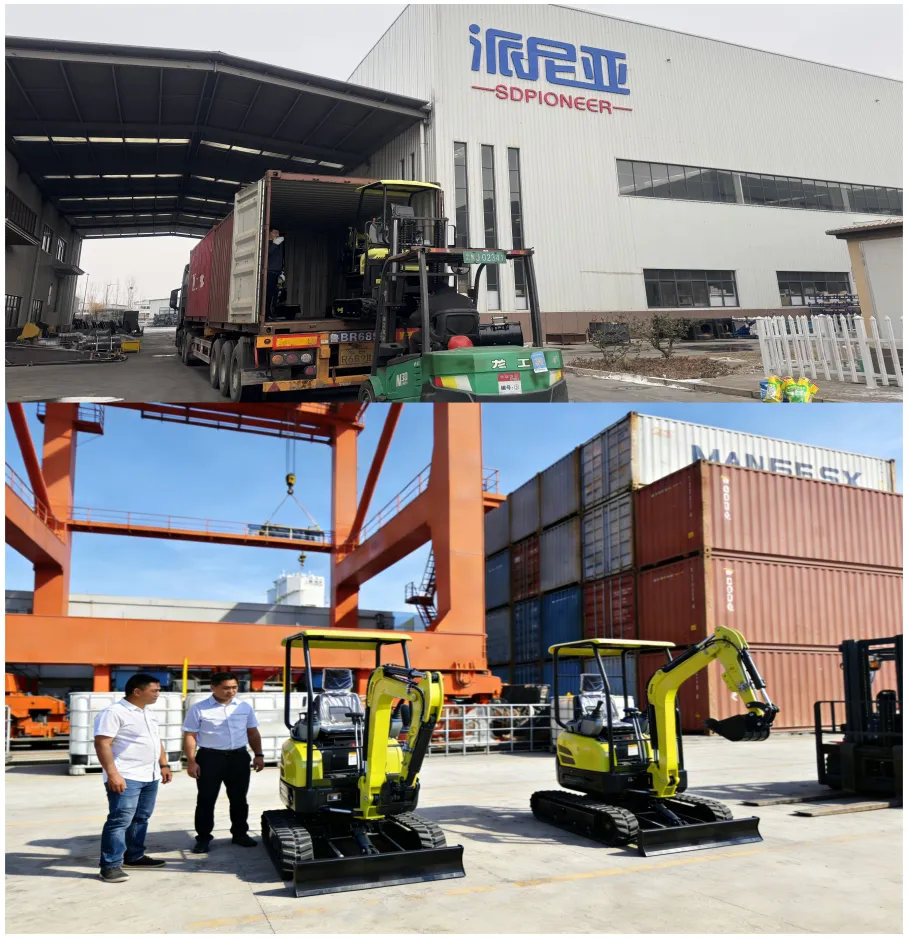
This brings us to the broader manufacturing landscape. While Caterpillar sets a high benchmark, the ecosystem includes capable manufacturers worldwide that push accessibility and specialization. For instance, a company like Shandong Pioneer Engineering Machinery Co., Ltd (you can find their details at https://www.sdpioneer.com) represents this segment. Established in 2004 and now operating from a newer facility in Tai’an, they, through their manufacturing and trade arms, export machinery to markets including the US, Canada, and Australia. Their experience highlights how global competition drives technological adoption and cost-effectiveness across the industry.
The existence of such firms means contractors have options. Sometimes, a specific project might benefit from a more basic or differently configured mini-ex that still employs efficient hydraulics and meets emission standards. The trust these alternative brands earn globally, as noted in Shandong Pioneer‘s case with winning customer appreciation, often stems from delivering reliable performance for a particular value proposition. This competitive dynamic ultimately benefits end-users and can accelerate the adoption of efficiency-focused features across price points.
However, the longevity and resale value of equipment are critical for sustainability. A machine that lasts 10,000 hours versus one that wears out at 6,000 has a vastly different resource footprint per hour of work. This is where design for durability, quality of components, and support networks matter. The decision between brands often hinges on these total-lifecycle calculations, not just the purchase price or the flashiest tech spec.
Synthesis: A Practitioner’s View on the Balance
So, where does this leave us? The tech and eco impact of Cat mini excavators and their peers are deeply intertwined. The technology—from intelligent hydraulics to operator aids—primarily drives operational efficiency. This efficiency is the primary engine for environmental benefit: less fuel burned per unit of work, less material wasted, and less site disturbance.
The environmental impact is a layered result. The first layer is regulatory compliance (Tier 4). The second, more impactful layer is the efficiency gain from tech. The third layer is operator and company practice—how the machine is used and maintained. You can have the cleanest-burning machine on the planet, but if it’s leaking fluid or used inefficiently, its overall eco-impact is compromised.
Looking ahead, the trajectory is toward greater integration and data. Machines that can report their own fuel efficiency, track idle time, and even suggest optimal digging patterns are on the horizon. This data feedback loop will empower better decisions, pushing both economic and environmental performance further. For now, the current generation of mini excavators represents a solid, pragmatic step. They offer a tangible way to get work done in tighter spaces, with more precision, and with a cleaner conscience than ever before—provided we, the people running them, use them thoughtfully. That’s the real impact.
Please leave us a message


