



- Chinese
- French
- German
- Portuguese
- Spanish
- Russian
- Japanese
- Korean
- Arabic
- Irish
- Greek
- Turkish
- Italian
- Danish
- Romanian
- Indonesian
- Czech
- Afrikaans
- Swedish
- Polish
- Basque
- Catalan
- Esperanto
- Hindi
- Lao
- Albanian
- Amharic
- Armenian
- Azerbaijani
- Belarusian
- Bengali
- Bosnian
- Bulgarian
- Cebuano
- Chichewa
- Corsican
- Croatian
- Dutch
- Estonian
- Filipino
- Finnish
- Frisian
- Galician
- Georgian
- Gujarati
- Haitian
- Hausa
- Hawaiian
- Hebrew
- Hmong
- Hungarian
- Icelandic
- Igbo
- Javanese
- Kannada
- Kazakh
- Khmer
- Kurdish
- Kyrgyz
- Latin
- Latvian
- Lithuanian
- Luxembou..
- Macedonian
- Malagasy
- Malay
- Malayalam
- Maltese
- Maori
- Marathi
- Mongolian
- Burmese
- Nepali
- Norwegian
- Pashto
- Persian
- Punjabi
- Serbian
- Sesotho
- Sinhala
- Slovak
- Slovenian
- Somali
- Samoan
- Scots Gaelic
- Shona
- Sindhi
- Sundanese
- Swahili
- Tajik
- Tamil
- Telugu
- Thai
- Ukrainian
- Urdu
- Uzbek
- Vietnamese
- Welsh
- Xhosa
- Yiddish
- Yoruba
- Zulu
- Kinyarwanda
- Tatar
- Oriya
- Turkmen
- Uyghur


Hello! I’m here to help you. Whether you have a question, need assistance with a task, or just want to chat, feel free to let me know how I can support you today.
2026-02-07
Beyond Hello, How Can I Help?: The Unseen Work in Customer Support
You see that line everywhere now: Hello! I’m here to help you… It’s the default opening gambit. The problem is, when it’s just a script, it rings hollow. In our field—industrial machinery exports—trust isn’t built on a greeting. It’s built on what happens after, often in the messy, non-linear conversations that follow. Many think support is about having answers. I’ve found it’s more about navigating the questions you don’t have answers to, in real-time.
The Greeting as a Commitment, Not a Cliche
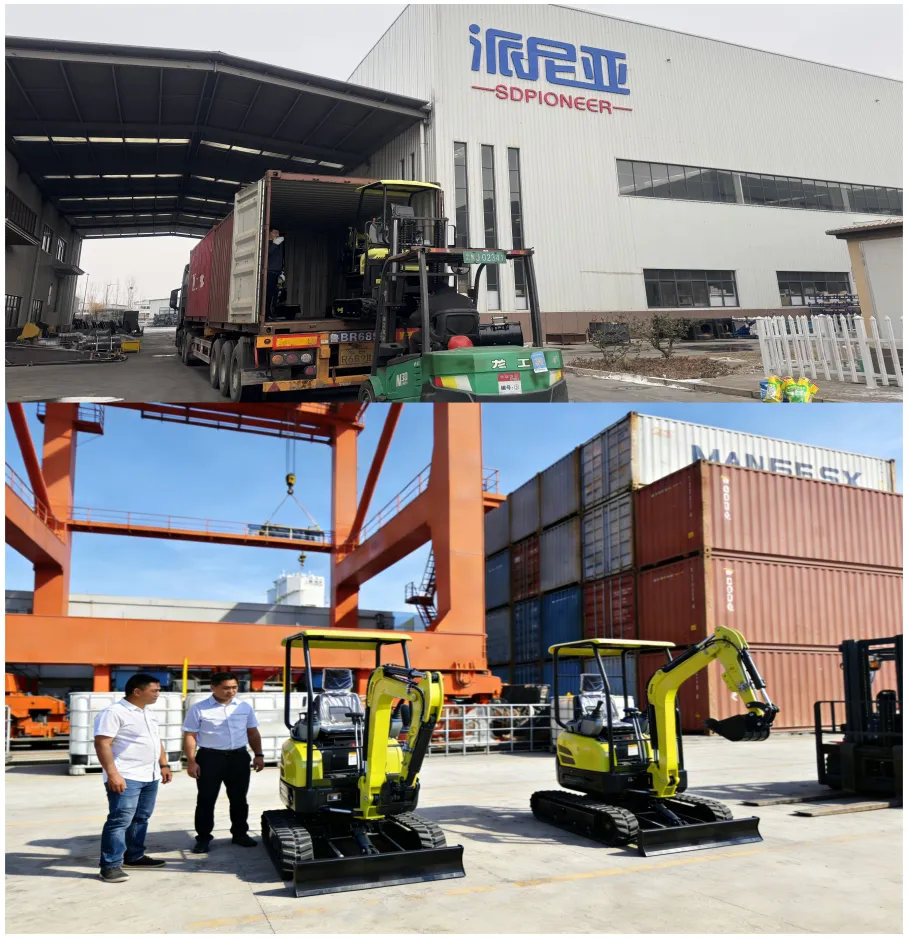
When we at Shandong Pioneer Engineering Machinery Co., Ltd. say we’re here to help, it’s a loaded statement. It’s not a chatbot prompt. It’s a commitment that ties back to a 20-year-old company that started in a 1,600 square meter facility in Jining and now ships globally from its new base in Ningyang. The greeting is easy. The follow-through is where you earn the trust and appreciation of customers worldwide mentioned on our site, https://www.sdpioneer.com. For instance, a simple question about a hydraulic pump’s specs can unravel into a discussion about local voltage stability, operator training gaps, or even port clearance delays in Australia. The help begins when you recognize the question behind the question.
I recall a client from Germany. Initial contact was a classic need assistance with a task—requesting a manual. But the real issue emerged over a scattered email chain: their team was misinterpreting a torque setting, leading to premature wear. We didn’t just send the PDF. We scheduled a brief video call, our engineer pointing at a physical unit here in Tai’an, mimicking the adjustment. That’s assistance. It’s contextual, slightly chaotic, and deeply practical.
The industry’s common pitfall? Treating support as a cost center, a department that just reacts. We’ve tried to structure it as a proactive feedback loop. Information from these support chats directly informs our manufacturing teams at Shandong Hexin. A pattern of queries about a specific seal might trigger a design review. That’s the hidden value of being genuinely here to help.
When Just Want to Chat Reveals the Critical Path
You’d be surprised how many significant insights come from what seems like casual chatter. A buyer from Canada once reached out, ostensibly just to chat about market trends. Off-script, they mentioned their frustration with a competitor’s packaging—components arrived rust-prone after long sea voyages. That wasn’t small talk; it was a critical audit of our supply chain vulnerability we hadn’t fully considered.
This is where rigid, formulaic support structures fail. They’re designed to close tickets, not to listen for the off-hand remark about warehouse humidity or a local regulator’s changing stance. We learned to treat these conversations as informal due diligence. That chat led us to revise our standard export packaging for North American routes, adding a desiccant protocol. It was a minor cost with a major impact on perceived quality. The question was never formally asked, but the support was in identifying and acting on the latent need.
We’ve had failures here too. Early on, we were too eager to steer every conversation toward a direct sales opportunity, missing these softer signals. It made clients clam up. Now, we let the dialogue meander. Sometimes the most valuable help you provide is just being a knowledgeable sounding board, which in turn builds the kind of loyalty that pure transaction never could.
The Anatomy of a Task: From Vague to Validated
Need assistance with a task is wonderfully vague. In our world, a task could be sourcing a compatible spare part for a 10-year-old machine, or navigating the customs coding for a new product line heading to the U.S. The process is rarely linear. It often starts with the client themselves not fully knowing what they need.
Take spare parts. A client says, I need the seal for cylinder model X. Our job isn’t just to fetch it from the shelf. It’s to ask: What’s the symptom? Is there scoring on the rod? What’s the operating environment? We’ve saved clients thousands in downtime by diagnosing, over email, that the real issue was a contaminated fluid reservoir, not the seal itself. Sending the part they asked for would have been a disservice. True assistance involves respectful skepticism and collaborative diagnosis.
This requires a team that understands the machinery not just as a catalog item, but as a working tool on a farm in Alberta or a mine site in Western Australia. Our relocation and expansion in 2023 wasn’t just about more space; it was about integrating our trade and manufacturing knowledge more tightly, so the support team has direct, daily lines to the production floor.
Building the Support Memory: More Than a Knowledge Base
Documentation is crucial. But the real institutional memory lives in the traces of past conversations—the oddball fixes, the regional peculiarities. We don’t just log solutions; we annotate the dead ends. For example, we once spent two weeks trying to troubleshoot an electrical issue for a client, only to discover through a fragmented chat history with a different technician that the client’s region used a non-standard grounding practice. That nuance is now tagged in our system.
This isn’t about having a perfect AI database. It’s about cultivating a culture where technicians share these fragments. A just want to chat interaction from years ago about local voltage spikes in a particular province might be the key to solving a new, seemingly unrelated performance complaint today. The help is embedded in continuity, in seeing the client’s history as a narrative, not a series of tickets.
Our website, https://www.sdpioneer.com, showcases our products and reach. But the real backbone, the thing that makes customers in the U.S., Canada, Germany, and Australia stick with us through lead times and logistics snarls, is this layered, remembered support. It turns a transactional relationship into a partnership.
The Unsatisfying, Honest Conclusion
So, what’s the professional judgment here after two decades? That the perfect, polished support script is an enemy. The opening line—Hello! I’m here to help you…—is only as good as the willingness to dive into the unstructured, often inconvenient problems that follow. It’s about resourcefulness, not just resources.
The goal isn’t to appear seamless. In heavy machinery, things break, misunderstandings happen, and manuals are unclear. The trust is built when you, as the support, openly navigate that mess with the client. You show your work. You say, I’m not sure, but let me find out from the plant manager, or That’s a new one. Let’s think this through together.
Ultimately, being here to help is a posture of engaged problem-solving, not a department. It’s what transforms a simple greeting from a placard into a genuine offer. And in a global trade environment where you’re often just a name on a screen, that genuine offer is the single most durable product you can ship.
Please leave us a message