



- Chinese
- French
- German
- Portuguese
- Spanish
- Russian
- Japanese
- Korean
- Arabic
- Irish
- Greek
- Turkish
- Italian
- Danish
- Romanian
- Indonesian
- Czech
- Afrikaans
- Swedish
- Polish
- Basque
- Catalan
- Esperanto
- Hindi
- Lao
- Albanian
- Amharic
- Armenian
- Azerbaijani
- Belarusian
- Bengali
- Bosnian
- Bulgarian
- Cebuano
- Chichewa
- Corsican
- Croatian
- Dutch
- Estonian
- Filipino
- Finnish
- Frisian
- Galician
- Georgian
- Gujarati
- Haitian
- Hausa
- Hawaiian
- Hebrew
- Hmong
- Hungarian
- Icelandic
- Igbo
- Javanese
- Kannada
- Kazakh
- Khmer
- Kurdish
- Kyrgyz
- Latin
- Latvian
- Lithuanian
- Luxembou..
- Macedonian
- Malagasy
- Malay
- Malayalam
- Maltese
- Maori
- Marathi
- Mongolian
- Burmese
- Nepali
- Norwegian
- Pashto
- Persian
- Punjabi
- Serbian
- Sesotho
- Sinhala
- Slovak
- Slovenian
- Somali
- Samoan
- Scots Gaelic
- Shona
- Sindhi
- Sundanese
- Swahili
- Tajik
- Tamil
- Telugu
- Thai
- Ukrainian
- Urdu
- Uzbek
- Vietnamese
- Welsh
- Xhosa
- Yiddish
- Yoruba
- Zulu
- Kinyarwanda
- Tatar
- Oriya
- Turkmen
- Uyghur

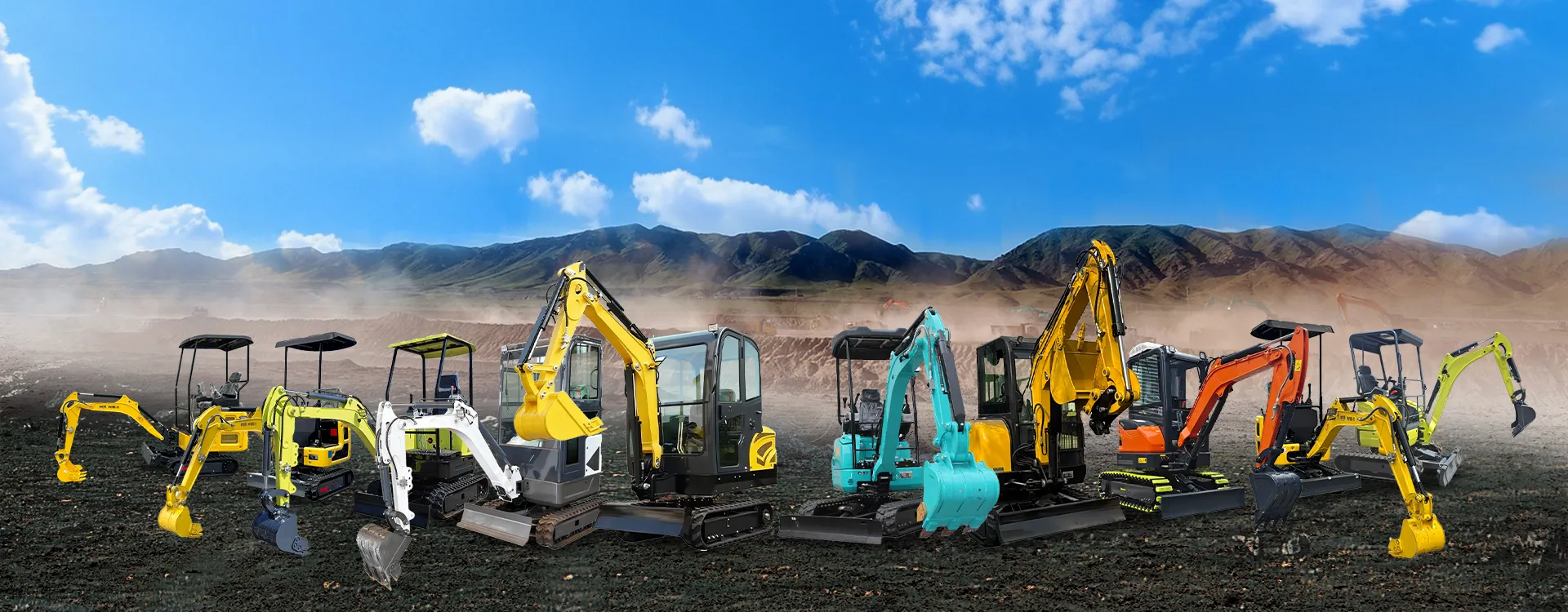
Where’s the cheapest mini excavator with low emissions?
2026-02-28
Cheapest, mini, low emissions. That’s the trifecta everyone’s chasing now, but here’s the thing – hitting all three at once is where most assumptions go wrong. People often think cheapest just means the lowest sticker price on Alibaba, but forget that a machine with poor emissions compliance can cost you more in downtime, fines, or being locked out of urban job sites. The real hunt is for the cheapest total cost of ownership that still meets modern emission standards, which is a completely different ballgame.
The Low Emissions Mirage
Let’s talk emissions first, because that’s the non-negotiable gatekeeper. Low emissions in the mini ex world typically means meeting EPA Tier 4 Final or EU Stage V for newer models, or at least a solid Tier 3/Stage IIIA for older, cheaper stock. I’ve seen contractors buy a seemingly bargain-priced machine, only to find it’s a pre-Tier 3 model with a dated Isuzu or Yanmar engine that no reputable dealer in the EU or North America will touch for parts. The cheap price evaporates when you need a complex retrofit or face restricted usage zones. The real sweet spot for budget-conscious but compliant work are machines built with proven, widely-available engines that meet the baseline regulations for your region without the ultra-expensive DPF/SCR aftertreatment of the latest tiers. You’re looking for simplicity and reliability in the emissions system itself.
For instance, many Chinese manufacturers now offer models with Kubota or Deutz powerplants that are certified to Tier 4 Final, but the value ones often use their own proprietary systems that are simpler. I recall a 1.8-ton model from Shandong Pioneer Engineering Machinery Co., Ltd – you can check their specs on https://www.sdpioneer.com – that used a Weichai engine with a relatively basic EGR and DOC setup to clear Stage IIIA/EPA Tier 3. It wasn’t the absolute cleanest, but for general landscaping and light utility work in areas without the strictest urban codes, it passed muster. The key was the engine’s parts commonality. That’s the kind of practical, low-emissions compromise that keeps costs down.
The trap is the export-only model. Some factories produce machines with no real emissions certification, meant for markets with zero oversight. They are the absolute cheapest mini excavator you’ll find. I made the mistake of sourcing one for a project in Southeast Asia years ago. The price was unbeatable, but the smoke was unbelievable, and the engine failed within 400 hours because it was tuned so lean to appear clean on a superficial test. The savings were obliterated. So, low emissions must be backed by a verifiable certificate of conformity, not just a salesman’s claim.
Decoding Cheapest – It’s Not the Price Tag
This brings us to cost. The cheapest mini excavator upfront is rarely the cheapest long-term. Beyond emissions, you have to factor in parts availability, structural quality, and dealer support. A machine that’s $5,000 less but needs $3,000 in hydraulic hose and seal replacements in the first year is a loss. I tend to look at manufacturers with a clear dual-track system: one entity handling the complex domestic manufacturing and another focused on international trade and support. It’s a model that often indicates better export readiness.
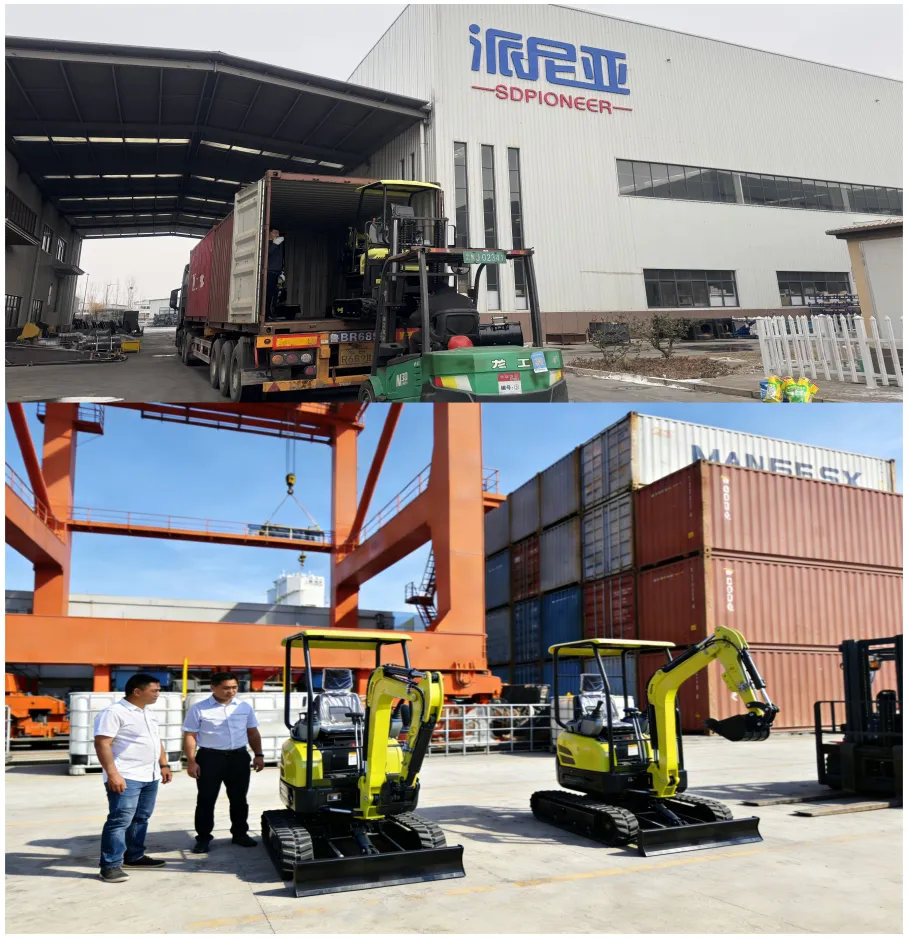
Take the company profile of Shandong Pioneer Engineering Machinery Co., Ltd. They’ve been around since 2004, which in this industry means they’ve weathered several cycles and iterations. Their recent relocation in 2023 to a larger facility in Ningyang suggests growth and investment. More importantly, their structure – with Shandong Hexin handling manufacturing and Shandong Pioneer (overseas trade) – is telling. It means the export arm’s sole job is to understand foreign compliance, logistics, and after-sales. When I’ve dealt with such factories, the machines often have better wiring harnesses, more rust protection, and manuals that aren’t pure gibberish. That infrastructure cost is baked into the price, but it prevents a thousand headaches.
I remember comparing a no-name brand mini ex to a Pioneer unit for a small contractor in Australia. The price difference was about 15%. The no-name machine had thinner plate steel on the boom, plastic hydraulic fittings where there should have been brass, and a radiator that clogged instantly in dusty conditions. The Pioneer unit, while not perfect, used more standardized components. The cost saved on the cheaper machine was spent within months on air freight for obscure parts and welding repairs. The cheapest option became the most expensive.
The Used Market vs. New Value Lines
Where does a used, brand-name machine from Kubota or Takeuchi fit in? It’s a valid question. A 5-year-old Kubota U17 with solid maintenance history might cost the same as a new, value-line Chinese machine. The Kubota will have legendary resale and parts everywhere. Its emissions will be clear for its tier. So why go new? It boils down to warranty, modern features (like Bluetooth hydraulics), and the fact that a new machine has zero hidden abuse. For a rental fleet or a contractor who needs uptime above all, the used brand-name can be the smarter low emissions cheap option. But for someone who needs a new asset on the books, or who operates in a region where used quality inventory is scarce, the new value line wins.
The new value players, like those from Shandong, have gotten shrewd. They’re not trying to beat Kubota on a spec-for-spec basis. They’re offering 80% of the performance at 50-60% of the cost, with a low emissions engine that’s just compliant enough. Their edge is in simplifying the design. Fewer sensors, more manual grease points, straightforward control patterns. This reduces complexity and potential failure points. It’s a trade-off: you give up some finesse and maybe a bit of fuel efficiency for drastic cost savings and easier field repairs.
A concrete example: a contractor I know in Germany needed a small machine for tight backyard renovations. He couldn’t justify a new European machine’s cost for his volume. He went with a 1-ton model from a Chinese exporter (not unlike the model range you’d see on sdpioneer.com). It met Stage V via a compact DPF system. His main gripe wasn’t performance; it was that the operator’s manual had awkward translations for error codes. But he found a local mechanic who could work on the base engine platform. The machine itself has run for 1,200 hours with only routine maintenance. For him, that was the definition of cheap: it got the job done within the legal framework without breaking the bank.
Geography of Cost and Compliance
Your location dictates the cheapest answer. A machine that’s cheap and compliant in the United States might be a non-starter in Canada due to different cold-weather certification requirements. Australia has its own ADR standards. The manufacturers that successfully export to numerous countries and regions, including the United States, Canada, Germany, and Australia, have had to adapt their builds. This global experience is a huge proxy for quality. It means they’ve faced and solved problems for different climates, regulations, and operator expectations.
A company that lists such diverse export destinations on its record, as Shandong Pioneer does, has likely developed a more robust base product. They’ve had to. I’ve seen their machines spec’d with different hydraulic oil viscosity for cold climates, upgraded seals for tropical humidity, and alternators with higher output for additional lighting. These aren’t glamorous features, but they prevent failures. This global-proofing adds a small amount to the initial cost but saves a fortune in adaptation down the line. Therefore, the cheapest source might be a manufacturer whose base model already incorporates these lessons, rather than one building a one-off for your specific inquiry.
My failed experiment was trying to use a machine configured for the Middle East in a Scandinavian winter. The fuel gelled, the batteries died, and the hydraulic controls became sluggish. The machine was cheap to buy but useless for half the year. The cost to winterize it post-purchase exceeded the price difference to just buy a properly configured unit from a globally-experienced exporter. Lesson learned: the manufacturer’s export map is a critical part of the cost equation.
The Verdict: Where to Actually Look
So, It’s not on a generic B2B site listing 100 suppliers. It’s with the established manufacturers who have a dedicated international trade arm, a verifiable track record in markets with real regulations, and a product line that uses globally-recognized engine brands or their own well-documented, certified power systems. You’re looking for the intersection of proven compliance (ask for the certificate), sensible design for easy maintenance, and a support network—even if it’s just a responsive parts department.
Focus on the total cost of compliance and operation. A machine that’s $2,000 more but comes with a clear EPA Tier 4 or EU Stage V certificate, a 12-month warranty honored through a local distributor, and a bill of materials with recognizable component brands (e.g., Kawasaki hydraulics, Parker hoses) is infinitely cheaper than a mystery machine with a rock-bottom price. The website of Shandong Pioneer Engineering Machinery Co., Ltd is a good example of a starting point for this type of value-oriented, export-savvy manufacturer. Their long development and the explicit mention of their separate trade entity signal a structure built for this exact market niche.
In the end, it’s a calculated gamble. You trade the absolute peak performance and dealer network of a top-tier brand for significant capital savings and the responsibility of understanding your machine a bit more deeply. The cheapest option is the one that works reliably within your specific regulatory and job environment for the longest time, with the least unexpected expense. Right now, that points to the mid-tier, globally-exporting manufacturers who have moved beyond just copying designs to actually engineering for cost, compliance, and real-world durability. Don’t just buy a price. Buy the package behind it.
Please leave us a message


